
Straatlantaarn — History & Facts
What if beauty was never meant to be finished? In Straatlantaarn, James Ensor invites us into a dreamscape where shadows play tricks and colors whisper secrets of the unknown. Look to the left at the eerie glow of the street lantern, its light flickering like a heartbeat in the darkness. The surrounding details blur, creating a gentle contrast between the warm illumination and the cool, muted hues of the night. Notice how Ensor’s brushstrokes swirl and pulse, inviting the eye toward the interplay of light and shadow, crafting an atmosphere that feels both alive and ephemeral. Within this haunting composition lies the contrast between reality and illusion.
The lantern, a symbol of guidance, becomes a beacon of the subconscious, illuminating not just the street but the depths of our dreams and fears. The soft edges of the figures lurking in the background suggest a presence that is both intimate and distant, evoking a sense of longing and the spectral nature of memory. Each element contributes to a narrative that is simultaneously inviting and unsettling, challenging our perception of what is real. In 1888, Ensor was immersed in the vibrant world of Brussels, grappling with the avant-garde movements that surrounded him.
This period marked a turning point in his career, as he began to explore themes of the fantastical and grotesque. Societal tensions and his own introspections deeply influenced his work, leading to a style that pushed the boundaries of traditional art and invited a new understanding of beauty in the modern age.
More Artworks by James Ensor
Browse all →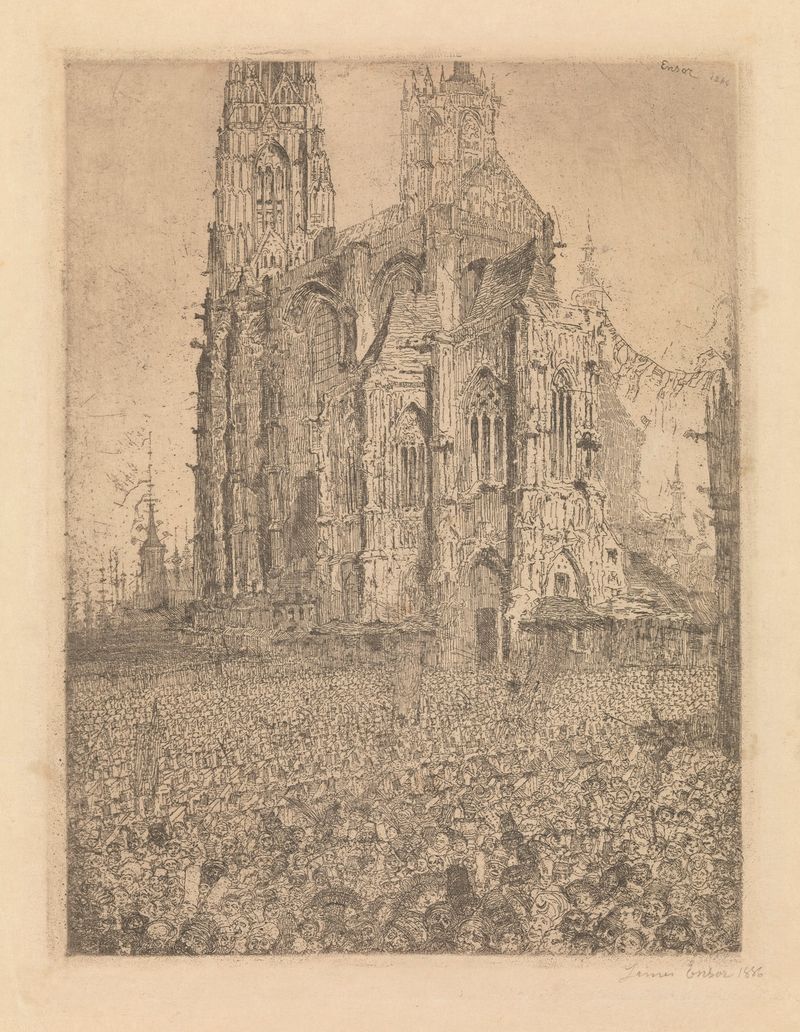
The Cathedral
James Ensor
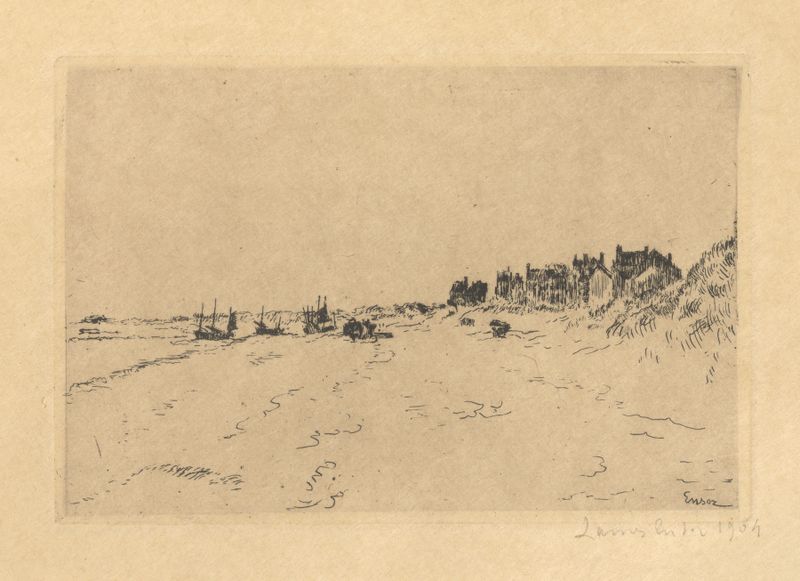
Het strand van De Panne
James Ensor
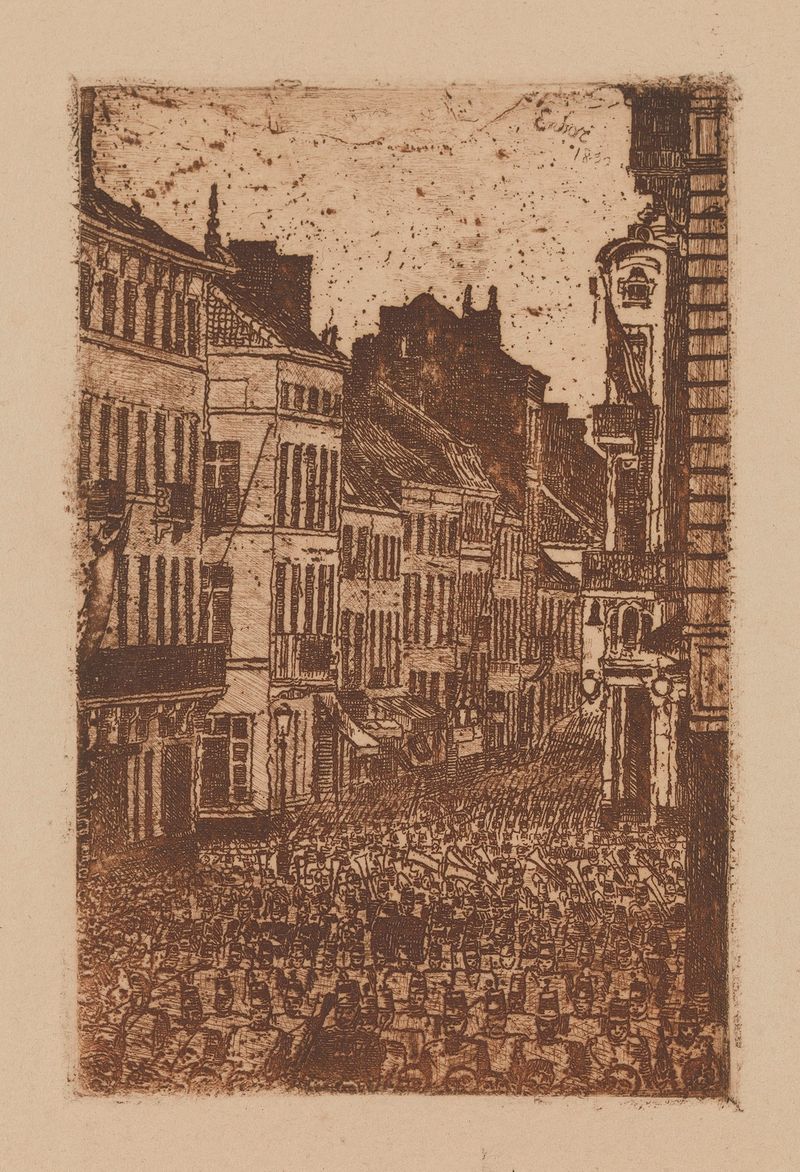
The Music in the rue de Flandre, Ostend
James Ensor
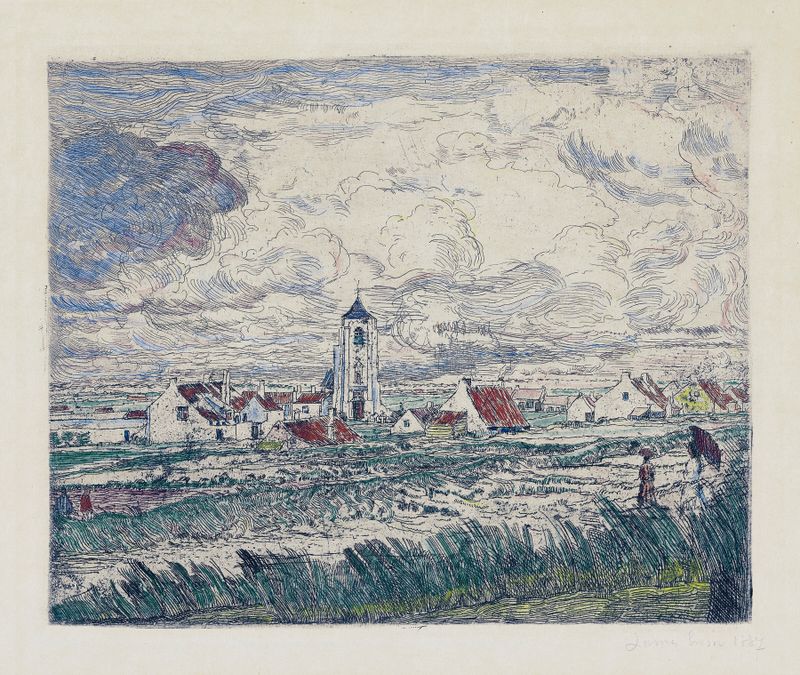
Grande vue de Mariakerke
James Ensor
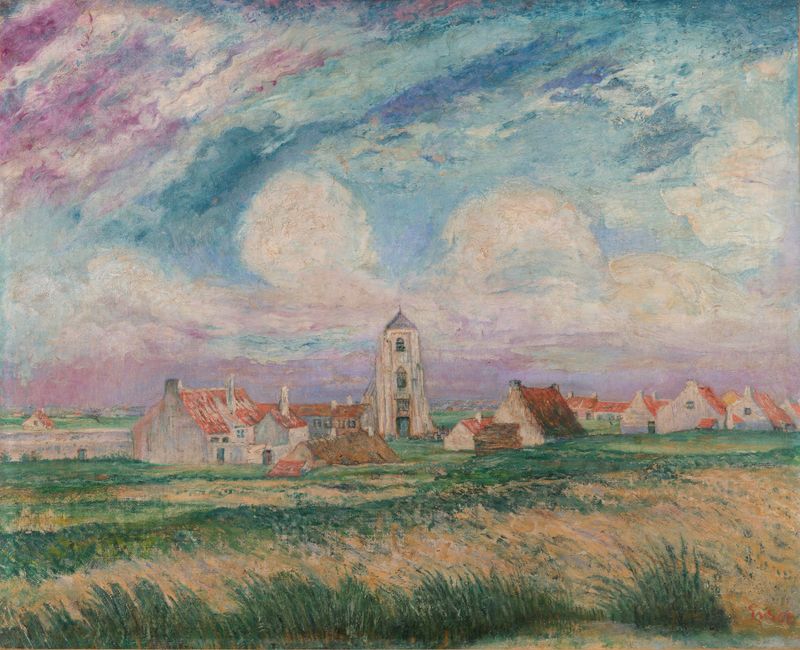
View of Mariakerke
James Ensor
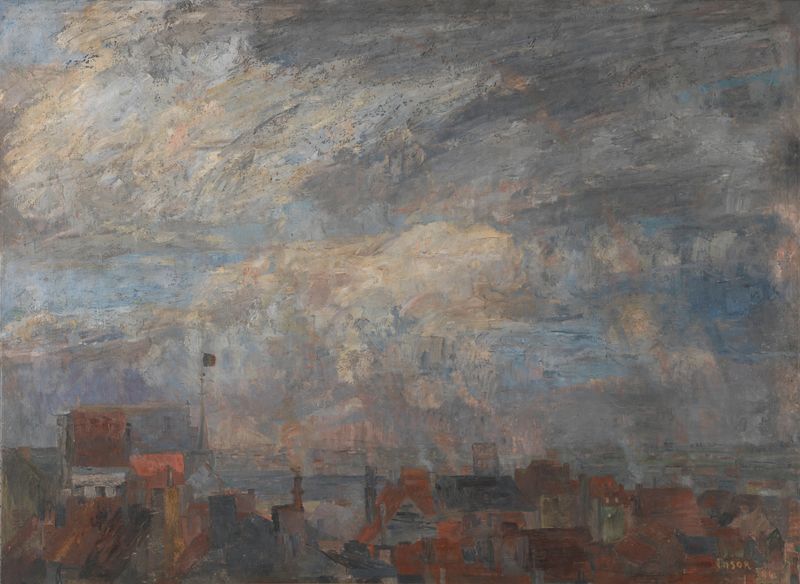
The Rooftops of Ostend
James Ensor
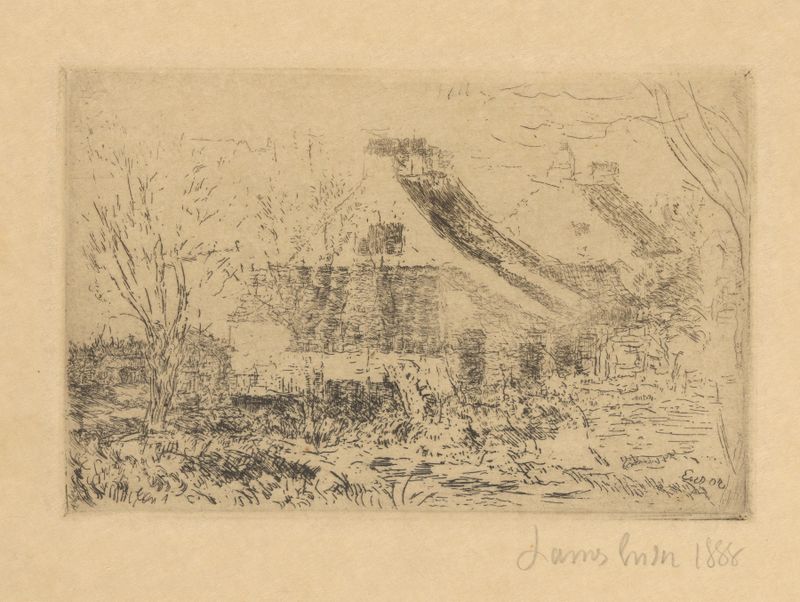
Huisjes in Mariakerke
James Ensor
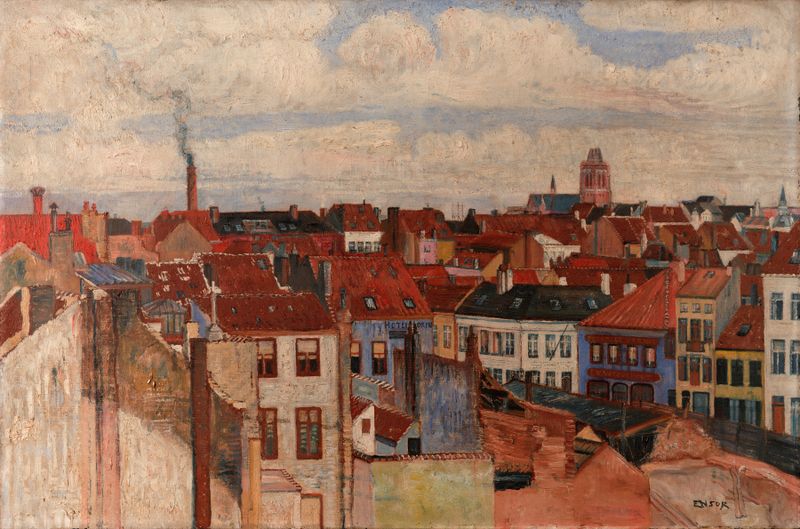
The rooftops of Ostend
James Ensor
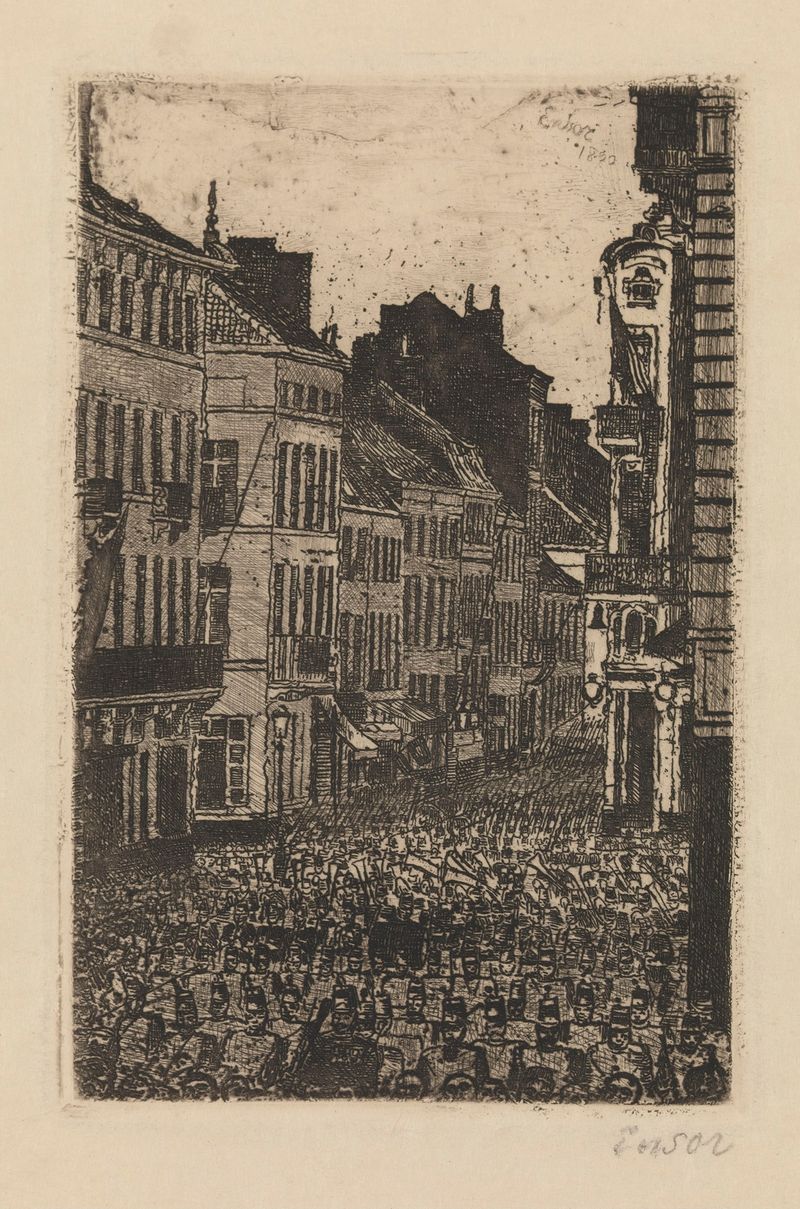
The Music in the rue de Flandre, Ostend
James Ensor
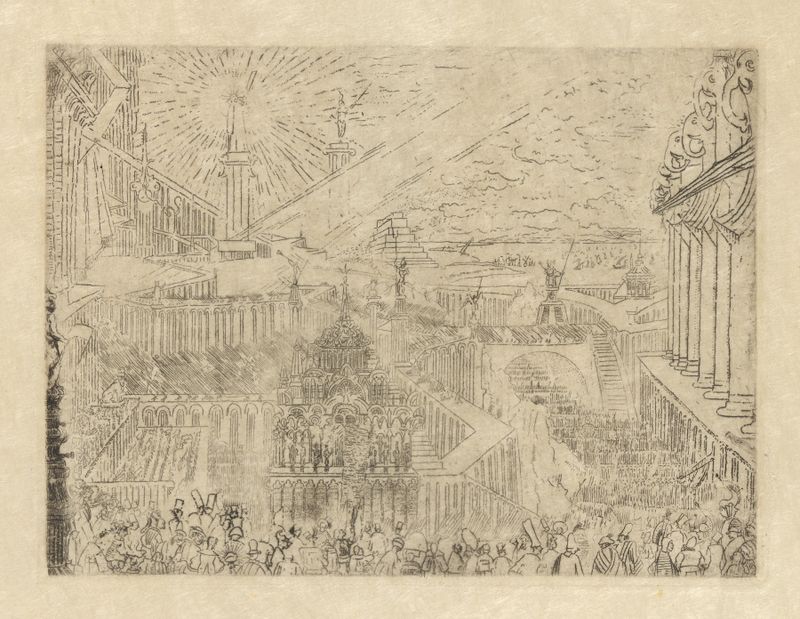
Verovering van een vreemde stad
James Ensor





