
Straßenszene an der Kai-Bey-Moschee in Kairo — History & Facts
Did the painter know this moment would outlive them? In Straßenszene an der Kai-Bey-Moschee in Kairo, time is captured in a fleeting obsession, a glimpse into a world where every brushstroke clings to the essence of life on the streets. Focus on the center of the canvas, where a group of figures meanders beneath the grand arches of the mosque. The stark contrast of deep shadows against the warm, sunlit buildings invites you into the vibrant chaos of Cairo life. Notice how the artist employs a palette rich in ochres and muted blues, creating a harmony that reflects both the warmth and the weight of the atmosphere.
Each figure, caught in a moment of motion, seems to pulse with the day's rhythm, drawing the viewer’s gaze through the bustling street, alive with the energy of the past. Hidden within this lively scene lies a quiet tension—a juxtaposition of devotion and daily life. The mosque, standing as an unwavering sentinel, contrasts with the ephemeral nature of the bustling crowd, suggesting a dialogue between spirituality and the mundane. The meticulous detailing of the architecture hints at both the reverence for tradition and the inevitable passage of time, as life weaves its narrative around the sacred. In 1918, Carl Wuttke painted this scene in Cairo during a time of cultural exchange and personal exploration.
The echoes of war resounded across Europe, yet here, he found a vivid inspiration, capturing the essence of Egyptian life against the backdrop of a changing world. This period marked a shift in his artistic journey, where he embraced new influences, immersing himself in the vibrant cultures that surrounded him.
More Artworks by Carl Wuttke
Browse all →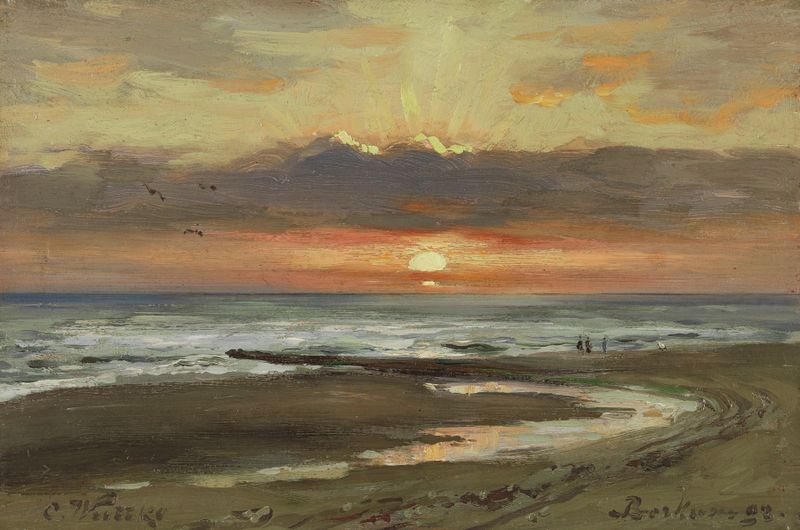
Sonnenuntergang auf Borkum
Carl Wuttke

Orientalischer Basar
Carl Wuttke

Blick vom antiken Theater in Taormina auf den Ätna
Carl Wuttke
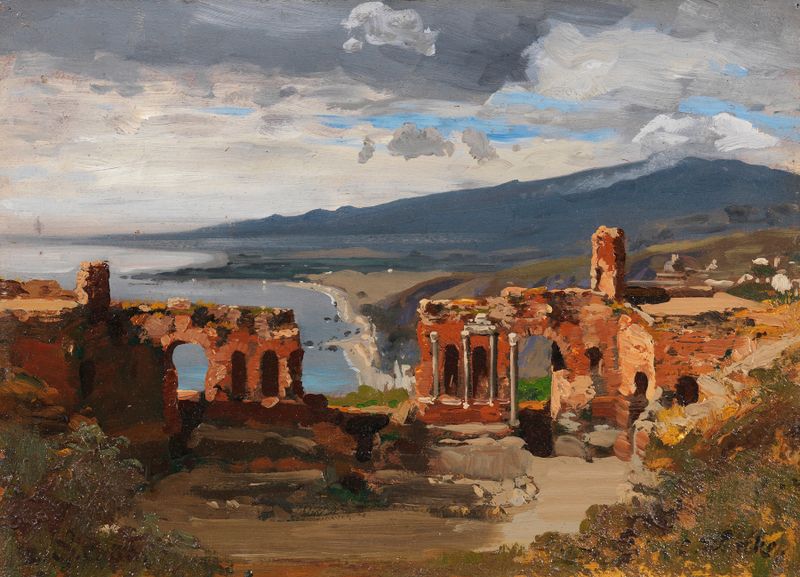
Blick vom antiken Theater in Taormina auf den Ätna
Carl Wuttke
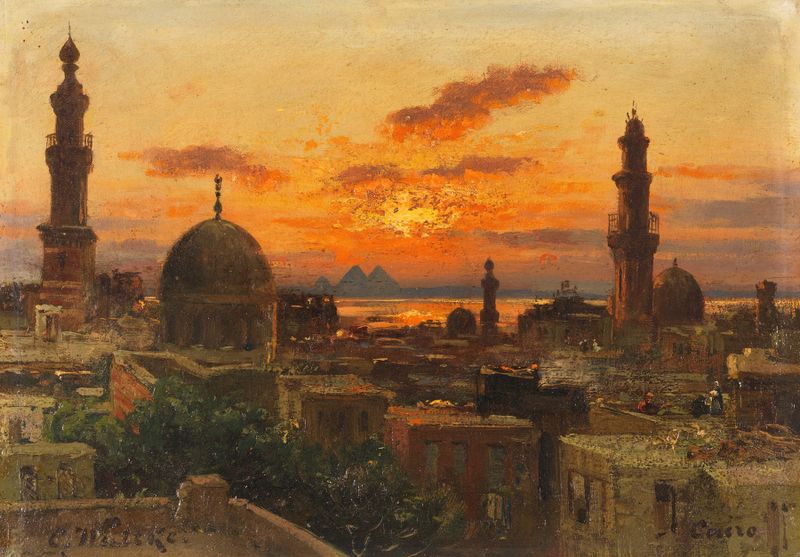
Kairo im Abendlicht
Carl Wuttke
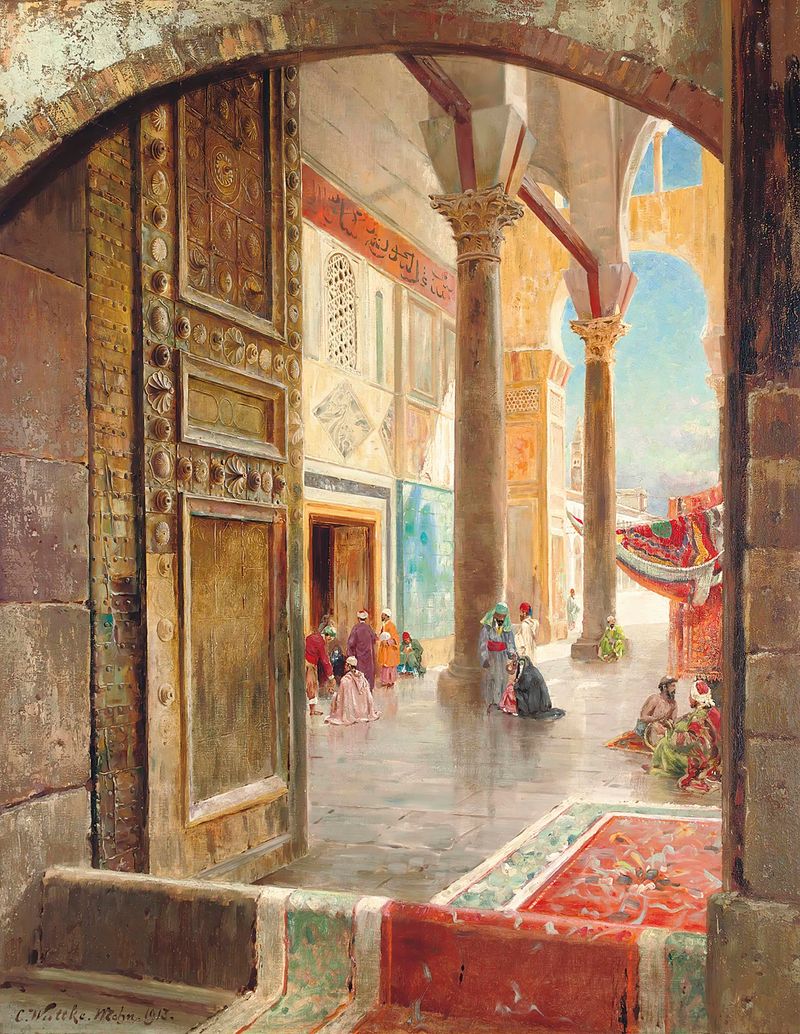
The Great Umayyad Mosque, Damascus
Carl Wuttke
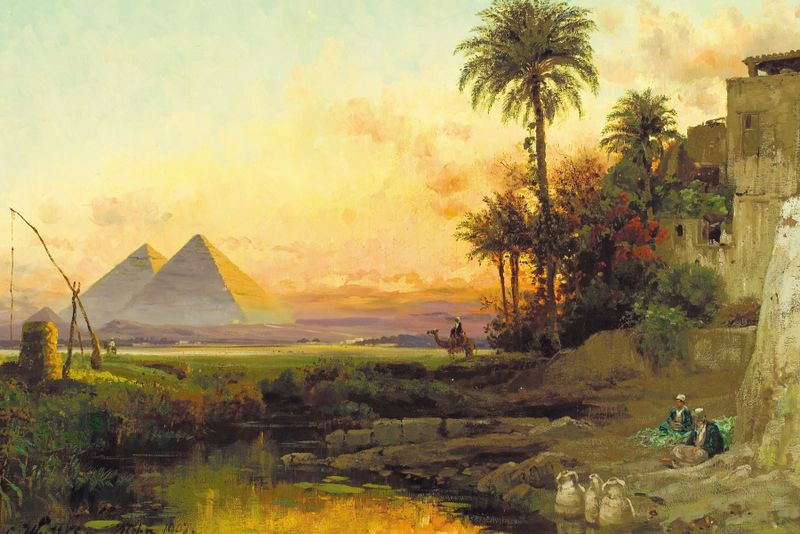
The Pyramids at Dusk
Carl Wuttke

Ansicht von Kairo mit dem Südtor der Stadtmauer
Carl Wuttke

Hügellandschaft in Westbengalen
Carl Wuttke
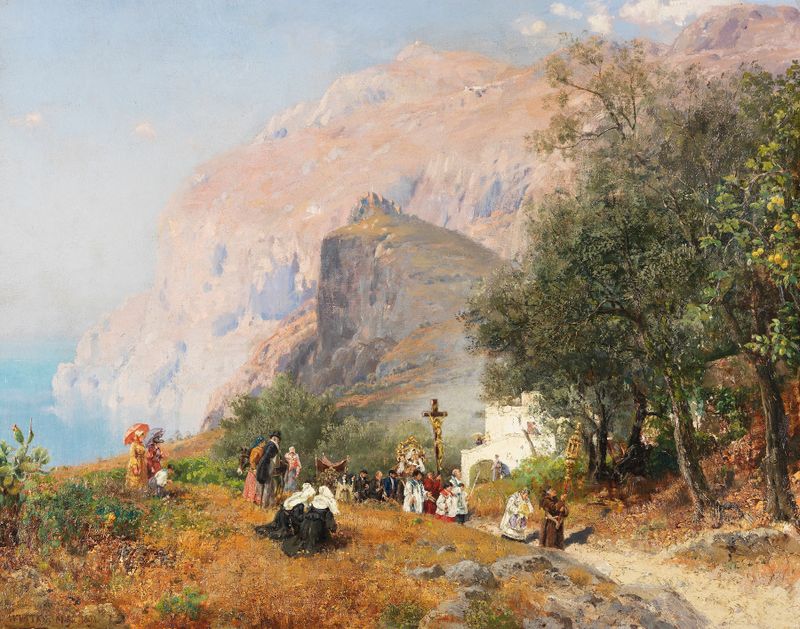
Prozession auf Capri
Carl Wuttke





