
Straying Thoughts — History & Facts
In Straying Thoughts, the viewer is greeted by a serene scene featuring a woman lost in contemplation. She is surrounded by lush greenery, with soft, natural light filtering through the leaves. The colors are rich and vibrant, with deep greens and warm earth tones dominating the palette.
The figure's flowing dress adds a sense of movement and grace to the composition. The painting is executed in oil on canvas, showcasing Leighton's skillful brushwork and attention to detail. The textures of the foliage and the fabric of the woman's dress are rendered with precision, creating a tactile quality. The use of light and shadow enhances the three-dimensionality of the scene, drawing the viewer's eye to the central figure.
The dimensions are approximately 70 x 100 cm, making it a substantial piece. Edmund Blair Leighton was known for his romantic and idealized depictions of women, often set in historical or literary contexts. Straying Thoughts reflects his Pre-Raphaelite influences, emphasizing beauty and nature. An interesting fact about this work is that it captures a moment of introspection, inviting viewers to reflect on their own thoughts.
This painting exemplifies the artist's ability to blend realism with a dreamlike quality.
More Artworks by Edmund Blair Leighton
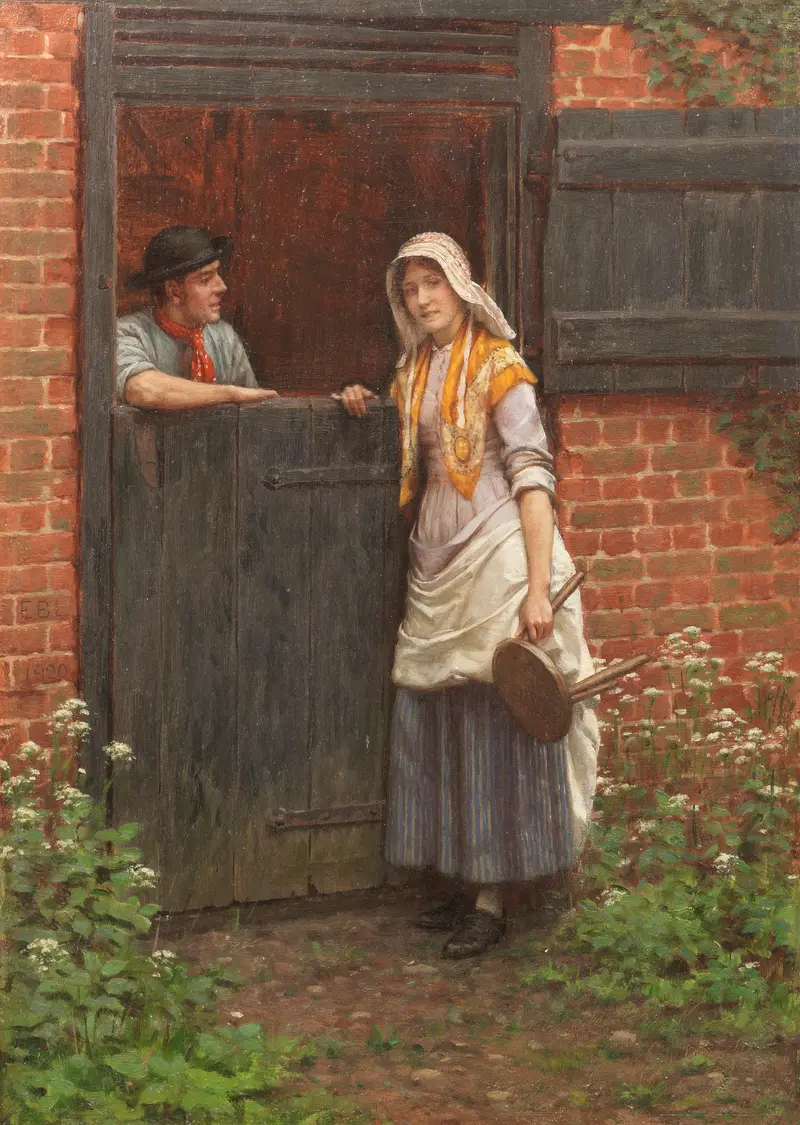
An Oft Told Tale
Edmund Blair Leighton
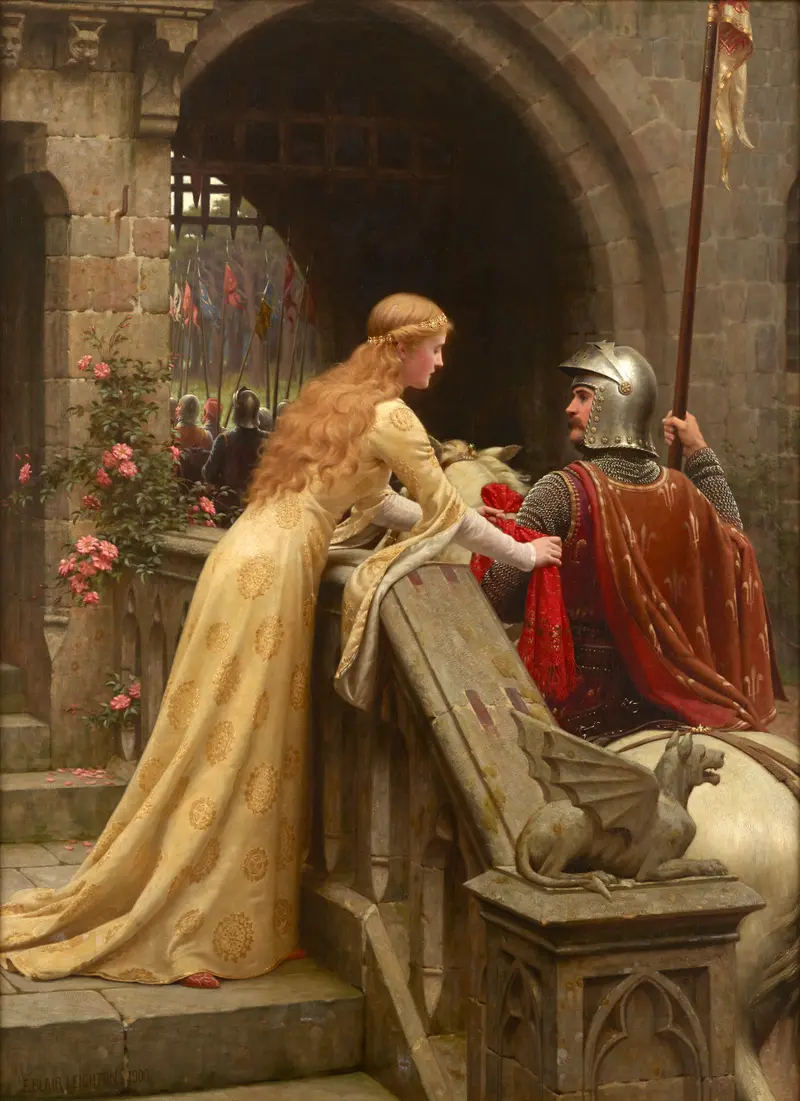
God Speed
Edmund Blair Leighton
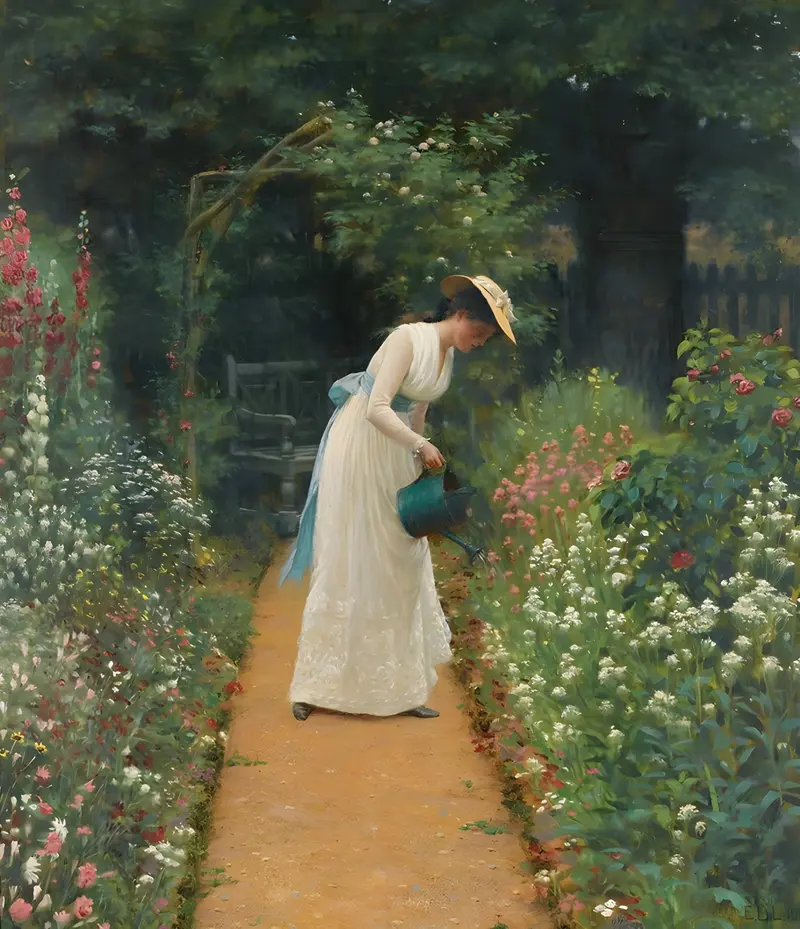
My Lady’s Garden
Edmund Blair Leighton
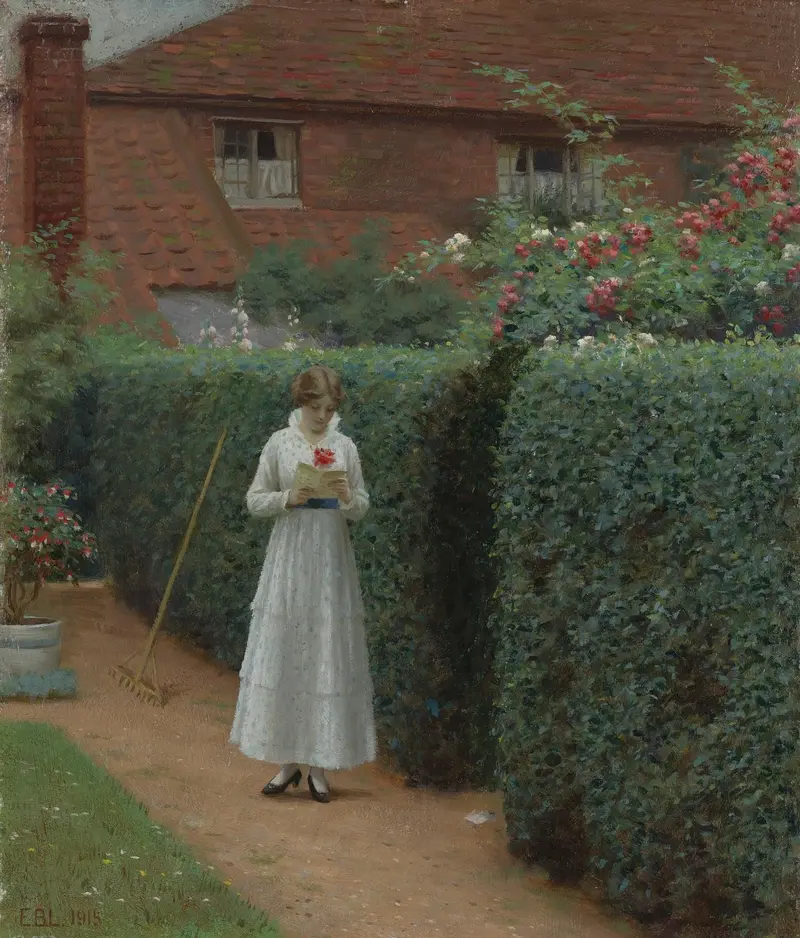
Le billet doux
Edmund Blair Leighton
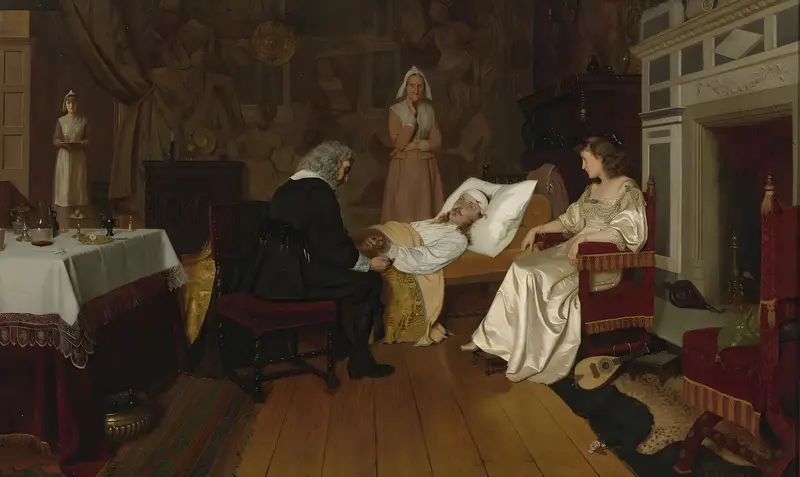
Witness my act and seal
Edmund Blair Leighton
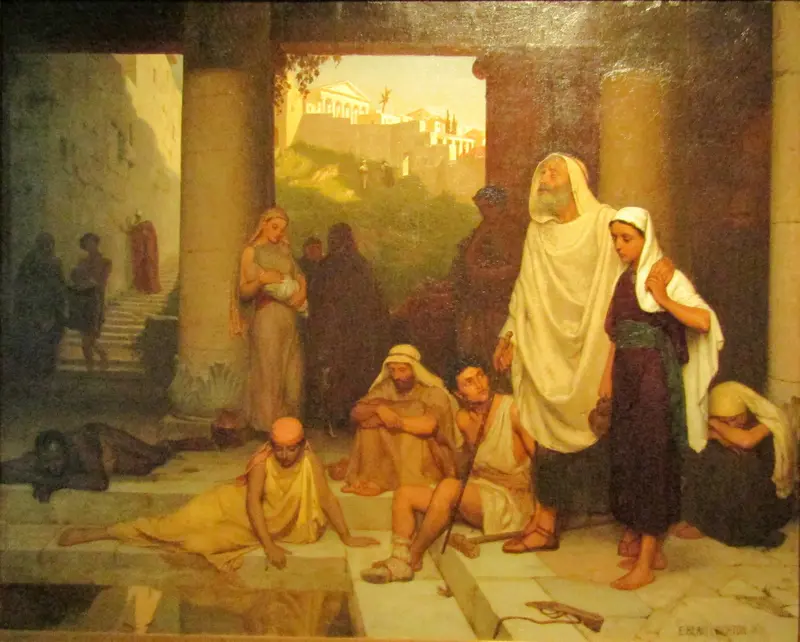
The blind man at the Pool of Siloam
Edmund Blair Leighton
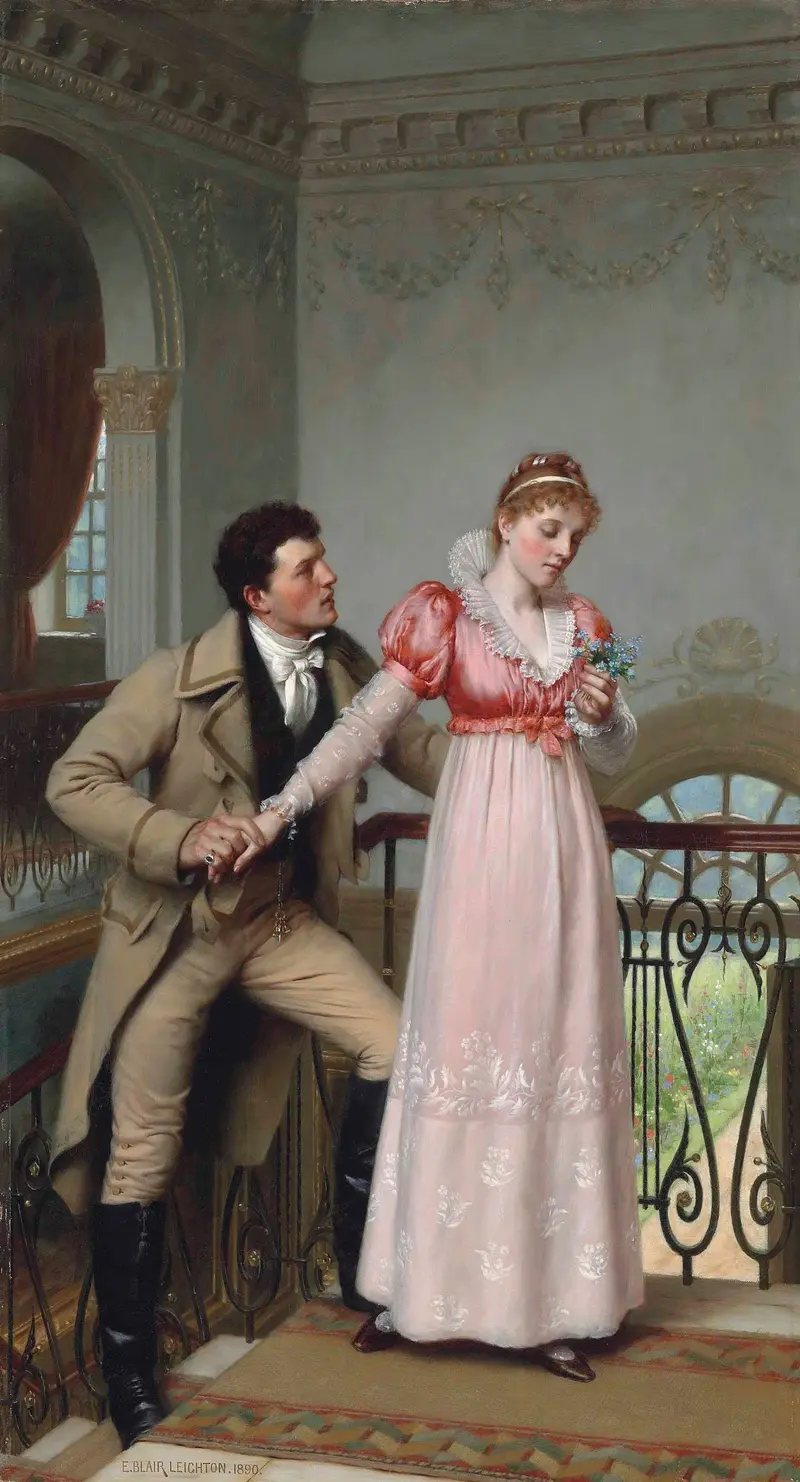
Yes Or No
Edmund Blair Leighton
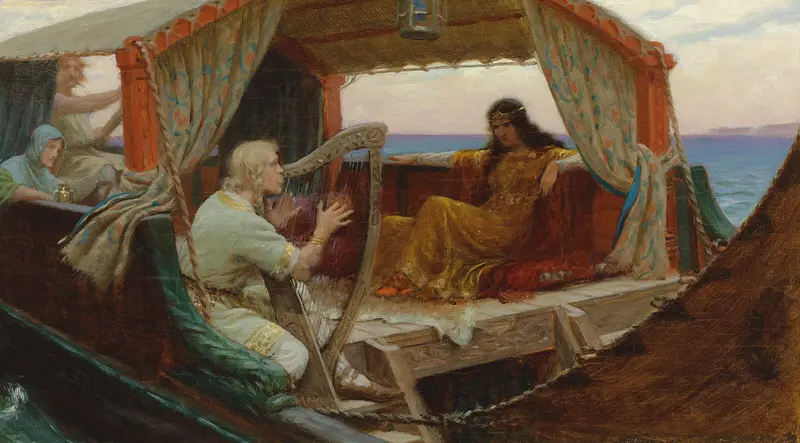
Tristram and Isolde
Edmund Blair Leighton
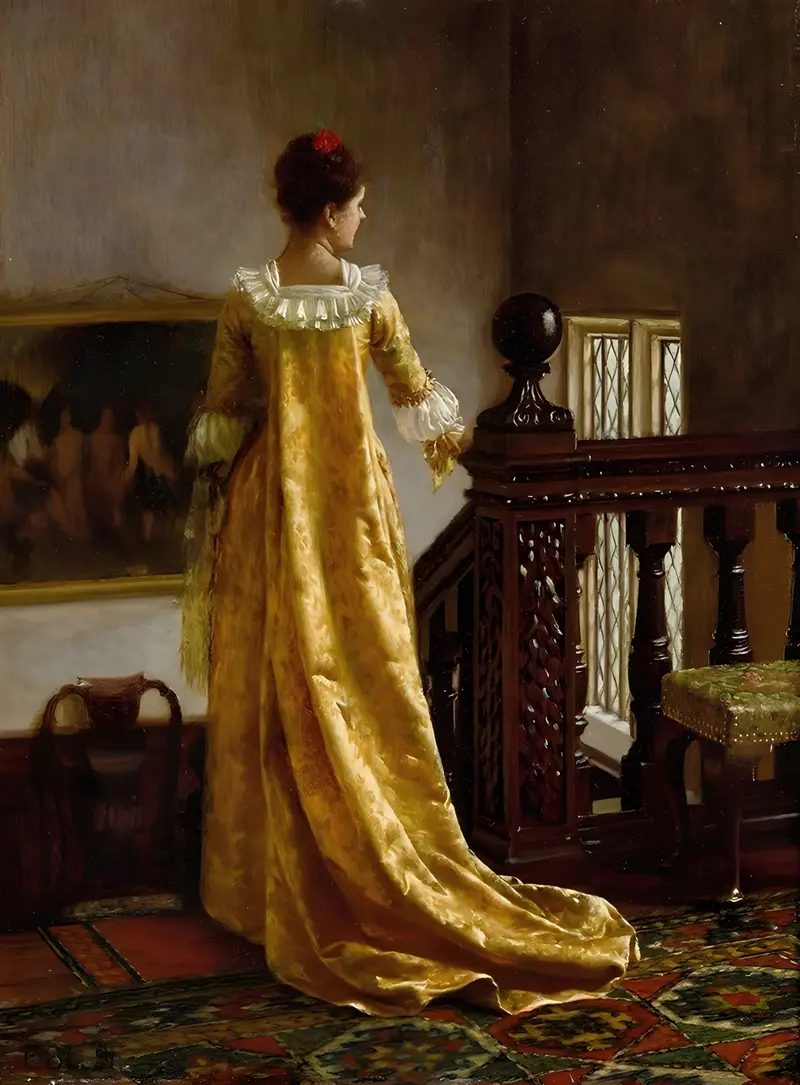
Qui M’aime Me Suit (Who Loves Me Follows Me)
Edmund Blair Leighton
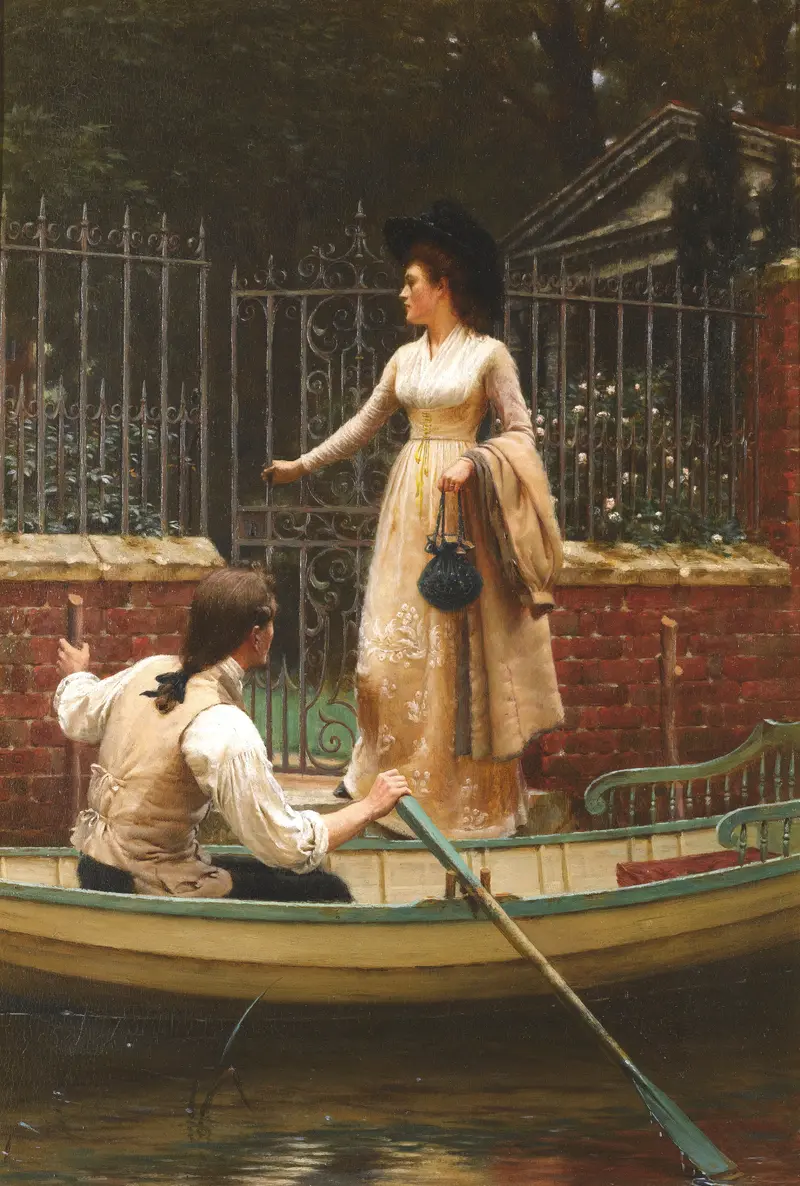
The Elopement
Edmund Blair Leighton
More Genre Scene Art

Banquet of the Officers of the St George Civic Guard
Frans Hals

Rembrandt and Saskia in the Scene of the Prodigal Son
Rembrandt van Rijn

Bal du moulin de la Galette
Pierre-Auguste Renoir

Quadrille at the Moulin Rouge
Henri de Toulouse-Lautrec

A Burial at Ornans
Gustave Courbet

When Will You Marry?
Paul Gauguin