
Street in Beauvais Cold Sunday. — History & Facts
Can beauty exist without sorrow? In Street in Beauvais Cold Sunday, Victor Alfred Lundy invites us to ponder this profound question amid the chill of winter. The canvas whispers of a quiet resilience—a moment suspended in time, where the starkness of the scene carries an undeniable weight of emotion. Look to the left, where a solitary figure cloaked in a dark coat navigates the icy street, their presence anchoring the composition. The muted tones of gray and blue dominate, punctuated by the warm flicker of distant lights emanating from a nearby window.
The brushstrokes are expressive yet restrained, allowing the viewer to feel the biting cold radiating from the surface while also being drawn into the warmth of life behind closed doors. The perspective leads our gaze down the narrow street, evoking a sense of both isolation and connection. As we delve deeper, the interplay of light and shadow becomes more pronounced, revealing themes of solitude and contemplation. The empty street serves as a metaphor for introspection, suggesting a longing for connection in the face of desolation.
The distant figures fading into the background embody the fleeting nature of human interaction, while the starkness of the surrounding architecture hints at the harsh realities of post-war life. Here, beauty is found in the juxtaposition of stillness and unseen stories, resonating with a quiet transcendence. Lundy created this work in 1949, a time when he was exploring the complexities of human emotion through the lens of everyday life. Living in the United States after the turmoil of World War II, the artist sought to capture the nuances of urban existence.
His approach merged modernist techniques with a deep understanding of form and space, reflecting the broader movements in art that were redefining how reality could be portrayed on canvas.
More Artworks by Victor Alfred Lundy
Browse all →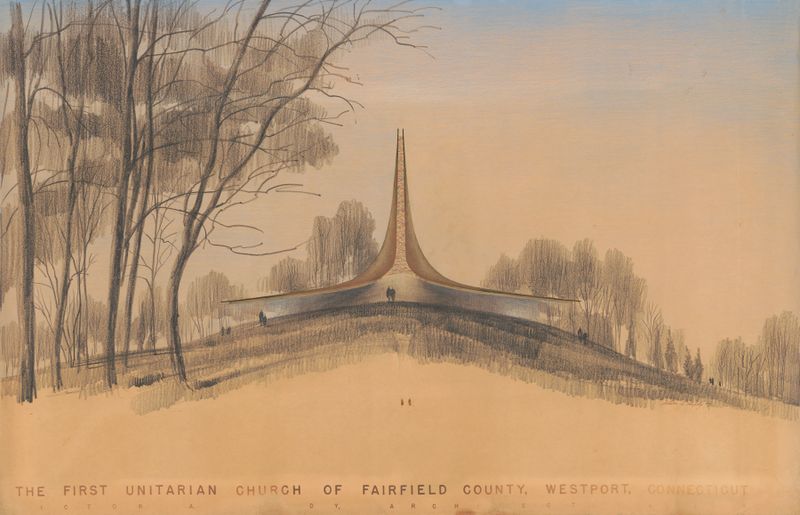
First Unitarian Church, Westport, Connecticut, Exterior
Victor Alfred Lundy

Residence for Mr. and Mrs. Ben Heller, East Hampton, Long Island, New York, Beach site
Victor Alfred Lundy
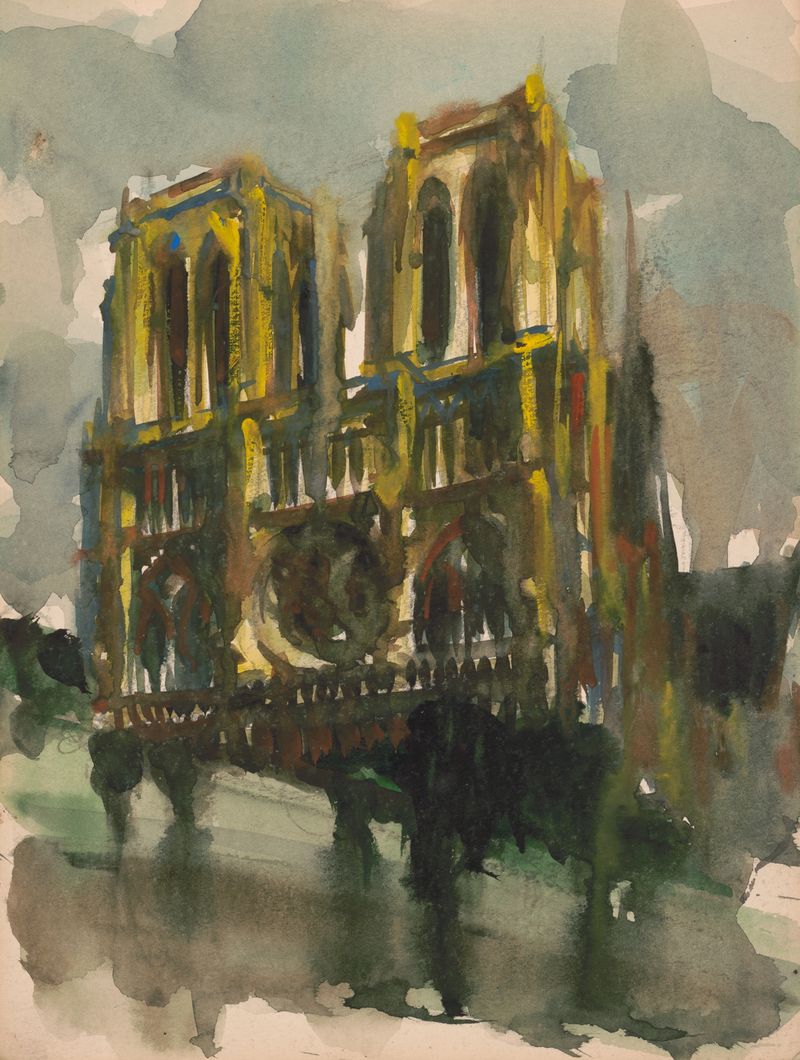
Notre Dame, Paris
Victor Alfred Lundy

Church on plaza, Mexico
Victor Alfred Lundy

Rue Saint Julien le Pauvre, Paris 5e
Victor Alfred Lundy
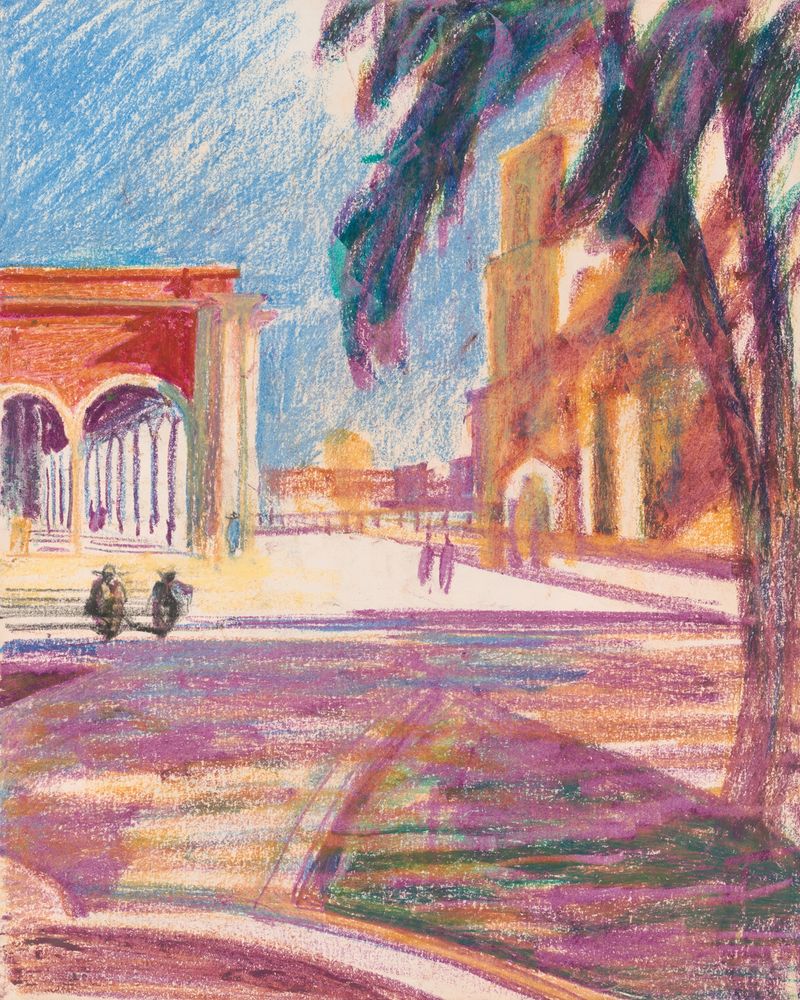
Plaza, Nochistlá́n, Mexico
Victor Alfred Lundy

Temple of Luxor
Victor Alfred Lundy

Trevi Fountain, Rome, Italy
Victor Alfred Lundy
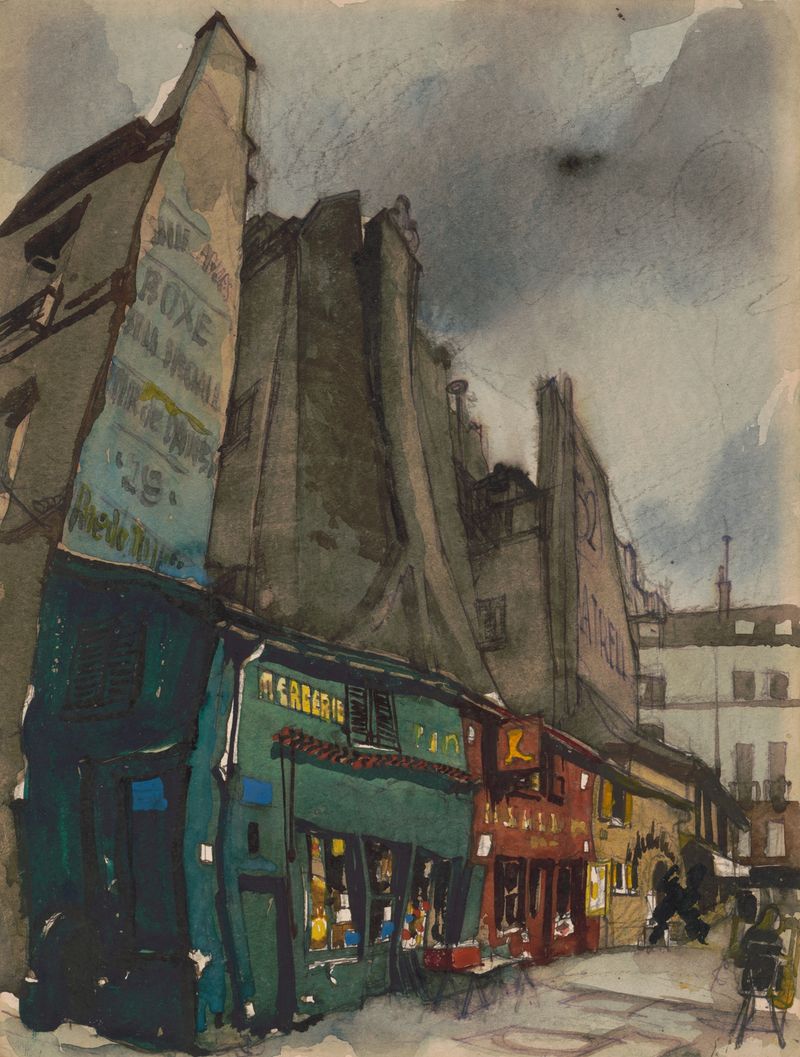
Place St. André des Arts, Paris between Rue Suger & Rue St. André des Arts
Victor Alfred Lundy
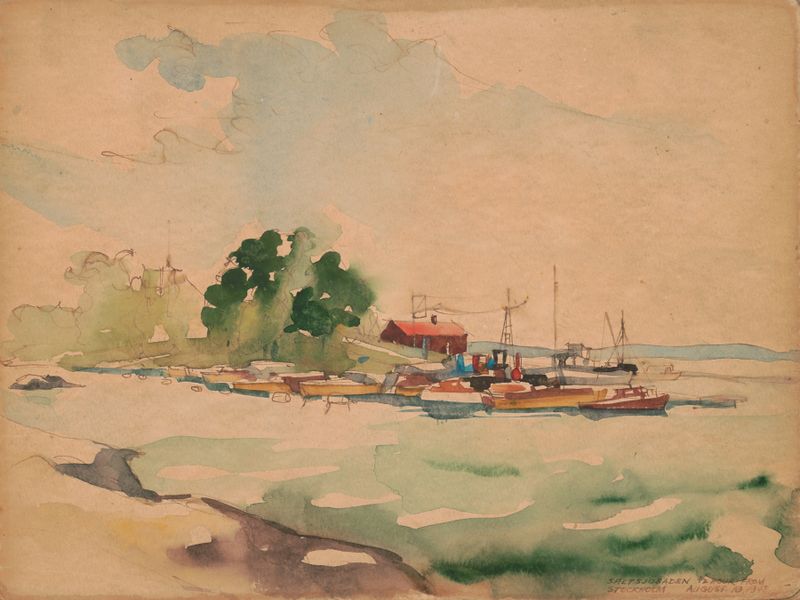
Saltsjöbaden, Half hour from Stockholm
Victor Alfred Lundy





