
Strolling Players at Lidd, Kent — History & Facts
In a realm of fleeting moments, the quietude of the scene beckons us to listen closely to the unspoken narratives woven into the fabric of the artwork. The air hums with a sense of longing, a melancholic echo that invites introspection and connection. Look to the left at the elegantly posed figures, draped in muted hues that harmonize with the soft earth tones of the landscape. The gentle brushwork captures the play of light across their faces, suggesting both joy and an underlying sorrow.
Notice the way the trees frame this intimate gathering, their branches stretching towards an uncertain sky, hinting at the passage of time. The careful composition draws the eye from the foreground to the horizon, creating a languorous rhythm that mirrors the players’ leisurely stroll. Delve deeper, and you'll uncover poignant contrasts within this seemingly serene tableau. The laughter of the strolling players belies the shadow of solitude that lingers just beyond the canvas’s edge.
Each character embodies a story, yet their collective presence feels like a fleeting moment, a reminder of the transience of youth and camaraderie. The lingering melancholy permeates the scene, transforming it from mere representation into a meditation on the fragility of joy. In 1907, Strolling Players at Lidd, Kent emerged from the brush of Sir Frank Short during a period marked by artistic exploration and a shift towards more impressionistic styles. Living in a country poised on the brink of modernity, Short's work reflects both a celebration of life and an awareness of the bittersweet nature of human experience.
This painting, created in a quaint English setting, resonates with a longing for connection, capturing a moment that feels both timeless and achingly ephemeral.
More Artworks by Sir Frank Short
Browse all →
Morning Haze in Chichester Harbor
Sir Frank Short
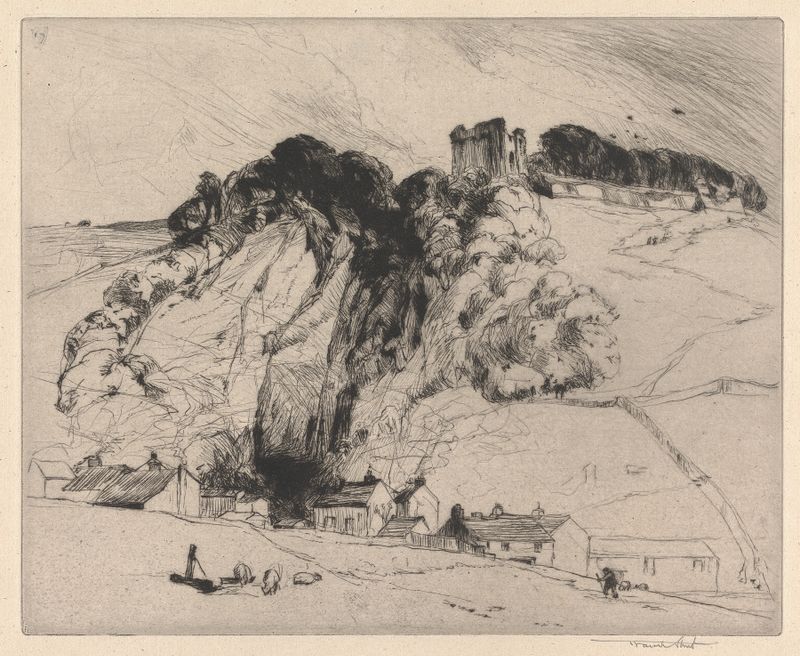
Peveril’s Castle, Derbyshire
Sir Frank Short
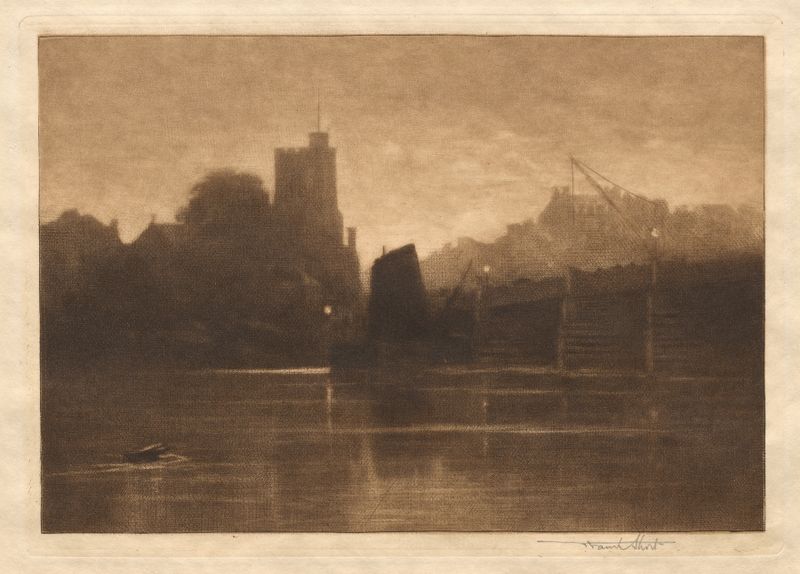
Ebb Tide, Putney Bridge
Sir Frank Short
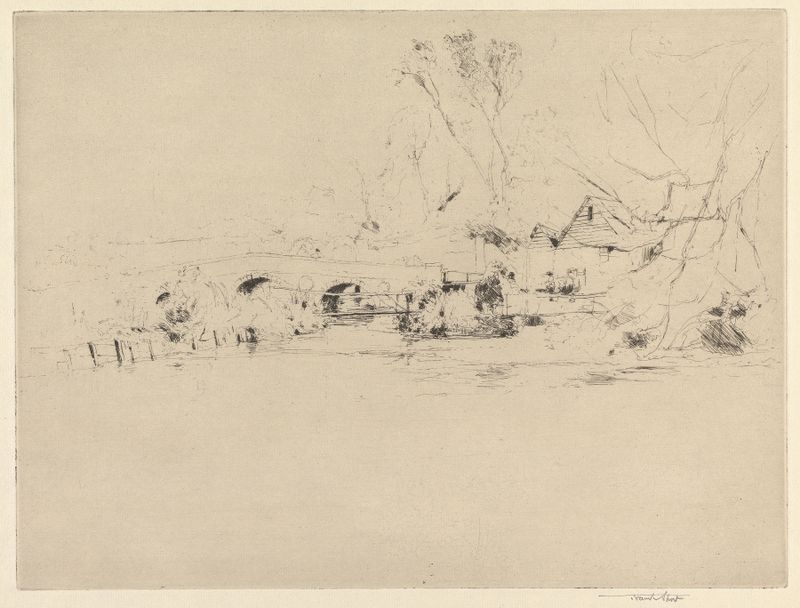
Old Mill on the Wandle, at Mitcham
Sir Frank Short

Moonlight on the Medway at Chatham
Sir Frank Short

Parkgate
Sir Frank Short
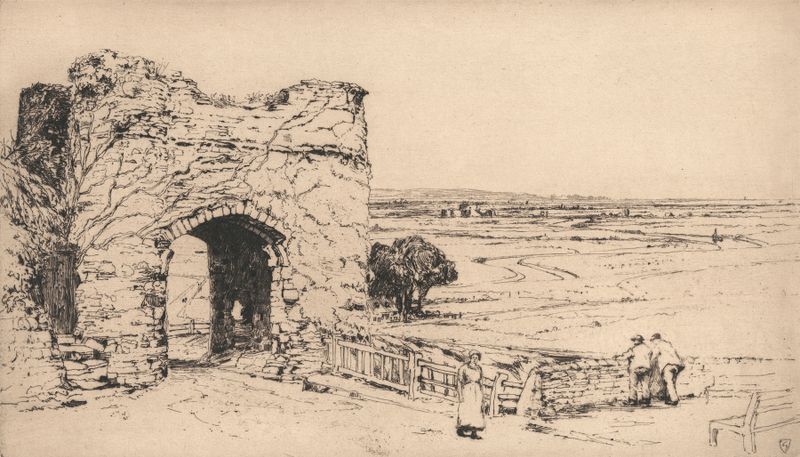
The Strand Gate, Winchelsea
Sir Frank Short

Bridgenorth
Sir Frank Short
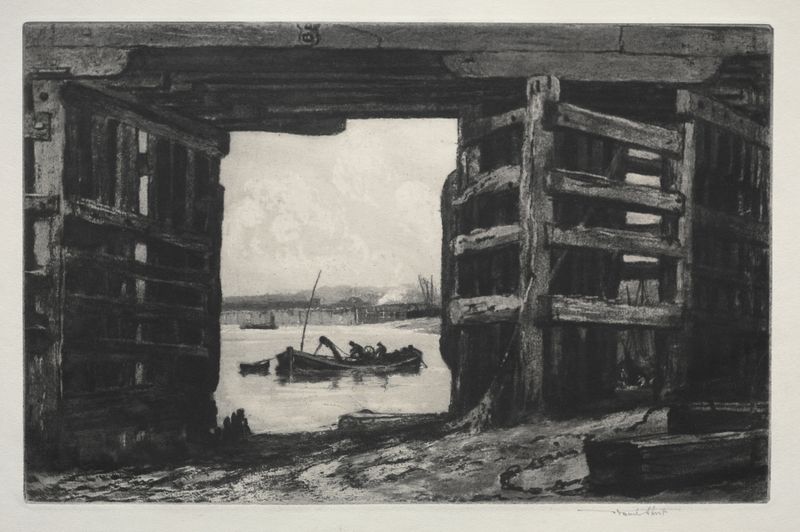
A Span of Old Battersea Bridge
Sir Frank Short

The Rope Walk, Spittal Bridge Whitby
Sir Frank Short





