
Stroyuschiysya dom — History & Facts
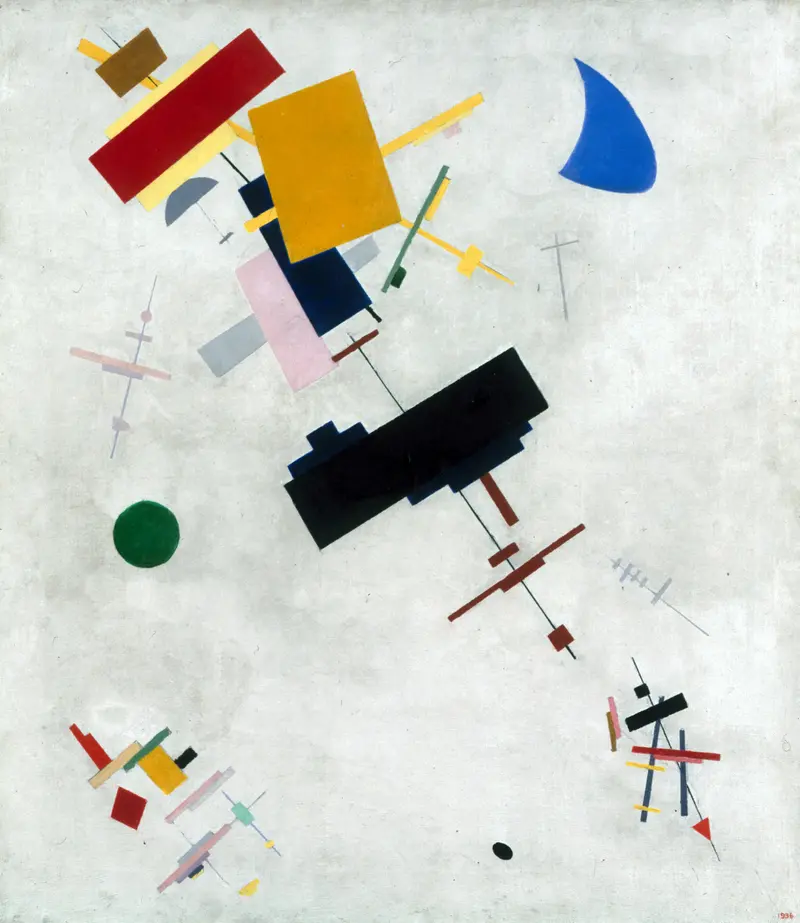
A sense of weightlessness collides with the sharp certainty of geometry in Stroyuschiysya dom, where Kazimir Malevich orchestrates a drama of floating forms. Your eye is pulled into the dance of rectangles and lines, each shape tilting and intersecting as if caught mid-flight or mid-collapse. The bold black bar slices diagonally, anchoring the composition, while flashes of red, yellow, and blue create a charged rhythm—each color a character, each angle a moment of tension or release.
The white ground is not empty but charged with the energy of these elements, as if the space itself is vibrating with possibility. Nothing here is accidental: the precise placement of every form invites you to imagine a structure both building and unbuilding itself before your eyes. This work belongs to the feverish years around 1915–16, when Russian artists like Malevich were tearing down the old rules and inventing new visual languages. The world outside was in upheaval—revolution on the horizon, technology transforming daily life—and artists responded by stripping painting to its foundations.
In this era, Malevich led the charge with Suprematism, a movement devoted to pure feeling through abstraction, where rectangles and lines replaced narrative and illusion. The origins and journeys of individual works like this one are often elusive, their stories scattered by history, but the painting’s presence in the Google Cultural Institute’s collection today is a testament to the enduring shock of the new. Let your gaze linger: what once seemed chaos now reveals a kind of order, a blueprint for seeing the world anew.
More Artworks by Kazimir Malevich

Red Square
Kazimir Malevich

Suprematist Composition: White on White
Kazimir Malevich

Black Square
Kazimir Malevich
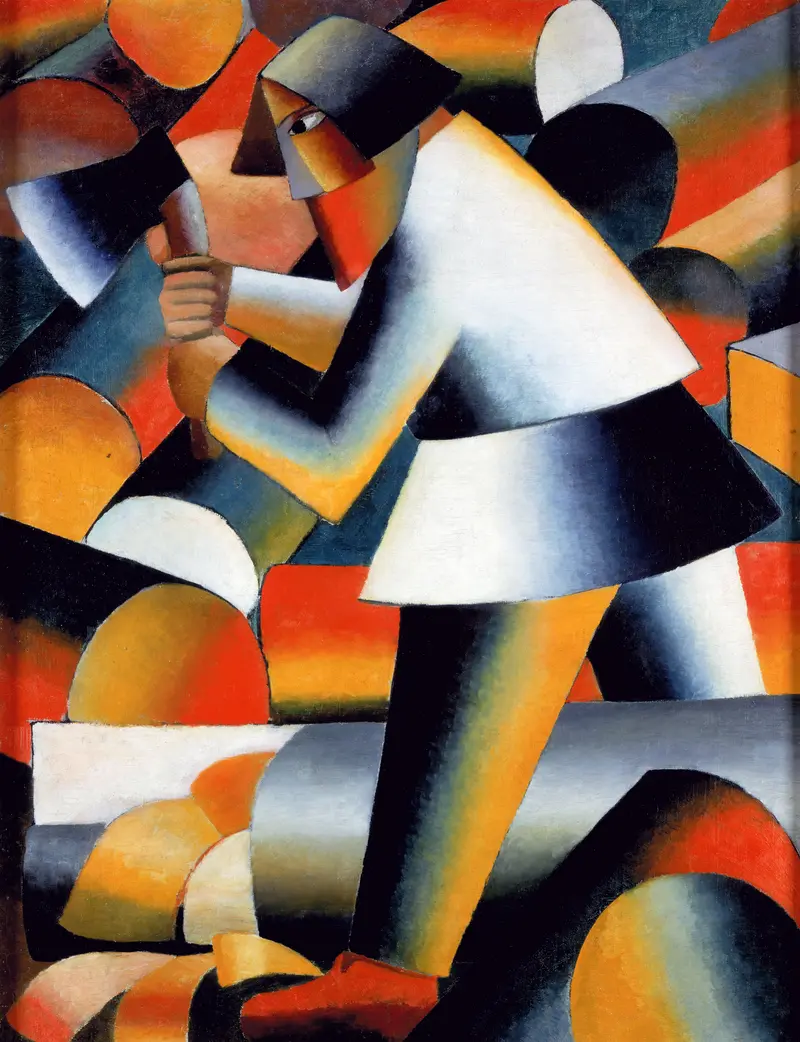
The Woodcutter
Kazimir Malevich

Untitled
Kazimir Malevich
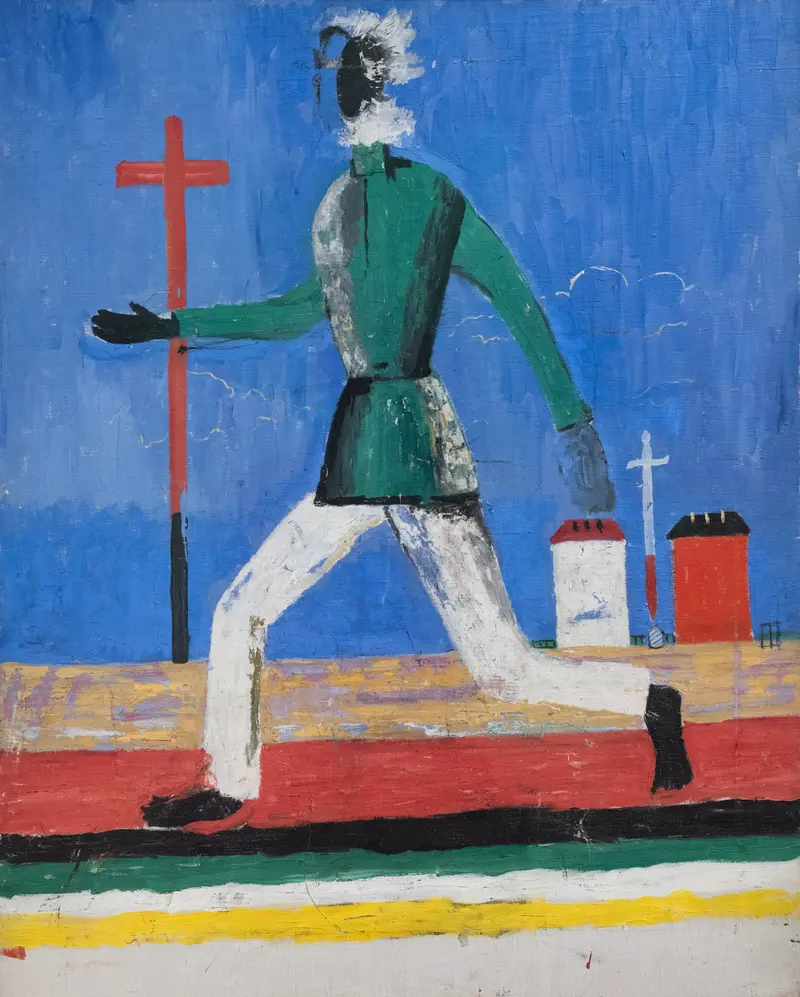
Sensation of danger
Kazimir Malevich
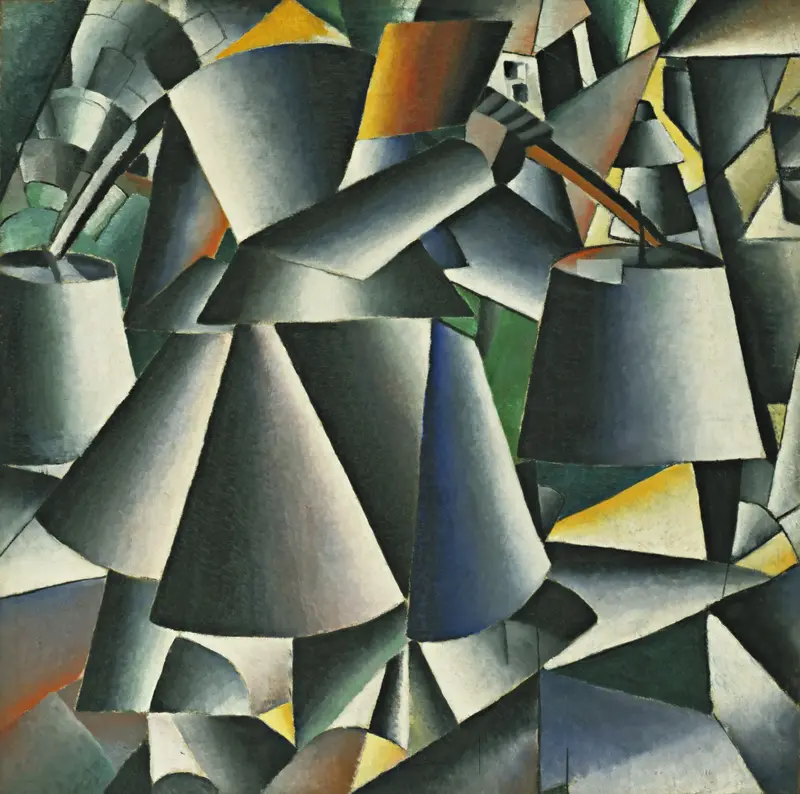
Woman with Pails: Dynamic Arrangement
Kazimir Malevich
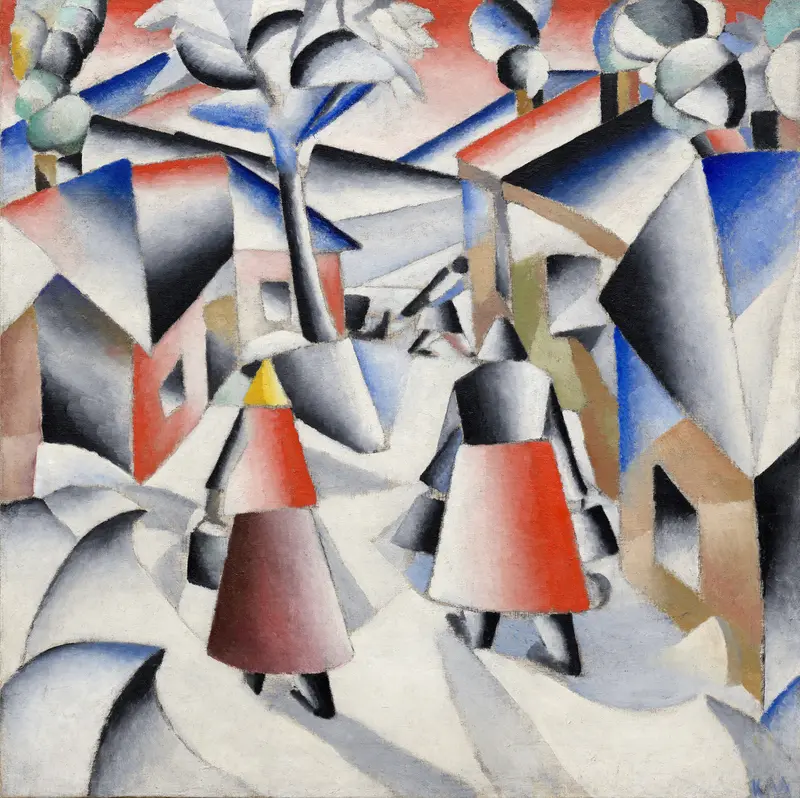
Morning in the Village after Snowstorm
Kazimir Malevich
The Knife Grinder
Kazimir Malevich
Suprematism (Supremus no. 56)
Kazimir Malevich


