Study for ‘Capercaillie’ — History & Facts
In the solitude of nature, loneliness wraps around the observer like a cloak, whispering secrets of what it means to exist in quietude. Jozef Chelmonski’s Study for ‘Capercaillie’ captures this essence, invoking a deep contemplation of isolation amidst the wild beauty of the Polish landscape. Look to the center of the canvas, where the capercaillie stands poised amidst the underbrush, its plumage a mesmerizing blend of earthy browns and vibrant greens. The meticulous brushwork brings each feather to life, emphasizing the texture and depth of its form.
Notice how the play of light dances upon its feathers, creating a luminous quality that contrasts sharply with the shadowy foliage surrounding it. The composition draws the eye inward, inviting contemplation of both the bird and its environment. Beneath the surface, the painting expresses a profound tension between presence and absence. The capercaillie, while striking and alive, seems to embody a profound solitude, evoking feelings of isolation in the midst of abundance.
The surrounding foliage, dense and thriving, starkly contrasts the singularity of the bird, hinting at the irony of being surrounded by life yet feeling utterly alone. Each brushstroke carries an emotional weight, reflecting the silent struggles within nature. In 1900, Chelmonski was deeply engaged in portraying the natural world, particularly in his homeland of Poland. During this period, he was captivated by the rural landscapes and wildlife, channeling his fascination into his work.
The turn of the century saw artists exploring the emotional depths of their subjects, and this painting represents a critical moment in Chelmonski's artistic evolution, as he sought to connect with both the beauty and the melancholia of the wilderness.
More Artworks by Jozef Chelmonski
Browse all →
Landscape; Meadow with Marsh-Marigolds
Jozef Chelmonski
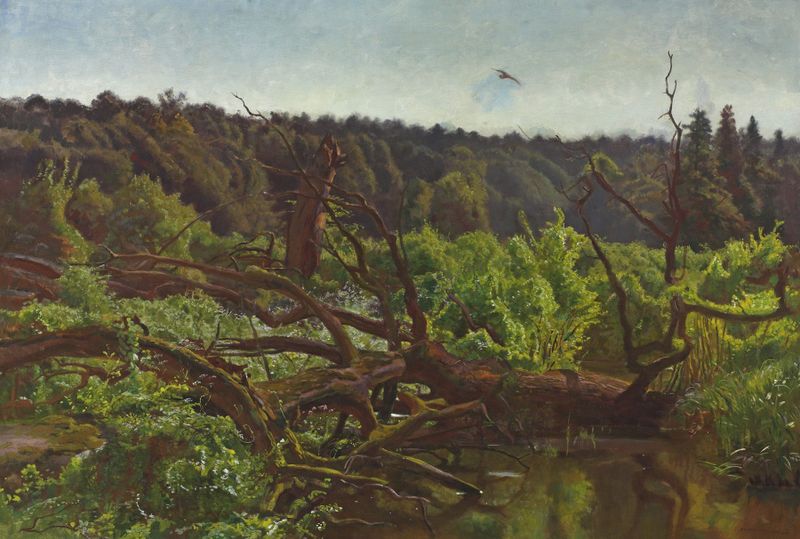
Deep forest – Windthrows
Jozef Chelmonski

Winter Sunset
Jozef Chelmonski
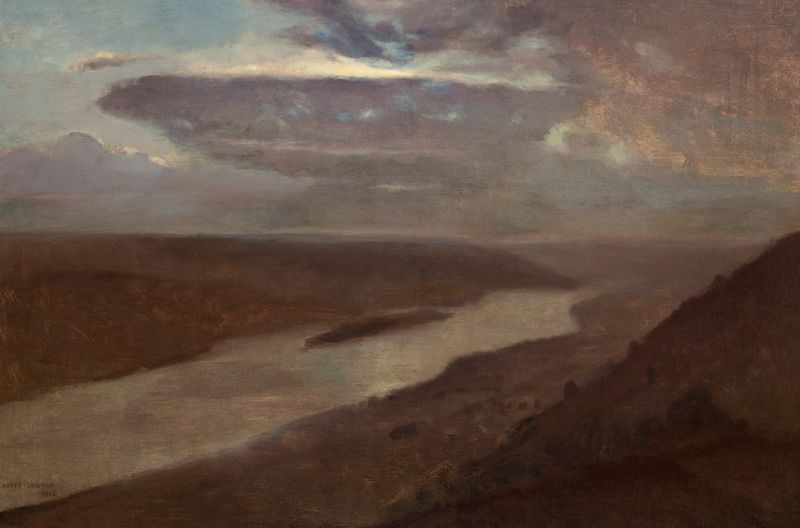
The Dniester River at Night
Jozef Chelmonski
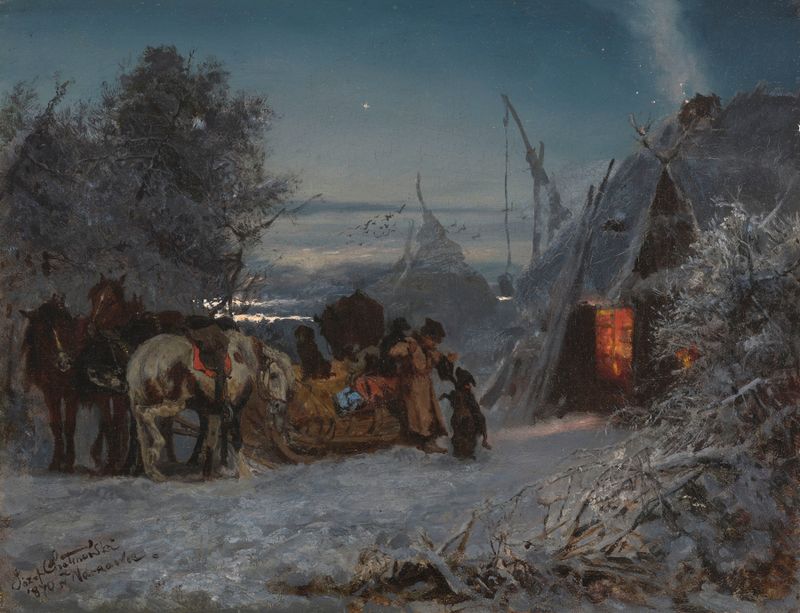
Morning in the Forest
Jozef Chelmonski
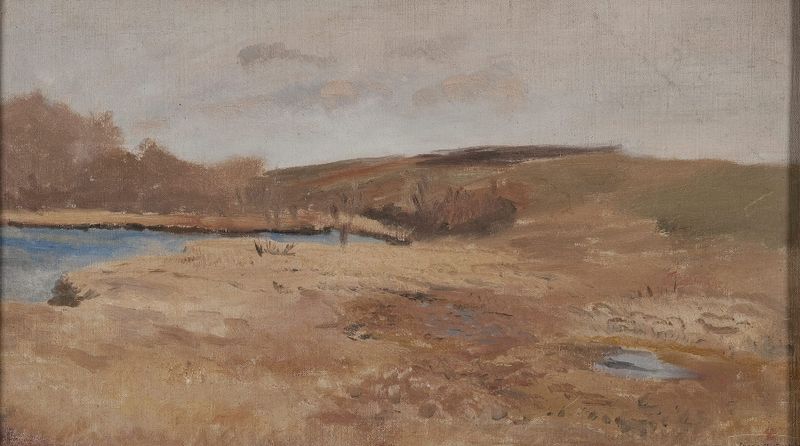
Autumn landscape
Jozef Chelmonski
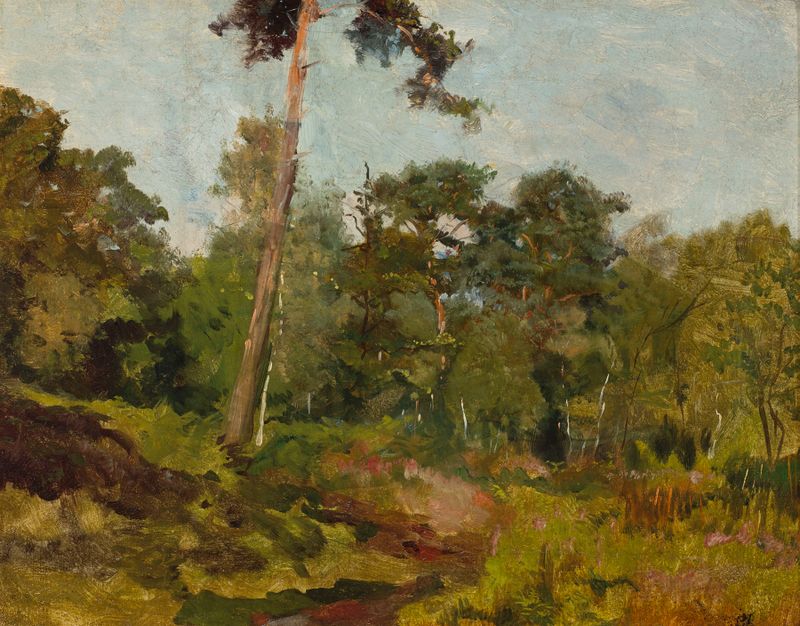
Lasek Buloński
Jozef Chelmonski

Episode from the Uprising of 1863
Jozef Chelmonski

Dawn
Jozef Chelmonski

Village by the Water
Jozef Chelmonski