Study of a Man, Seen from Behind — History & Facts
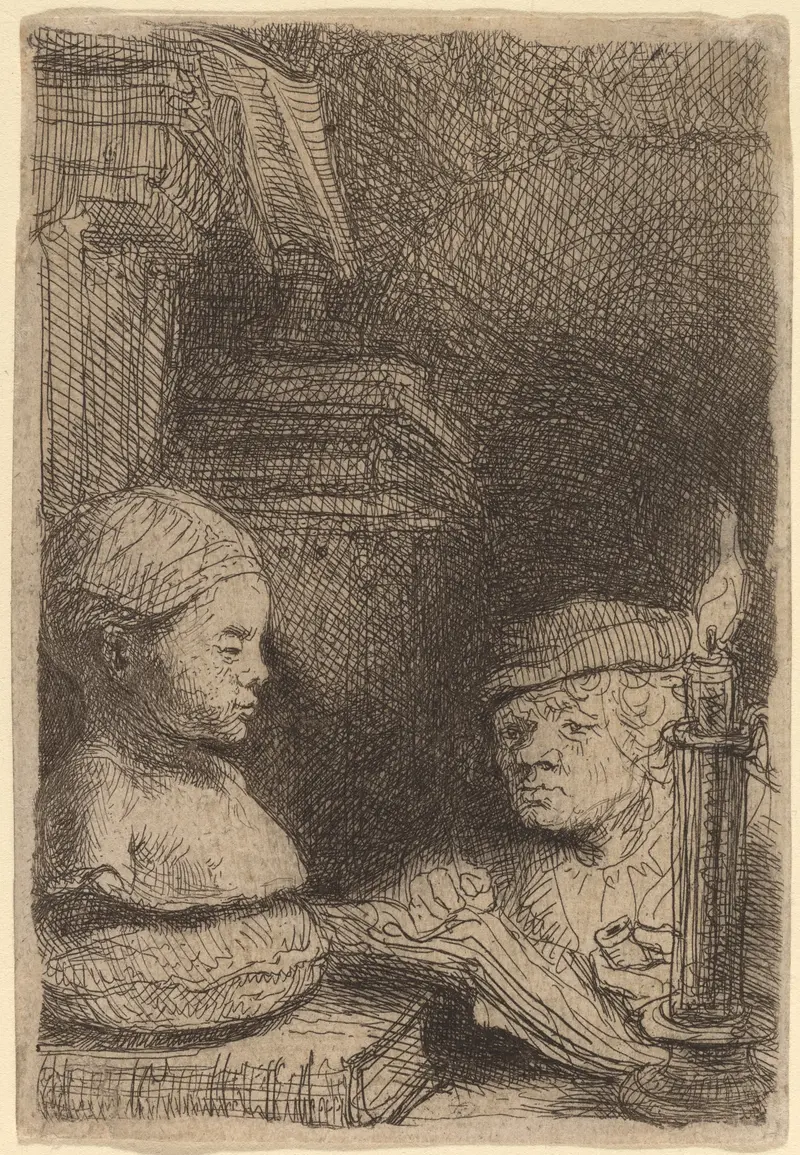
What first catches the eye in Study of a Man, Seen from Behind is its sense of immediacy—a figure half-turned, captured in a handful of swift, searching lines. The man’s posture, slightly hunched and intent, draws you into the moment of observation, as if you have stumbled upon a private rehearsal. Rembrandt’s pencil lingers over the curve of the back and the tilt of the hat, suggesting a fleeting gesture rather than a finished portrait.
The spareness of the drawing leaves much unsaid, letting the viewer fill in the space around the figure and imagine the world beyond the page. This kind of study was a vital tool for artists in seventeenth-century Holland, where the quick notation of a pose or movement could later be transformed into a painting or etching. Rembrandt, especially in his early years, filled sheets with such sketches, training his eye and hand on the everyday people around him—servants, beggars, actors, and neighbors. Few records remain about the individual models or precise occasions for these studies, but their freshness speaks to a culture fascinated by the observation of life in all its variety.
The drawing’s presence in the Rijksmuseum today lets us glimpse the artist at work, searching for truth in the turn of a shoulder and the fall of a coat.
More Artworks by Rembrandt van Rijn
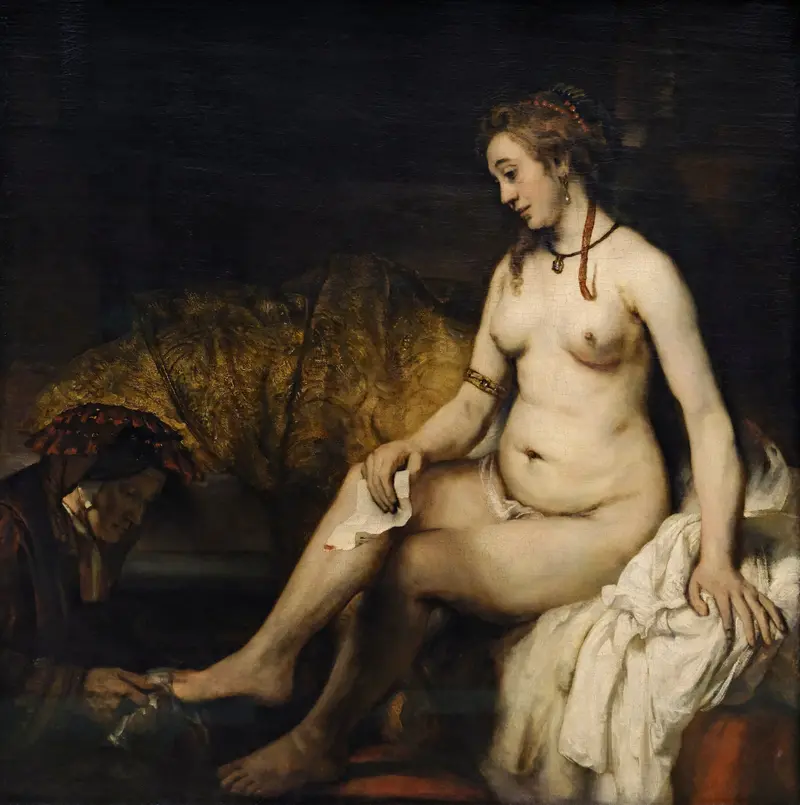
Bathsheba at Her Bath
Rembrandt van Rijn
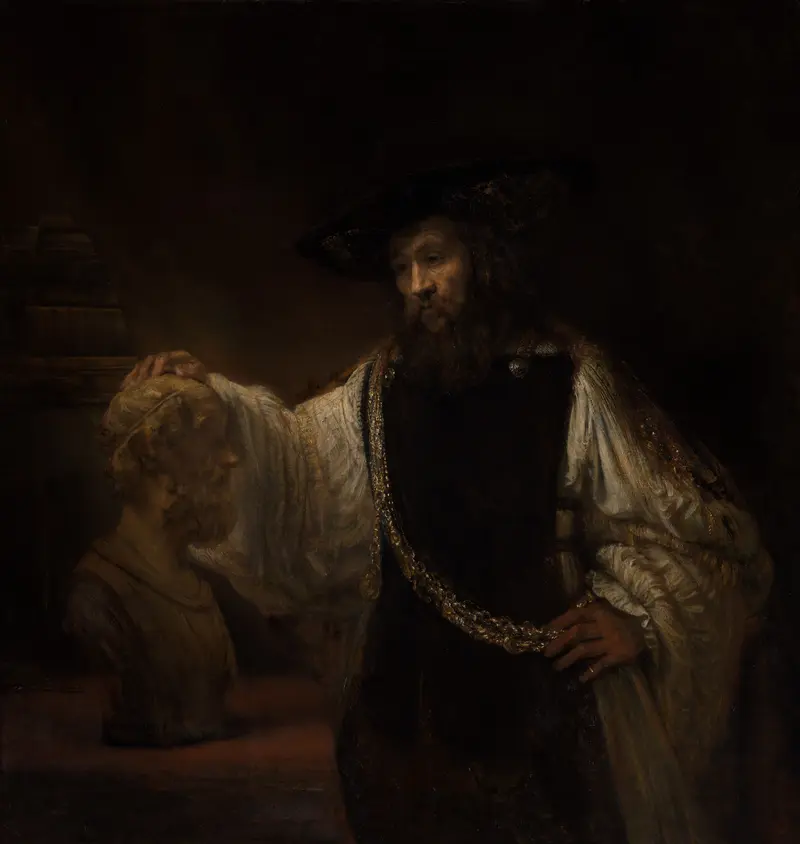
Aristotle with a Bust of Homer
Rembrandt van Rijn
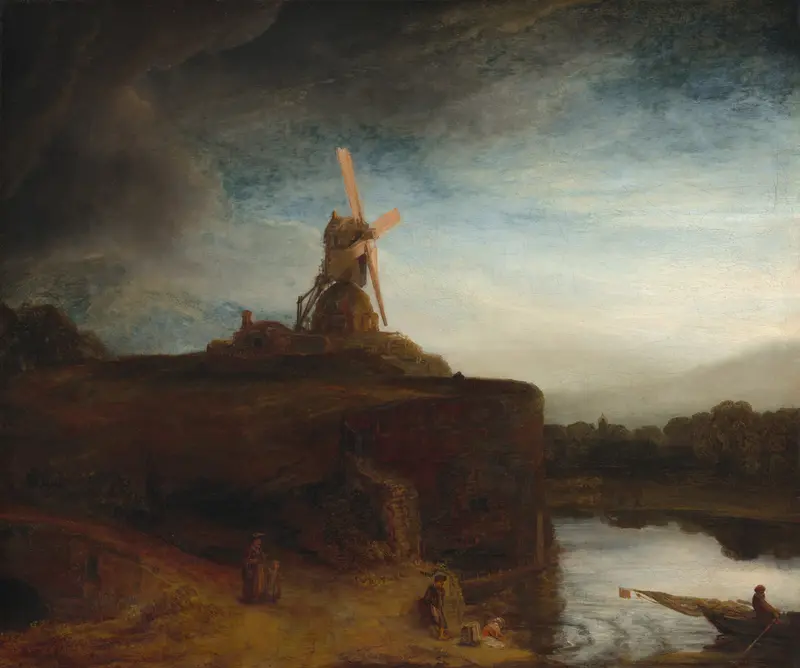
The Mill
Rembrandt van Rijn
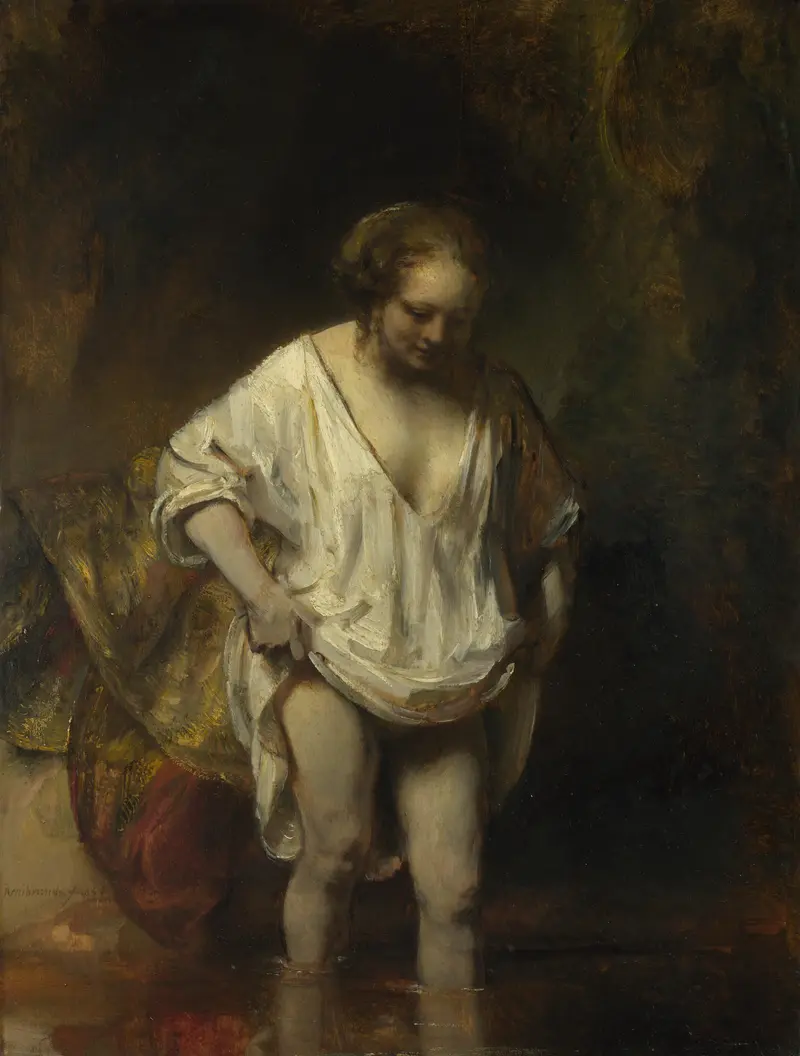
A Woman Bathing in a Stream
Rembrandt van Rijn
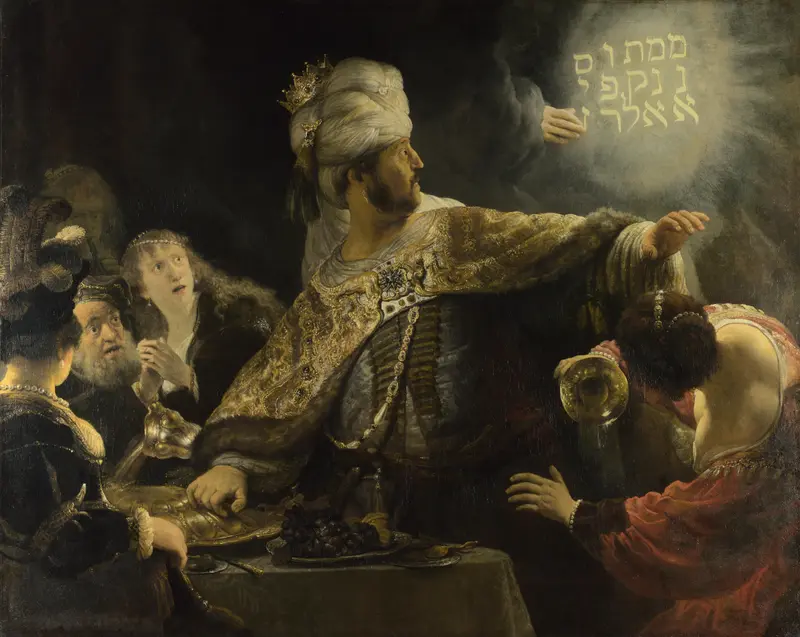
Belshazzar’s Feast
Rembrandt van Rijn
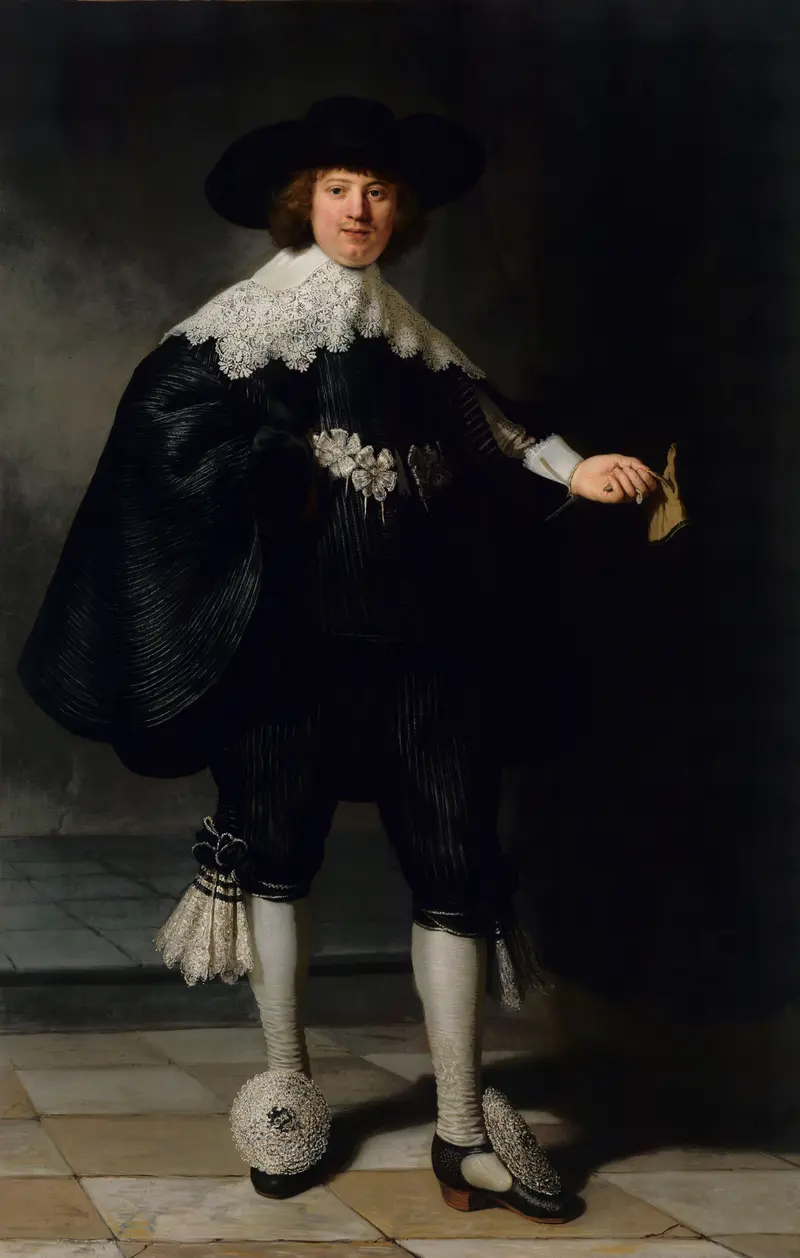
Portrait of Marten Soolmans
Rembrandt van Rijn
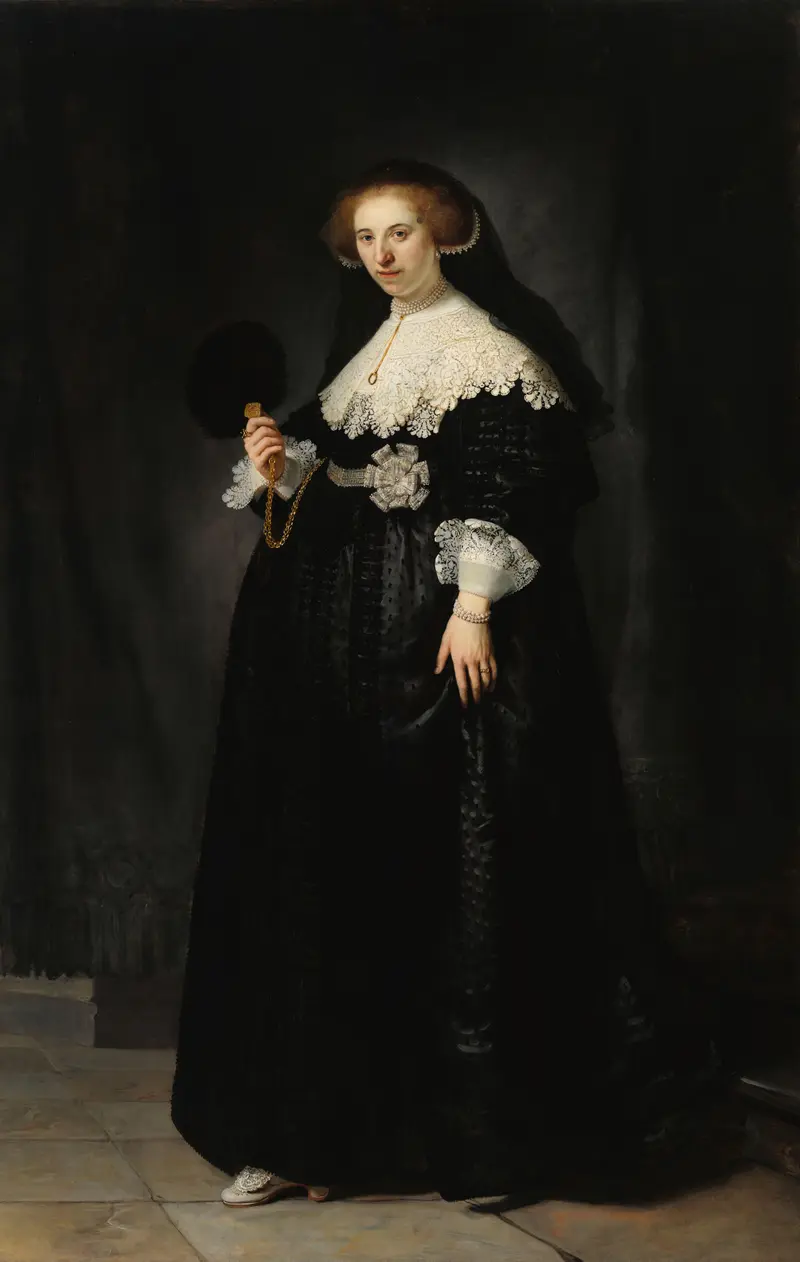
Portrait of Oopjen Coppit
Rembrandt van Rijn

The Prodigal Son in the Tavern
Rembrandt van Rijn
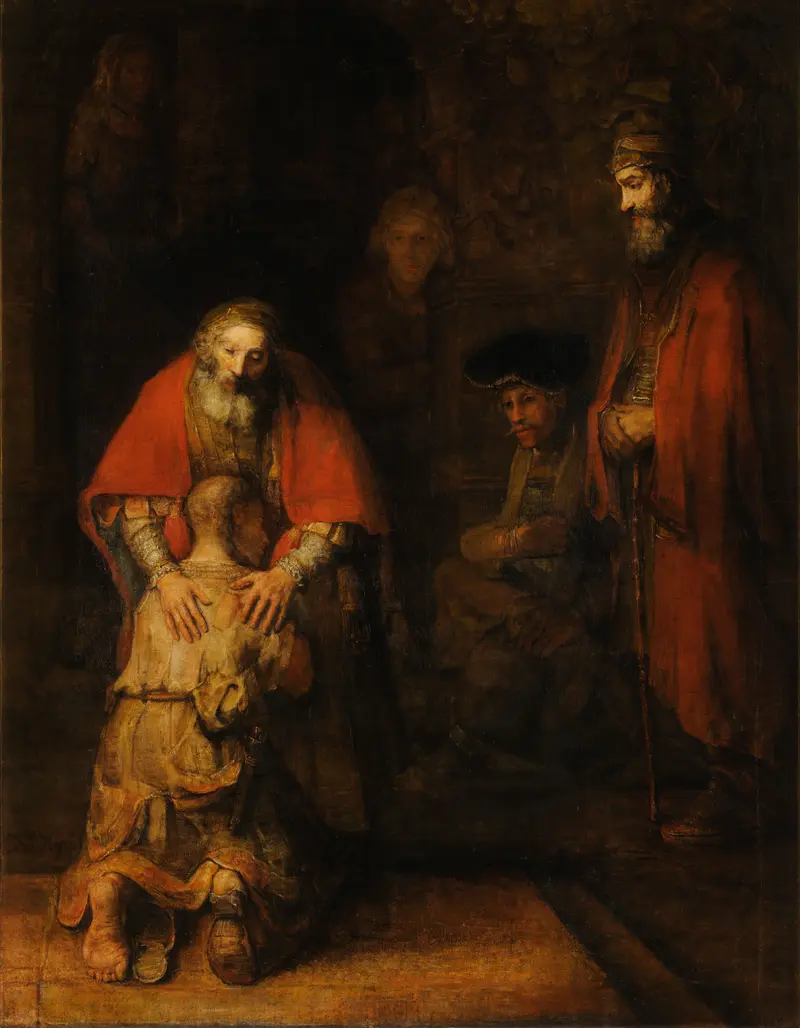
The Return of the Prodigal Son
Rembrandt van Rijn
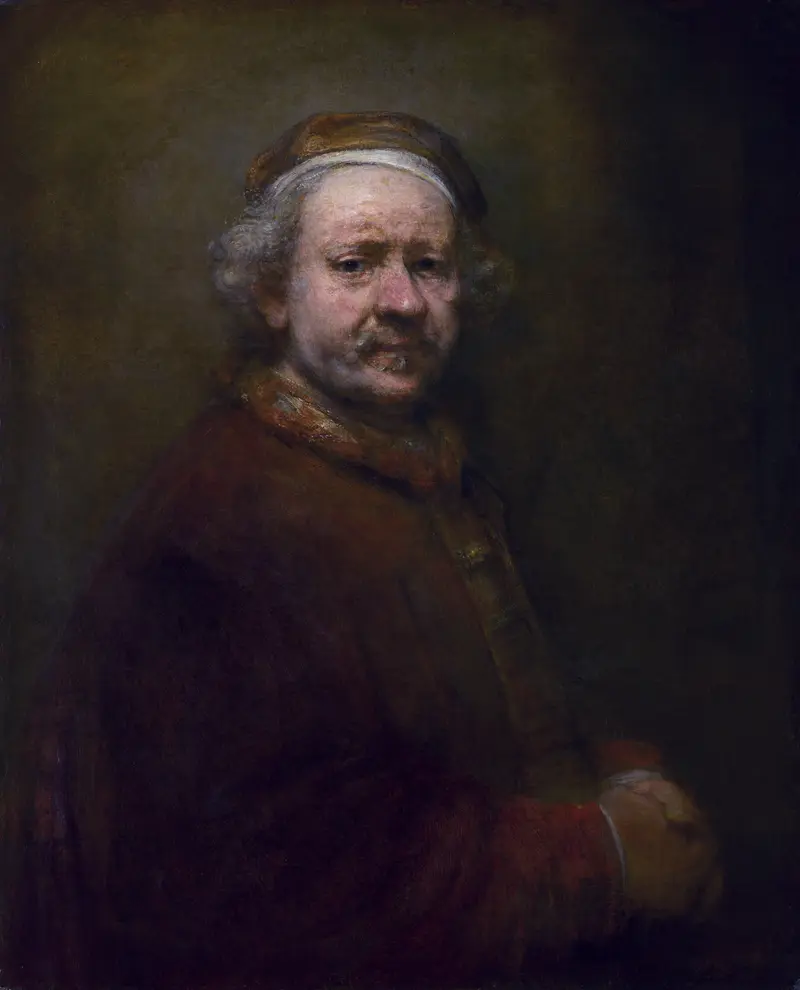
Self-Portrait at the Age of 63
Rembrandt van Rijn