Study of a Rustic Interior Scene — History & Facts
In this exploration of solitude, we are invited to confront the quiet ache of loneliness that lingers in rustic corners and forgotten spaces. Look to the left at the weathered wooden table, its surface a tapestry of age and abandonment. The muted palette of browns and greens evokes a sense of desolation, while soft light filters through a window, casting shadows that dance in stillness. Notice how the delicate brushwork breathes life into the texture of the walls, hinting at stories untold, yet etched deeply into the very fabric of the scene.
The interplay of light and shadow serves to heighten the emotional weight, drawing the viewer into a world that feels both familiar and haunting. Amidst the simplicity of this interior, subtle contrasts emerge. The warmth of the table contrasts with the coolness in the shadows, suggesting a lingering warmth of human presence now absent. The empty space around the table pulses with a palpable tension, hinting at companionship lost or the echo of laughter that once filled these walls.
Each element, from the dilapidated chair to the faintly glowing embers in the hearth, serves as a reminder of the fragility of connection. At the time this artwork was conceived, the artist was entrenched in the Romantic movement, a period marked by intense emotional expression and a deep appreciation for nature and domestic life. Müller painted this piece in the mid-19th century, amidst the burgeoning Industrial Revolution, a time when the world was rapidly shifting, and the intimacy of rustic settings began to dissolve. His focus on these interiors reflects a yearning for simplicity amidst the encroaching complexities of modern existence.
More Artworks by William James Müller
Browse all →
Cleeve, Somerset, with Bridgewater Bay in the Distance
William James Müller

The Bridge at Llangollen
William James Müller

Cairo Bazaar
William James Müller
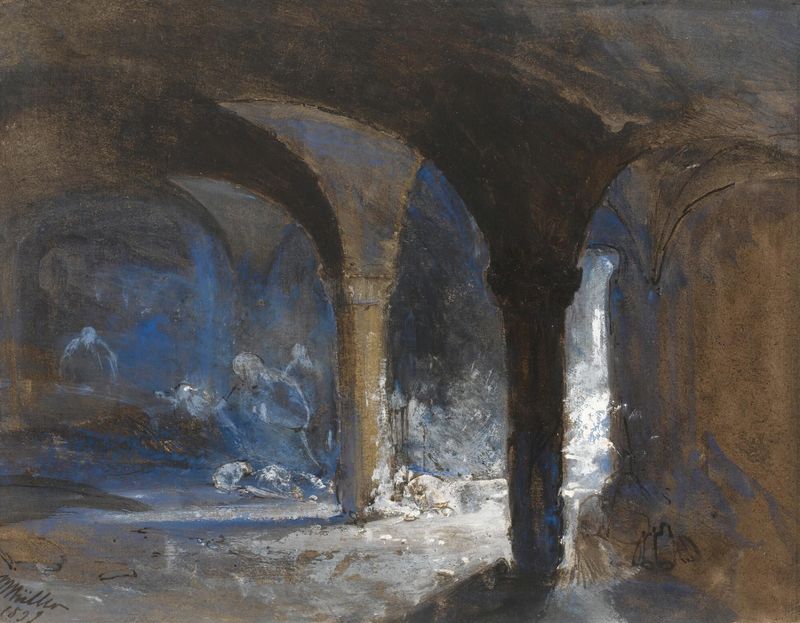
Crypt of the bishop’s palace during the Bristol riots
William James Müller

Near the Caravan Bridge, Smyrna
William James Müller
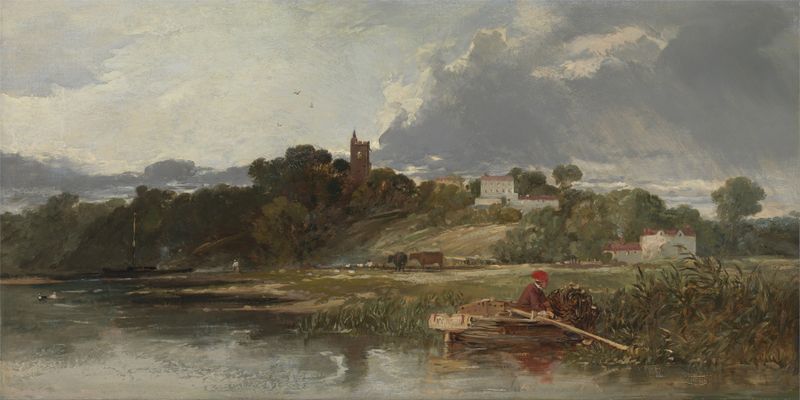
Gillingham on the Medway
William James Müller

The Church of the Holy Sepulchre
William James Müller

A View of Eton and the Fellows Eyot
William James Müller

Tripoli
William James Müller

A Mountain Torrent
William James Müller