
Study of a Woodland Landscape — History & Facts
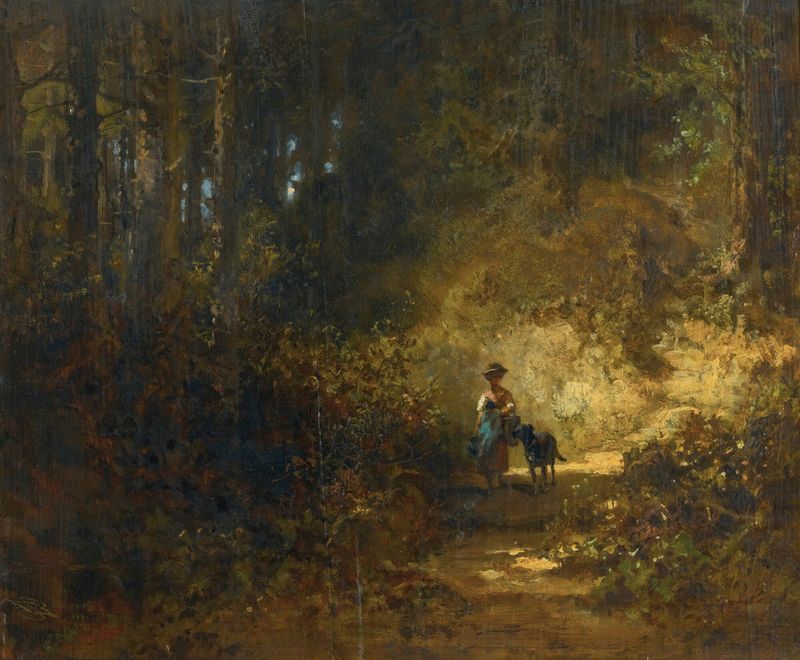
What if silence could speak through light? In the stillness of a woodland landscape, every shaft of sunlight becomes a whisper, revealing the profound loneliness nestled within nature's embrace. Look to the right at the delicate interplay of greens and browns, where trees rise like quiet sentinels against the soft, muted background. Notice how the dappled light filters through the leaves, casting gentle shadows on the rich earth below. The textured brushstrokes evoke a palpable sense of serenity, inviting the viewer to linger, while the carefully chosen palette creates a harmonious balance that feels both alive and hauntingly empty. Within this tranquil setting lies a tension between presence and absence.
The solitary path meanders through the woods, suggesting a journey yet to be undertaken, while the serene atmosphere hints at stories of solitude and reflection. Each element, from the silent trees to the distant hills, speaks to the isolation inherent in the natural world, reminding us of our own quiet battles and moments of introspection. Spitzweg painted this piece during a time marked by personal and artistic introspection in the 19th century, when Romanticism flourished across Europe. His focus on landscapes and everyday life reflected a reaction to the rapid industrialization of the era, as he sought solace and beauty in nature.
This work emerged amid his broader exploration of mood and emotion, encapsulating both the lushness and emptiness that define the human experience.
More Artworks by Carl Spitzweg
Browse all →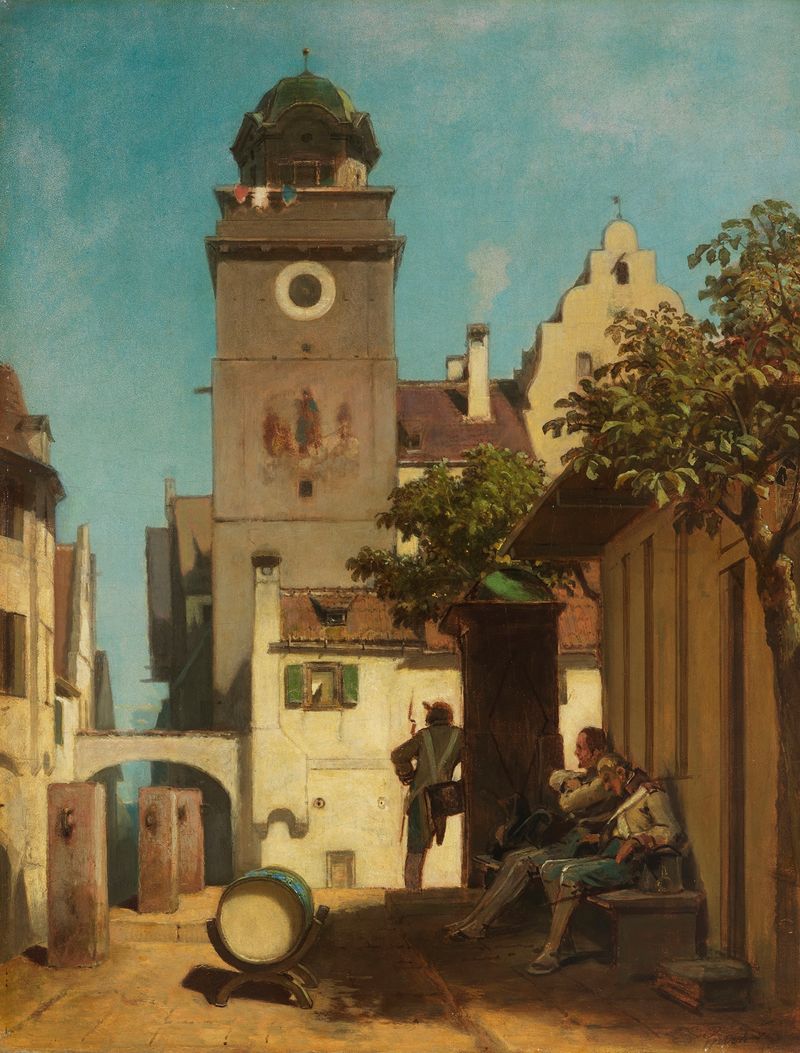
Die Stadtwache
Carl Spitzweg
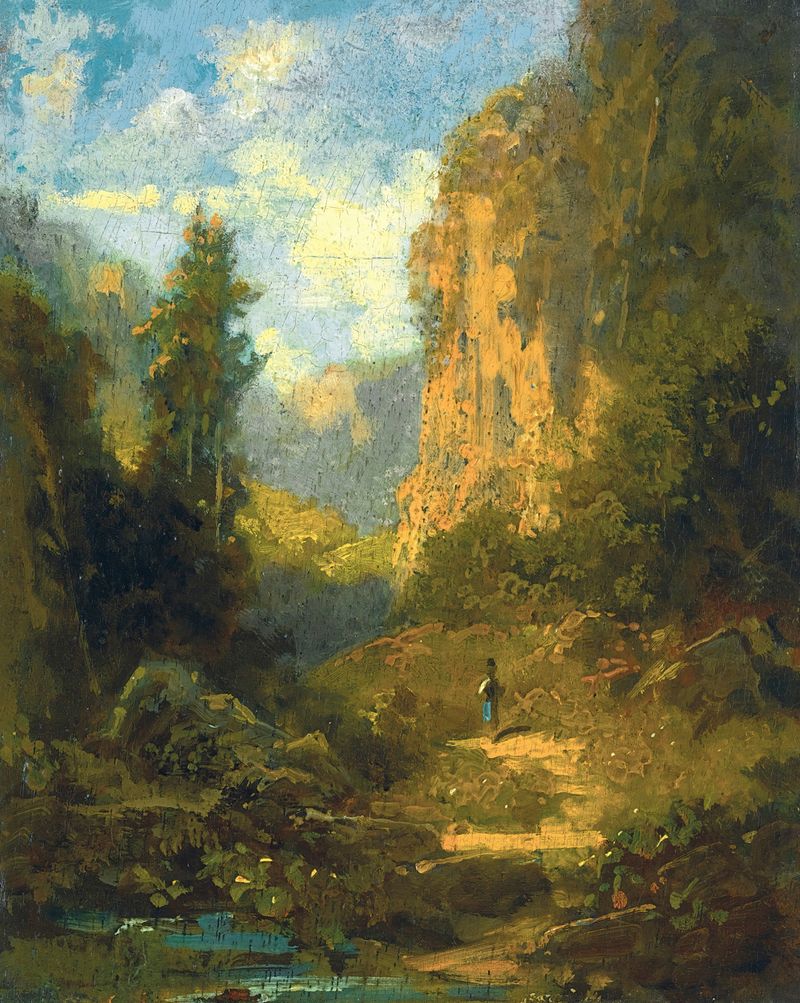
Gebirgslandschaft
Carl Spitzweg

In the Alpine High Valley (Landscape with Mt. Wendelstein)
Carl Spitzweg

Gebirgsmühle
Carl Spitzweg
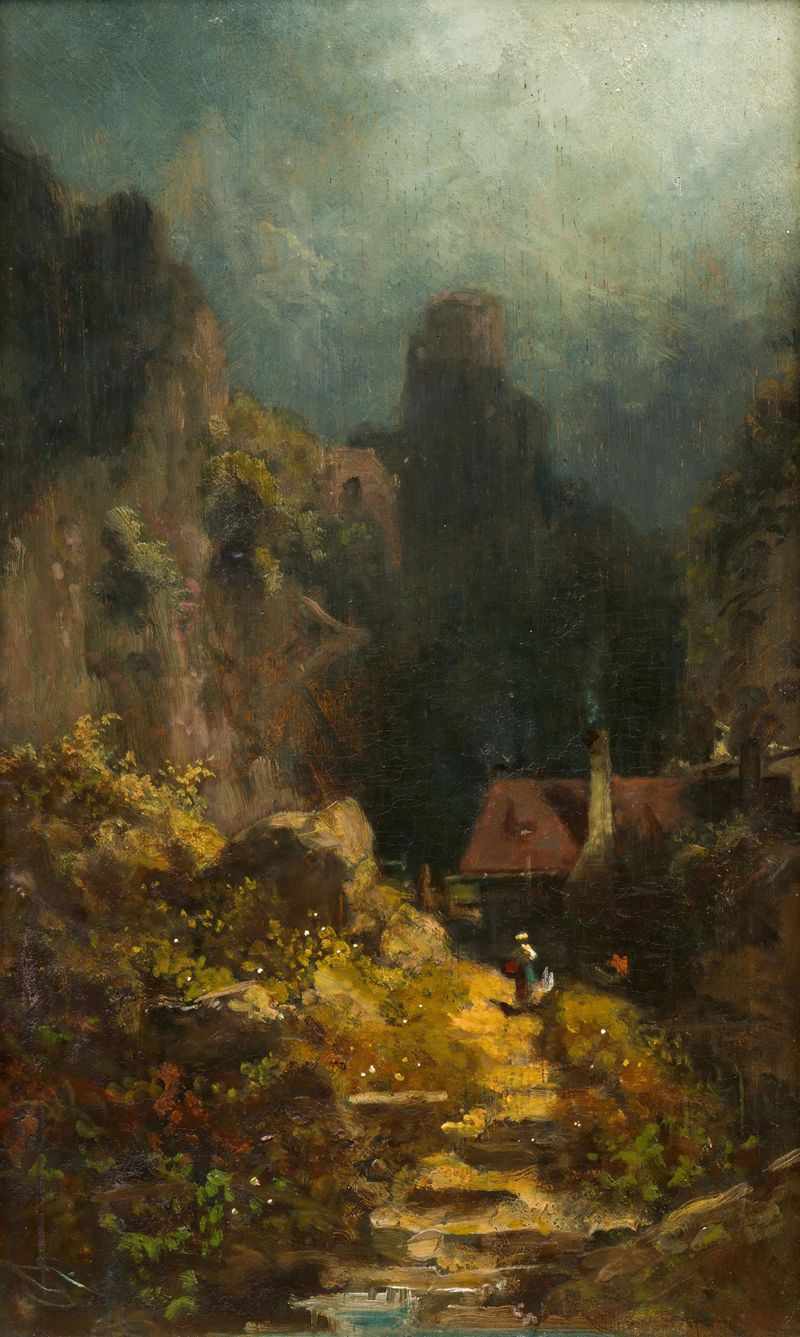
In der Schlucht
Carl Spitzweg
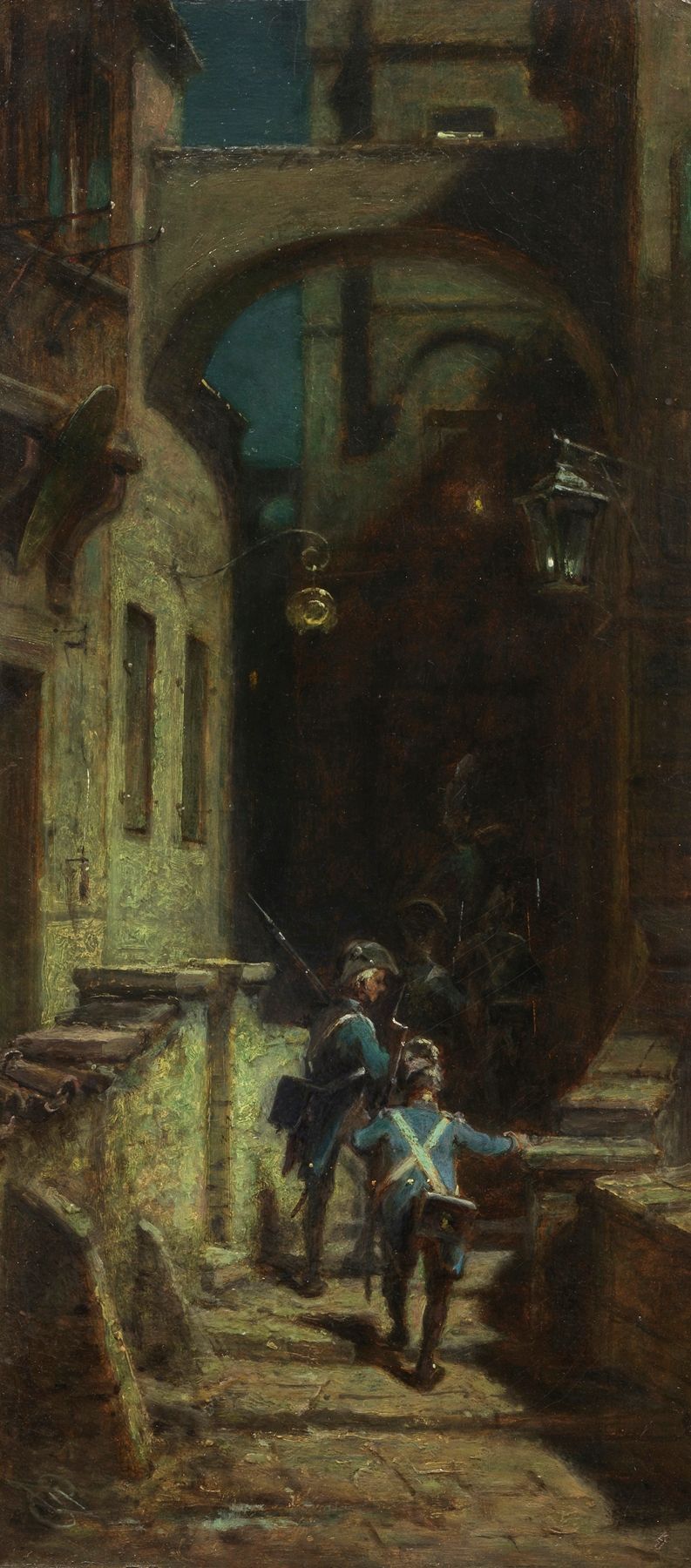
Die Scharwache
Carl Spitzweg

Einsiedler mit Mädchen
Carl Spitzweg

Lagernde Karrner (Rast der Streuner)
Carl Spitzweg
Im Walde
Carl Spitzweg
Moonlit Scene with Castle Ruins
Carl Spitzweg





