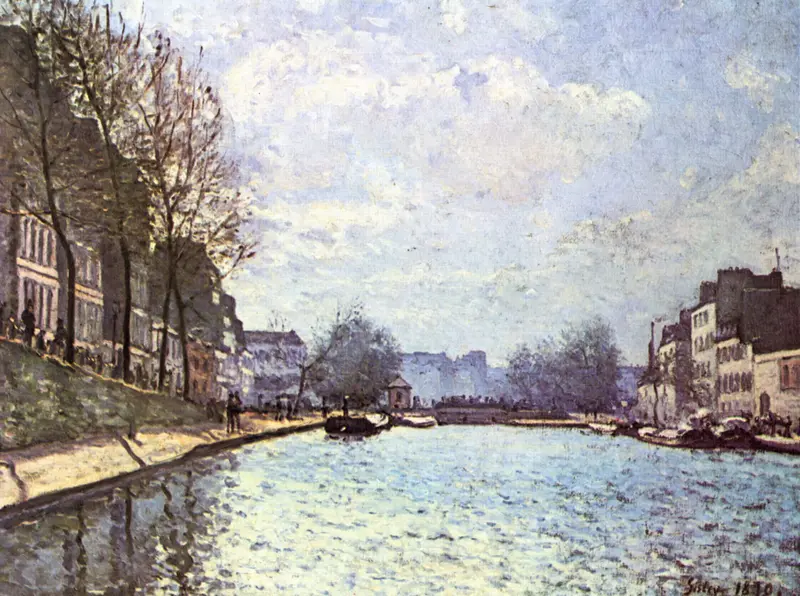
Study of Houses — History & Facts
In Study of Houses, Paul Cézanne presents a scene filled with earthy tones and muted colors. The houses are depicted with simple shapes, nestled within a natural landscape. The brushwork is loose, allowing for a sense of movement and life in the setting.
The overall composition feels harmonious, reflecting Cézanne's interest in structure and form. The painting is characterized by its use of oil on canvas, a medium that Cézanne often employed to build texture and depth. The dimensions are approximately 60 x 80 cm, making it a manageable size for intimate viewing. The color palette consists of greens, browns, and soft blues, typical of Cézanne's later works.
This piece demonstrates his shift towards a more abstract representation of reality. Paul Cézanne was a pivotal figure in the transition from Impressionism to modern art. Study of Houses reflects his fascination with the interplay of light and form, as well as his innovative approach to perspective. Interestingly, this work showcases his desire to capture the essence of a scene rather than its exact details.
Cézanne's influence can be seen in the works of many 20th-century artists, making him a key figure in art history.
More Artworks by Paul Cézanne

Apples, Peaches, Pears and Grapes
Paul Cézanne

The Card Players
Paul Cézanne

Rideau, Cruchon et Compotier
Paul Cézanne

The Boy in the Red Vest
Paul Cézanne

Madame Cézanne
Paul Cézanne

Montagne Saint-Victoire
Paul Cézanne

Montagne Sainte-Victoire
Paul Cézanne

Mont Sainte-Victoire Seen beyond the Wall of the Jas de Bouffan
Paul Cézanne

Still Life with Apples
Paul Cézanne

La Montagne Sainte-Victoire
Paul Cézanne