
Summerlust — History & Facts
A gentle radiance seems to settle over the figures in Summerlust, drawing the viewer into a world where the everyday is quietly celebrated. At the heart of the scene, a cluster of women and children gather in the open air, their gestures and glances weaving a tapestry of intimacy and shared delight. The artist’s hand lingers on the flowing lines of garments and the soft turn of faces, inviting us to linger as well.
A child is lifted high, a wreath crowns a brow, and a goat trots alongside, each detail carrying the warmth of a sunlit afternoon. The palette is airy and restrained, letting the figures emerge as if from a half-remembered dream, while the light glances off hair and fabric, guiding the eye gently across the group. Painted in 1844, this work belongs to a moment in German art when scenes of rural leisure and familial gathering were gaining new significance. The early nineteenth century saw artists like Adrian Ludwig Richter turning to the countryside and to simple joys, responding to a world in the midst of industrial and social change.
Such paintings were cherished for their sense of rootedness and harmony, often commissioned or collected by those longing for a vision of peace amid upheaval. Now held by the Germanisches Nationalmuseum, Summerlust stands as a delicate record of that longing, its faded contours and unfinished washes inviting us to imagine the laughter and stories that might have filled this summer day.
More Artworks by Adrian Ludwig Richter

Landschaft bei den Sabiner Bergen (Rocca di Mezzo)
Adrian Ludwig Richter

The Fountain at Grottaferrata
Adrian Ludwig Richter
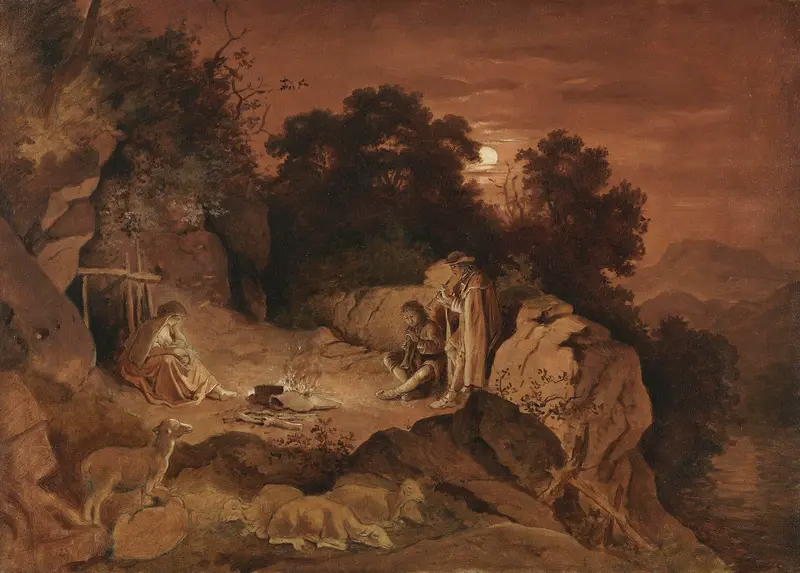
Hirten am Feuer (Abendlandschaft)
Adrian Ludwig Richter
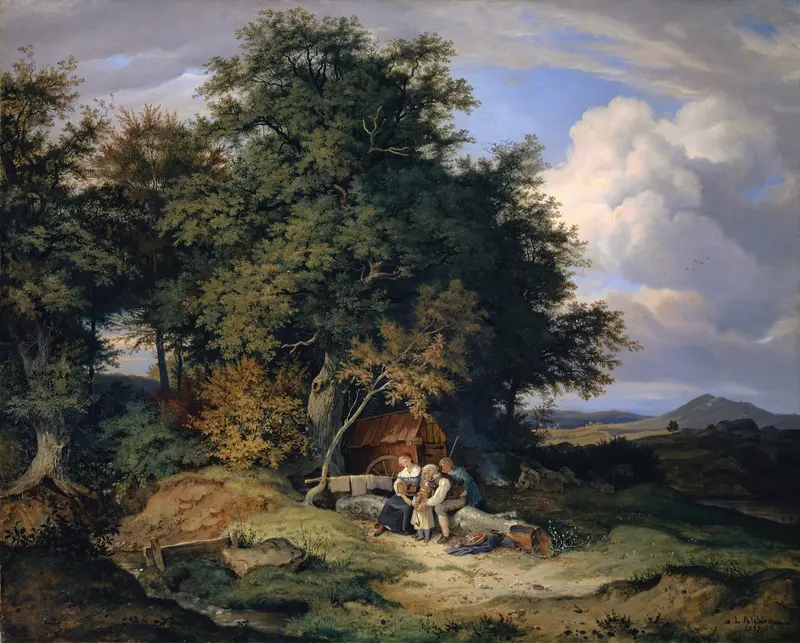
Herbstlicher Wald mit Schäferfamilie
Adrian Ludwig Richter
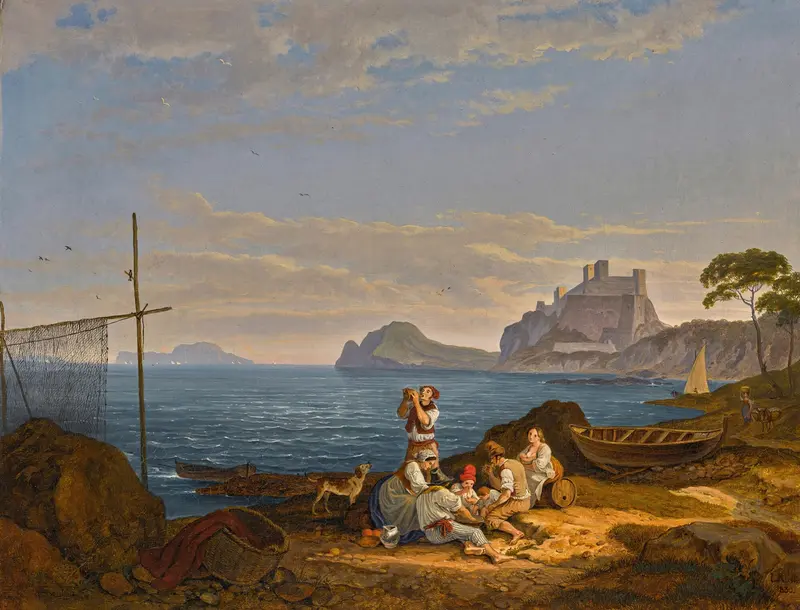
The Bay Of Naples, Capri Beyond
Adrian Ludwig Richter
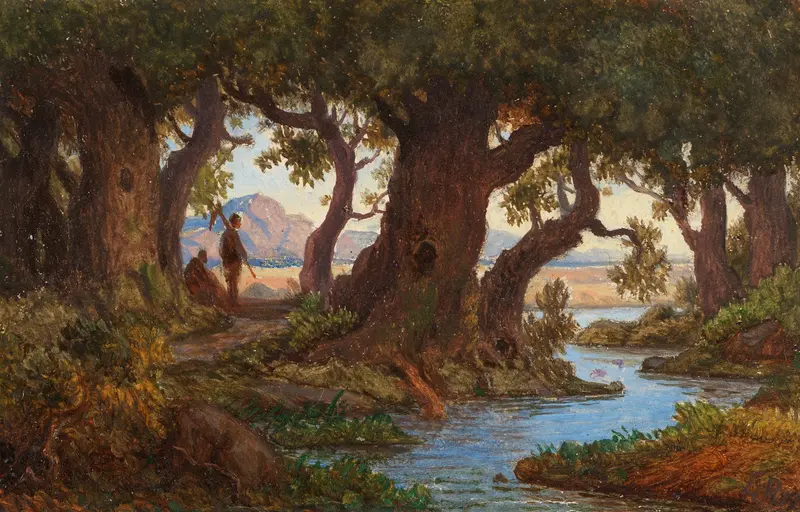
Italienische Flusslandschaft
Adrian Ludwig Richter
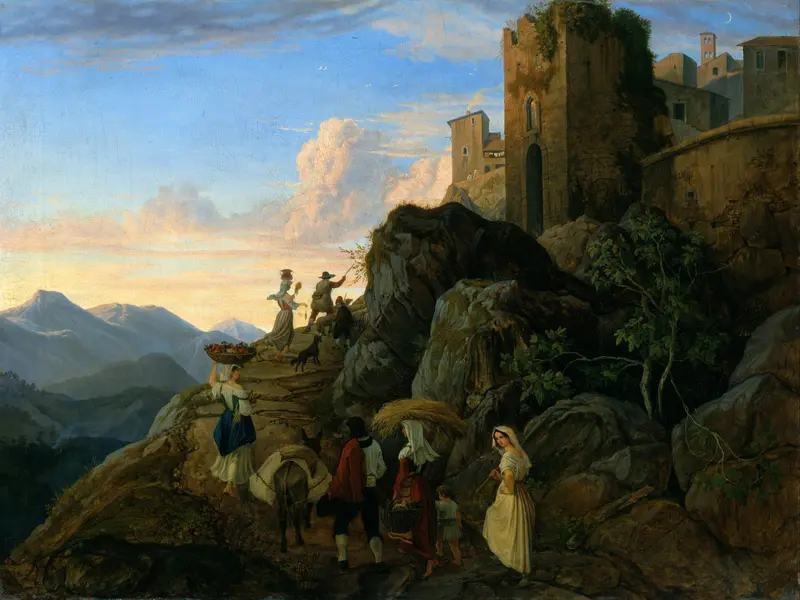
Civitella
Adrian Ludwig Richter
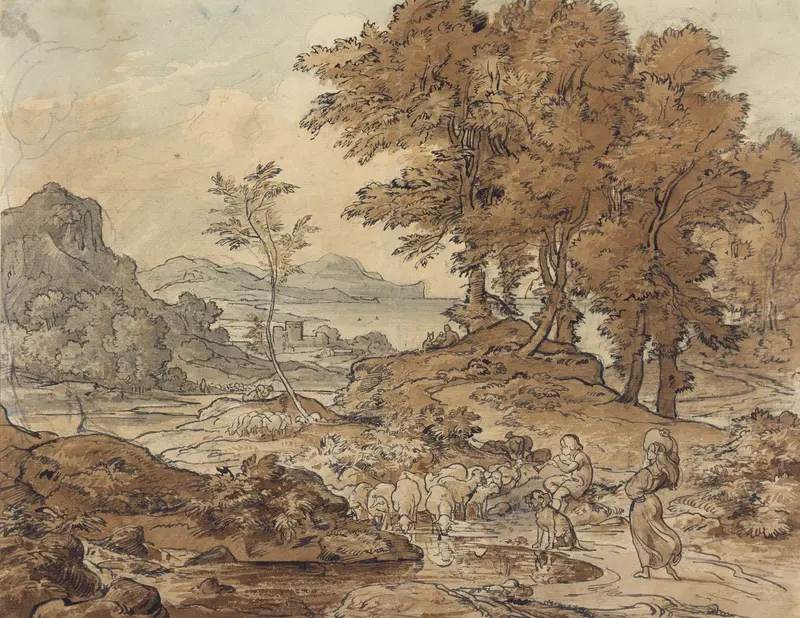
Italienische Landschaft mit Schafherden
Adrian Ludwig Richter
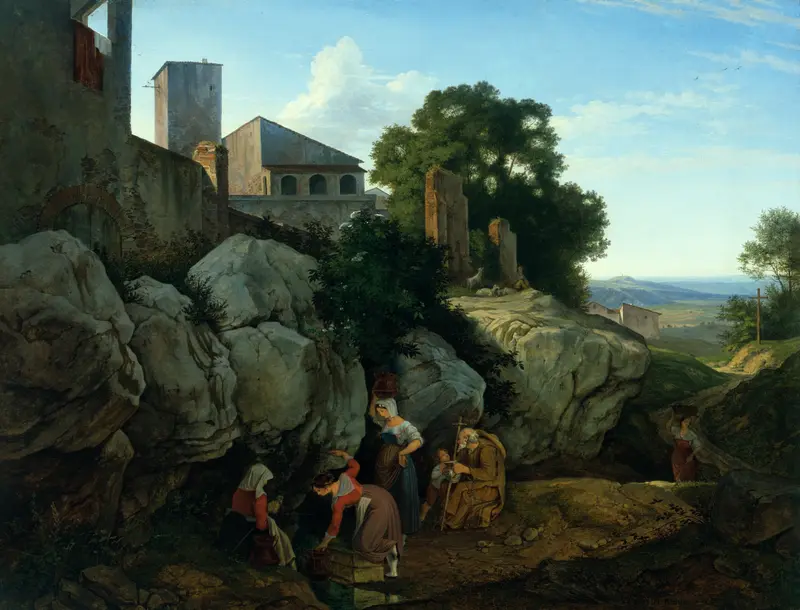
Ariccia
Adrian Ludwig Richter
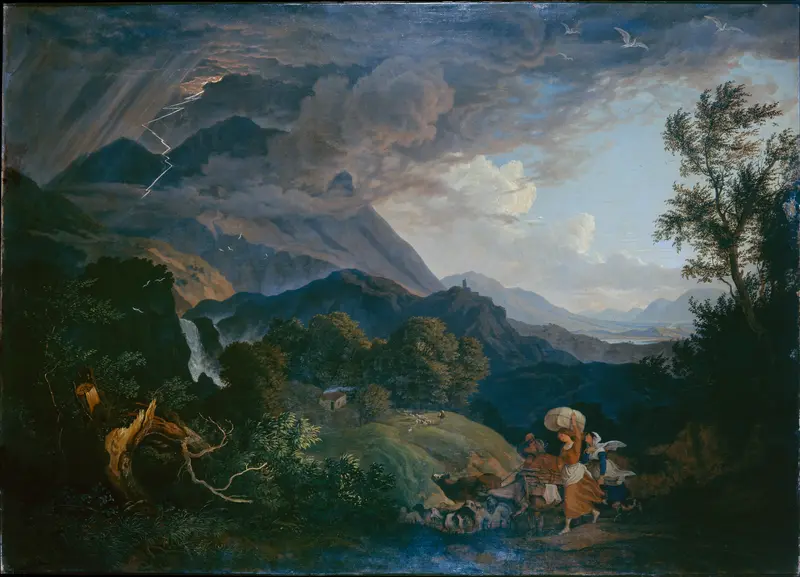
Thunderstrom over Monte Scalambra near Olevano in the Sabine Mountains
Adrian Ludwig Richter
More Genre Scene Art

Banquet of the Officers of the St George Civic Guard
Frans Hals

Rembrandt and Saskia in the Scene of the Prodigal Son
Rembrandt van Rijn

Bal du moulin de la Galette
Pierre-Auguste Renoir

Quadrille at the Moulin Rouge
Henri de Toulouse-Lautrec

A Burial at Ornans
Gustave Courbet

When Will You Marry?
Paul Gauguin