
Sunset — History & Facts
Can paint confess what words never could? In Frederic Edwin Church's Sunset, the artist captures the fleeting illusion of day’s end, where light and color blend into a symphony of emotion, whispering secrets of nature that mere words struggle to articulate. Look to the horizon, where the sun, a fiery orb, spills its warm glow across the sky; the vibrant oranges and deep purples bleed into one another, creating a breathtaking gradient. Notice how the silhouettes of distant mountains frame the scene, their textured surfaces rendered with precision, inviting you to explore the interplay of light and shadow. The reflective waters below mirror this celestial display, adding a layer of depth that amplifies the painting's overall harmony. As you delve deeper, consider the contrast between the vibrant sunset and the darkening landscape.
This duality evokes a sense of transience and beauty, reminding us that every ending cradles the promise of a new beginning. The illusion of light, almost tangible, serves as a gateway to introspection, prompting reflection on the fleeting nature of time and experience, while the gentle waves suggest the eternal cycle of life. Frederic Edwin Church created Sunset between 1865 and 1866, during a pivotal moment in American art known as the Hudson River School. This period was marked by a growing appreciation for the natural world, as artists sought to depict the grandeur of American landscapes.
At this time, Church was emerging as a leading figure, exploring the interplay of light and atmosphere in his work, as he sought to evoke both awe and contemplation in the viewer.
More Artworks by Frederic Edwin Church
Browse all →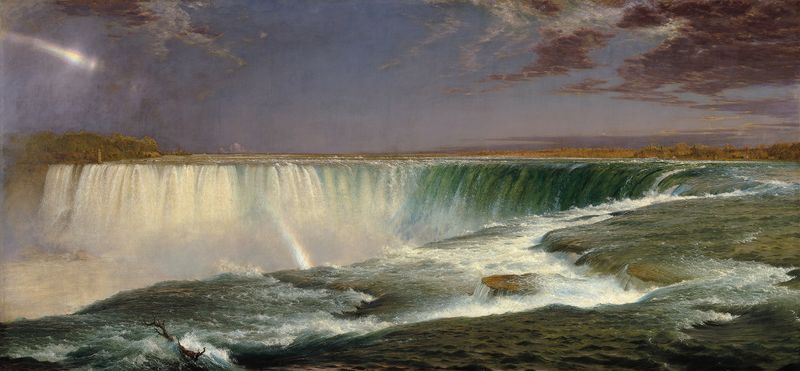
Niagara
Frederic Edwin Church
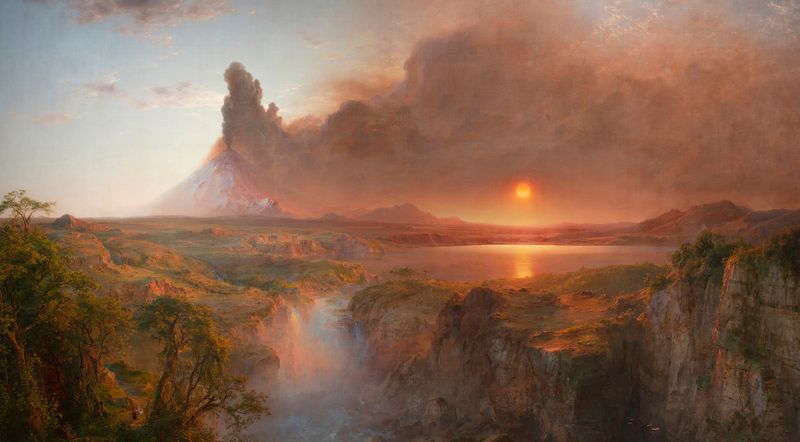
Cotopaxi
Frederic Edwin Church
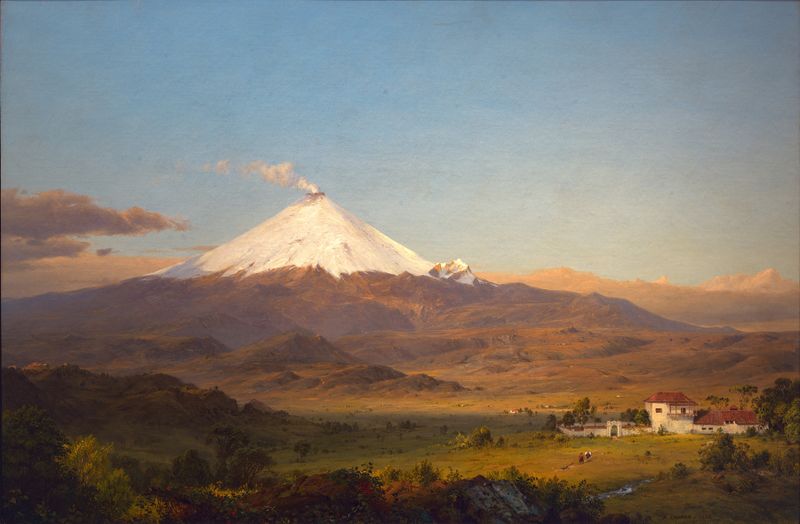
Cotopaxi
Frederic Edwin Church
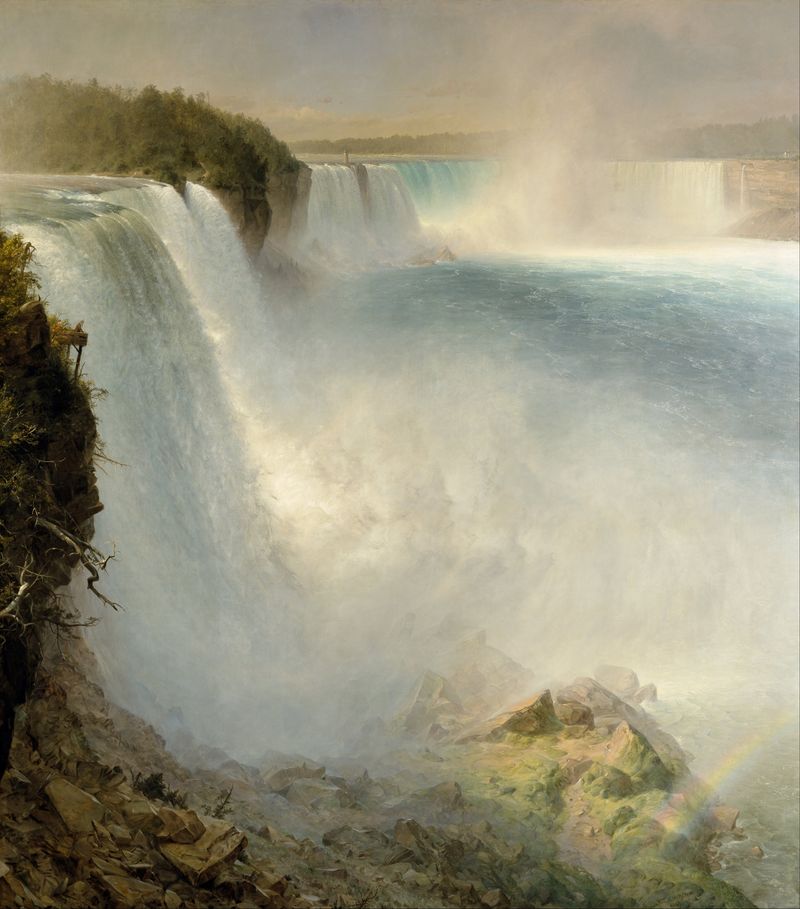
Niagara Falls, from the American Side
Frederic Edwin Church
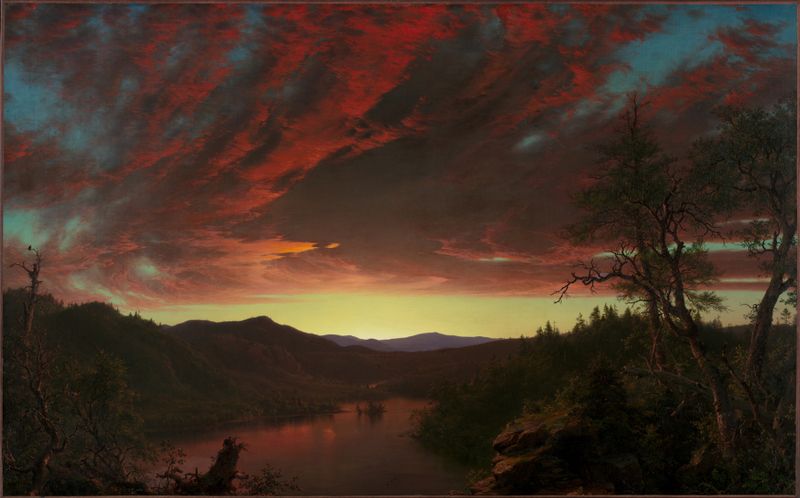
Twilight in the Wilderness
Frederic Edwin Church
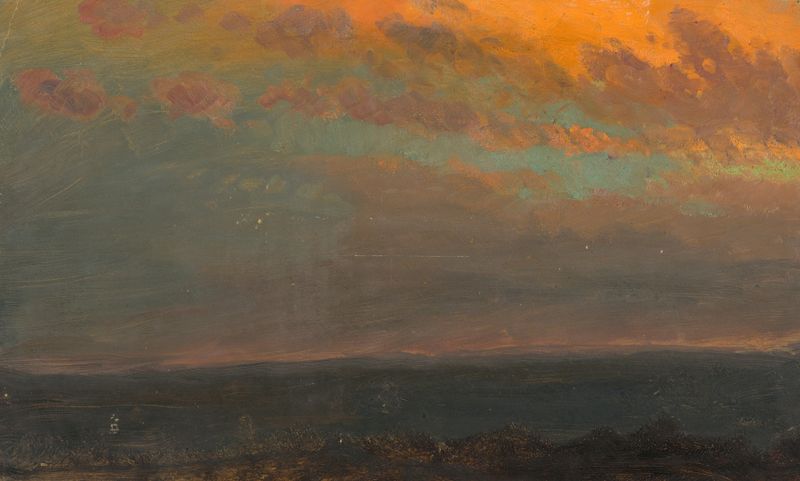
Hudson Valley at Sunset
Frederic Edwin Church
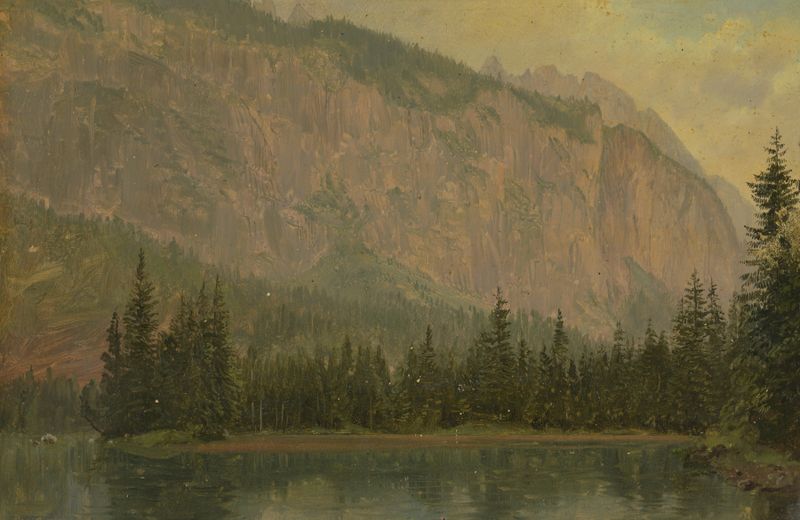
The Hintersee, near Berchtesgaden, Bavaria
Frederic Edwin Church
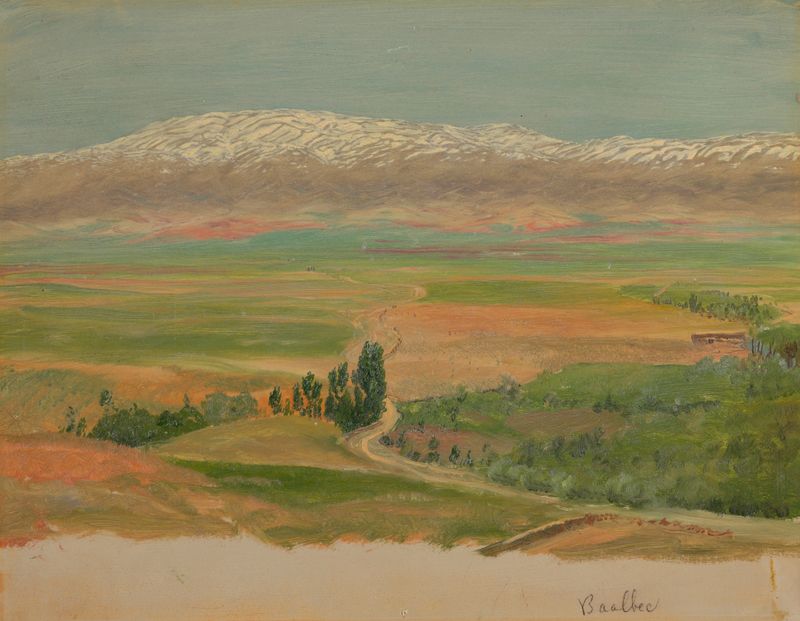
Mountains near Baalbec
Frederic Edwin Church
Aurora Borealis
Frederic Edwin Church
Cotopaxi
Frederic Edwin Church





