
Sunset over bare hills — History & Facts
Could beauty survive in a century of chaos? In Sunset over Bare Hills, the answer resonates with a profound serenity that transcends turmoil. Look to the horizon, where the blazing sun dips below undulating hills, casting a gentle glow across the canvas. The warm hues of orange and gold merge seamlessly with muted purples and blues, creating a breathtaking gradient that invites the eye to wander. Notice how the distant hills, stripped of foliage, stand in quiet majesty, their starkness softened by the atmospheric light.
This masterful play of color not only illuminates the scene but evokes a sense of calm, as if nature herself is exhaling after a long day. Delve deeper into the contrasts that lie within the composition. The bare hills, devoid of life, speak to vulnerability and desolation, yet the vibrant sunset offers a counterpoint—a reminder of beauty’s resilience. This juxtaposition reflects the artist’s contemplation of nature’s cycles, revealing an emotional tension between loss and transcendence.
The swirling clouds above seem to dance with the last light, hinting at a celestial connection that inspires awe and invites reflection. Frederic Edwin Church painted Sunset over Bare Hills between 1870 and 1880, during a transformative period in American landscape painting. Emerging from the Hudson River School, Church sought to capture the sublime beauty of the natural world amid the rapid changes of the Industrial Revolution. His works were often steeped in both optimism and melancholy, reflecting not only the shifting American landscape but also the broader complexities of a nation at the cusp of modernity.
More Artworks by Frederic Edwin Church
Browse all →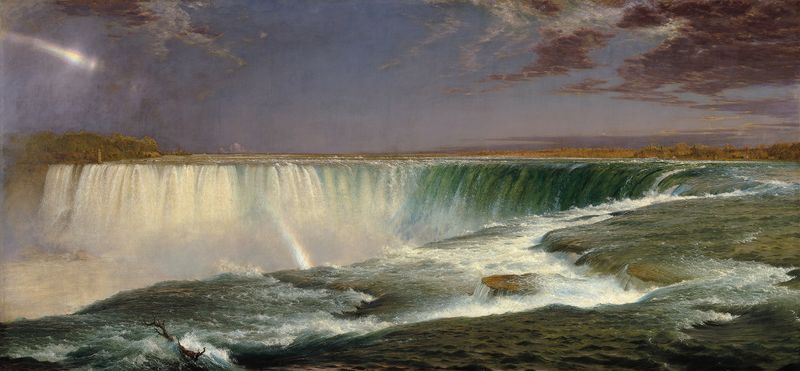
Niagara
Frederic Edwin Church
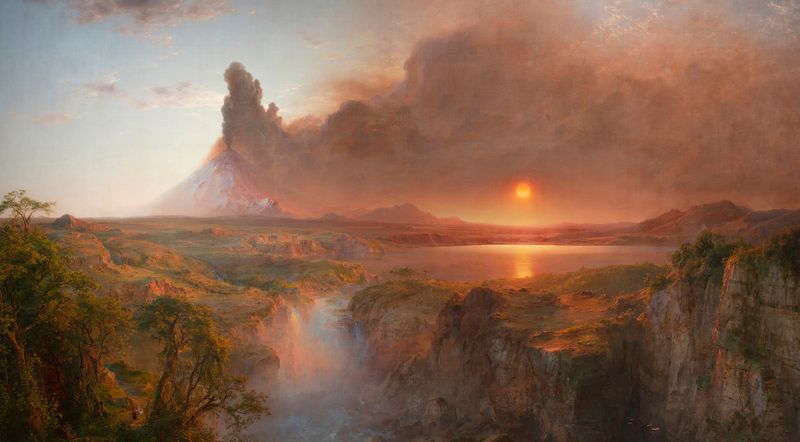
Cotopaxi
Frederic Edwin Church
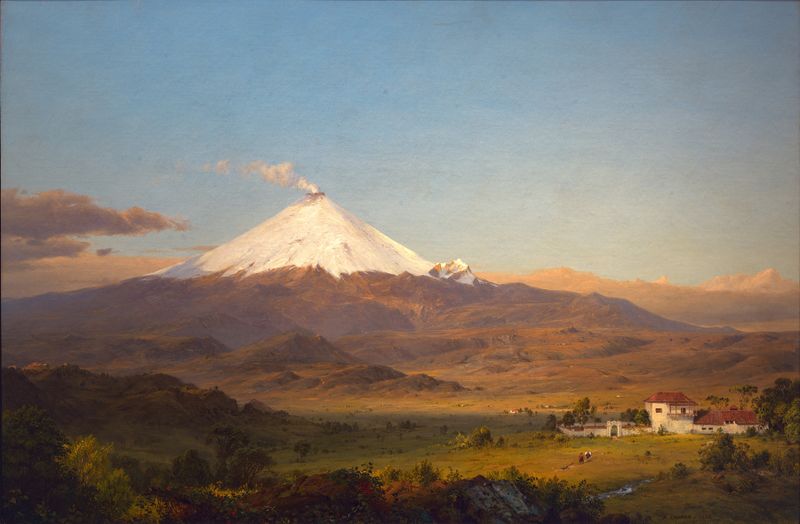
Cotopaxi
Frederic Edwin Church
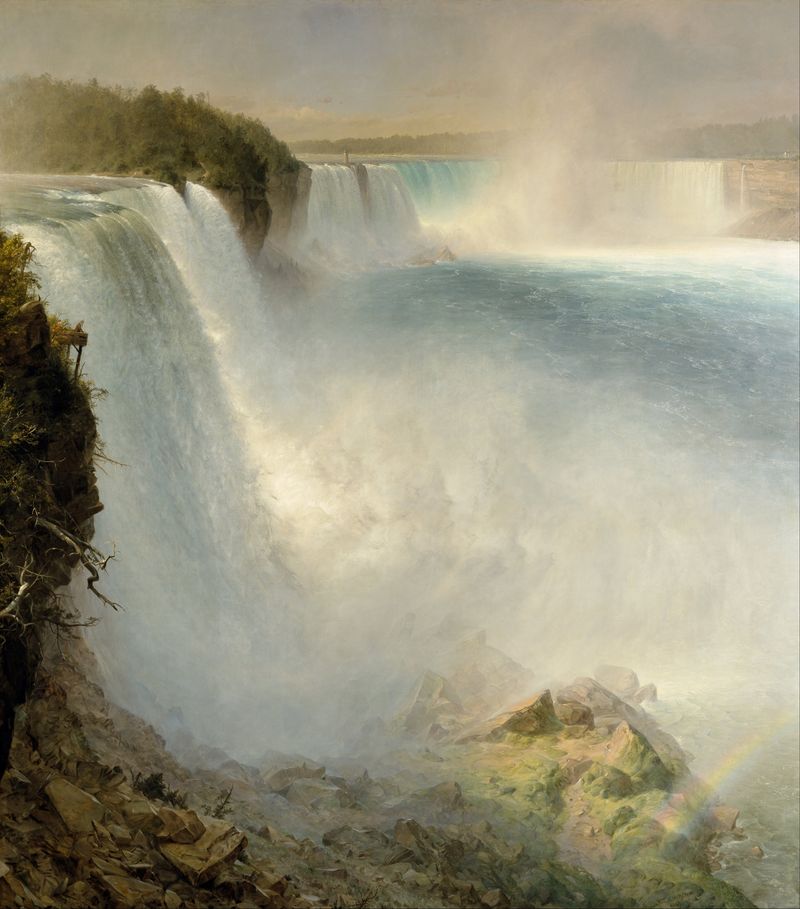
Niagara Falls, from the American Side
Frederic Edwin Church
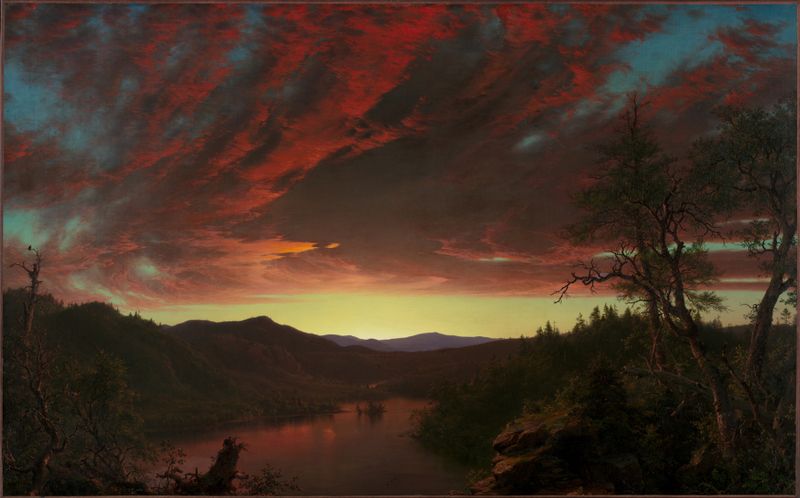
Twilight in the Wilderness
Frederic Edwin Church
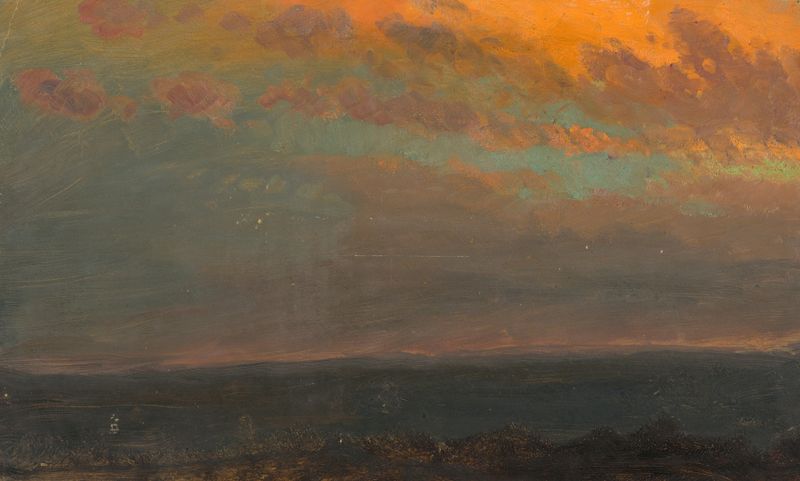
Hudson Valley at Sunset
Frederic Edwin Church
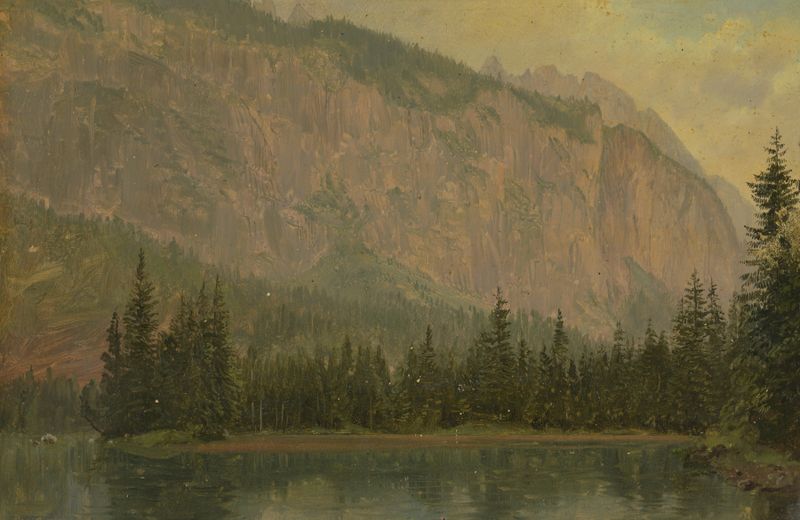
The Hintersee, near Berchtesgaden, Bavaria
Frederic Edwin Church
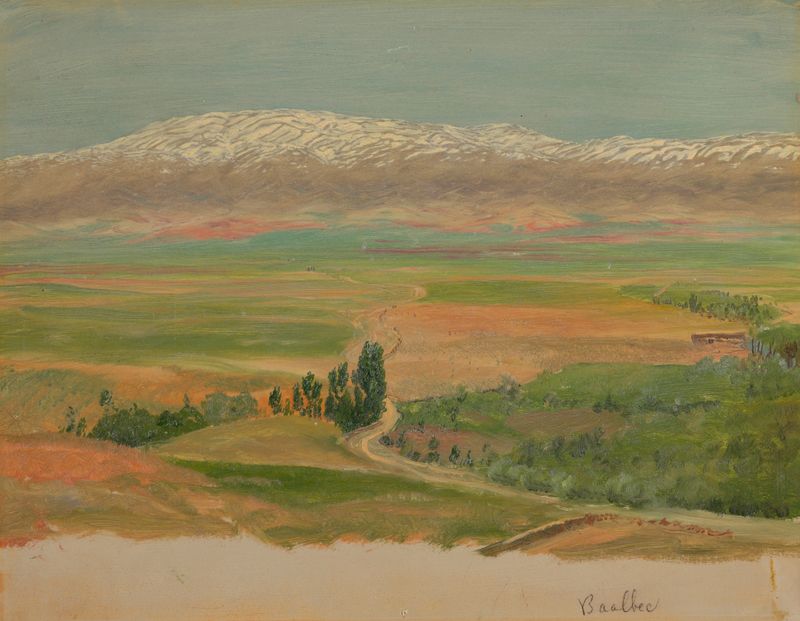
Mountains near Baalbec
Frederic Edwin Church
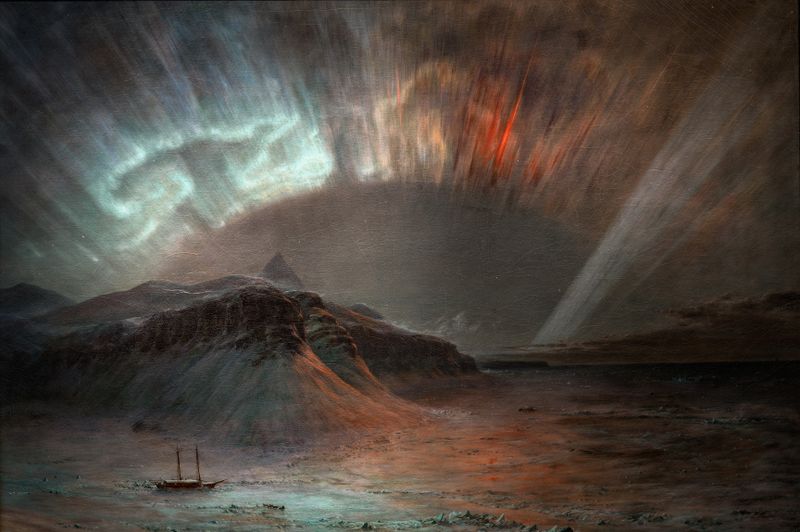
Aurora Borealis
Frederic Edwin Church
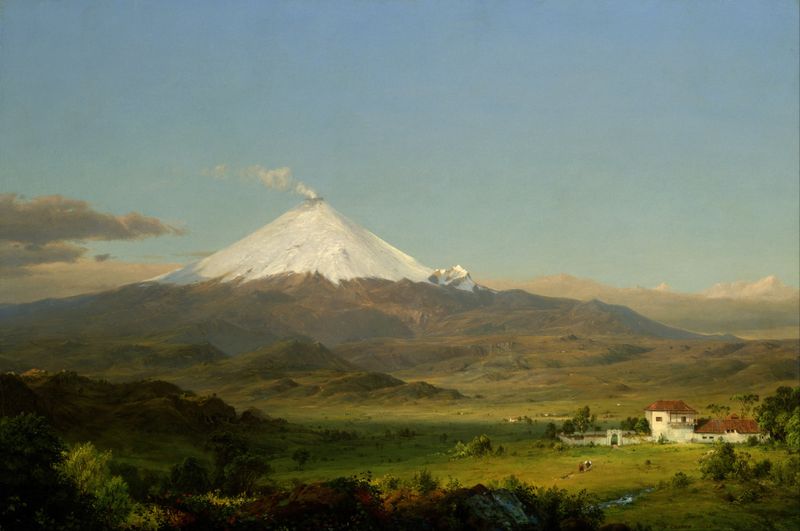
Cotopaxi
Frederic Edwin Church





