
Suprematism — History & Facts
A riot of shapes and colors seems to hover weightlessly on a stark white field, each form asserting its own presence yet caught in a silent conversation with its neighbors. The eye is drawn first to the bold red rectangle, then swept along by the diagonal thrust of a crimson beam that slices across the composition, intersecting with a black bar and a fractured yellow plank. A blue square and a black circle anchor the left, while the right is dominated by two large, solid blocks—one red, one black—each vibrating with the tension of their edges.
There is no up or down, no narrative to resolve; instead, the painting stages a drama of balance and collision, of color and void. The cracked surfaces of some shapes hint at time’s passage, while the crispness of others feels almost newly made. This work belongs to the world of Suprematism, a radical movement born in Russia during the tumultuous years around 1915, when artists like Kazimir Malevich sought to break entirely with representation and tradition. Their aim was not to depict the world, but to create a new visual language—one that spoke in pure color, geometry, and sensation.
Such paintings were often shown in avant-garde exhibitions, challenging viewers to see art as a field of feeling rather than a window onto reality. The year 1915 marks the height of this revolution, and the work’s presence in a Russian collection today is a reminder of how these experiments, once shocking, became part of the story of modern art. Stand before it, and let your eye wander: the painting asks not what it means, but how it makes you move and think.
More Artworks by Kazimir Malevich

Red Square
Kazimir Malevich

Suprematist Composition: White on White
Kazimir Malevich

Black Square
Kazimir Malevich
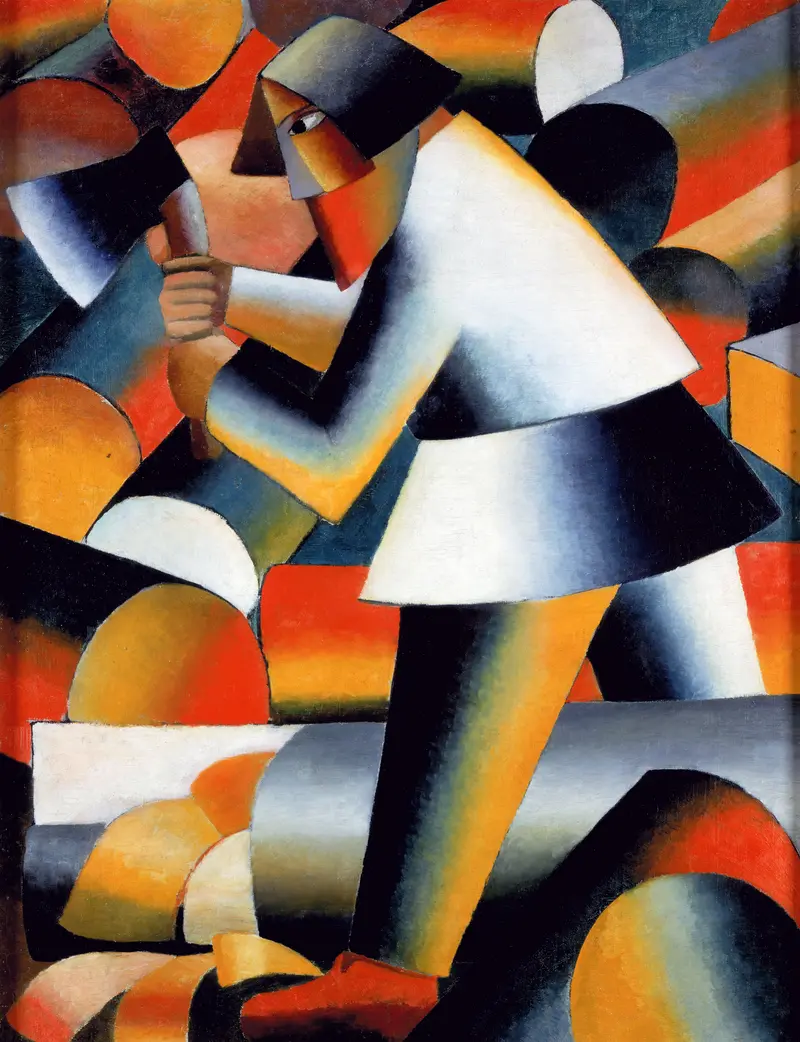
The Woodcutter
Kazimir Malevich

Untitled
Kazimir Malevich
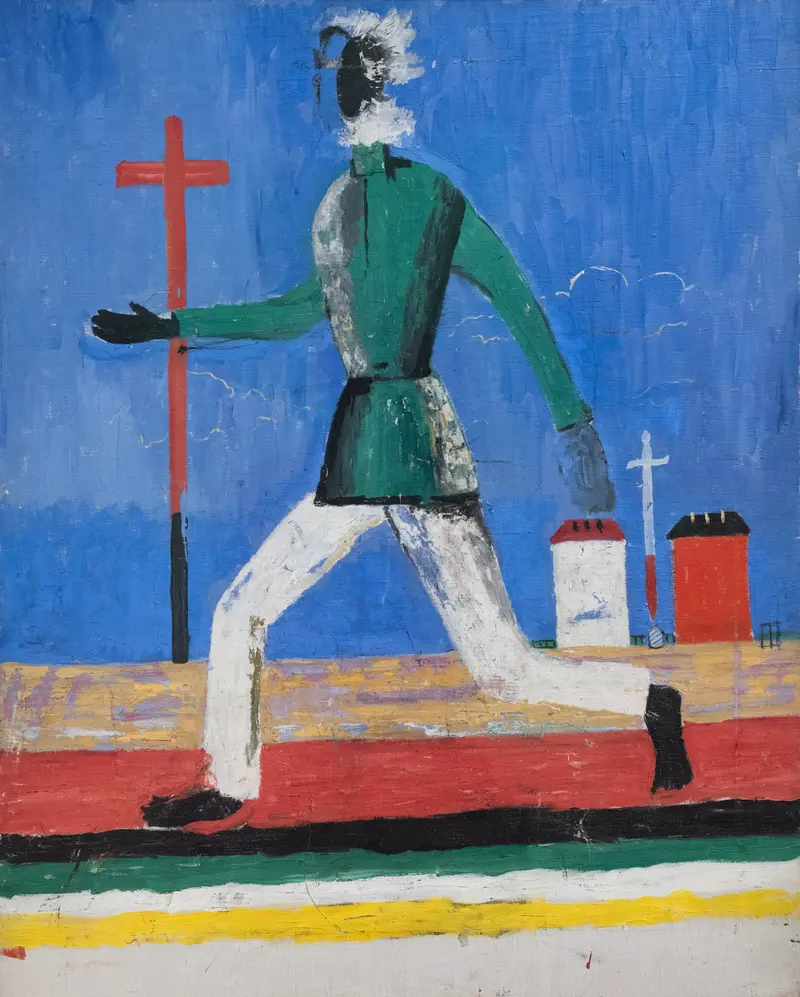
Sensation of danger
Kazimir Malevich
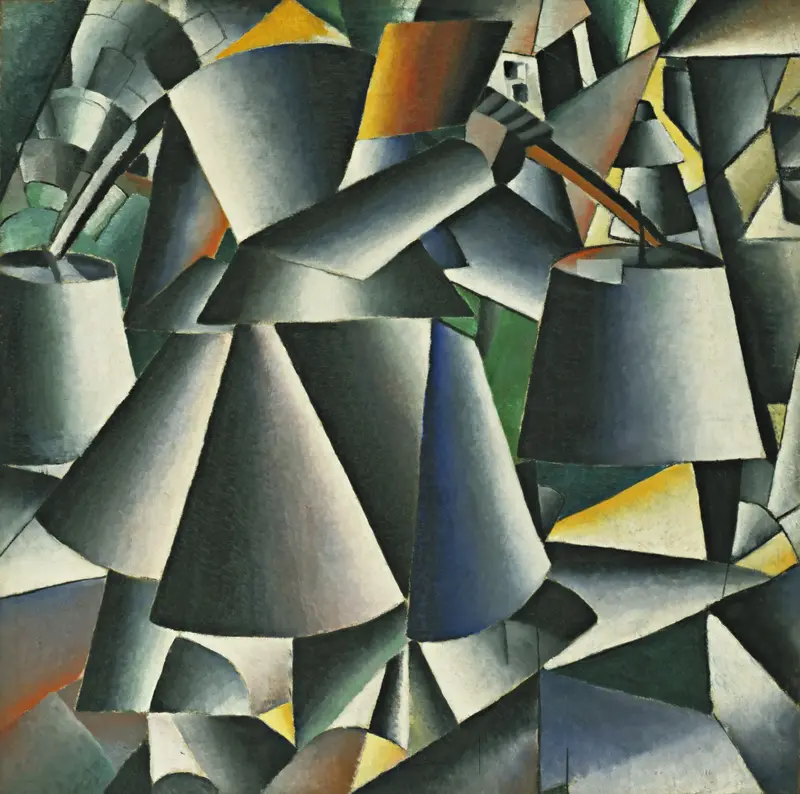
Woman with Pails: Dynamic Arrangement
Kazimir Malevich
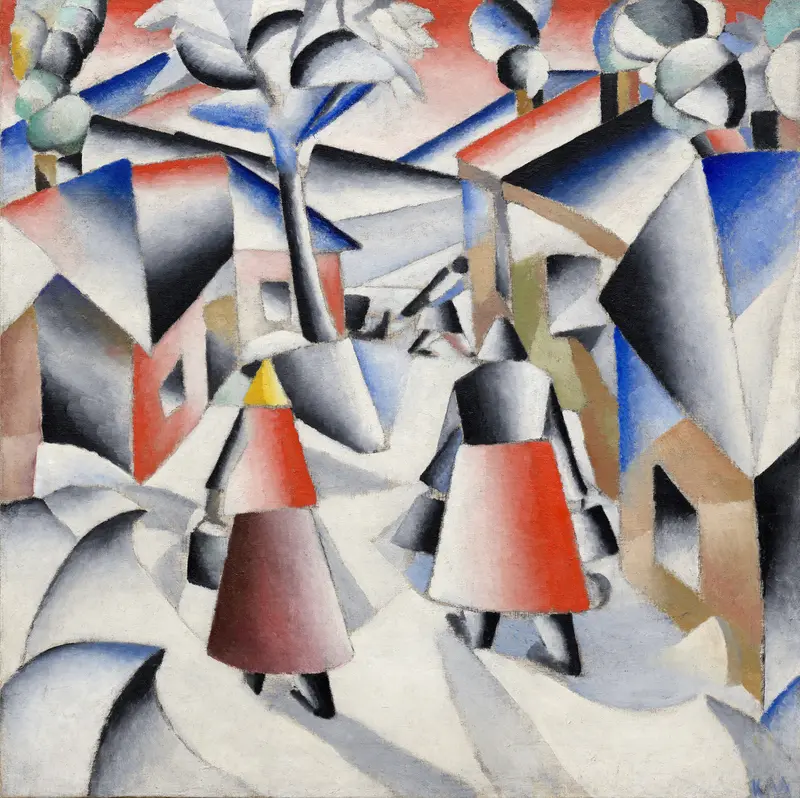
Morning in the Village after Snowstorm
Kazimir Malevich
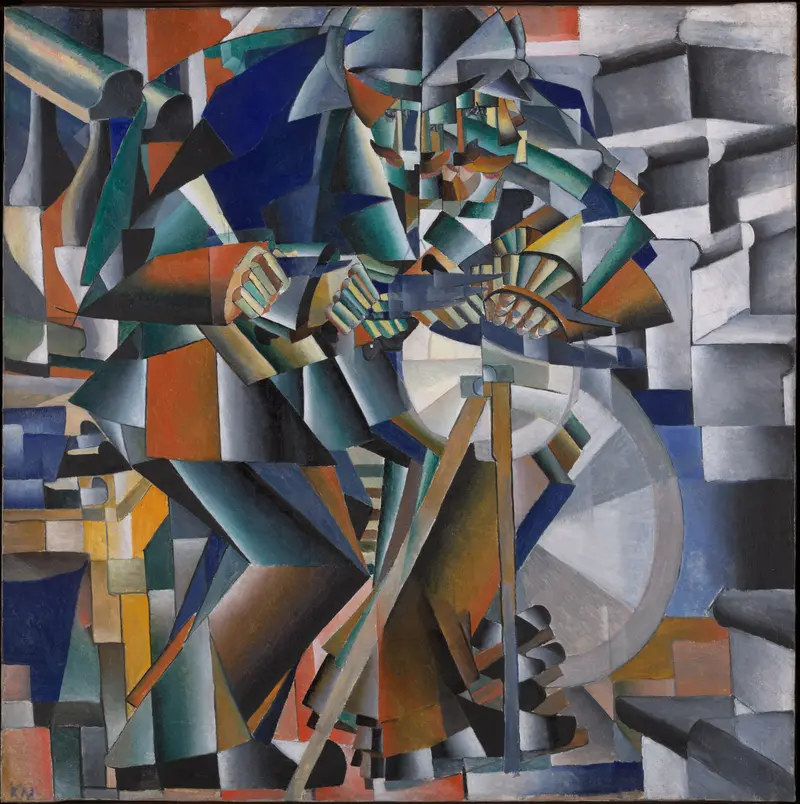
The Knife Grinder
Kazimir Malevich
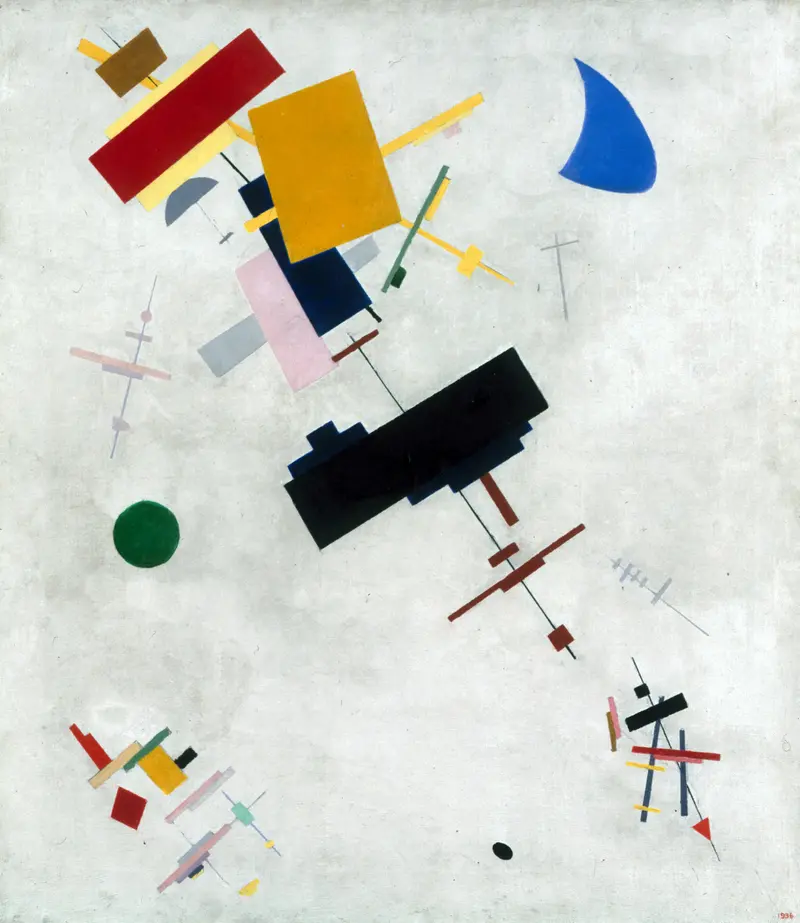
Suprematism (Supremus no. 56)
Kazimir Malevich


