
Szene in einem Luftschutzkeller — History & Facts
Can beauty exist without sorrow? In the depths of despair, where shadows loom larger than life, some of the most profound expressions of desire emerge. Look to the center of Szene in einem Luftschutzkeller, where a flickering candle casts trembling light across weary faces. The soft glow illuminates the harsh lines of the bunker, contrasting against the somber, muted colors that envelop the figures huddled together. Notice the interplay between the harshness of the setting and the tenderness of the human connection; even in confinement, a fragile warmth radiates as they share a moment of solace. Beneath the surface, this artwork captures a complex tapestry of emotions—hope intertwined with despair.
The longing in their eyes conveys a yearning for freedom and safety, underscored by the oppressive environment. While the physical space is dark and stifling, the emotional landscape is rich with nuance; it speaks to the resilience of the human spirit amid chaos. Every detail, from the worn garments to the anxious gestures, reflects the weight of their shared experience, echoing the desire to reclaim a life beyond survival. In 1945, Oskar Laske painted this piece during the tumultuous final months of World War II in Germany.
Living through the devastation of war, he witnessed the profound impact of conflict on human lives, fueling his exploration of emotional depth in art. This work stands as a testament to both the artist's response to a fractured world and the universal longing for connection, even in the bleakest of circumstances.
More Artworks by Oskar Laske
Browse all →
Faschingsumzug am Stock im Eisen Platz
Oskar Laske

Schönbrunn (Winter)
Oskar Laske
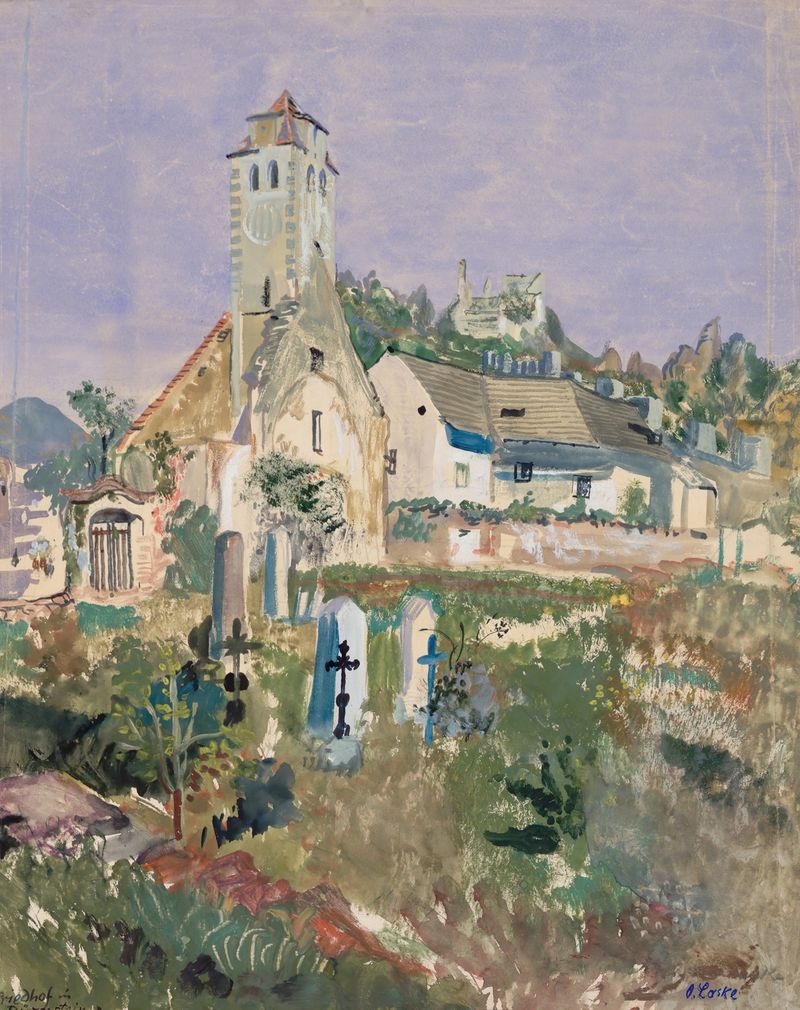
Friedhof in Dürnstein
Oskar Laske

Pratermotiv an der alten Donau
Oskar Laske

Frühjahrsnebel in Niederösterreich
Oskar Laske

Begräbnis des Wiener Bürgermeisters Dr. Karl Lueger
Oskar Laske

Maria Theresien-Denkmal mit Blick gegen das Burgtor
Oskar Laske
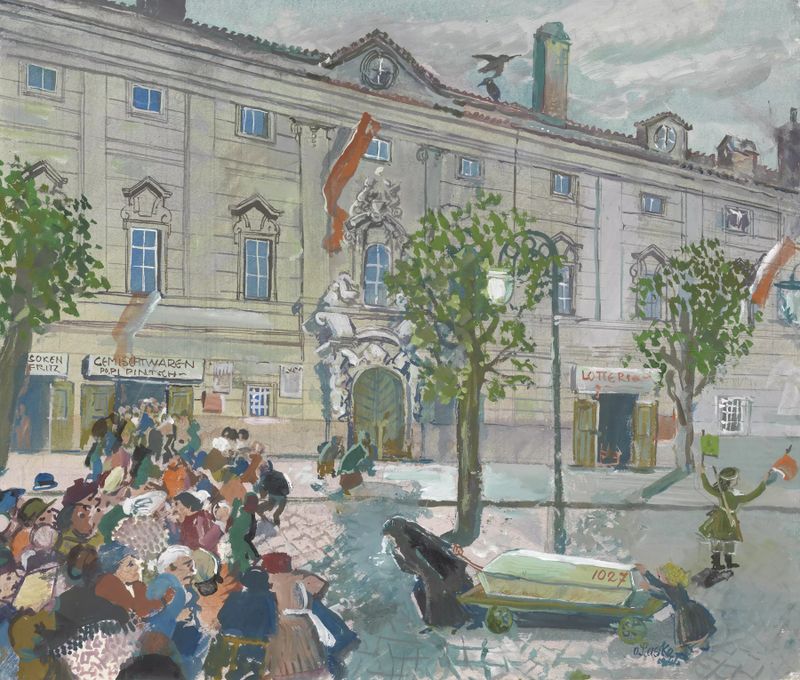
Wiener Straßenbild vom Mai 1945
Oskar Laske

Winterlandschaft in Pressbaum
Oskar Laske

Ansicht von Positano
Oskar Laske





