
Tableau no. 2 / Composition no. V — History & Facts
A lattice of pastel blocks draws the viewer in, each rectangle a quiet cell in a larger, pulsing organism. The eye is led gently from one compartment to the next, first by the soft glow of yellow, then by the blush of pink, all anchored by a scaffolding of cool blue-grey. The black outlines are not rigid but tremble slightly, as if the whole grid is breathing, resisting the urge to settle into perfect geometry.
Light seems to pool and ebb across the surface, with certain rectangles catching more radiance, hinting at a hidden order or rhythm beneath the apparent calm. This is a painting that invites you to wander, to feel the tension between structure and improvisation. Painted in 1914, Tableau no. 2 / Composition no.
V belongs to a world on the brink of radical change. In these years, artists like Piet Mondrian were searching for a new visual language, one that could express the underlying harmony of nature without resorting to literal depiction. The grid—so familiar now—was a bold experiment then, a way to break painting down to its essentials.
This work, now in the collection of MoMA, stands at the threshold between the old world and the new, its pastel palette and trembling lines reminding us that every revolution begins with a single, searching step. Look again, and see how the past and the future meet in every brushstroke.
More Artworks by Piet Mondrian

Composition II in Red, Blue, and Yellow
Piet Mondrian

Composition with Yellow, Blue, Black and Light Blue
Piet Mondrian

Composition with Large Blue Plane, Red, Black, Yellow, and Gray
Piet Mondrian
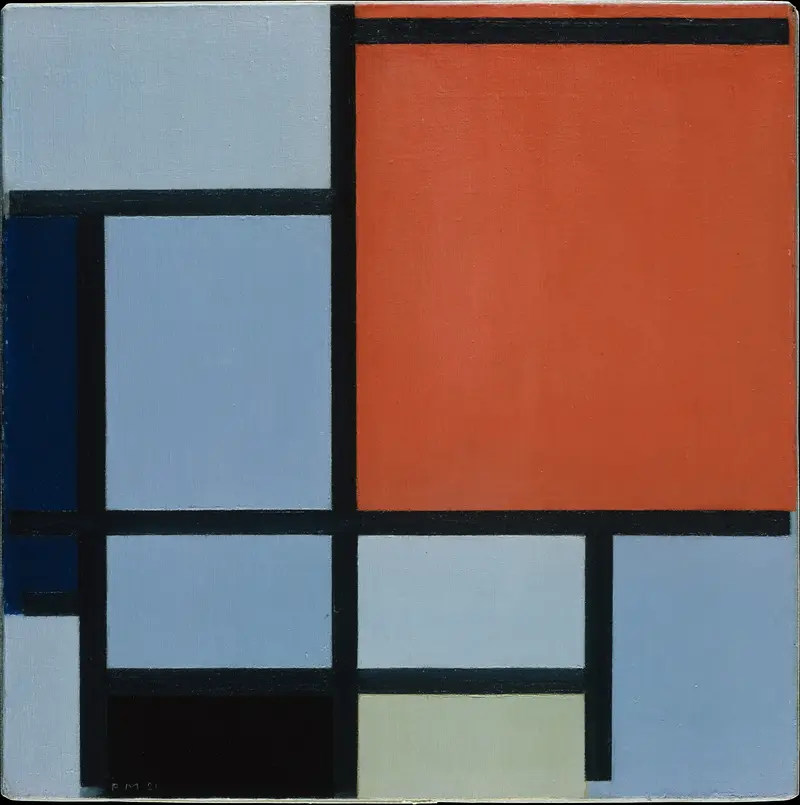
Composition
Piet Mondrian
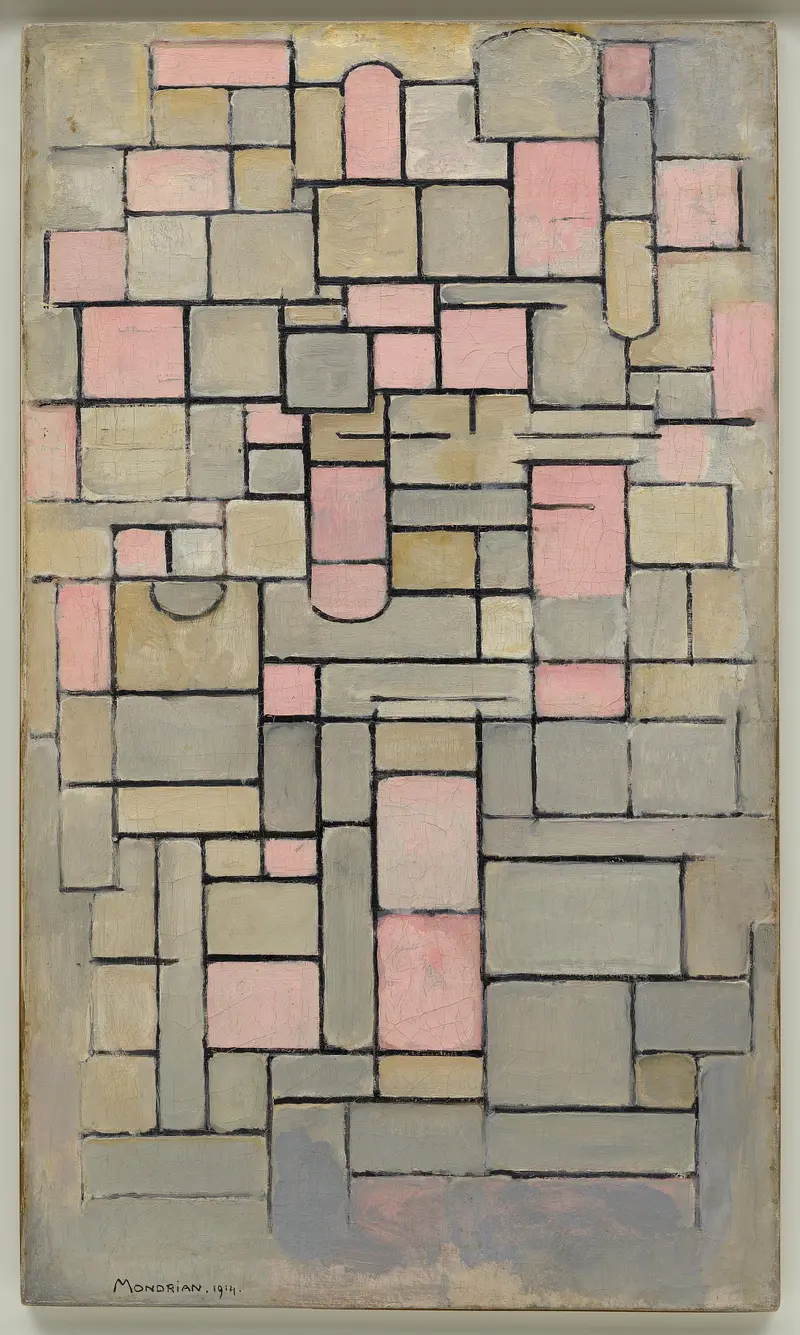
Composition 8
Piet Mondrian
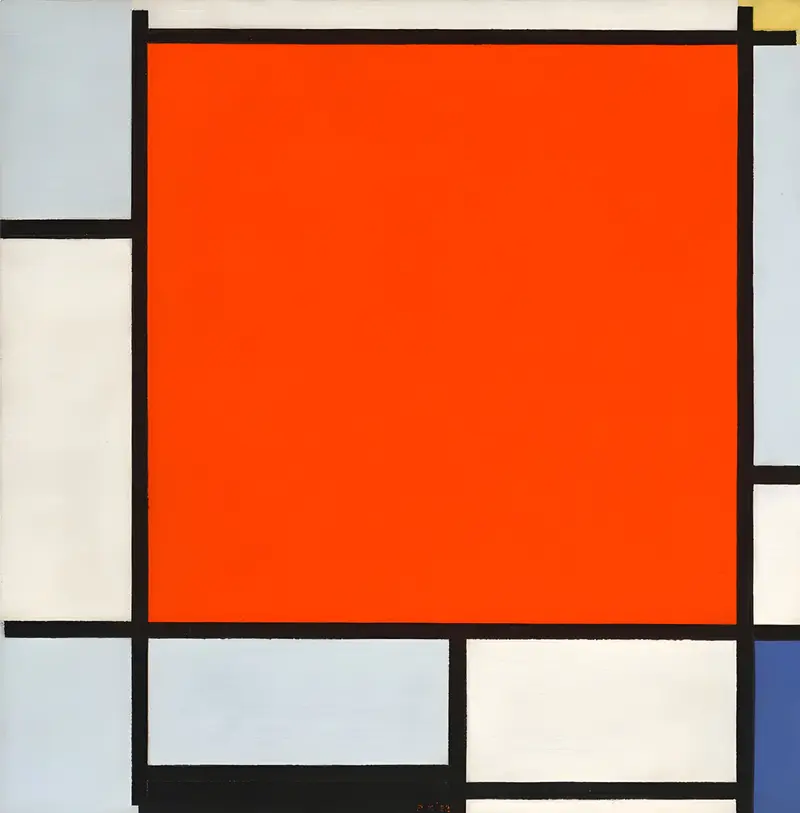
Composition with Large Red Plane, Bluish Gray, Yellow, Black and Blue
Piet Mondrian
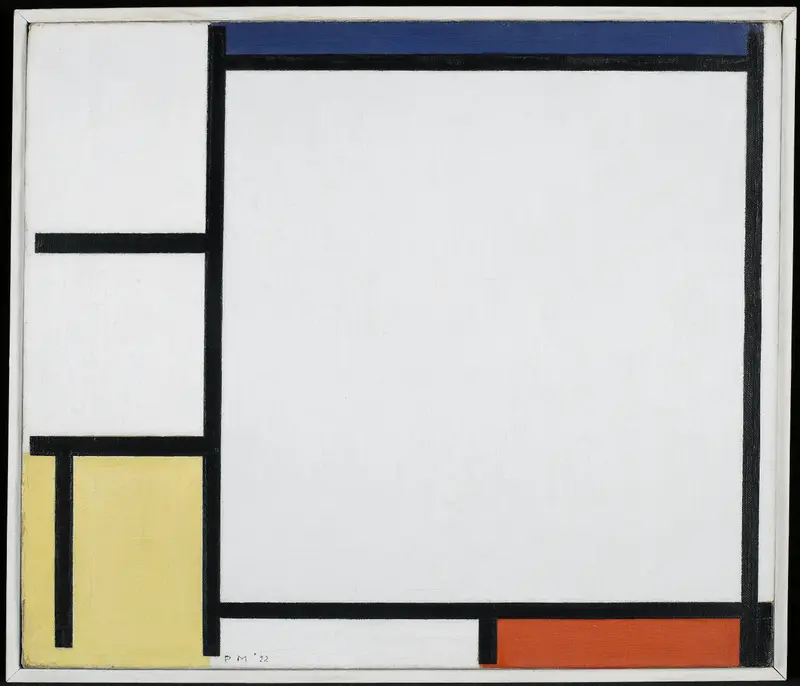
Composition with Blue, Red, Yellow, and Black
Piet Mondrian
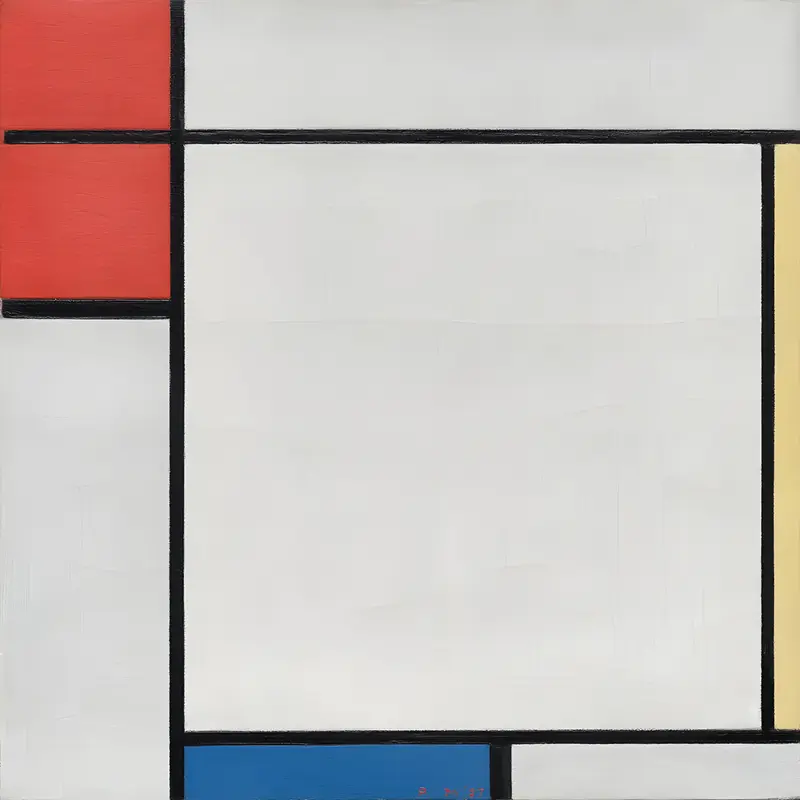
Composition with Red, Yellow, and Blue
Piet Mondrian
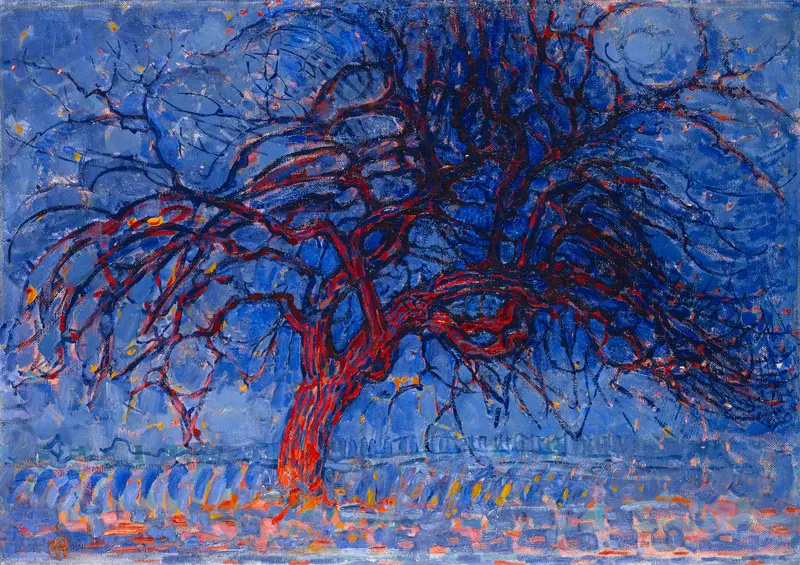
The Red Tree (Evening)
Piet Mondrian
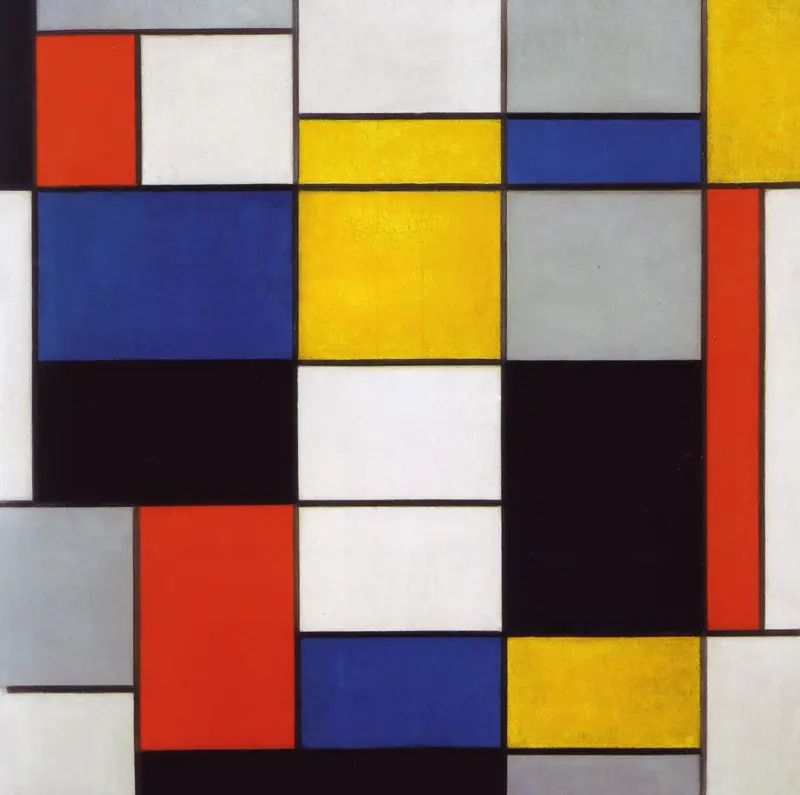
Composition A
Piet Mondrian




