
Tableau No. VIII — History & Facts
Tableau No. VIII is an abstract oil painting created by Piet Mondrian in 1925. The work belongs to the period in which Mondrian developed his mature style, characterized by geometric abstraction and a restricted palette of primary colors, black, white, and gray.
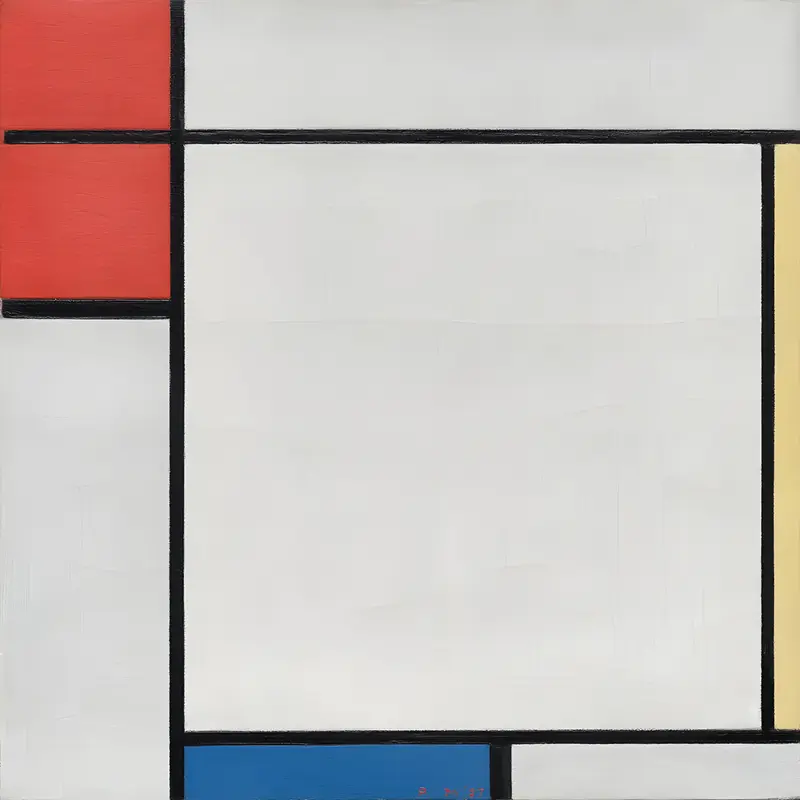
This painting is part of the artist’s exploration of the principles of De Stijl, a movement he helped to found. The composition consists of a large white rectangular field, bordered and intersected by thick black lines that divide the canvas into smaller rectangles and squares. Accents of primary colors—yellow in the upper right, red in a small square to the right, and blue along the lower edge—contrast with the white and gray areas. The surface is flat and the brushwork is restrained, emphasizing clarity and order.
The use of straight lines and right angles creates a sense of balance and structure. Tableau No. VIII exemplifies Mondrian’s commitment to neoplasticism, a theory that sought to express universal harmony through abstraction and reduction to essentials. Works from this period were not commissioned but were part of the artist’s ongoing investigation into the relationship between form and color.
More Artworks by Piet Mondrian

Composition II in Red, Blue, and Yellow
Piet Mondrian

Composition with Yellow, Blue, Black and Light Blue
Piet Mondrian

Composition with Large Blue Plane, Red, Black, Yellow, and Gray
Piet Mondrian
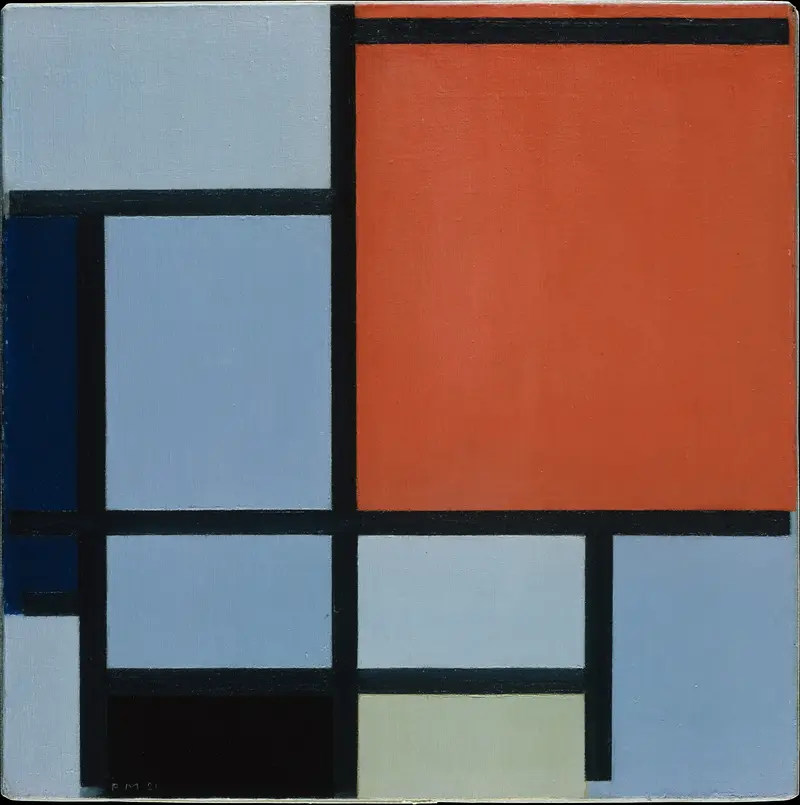
Composition
Piet Mondrian
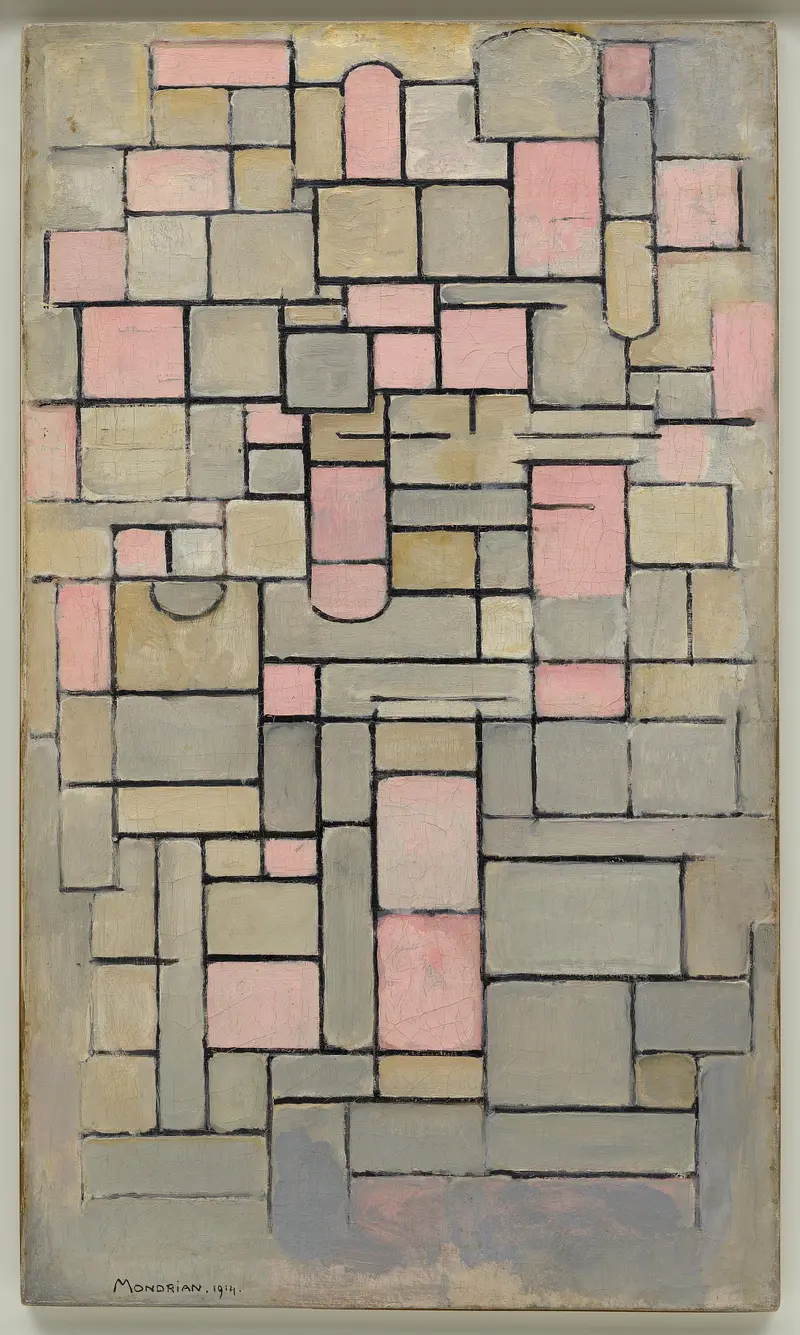
Composition 8
Piet Mondrian
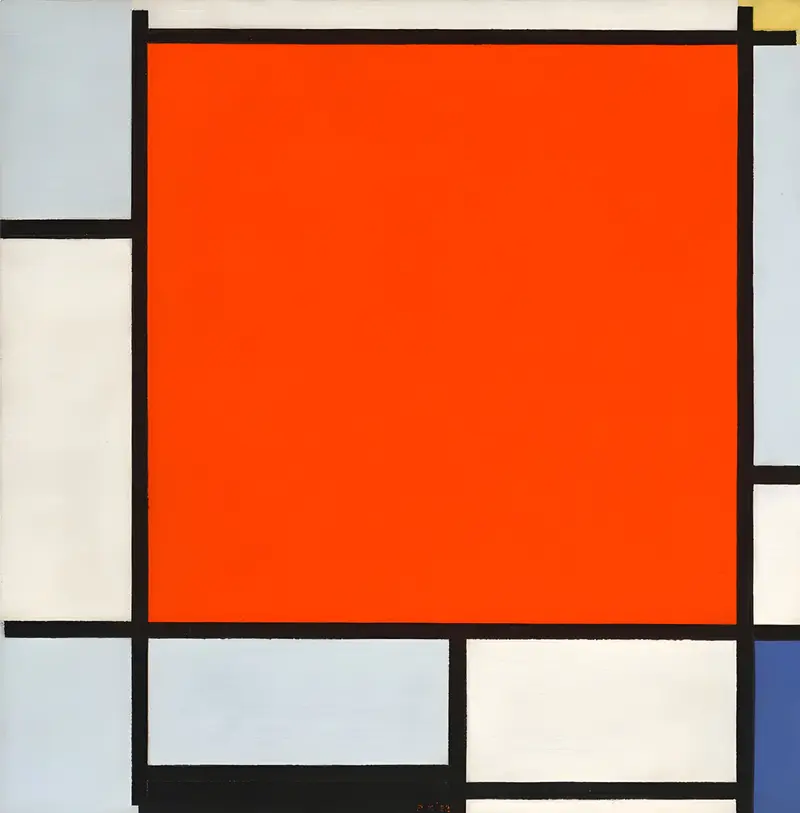
Composition with Large Red Plane, Bluish Gray, Yellow, Black and Blue
Piet Mondrian
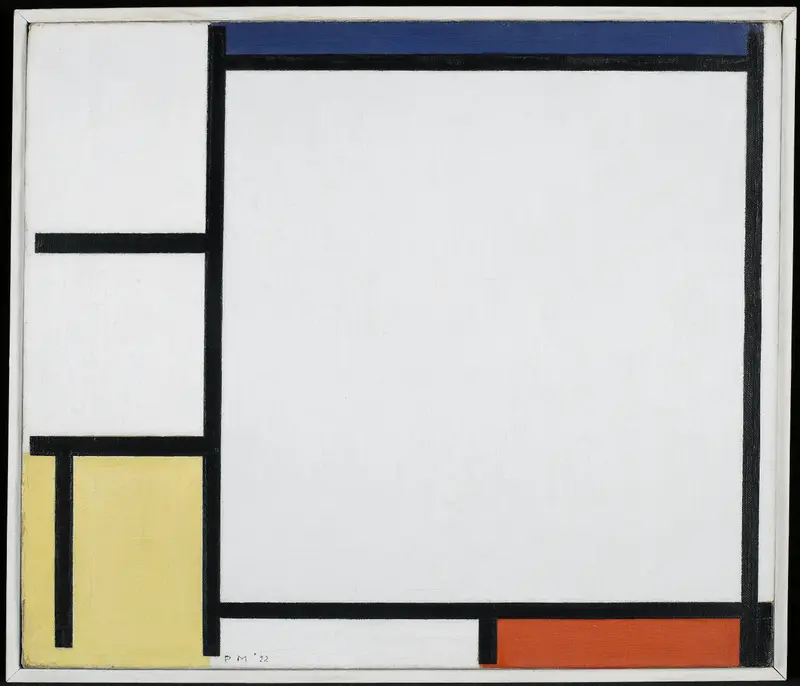
Composition with Blue, Red, Yellow, and Black
Piet Mondrian
Composition with Red, Yellow, and Blue
Piet Mondrian
The Red Tree (Evening)
Piet Mondrian
Composition A
Piet Mondrian




