
Tada no manchū — History & Facts
In Tada no manchū, the viewer is greeted with vibrant colors and intricate details. The scene features mythological figures, showcasing the rich narrative style typical of Ukiyo-e. The use of bold lines and contrasting colors creates a dynamic composition.
The background is often filled with stylized elements that enhance the overall atmosphere of the piece. The technical execution of this woodblock print is characteristic of Ukiyo-e art. Yoshitoshi employs a layered printing technique, allowing for depth and texture in the colors. The precision in the details of the figures and their expressions is notable, reflecting the artist's skill.
The print likely measures approximately 25 x 35 cm, making it a compact yet impactful work. Tsukioka Yoshitoshi was a prominent figure in the Ukiyo-e movement, known for his innovative approach to traditional themes. This work, created in the late 19th century, reflects the transition of Japanese art during a time of modernization. An interesting fact about Tada no manchū is that it captures a lesser-known myth, highlighting Yoshitoshi's dedication to exploring diverse narratives.
His prints often blend historical and contemporary elements, making them significant in the context of Japanese art history.
More Artworks by Tsukioka Yoshitoshi

Frost fills the air and the autumn air is still/lines of returning geese cross the moon in the third hour-Kenshin, from the series Twelve Aspects of the Moon
Tsukioka Yoshitoshi
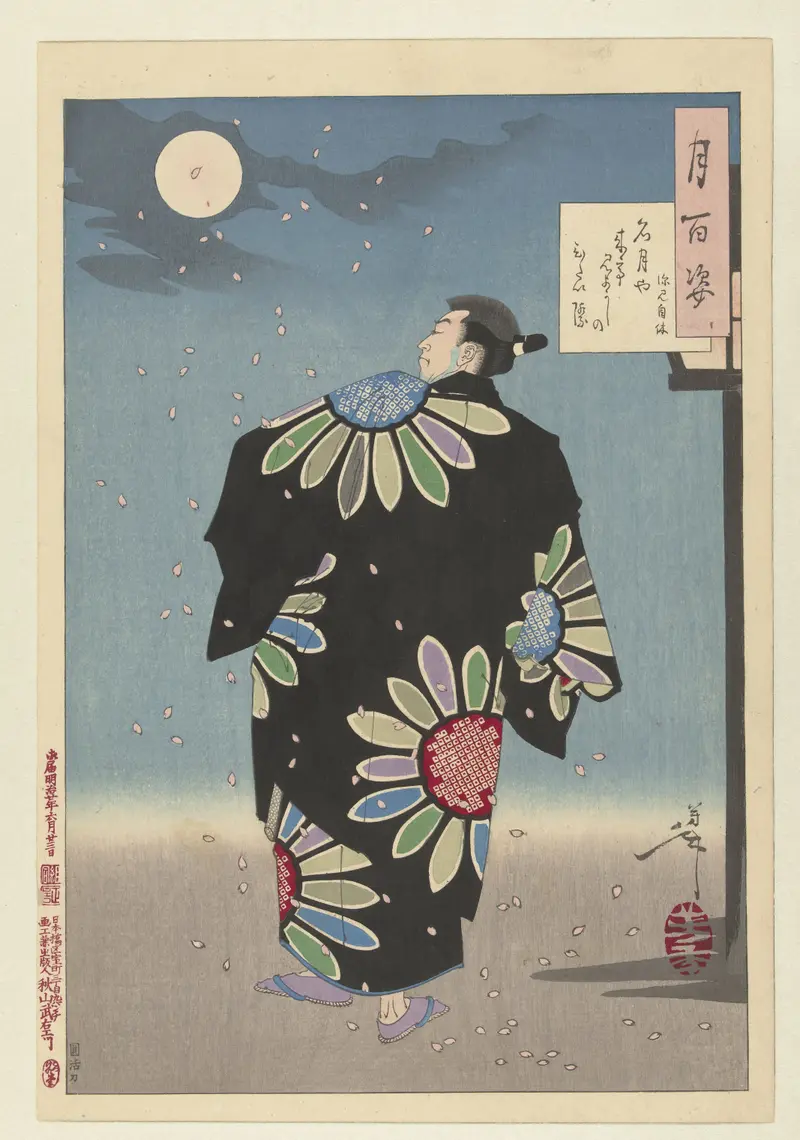
Fukami Jikyu in maanlicht
Tsukioka Yoshitoshi
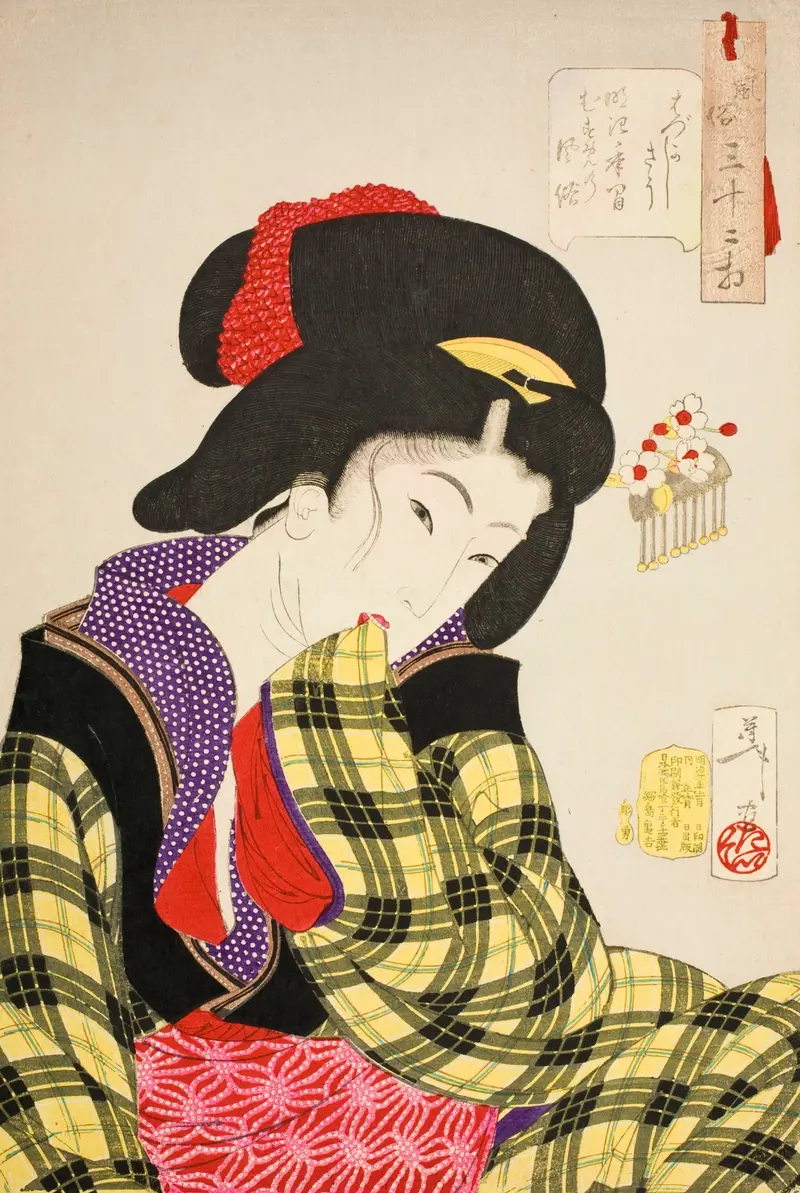
Looking Shy; The Manners of a Young Girl of the Meiji Era
Tsukioka Yoshitoshi
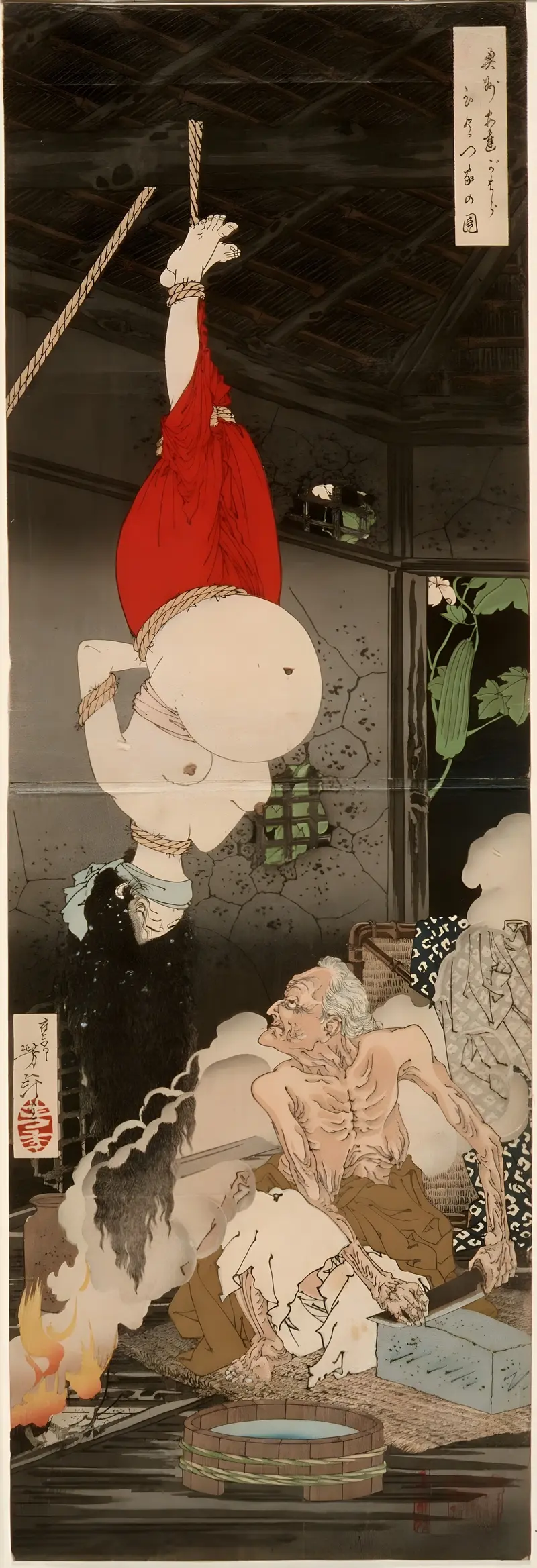
The Lonely House on Adachi Moor in Northern Japan
Tsukioka Yoshitoshi
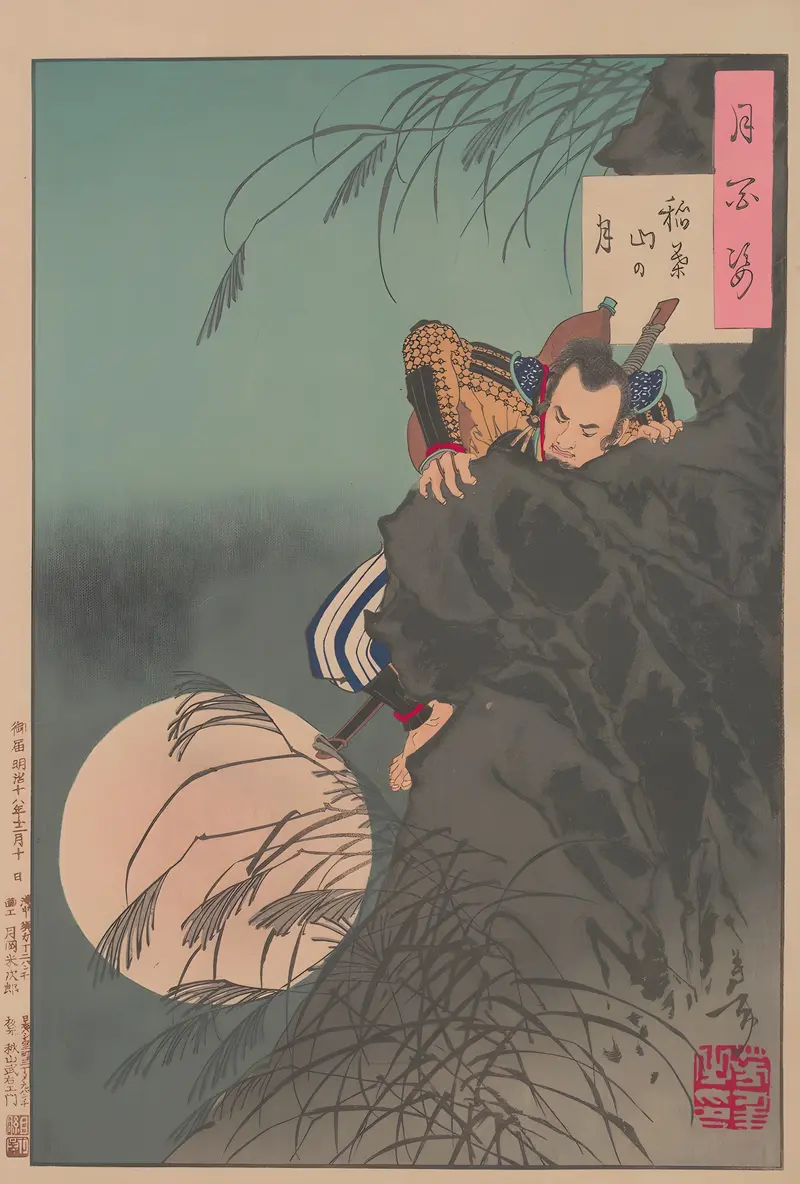
Inaba Mountain moon (Inabayama no tsuki)
Tsukioka Yoshitoshi
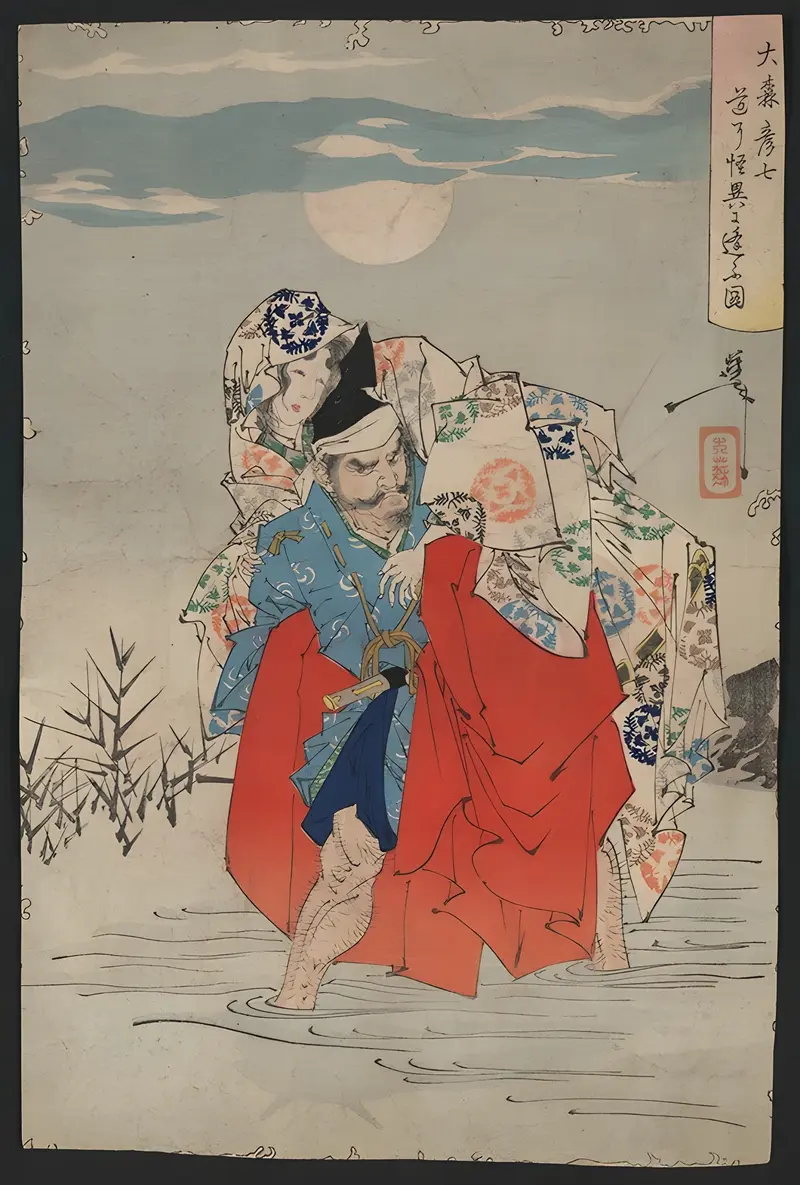
Omori Hikoshichi
Tsukioka Yoshitoshi
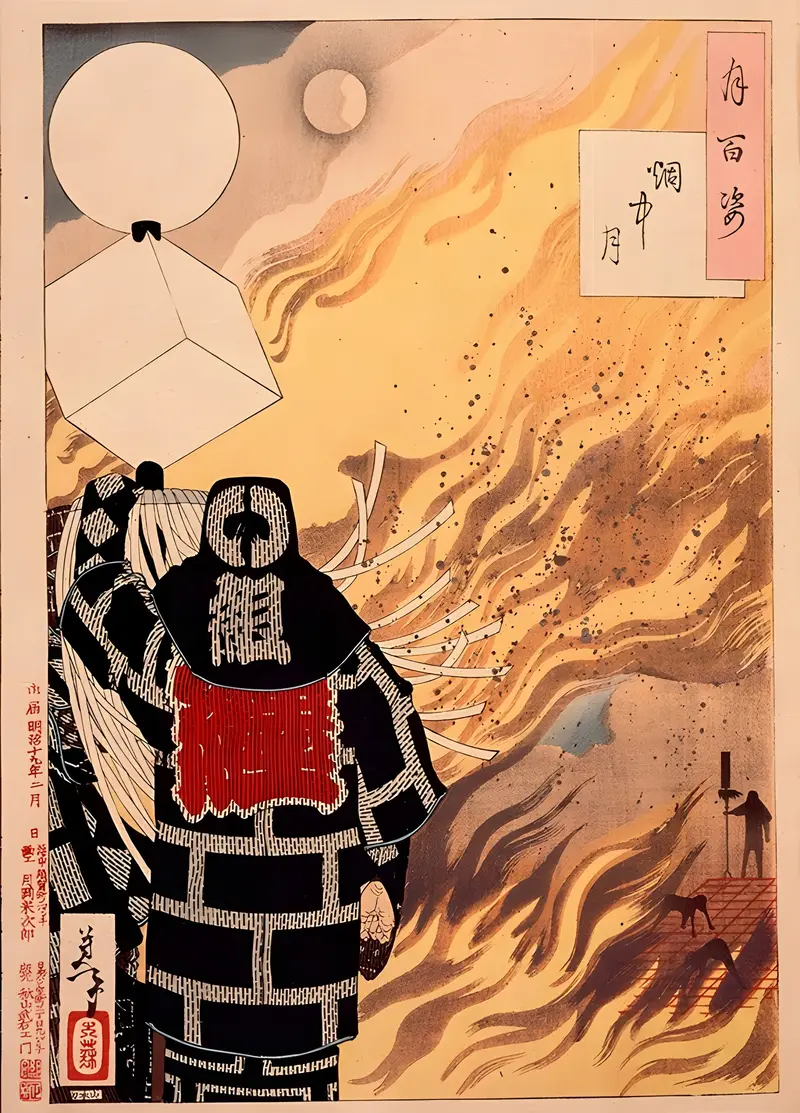
One Hundred Aspects of the Moon
Tsukioka Yoshitoshi
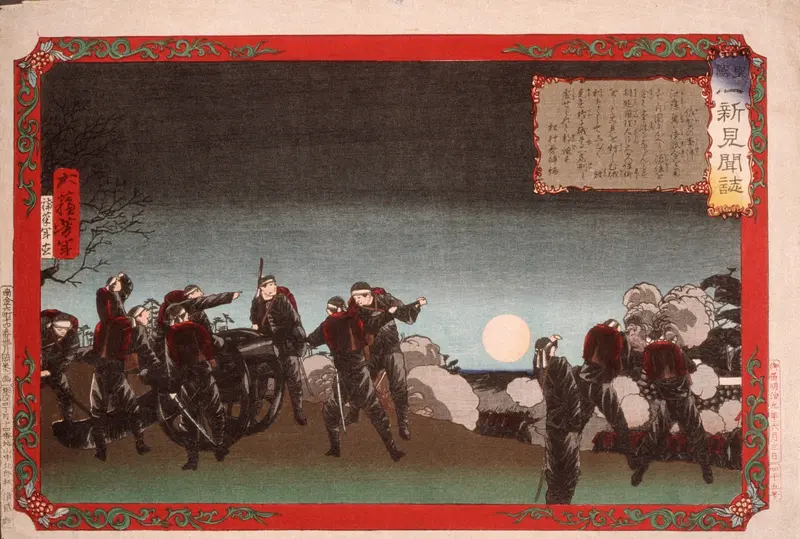
The Saga Incident
Tsukioka Yoshitoshi
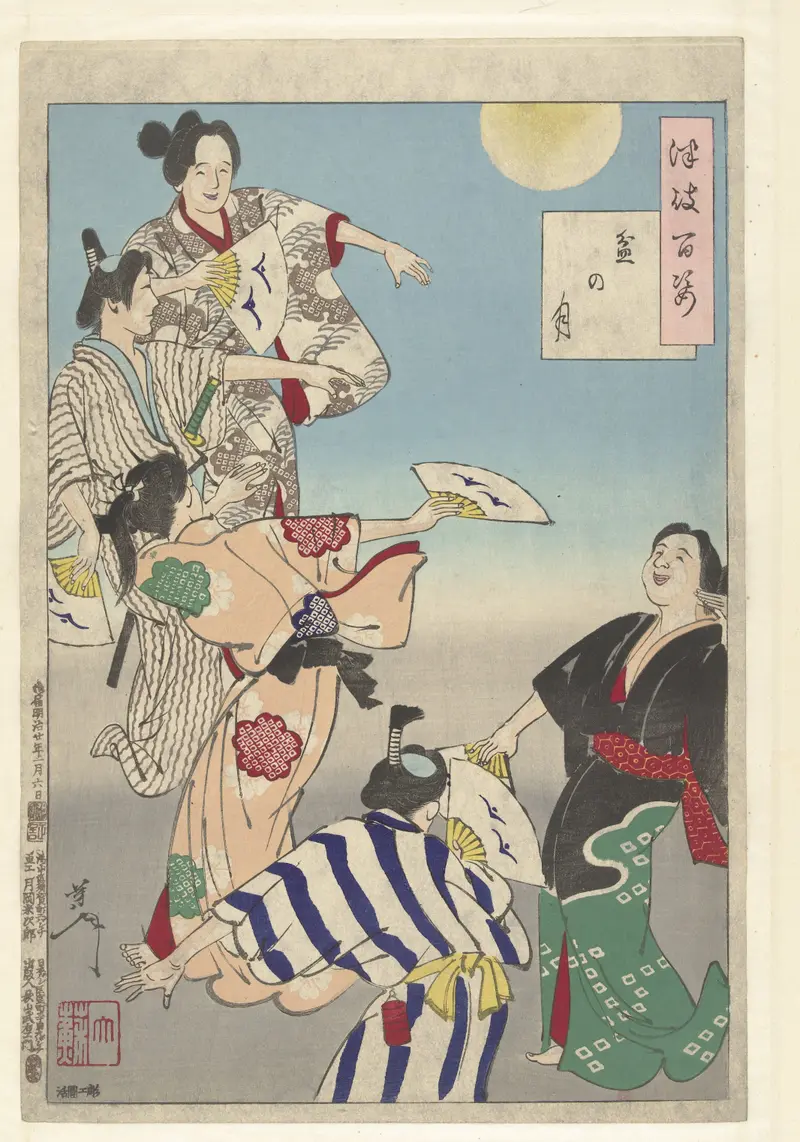
Bon Festival Moon (Bon no tsuki)
Tsukioka Yoshitoshi
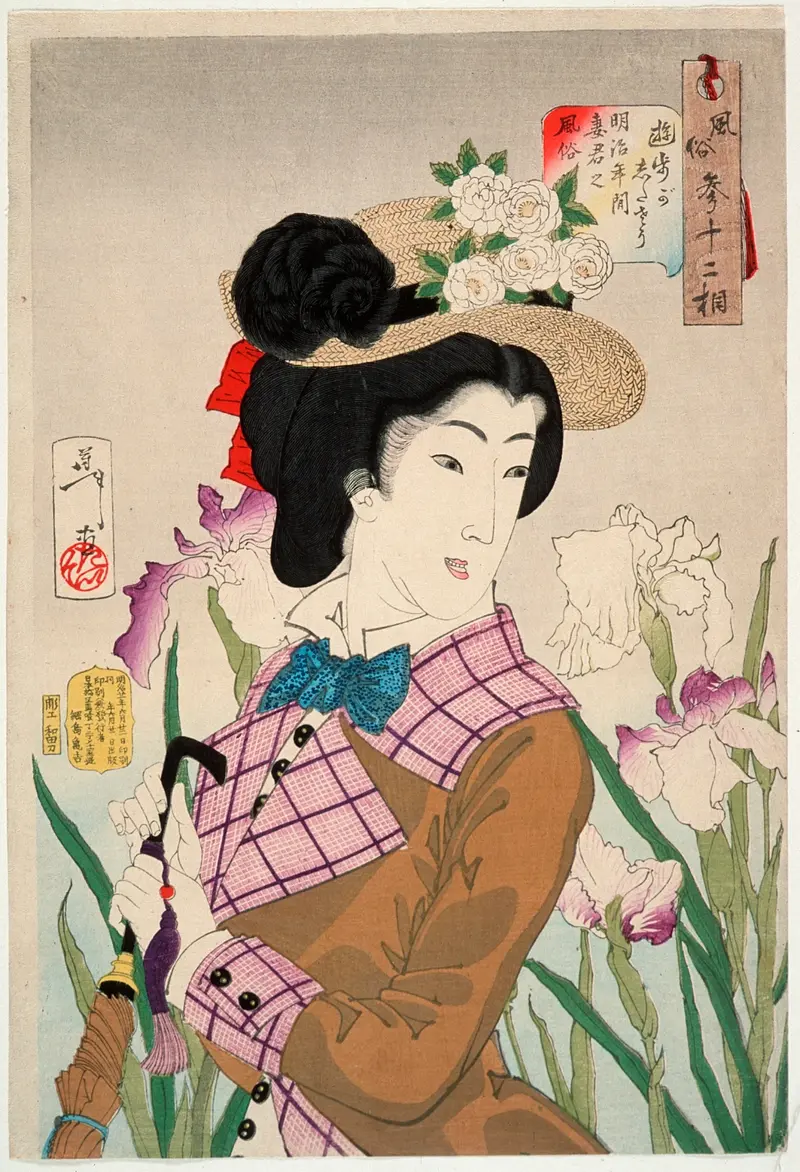
Preparing to Take a Stroll; The Wife of a Nobleman of the Meiji Period
Tsukioka Yoshitoshi





