
Tallandschaft mit einer steinernen Brücke, auf deren Brüstung eine antike Skulptur aufgestellt ist — History & Facts
Can paint confess what words never could? In Tallandschaft mit einer steinernen Brücke, auf deren Brüstung eine antike Skulptur aufgestellt ist, the emotional turmoil of a transformative era finds its voice through brushstrokes and color. Look closely at the bridge, its stone surface weathered yet steadfast, inviting your gaze across the panorama. Notice how the light plays along its edges, casting soft shadows that dance with the green foliage surrounding it. The ancient sculpture perched upon the railing serves as a sentinel, a silent witness to the intersection of nature and human endeavor, embodying both history and the passage of time.
Pforr's use of muted tones creates a harmonious balance, evoking a sense of calm amid the looming uncertainties of change. Beneath this scenic facade lies a tension between the past and the present. The bridge symbolizes a connection between disparate worlds, while the antiquity of the sculpture hints at a nostalgia for a bygone era. The lush landscapes juxtapose the rigidity of man-made structures, illustrating the struggle between natural freedom and human confinement.
As you delve deeper, the painting suggests a revolution not just in society but within the artist’s own psyche—an awakening to the complexities of progress and legacy. Johann Georg Pforr painted this work during a period of artistic and social upheaval in early 19th-century Germany, a time when Romantic ideals began to challenge classical norms. The piece reflects Pforr's engagement with these revolutionary ideas, striving to capture the spirit of his time in a landscape that evokes both beauty and contemplation.
More Artworks by Johann Georg Pforr
Browse all →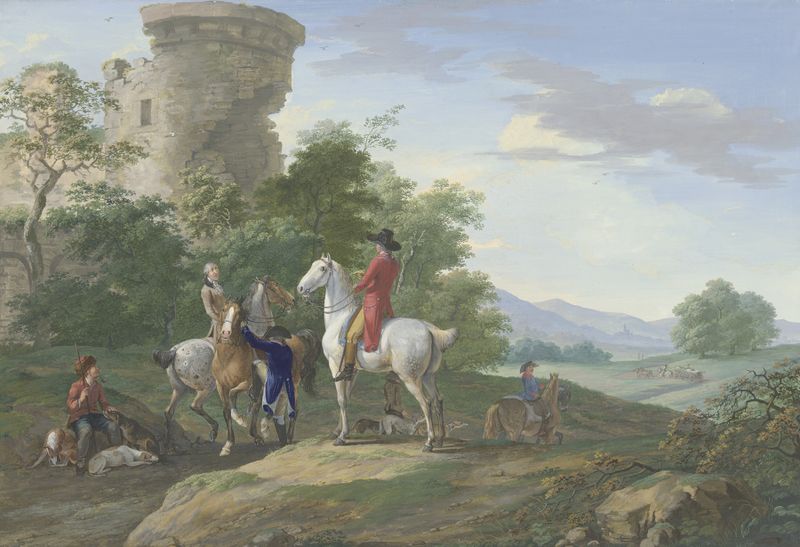
Jäger mit Pferden und Jagdhunden machen bei einer Ruine halt
Johann Georg Pforr
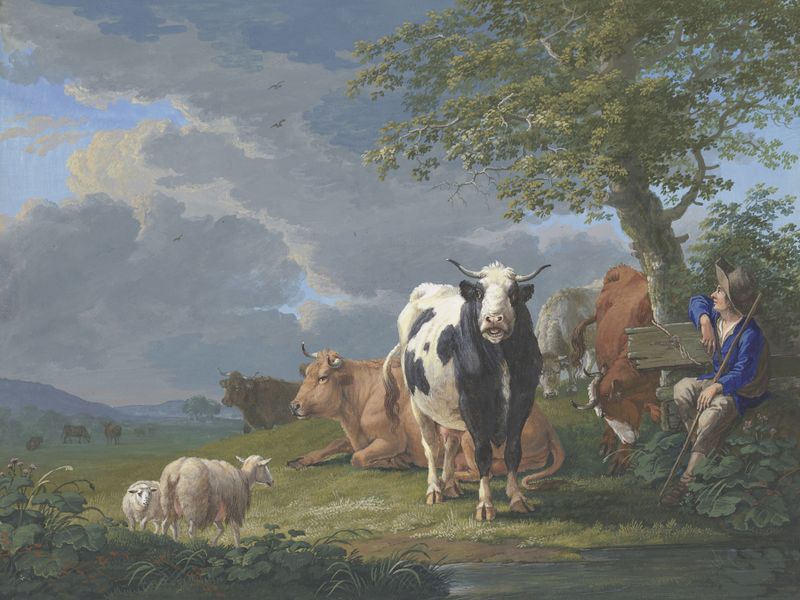
Hirte unter einem Baum mit seiner Rinderherde und zwei Schafen
Johann Georg Pforr
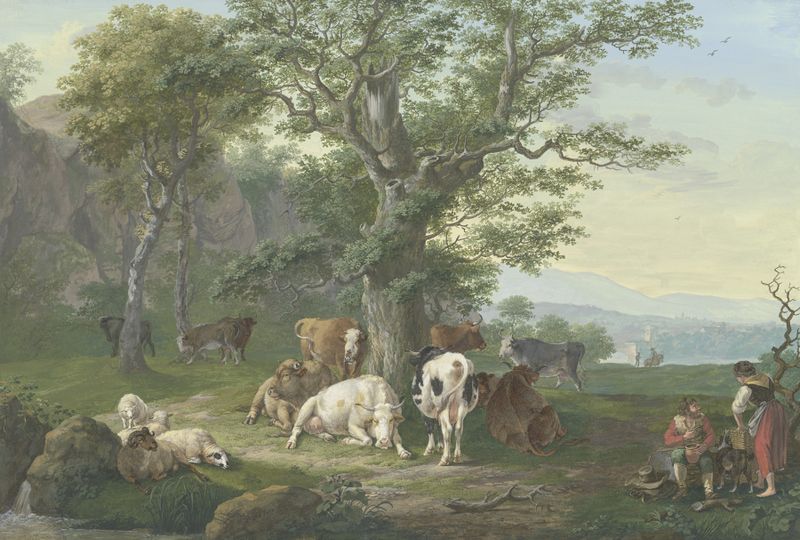
Lagernde Herde unter einer Eiche, rechts Hirte und Hirtin bei der Mahlzeit und Ausblick in die Ferne
Johann Georg Pforr
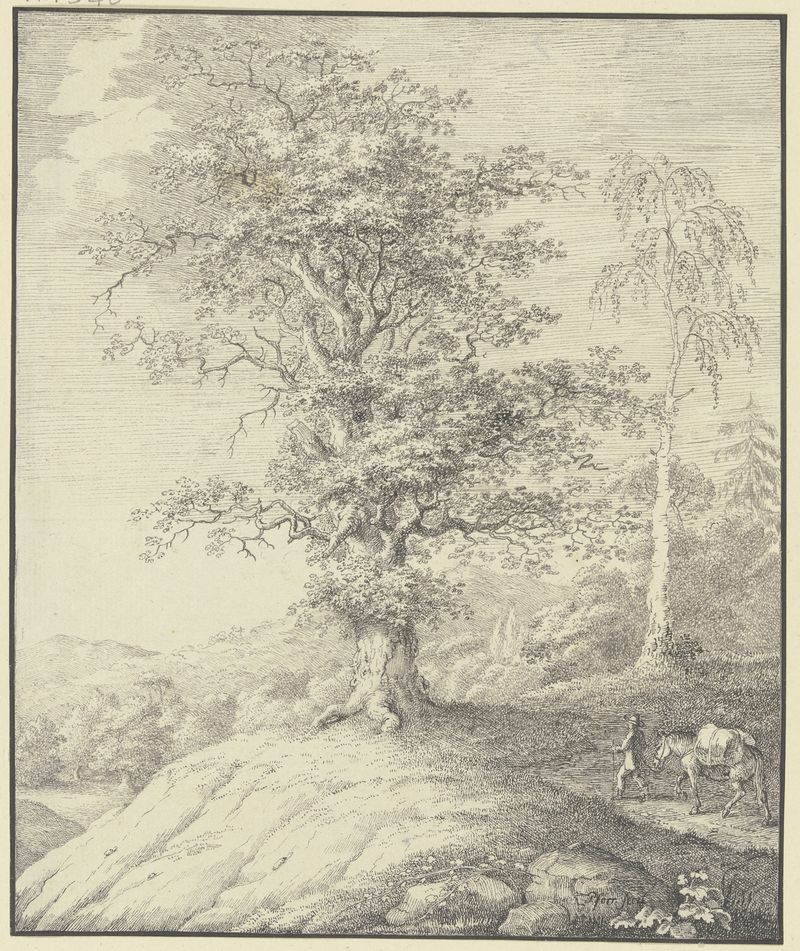
Eichbaum und Birke auf einer Anhöhe, von rechts führt ein Mann ein bepacktes Pferd herbei
Johann Georg Pforr
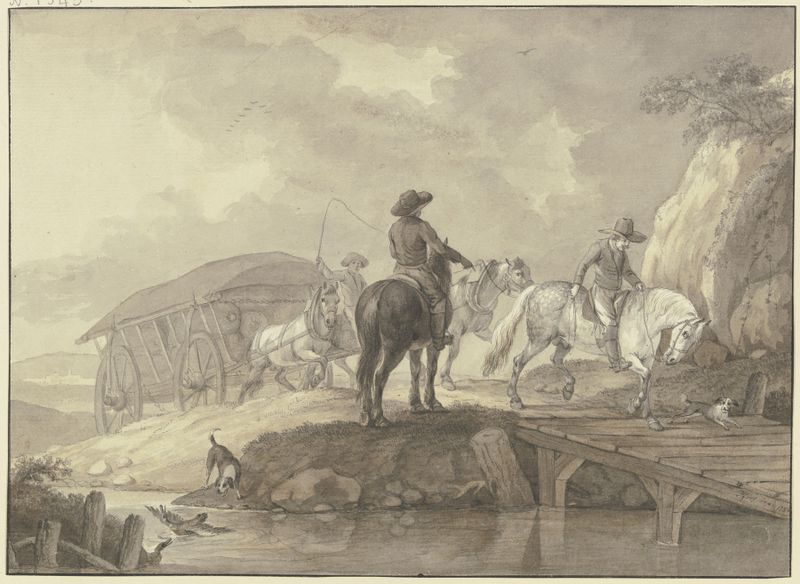
Ein mit Säcken beladener Lastwagen, begleitet von zwei Reitern und zwei Hunden, fährt über eine Brücke
Johann Georg Pforr
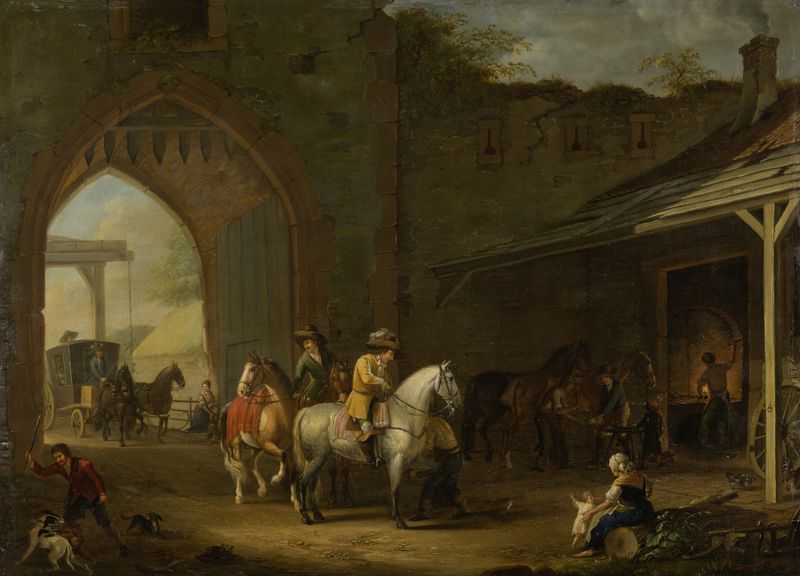
Horsemen at the Blacksmith’s
Johann Georg Pforr
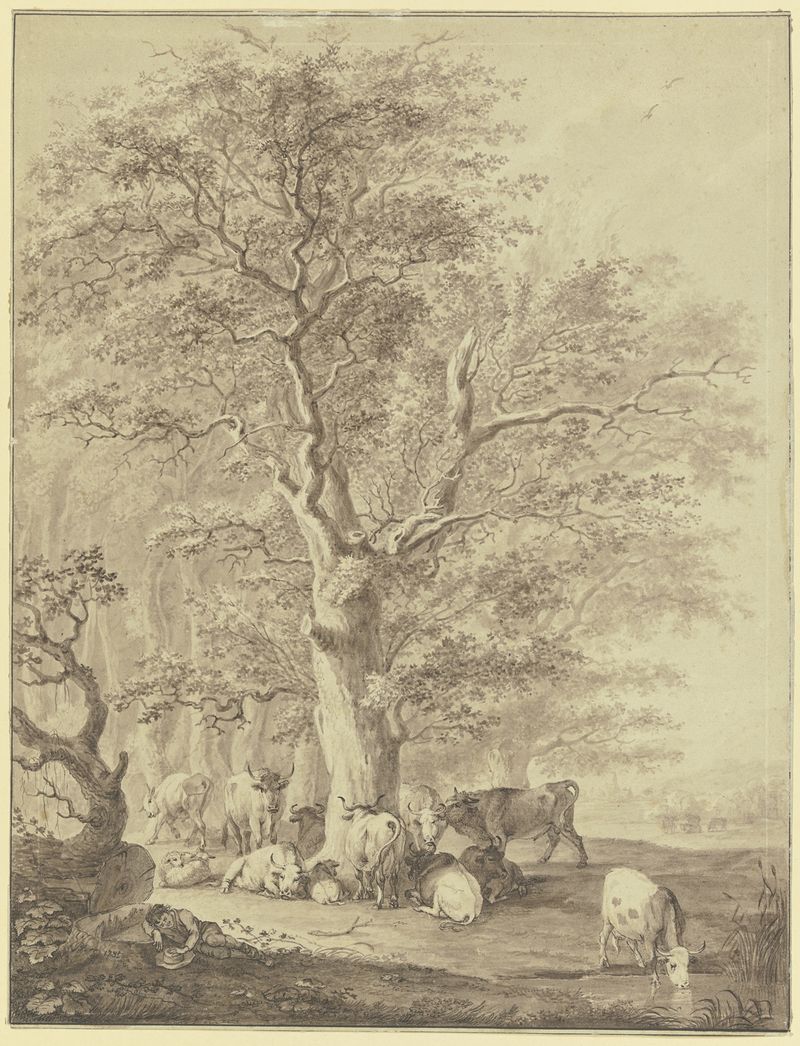
Rinderherde mit zwei Schafen und dem Hirten unter einer Eiche rastend
Johann Georg Pforr

Mondscheinlandschaft an einem Fluß, Hirte und Hirtin treiben das Vieh zum Hof
Johann Georg Pforr
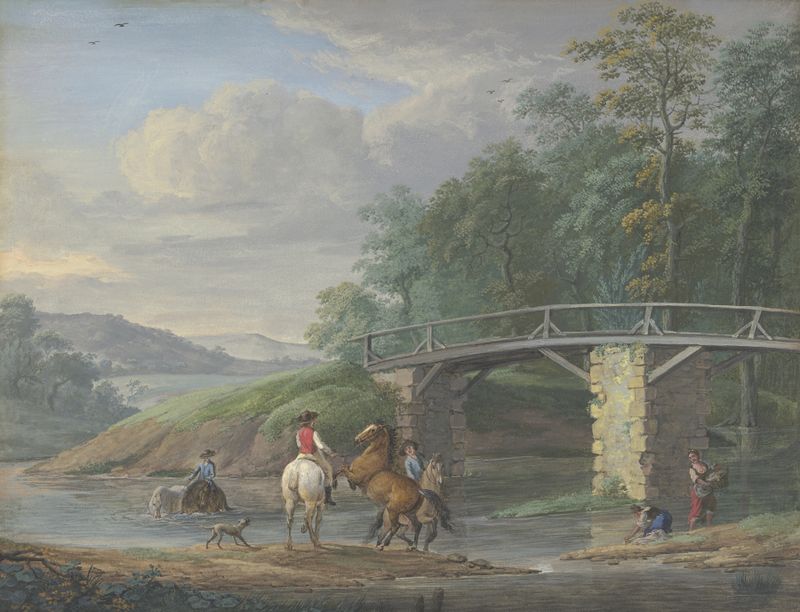
Pferde in der Schwemme bei einer Brücke, rechts zwei Wäscherinnen
Johann Georg Pforr

Viehherde mit zwei Hirten, bei einer Steinbrücke durch das Wasser schwimmend
Johann Georg Pforr





