
Temple Church — History & Facts
Madness lurks in the quiet spaces, waiting to reveal itself in the most unexpected forms. In the realm of art, it dances with rationality, taunting the edges of sanity. Focus on the steadfast silhouette of the Temple Church, rising against a backdrop of turbulent skies. Notice how the light plays upon the stone, revealing intricate details that echo the weight of history.
The palette of muted tones graces the structure, inviting contemplation while suggesting an unyielding presence. Every shadowy crevice seems to whisper secrets of the past, drawing the eye to the imposing archways that beckon yet withhold their stories. As you explore further, observe the juxtaposition between the church's solidity and the ethereal ambiance surrounding it. The calm facade contrasts with the tempestuous skies, evoking a sense of internal conflict—perhaps a reflection of the artist's own struggle with the madness of existence.
Here, the stillness of the architecture seems to confront the chaos of the world, an invitation to grapple with the dualities of faith and doubt. In 1800, Samuel Ireland painted this work during a time when Romanticism was blossoming, shaping a shift in artistic expression. Living in England, he witnessed the upheaval of societal norms alongside a growing interest in the sublime. His experience and the cultural dynamics of the period influenced his portrayal of stability amidst uncertainty, making Temple Church a poignant commentary on the fragile nature of sanity in a changing world.
More Artworks by Samuel Ireland
Browse all →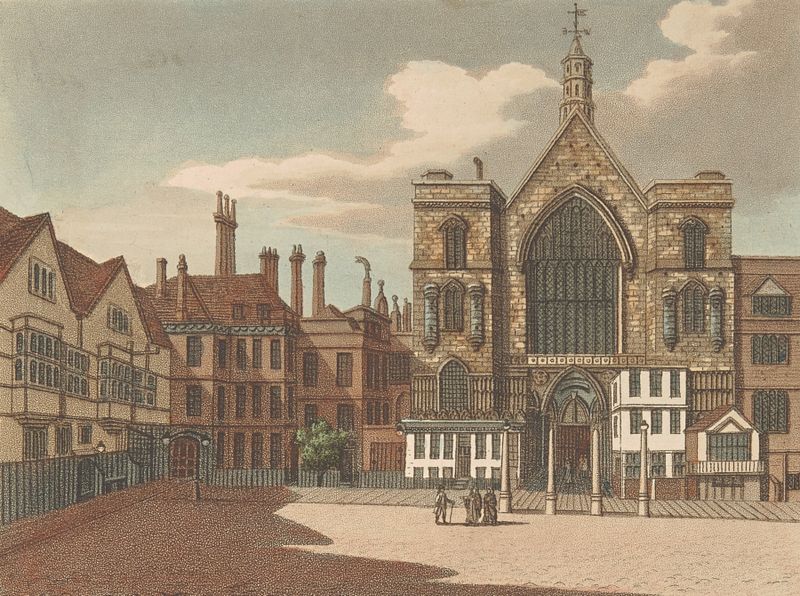
Westminster Hall
Samuel Ireland

Southwest View of Middle Temple
Samuel Ireland
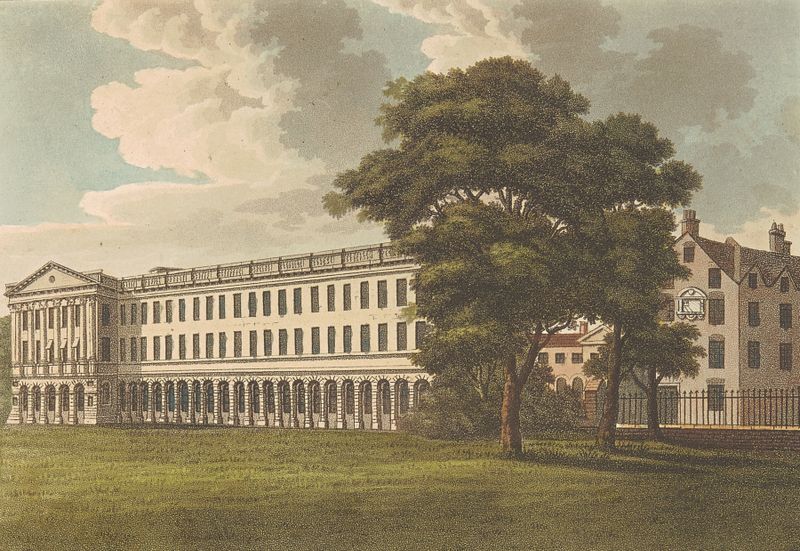
Stone Buildings, Lincoln’s Inn
Samuel Ireland
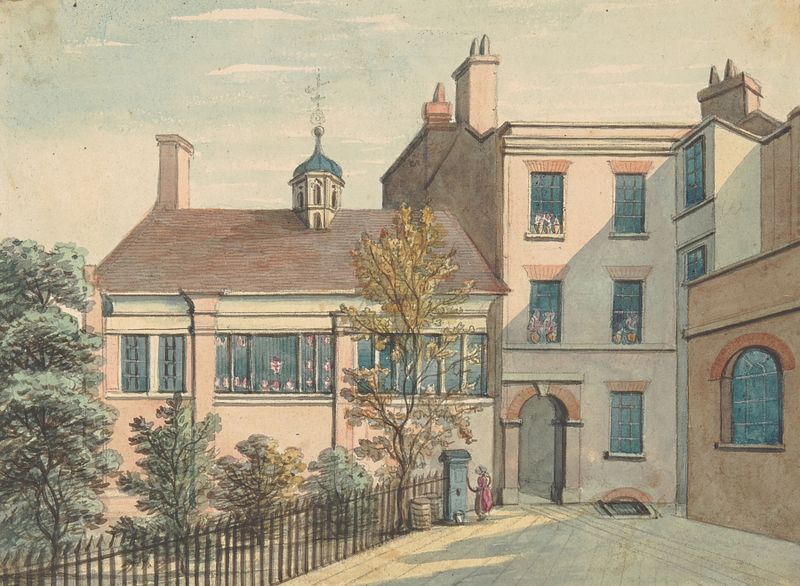
Barnard’s Inn
Samuel Ireland

Lincoln’s Inn Hall and Chapel
Samuel Ireland

Lion’s Inn
Samuel Ireland
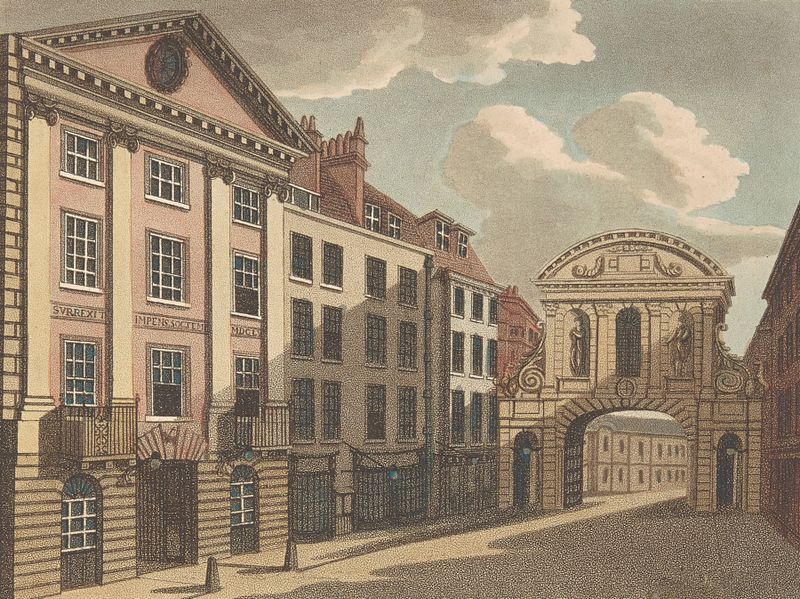
Middle Temple Gate
Samuel Ireland
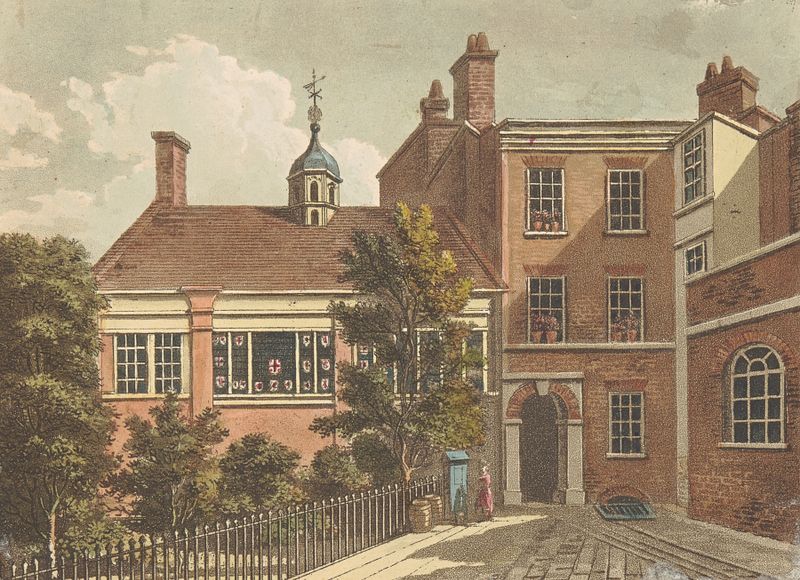
Barnard’s Inn
Samuel Ireland

Westminster Hall
Samuel Ireland
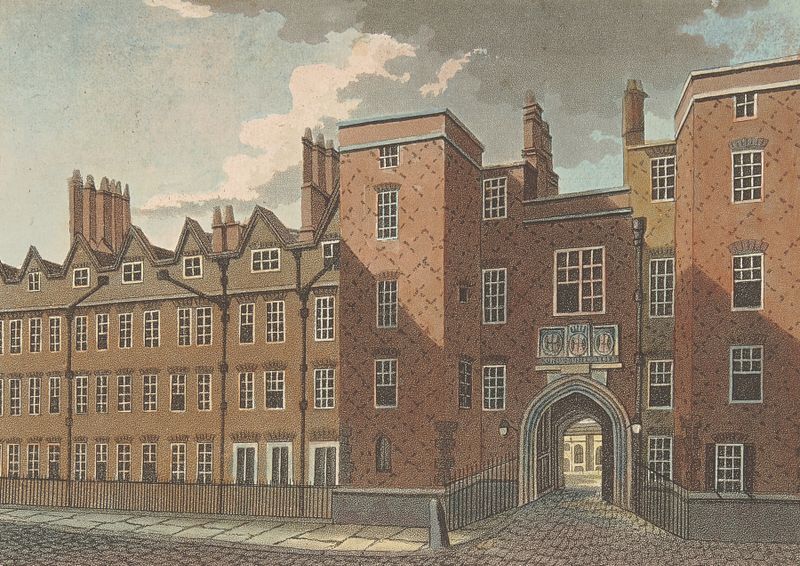
Lincoln’s Inn Gate
Samuel Ireland
More Architecture Art
Browse all →
The statue of Liberty
Frédéric Auguste Bartholdi

View of Houses in Delft, Known as ‘The Little Street’
Johannes Vermeer

View of Houses in Delft, Known as ‘The Little Street’
Johannes Vermeer

The Cathedral in Rouen. The portal, Grey Weather
Claude Monet

The yellow house
Vincent van Gogh

The Church in Auvers-sur-Oise, View from the Chevet
Vincent van Gogh