
Templum Antonini et Faustinae — History & Facts
In the quietude of loss, what remains when the echoes of a once-vibrant life fade away? Look closely at the architectural remnants in the center; the majestic columns emerge from the canvas, standing stoic against the soft, muted palette. Notice how the light delicately bathes the stone, highlighting its weathered textures, while shadows gather in the crevices, whispering stories of time and decay. The gentle play of light captures both reverence and sorrow, prompting the viewer to question the permanence of memory and the passage of time. Yet, it is the surrounding elements that reveal deeper emotions.
The interplay of the ruins with the encroaching foliage symbolizes nature’s resilience amidst loss, suggesting a contrast between human ambition and the inevitability of decline. The spectral figures on the periphery hint at the ghosts of those who once walked these hallowed grounds, evoking a sense of grief intertwined with nostalgia. Each brushstroke weaves a narrative of celebration and remembrance, inviting reflection on what we hold dear in the face of absence. Created in 1882, this work emerged during a time when Christoph Ziegler was immersed in his studies of classical architecture in Italy.
The Romantic era was reaching its zenith, characterized by a fascination with the ruins of the past, both as a reflection of historical grandeur and a commentary on the fleeting nature of human endeavors. This context offers a stark yet poignant backdrop for Ziegler's exploration of loss and memory, bringing to life the remnants of history with profound emotional resonance.
More Artworks by Christoph Ziegler
Browse all →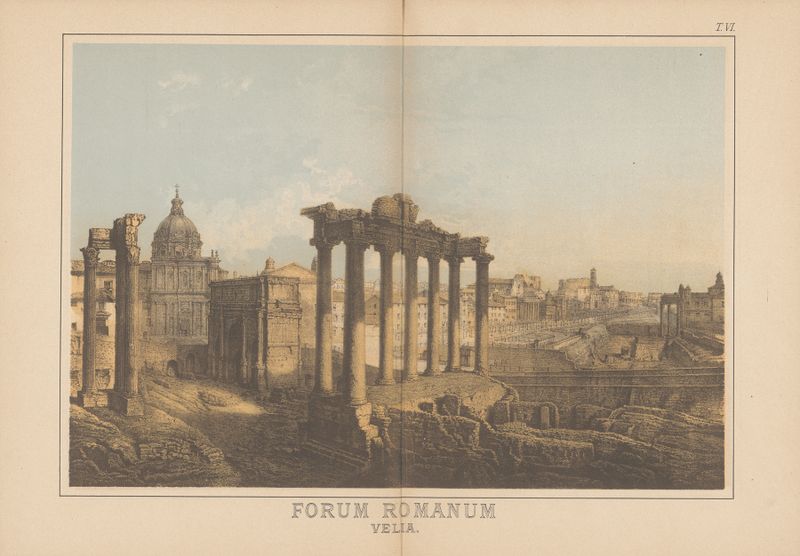
Forum Romanum
Christoph Ziegler
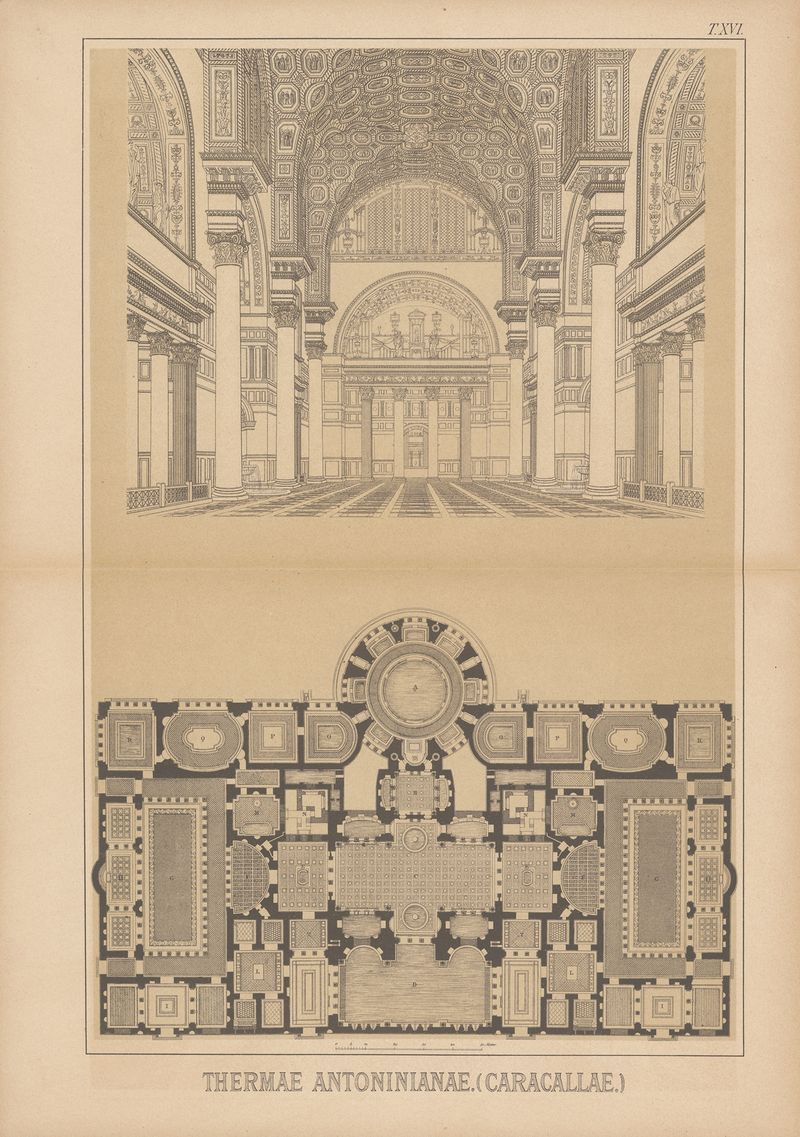
Thermae Antoninianae (Caracallae)
Christoph Ziegler
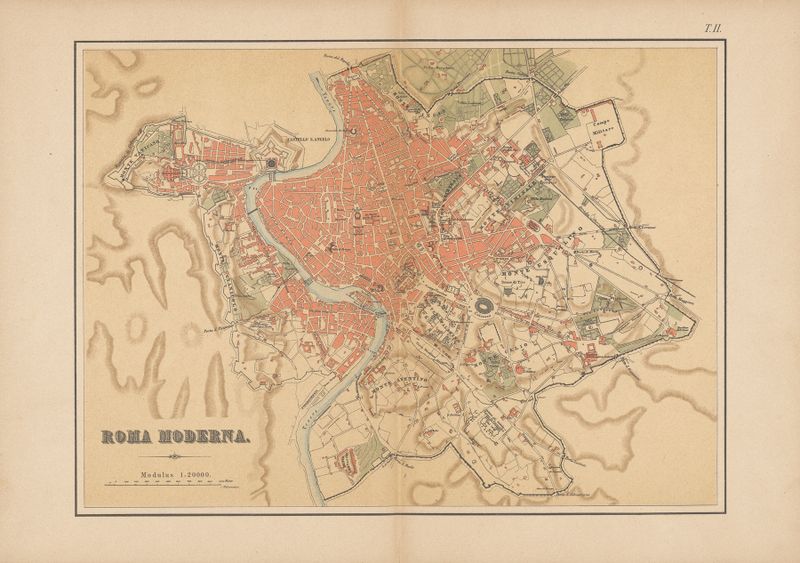
Plan des neuen Rom
Christoph Ziegler
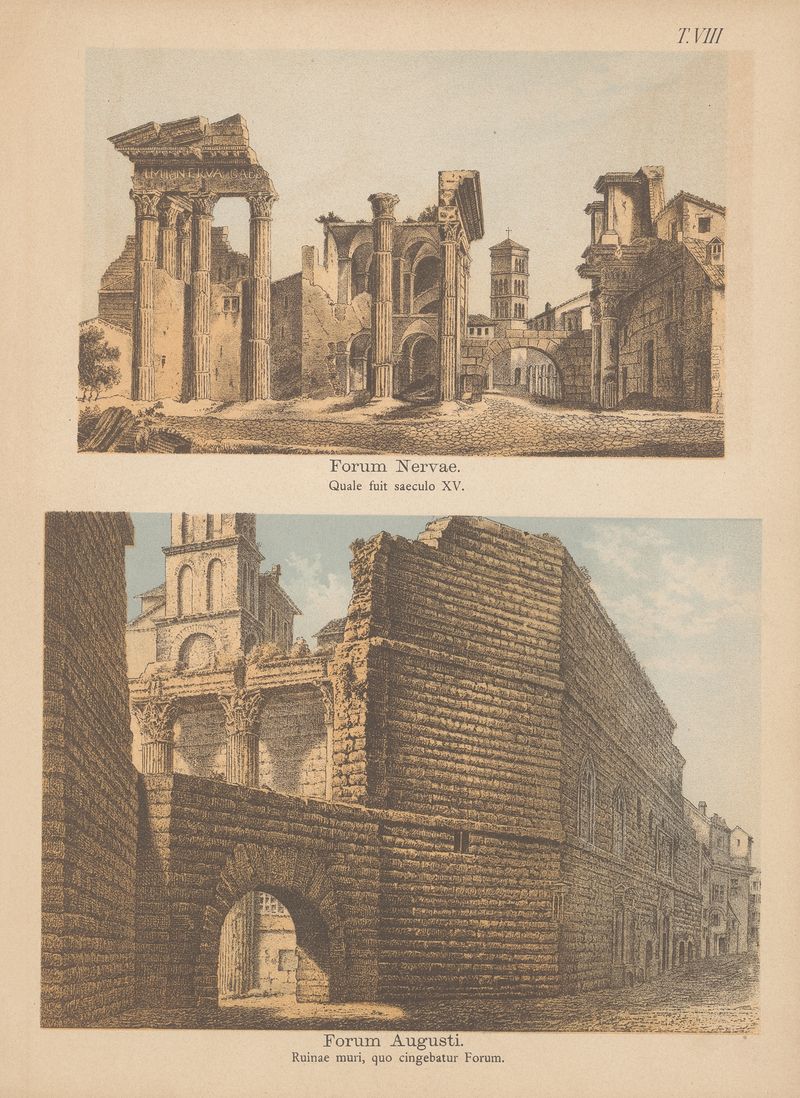
Forum Nervae, Forum Augusti
Christoph Ziegler
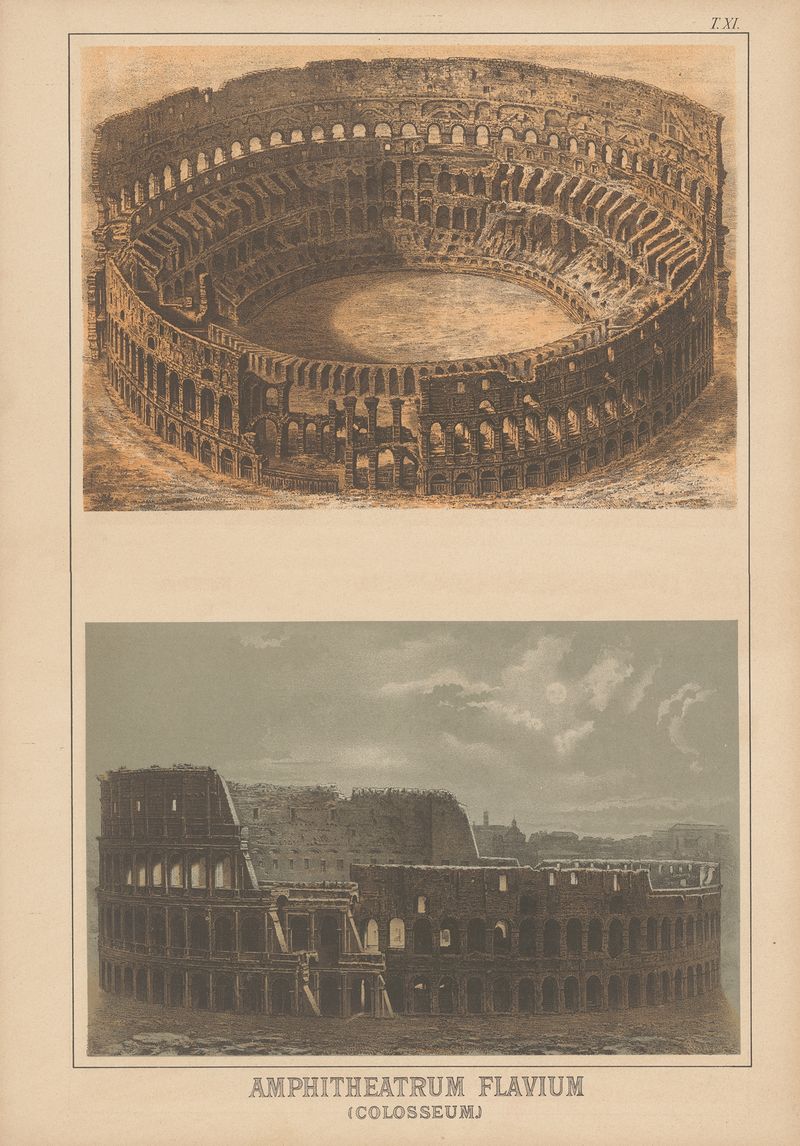
Amphitheatrum Flavium (Colosseum)
Christoph Ziegler
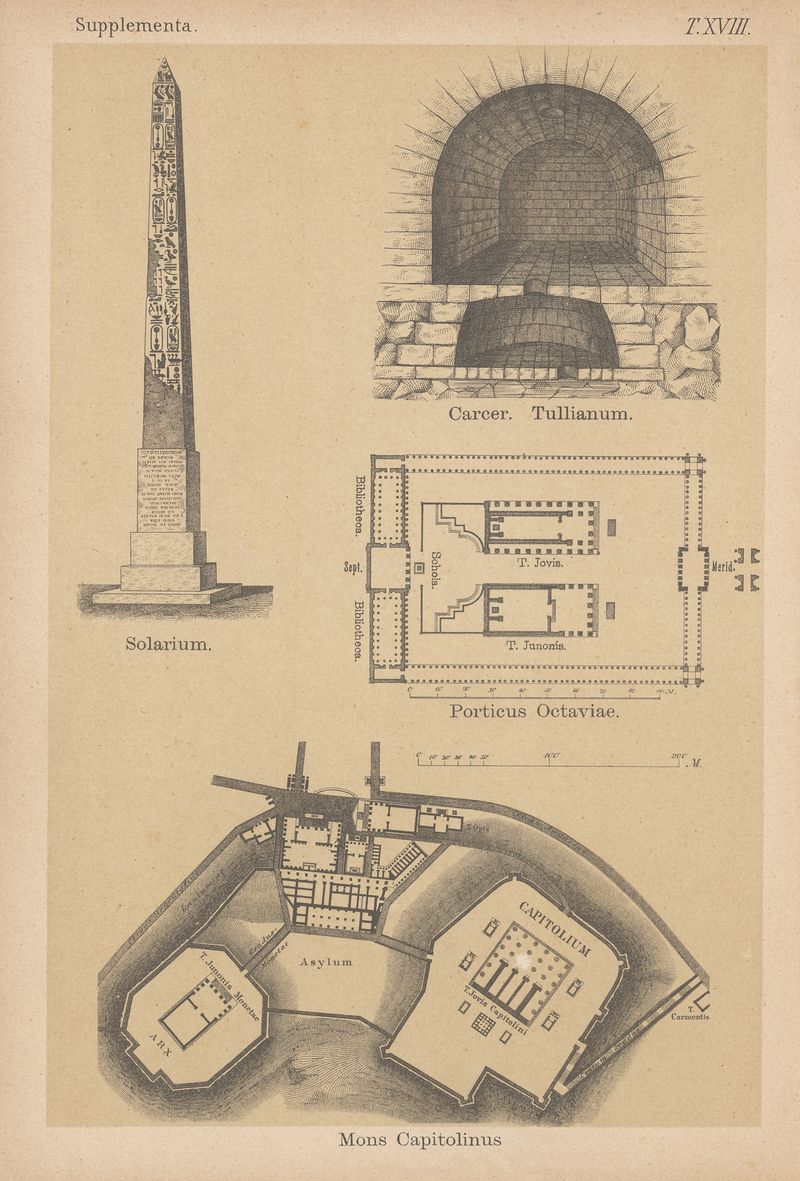
Mons Capitolinus
Christoph Ziegler
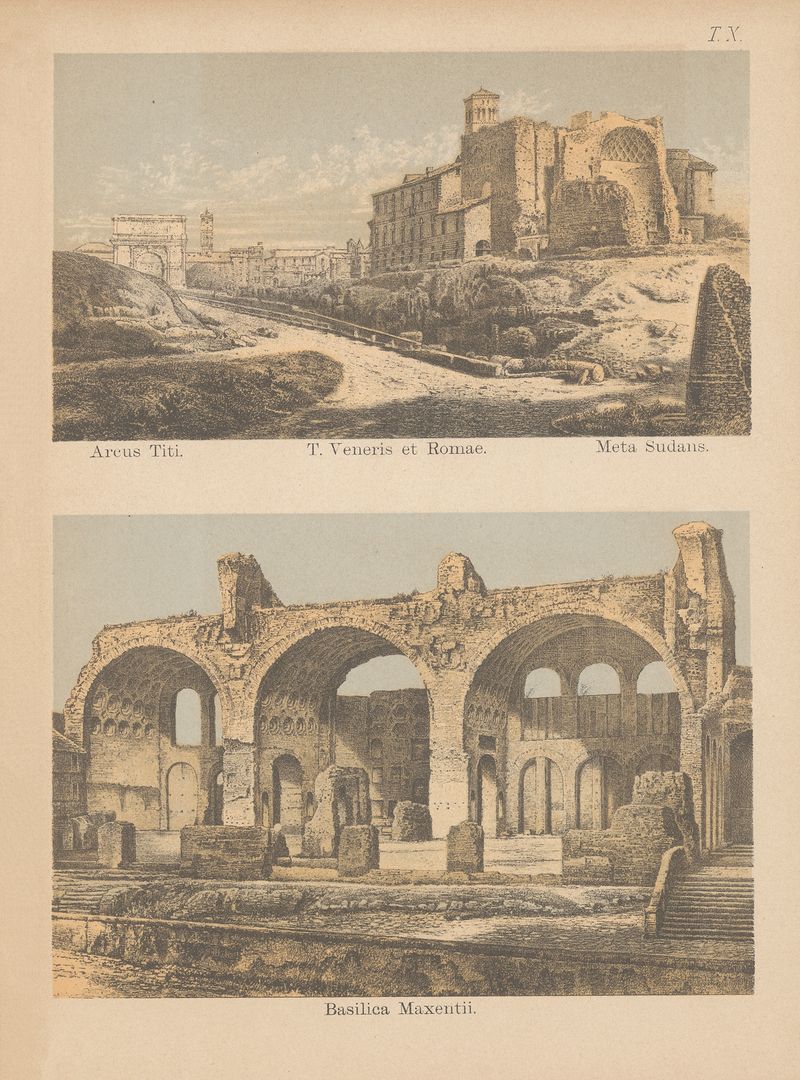
T. Veneris et Romae, Basilica Maxentii
Christoph Ziegler
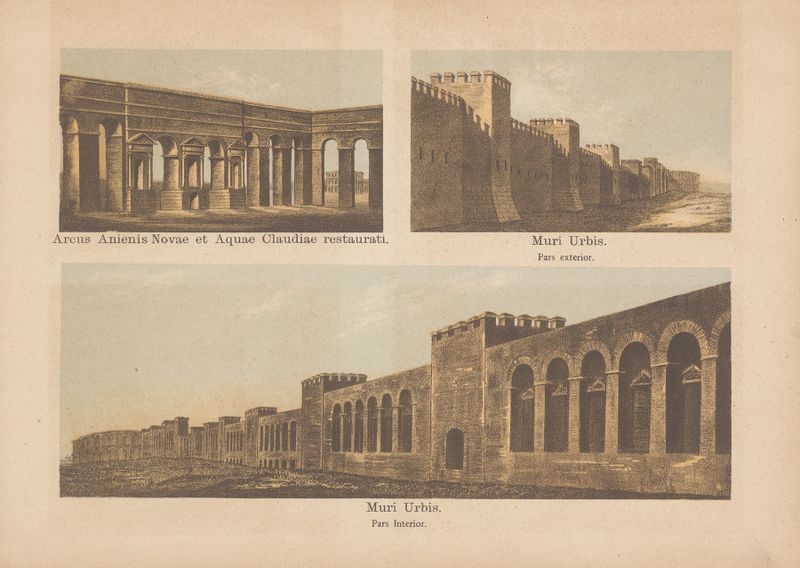
Arcus Anienis Novae, Muri urbis
Christoph Ziegler
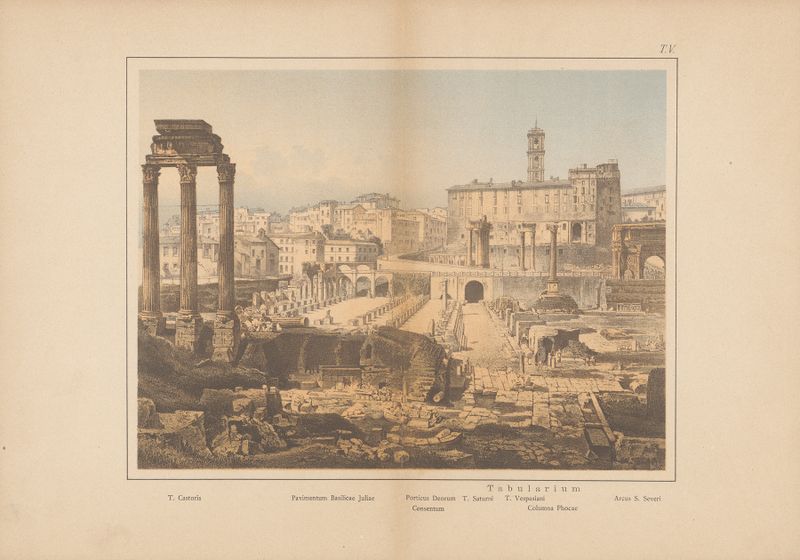
Tabularium
Christoph Ziegler
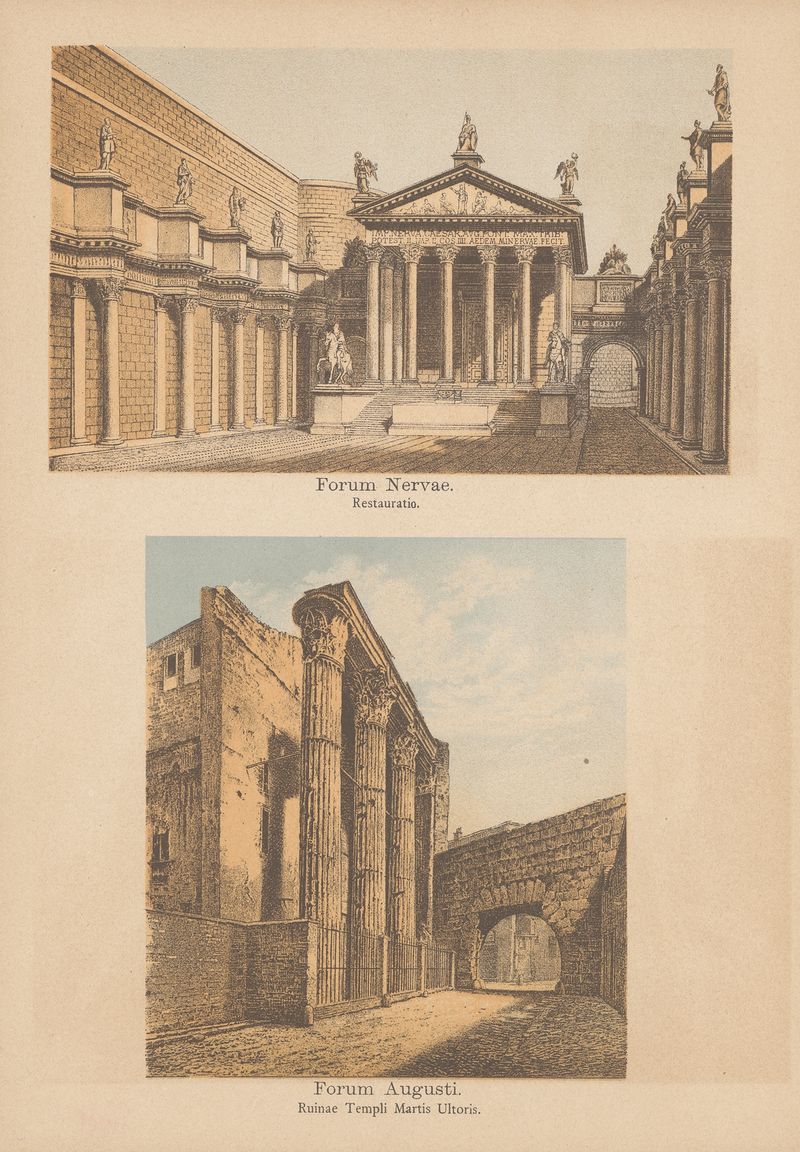
Forum Nervae, Forum Augusti
Christoph Ziegler
More Architecture Art
Browse all →
The statue of Liberty
Frédéric Auguste Bartholdi

View of Houses in Delft, Known as ‘The Little Street’
Johannes Vermeer

View of Houses in Delft, Known as ‘The Little Street’
Johannes Vermeer

The Cathedral in Rouen. The portal, Grey Weather
Claude Monet

The yellow house
Vincent van Gogh

The Church in Auvers-sur-Oise, View from the Chevet
Vincent van Gogh