
The Andreas church in Dusseldorp — History & Facts
A sky full of restless clouds hovers above the city, yet the eye is drawn irresistibly to the luminous church rising at the heart of the scene. Adriaen van de Velde chooses a moment when the everyday world—figures strolling, a dog sniffing at the street, townsfolk pausing in conversation—unfolds beneath the grandeur of architecture. The pale stone of the church, crowned with twin towers and a domed roof, catches the sun and stands as a beacon among the red and ochre houses, their irregular facades and gables a testament to the lived-in city. This is the world of the Dutch Golden Age, when artists like van de Velde turned their gaze from myth and history to the cities and countryside around them.
Painted in 1667, The Andreas church in Dusseldorp belongs to a tradition that celebrated civic pride and the quiet drama of daily life. Such works were often commissioned by prosperous burghers or city officials, keen to commemorate their town’s landmarks and the order of urban life. Now in the Mauritshuis, this painting offers not just a record of a place, but a window into a moment when the city itself became a worthy subject for art—inviting us to linger, as the figures do, in the gentle bustle of the square.
More Artworks by Adriaen van de Velde

Staande stier
Adriaen van de Velde
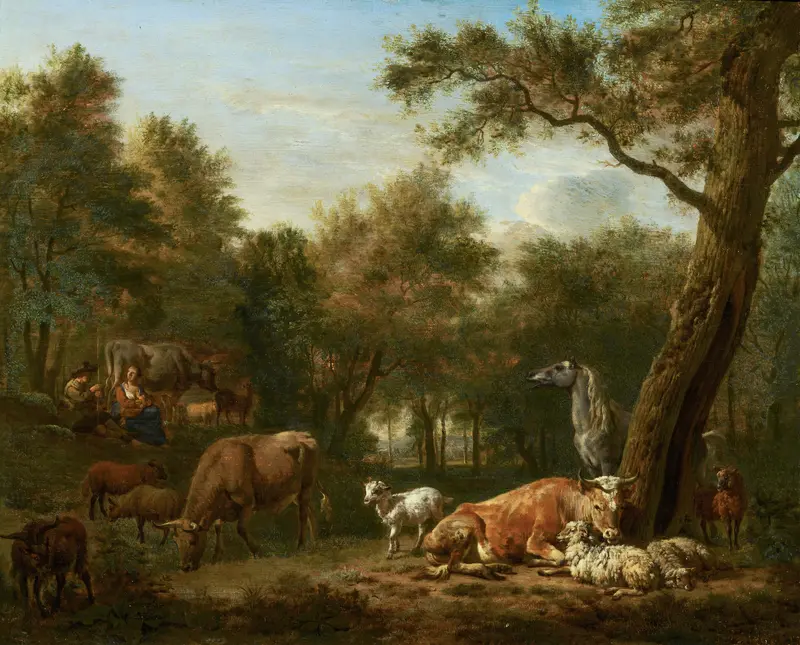
Wooded Landscape with Cattle
Adriaen van de Velde
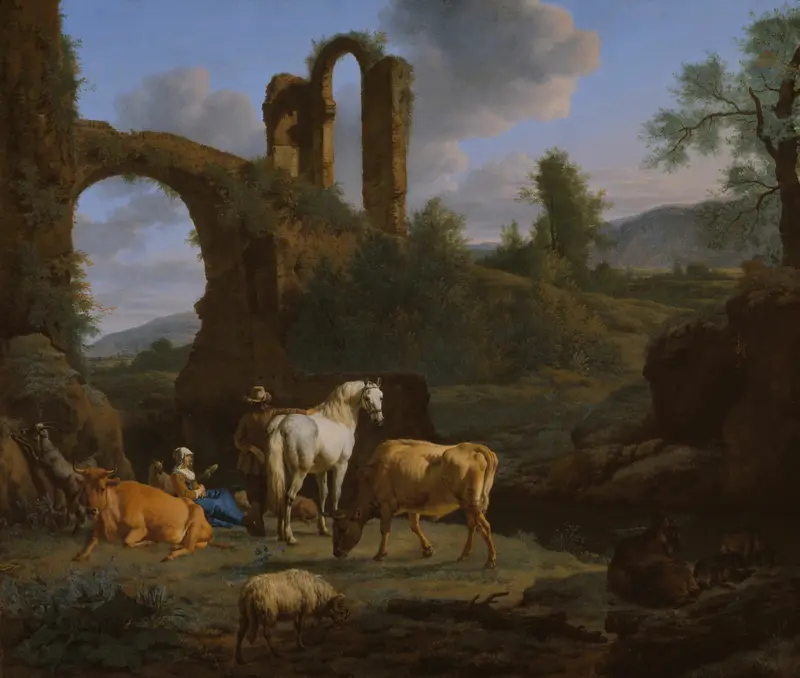
Pastoral Landscape with Ruins
Adriaen van de Velde
Pastoral Landscape with Ruins
Adriaen van de Velde
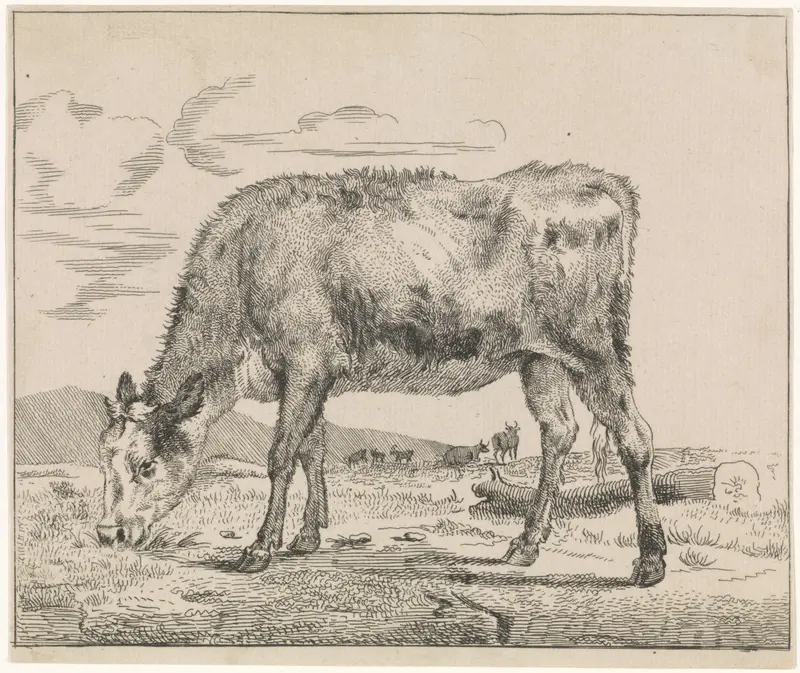
Grazend kalf
Adriaen van de Velde
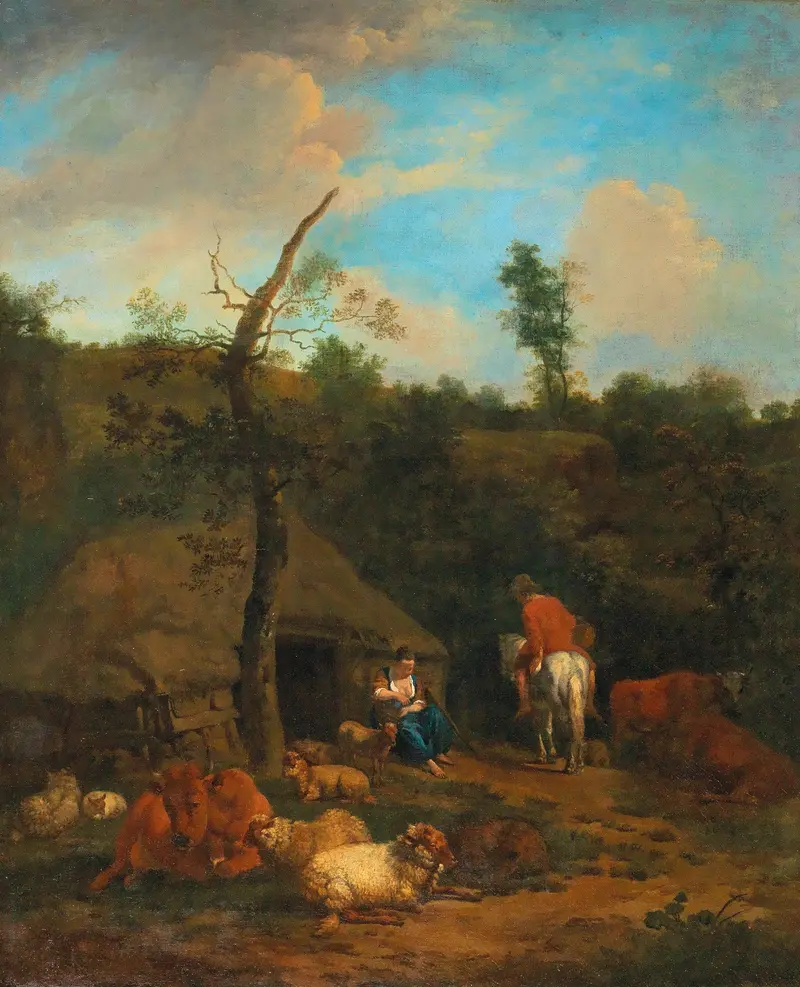
A herdsman and a shepherdess in front of a wooden farmhouse
Adriaen van de Velde
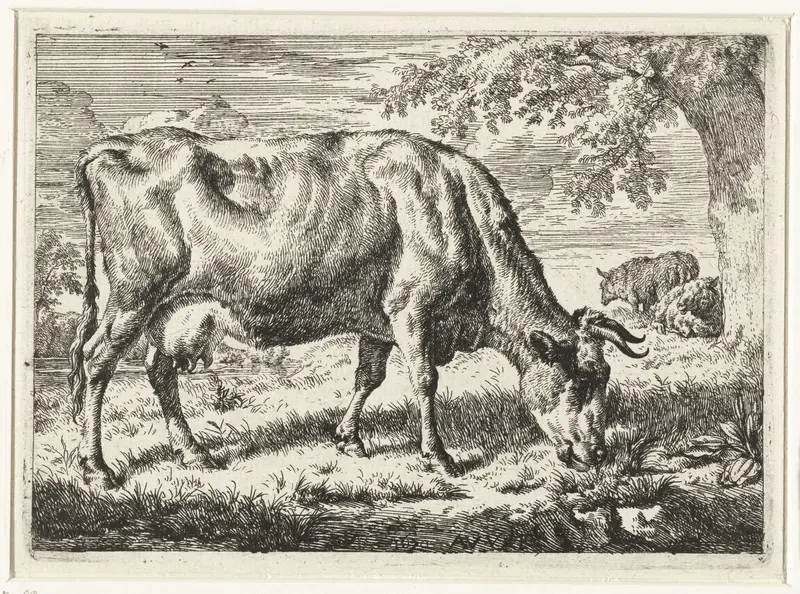
Grazende koe en twee schapen
Adriaen van de Velde
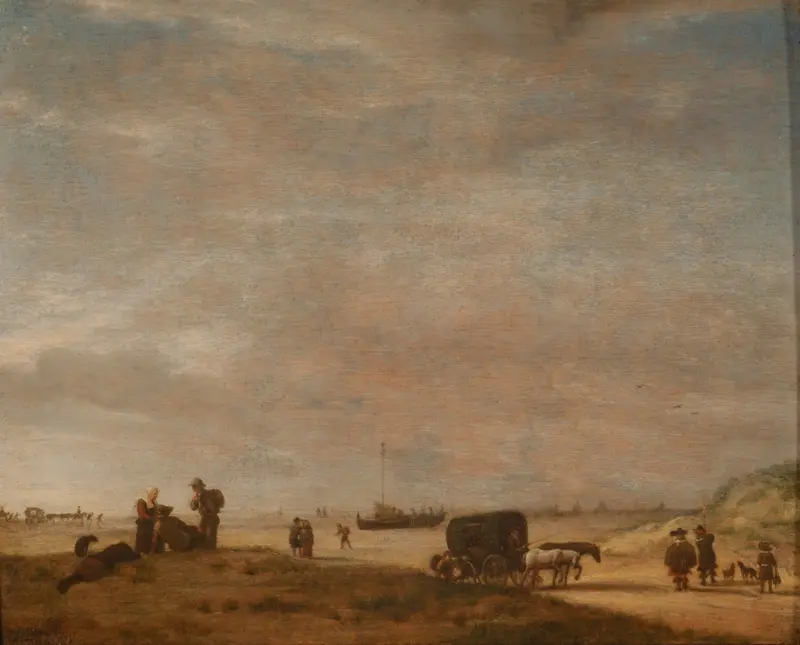
Scheveningen Beach
Adriaen van de Velde
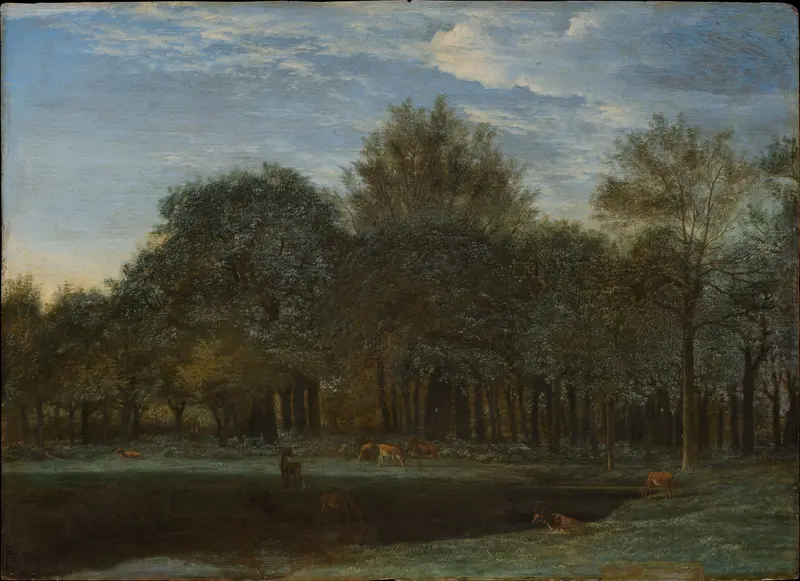
Forest Clearing with Grazing Deer
Adriaen van de Velde
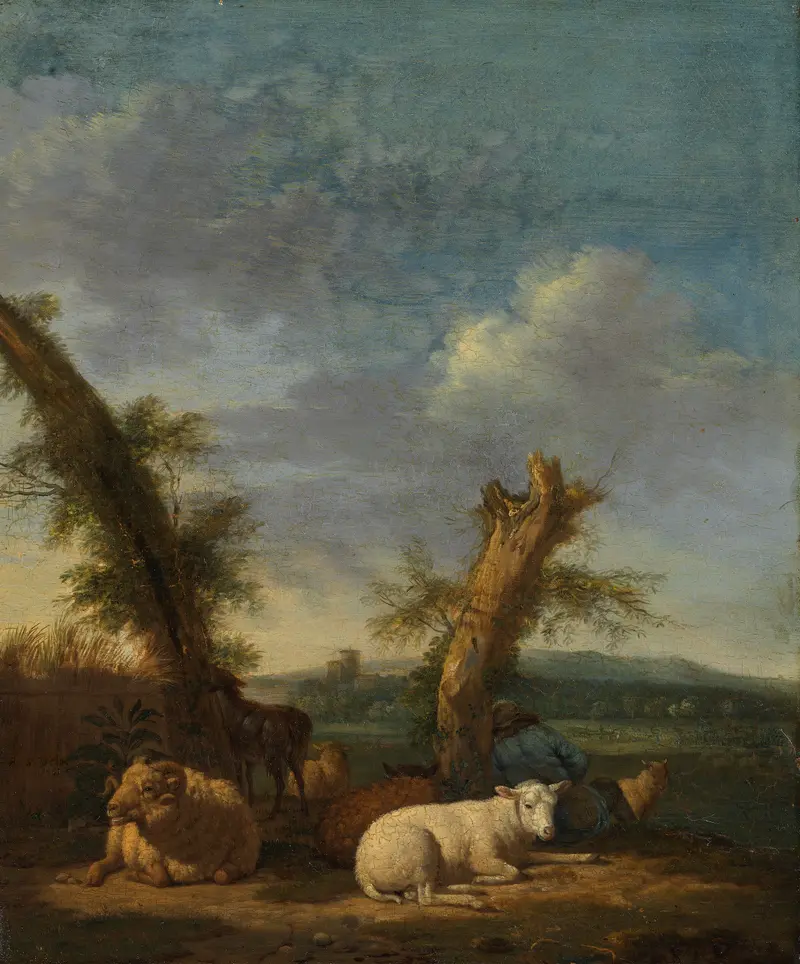
Landscape with Sheep and a Sleeping Shepherd
Adriaen van de Velde





