
The Apparition — History & Facts
The Apparition is a watercolour on paper created by Gustave Moreau circa 1876. The work depicts a biblical scene from the story of Salome and the beheading of John the Baptist, a subject Moreau revisited multiple times in his career. One of a series of closely related versions of the subject, this watercolour is regarded as a key work of Moreau and of the Symbolist movement. The composition centers on a richly adorned Salome, her arm outstretched toward a vision of the severed head of John the Baptist, which appears radiant and suspended in mid-air, surrounded by golden rays.
The setting is an elaborate palace interior with intricate architectural details and ornamentation, rendered in muted tones of gold, blue, and brown. Other figures, including Herod and attendants, are seated or standing in the background, contributing to the dramatic tension of the scene. The technique combines delicate washes and precise linework, highlighting the opulence of the costumes and the supernatural quality of the apparition. The watercolour belongs to the Musée d'Orsay in Paris.
Created around 1876, it reflects the Symbolist fascination with biblical and literary subjects, as well as Moreau’s distinctive approach to narrative and ornamentation. The painting is a notable example of late nineteenth-century French Symbolist art.
More Artworks by Gustave Moreau
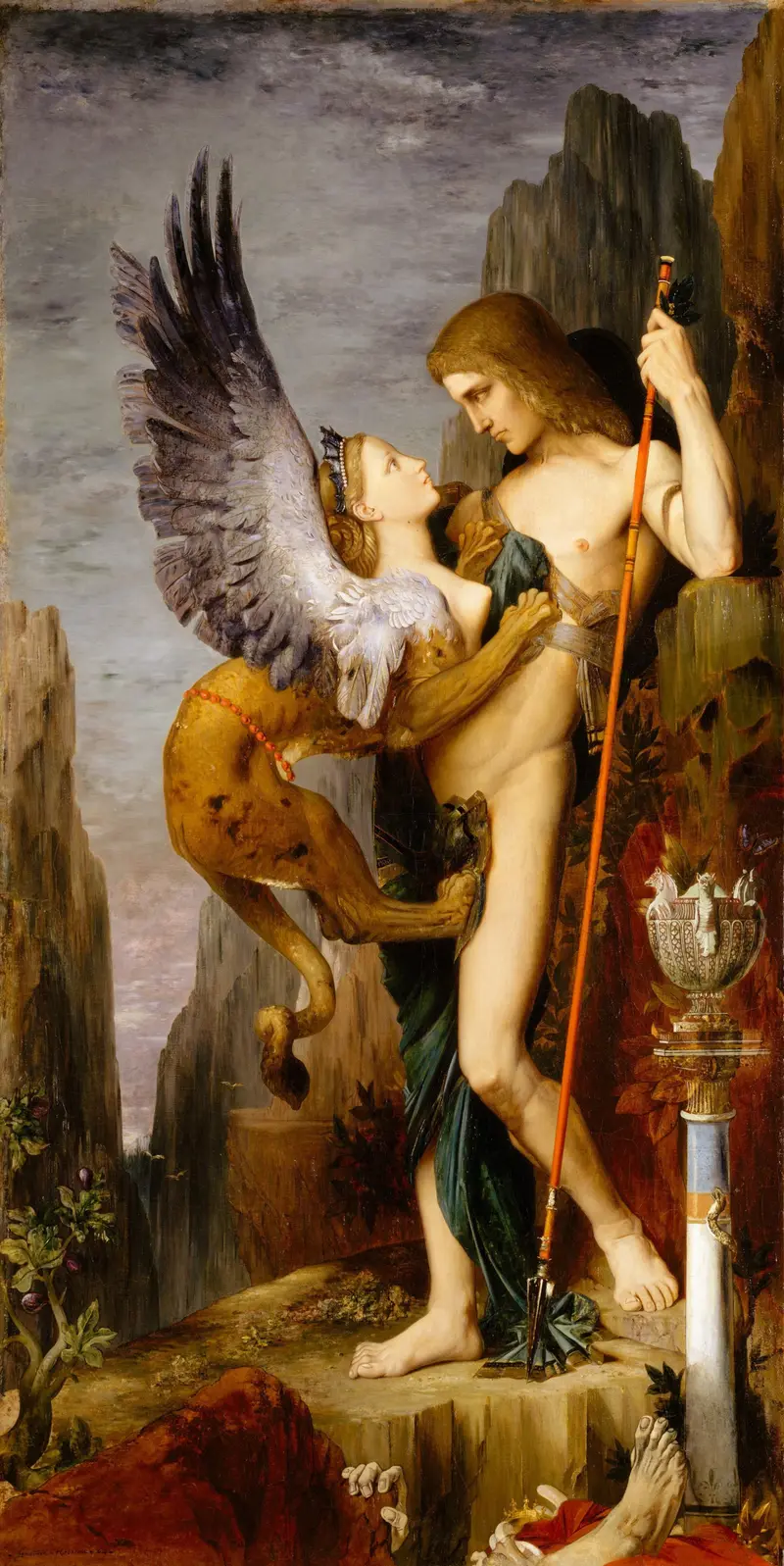
Oedipus and the Sphinx
Gustave Moreau

The Apparition
Gustave Moreau
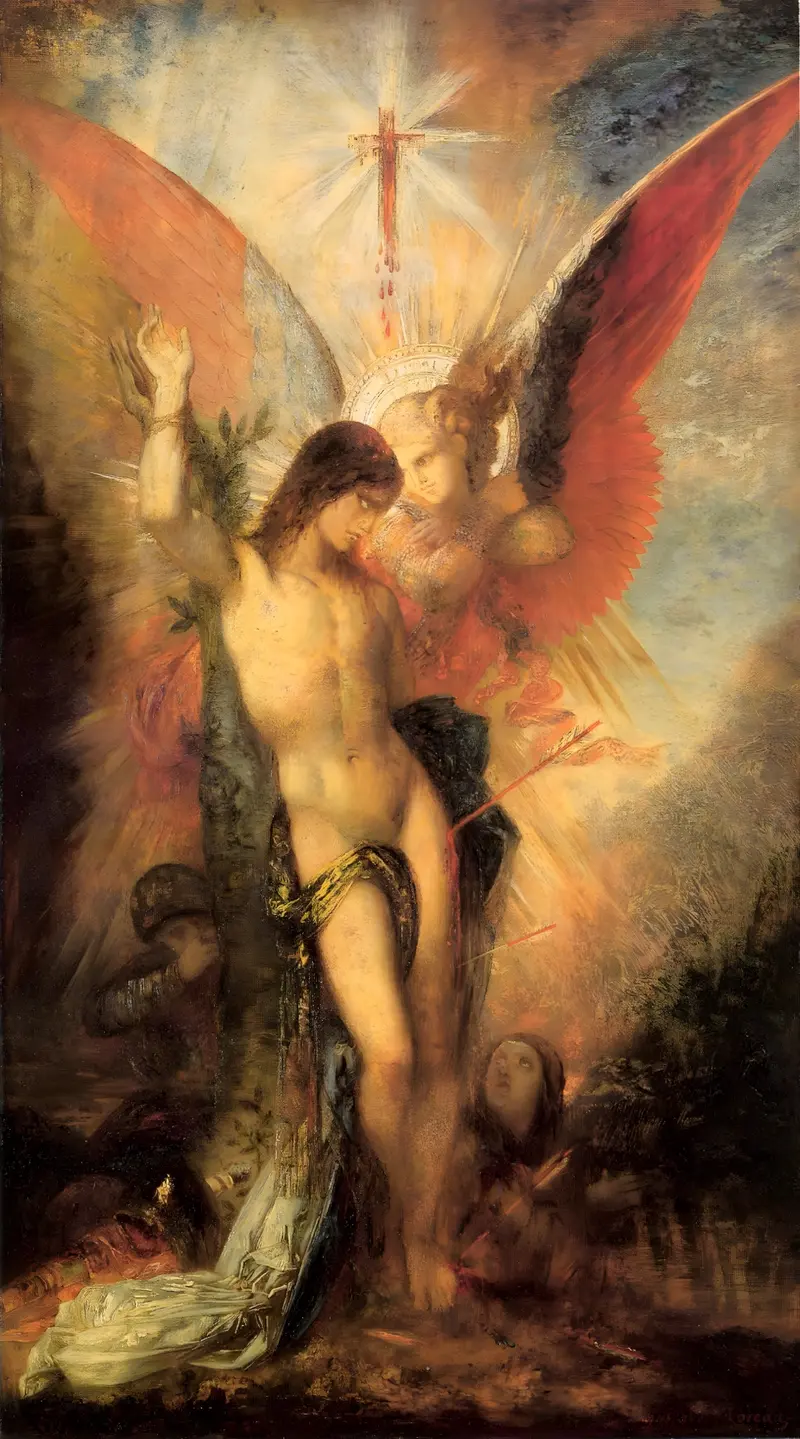
Saint Sebastian and the Angel
Gustave Moreau
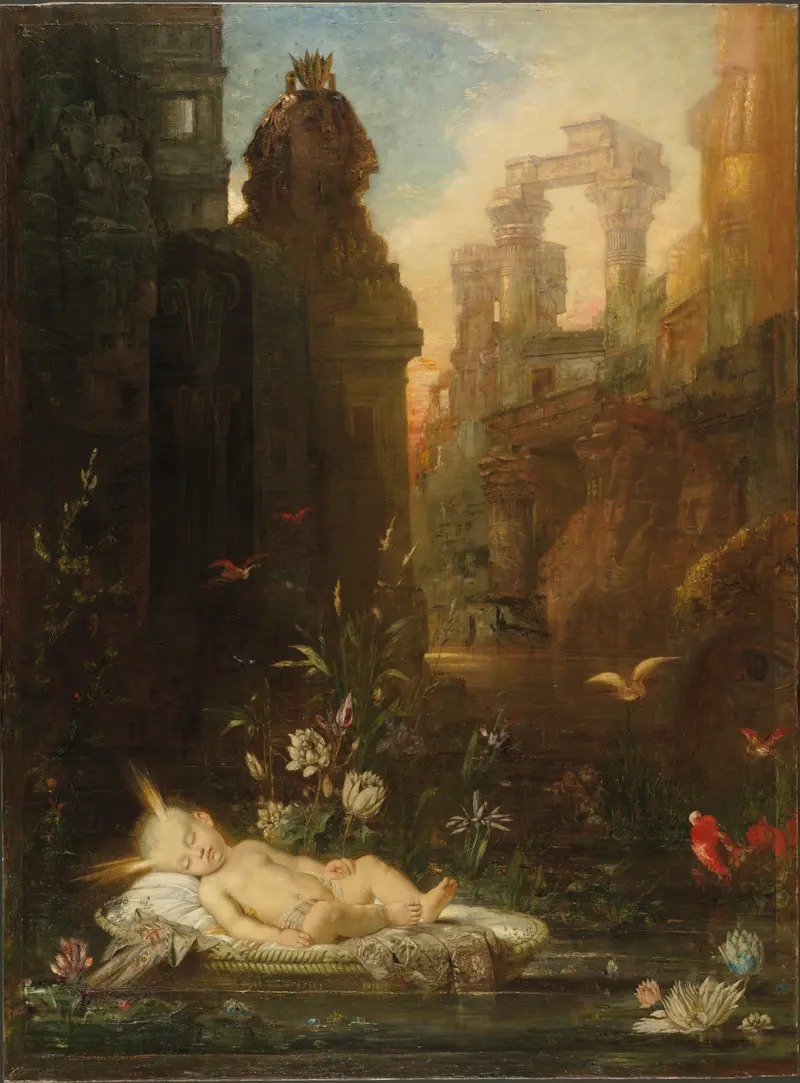
The Infant Moses
Gustave Moreau
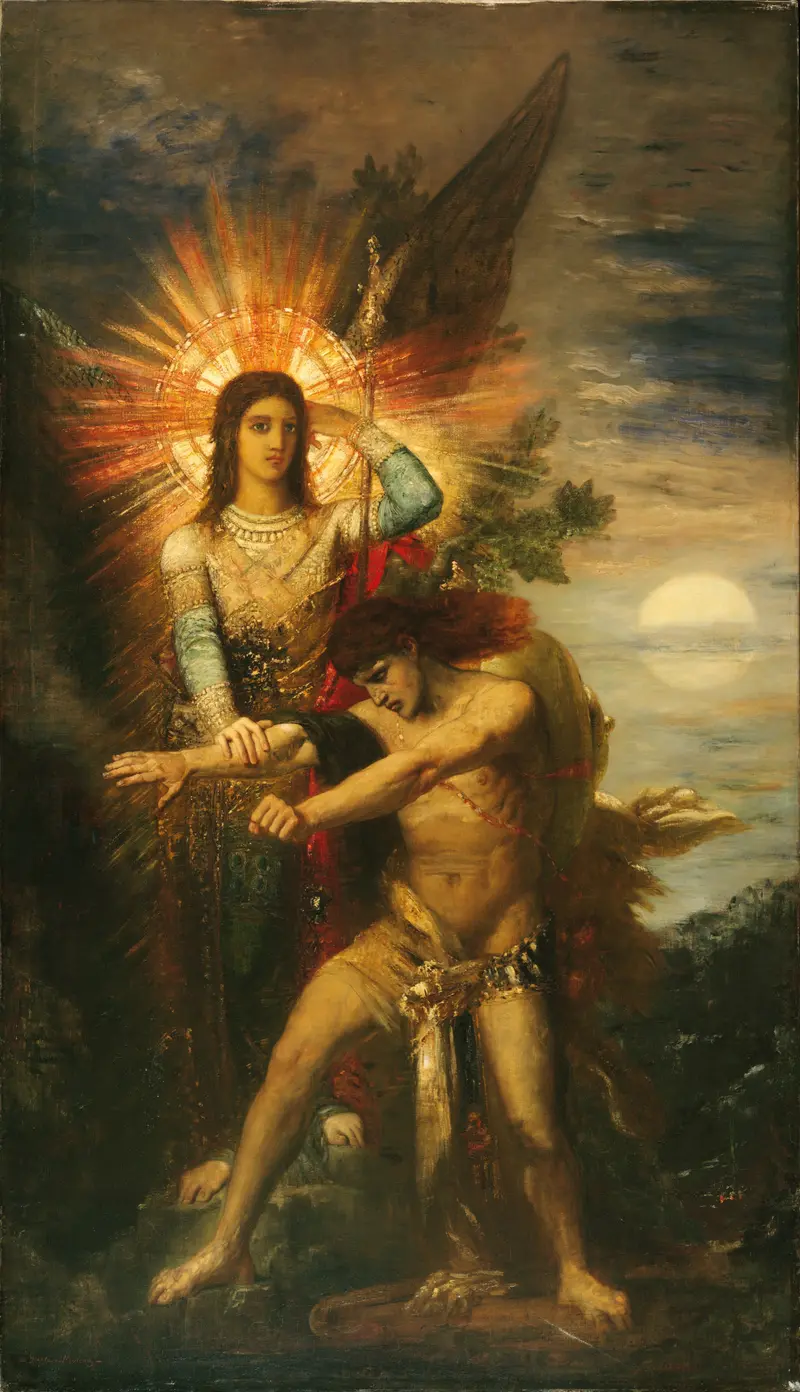
Jacob and the Angel
Gustave Moreau
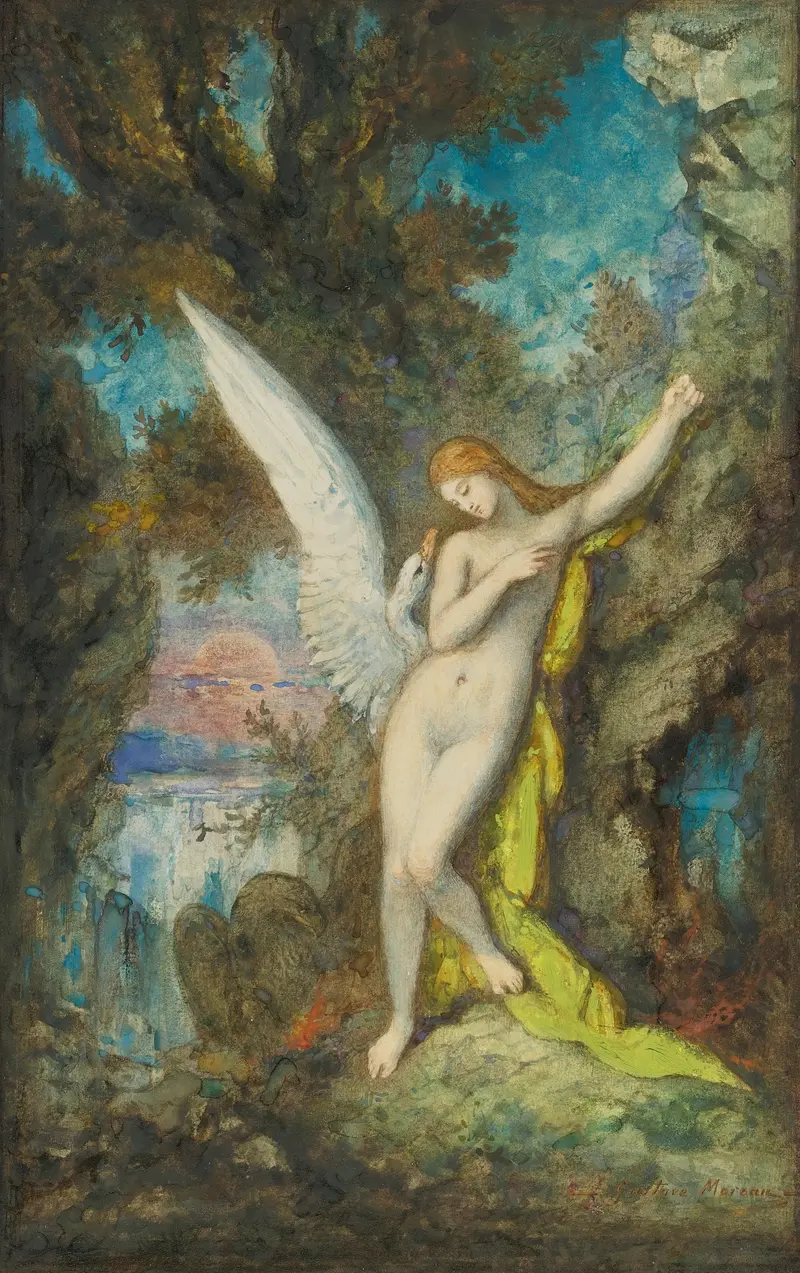
Leda Et Le Cygne
Gustave Moreau
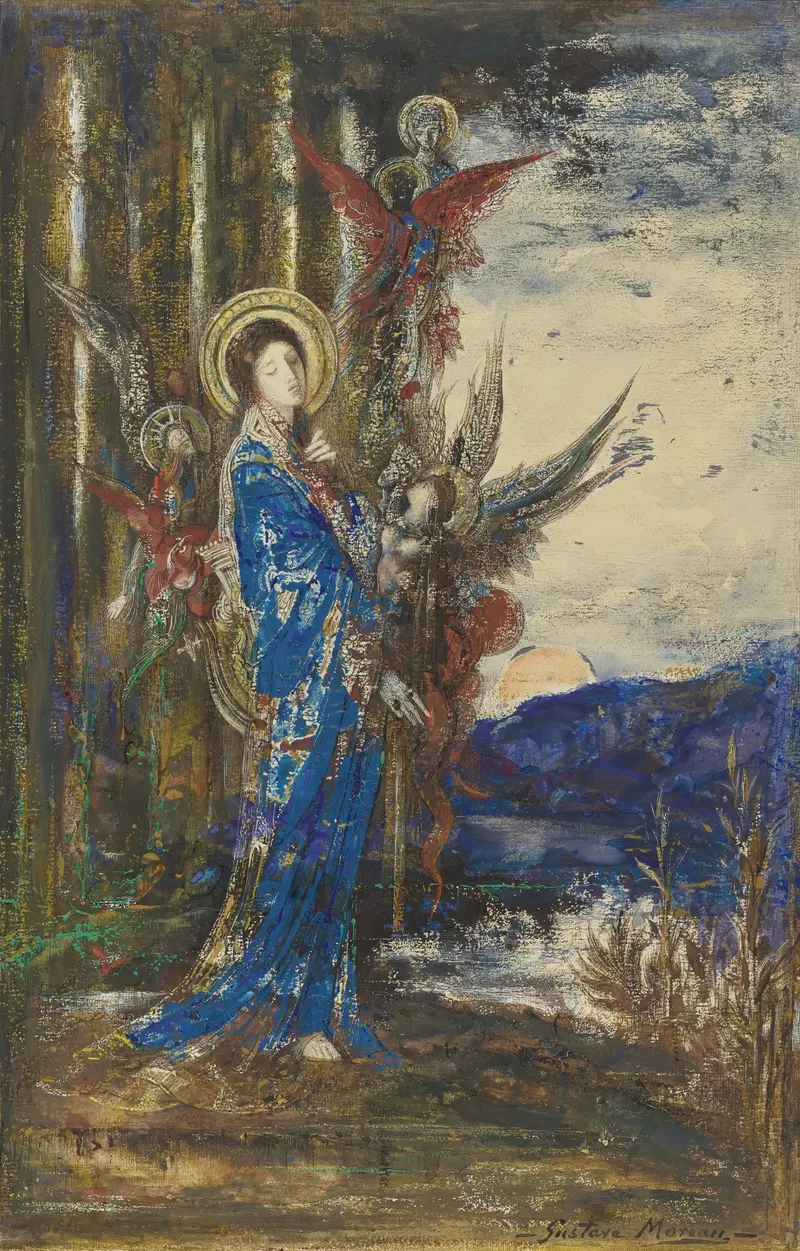
Les Épreuves
Gustave Moreau
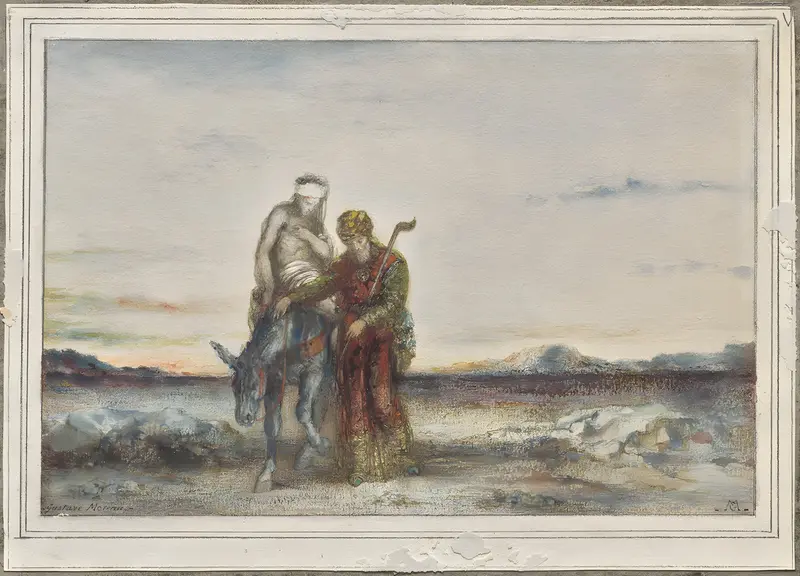
The Good Samaritan
Gustave Moreau
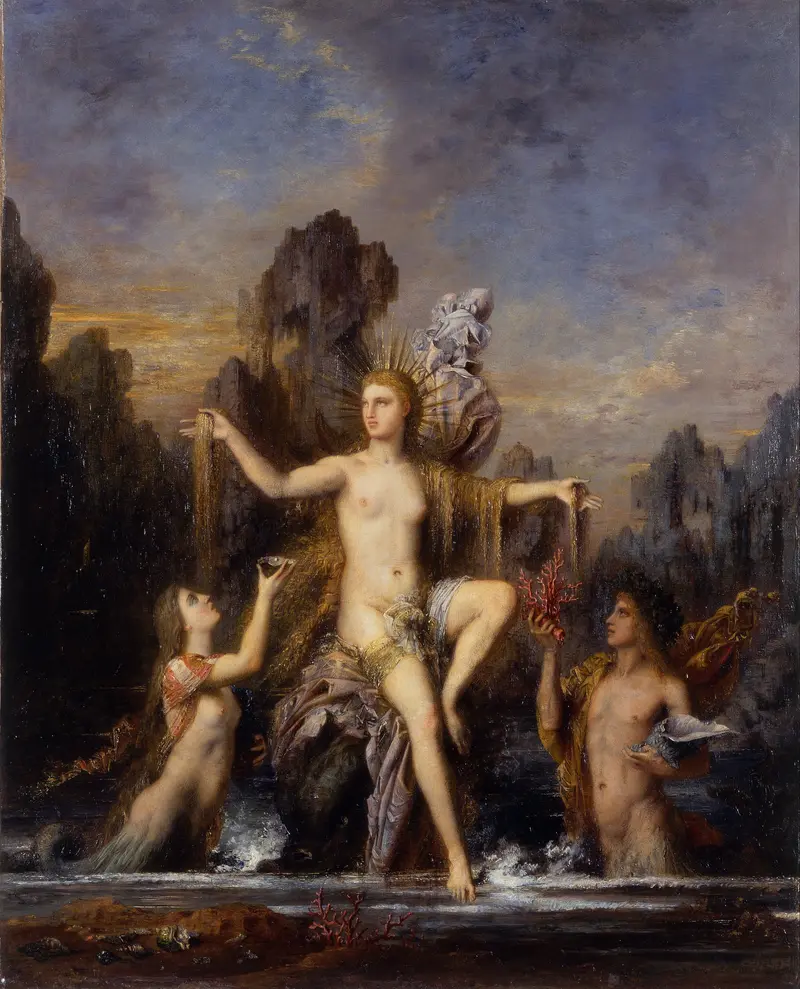
Venus Rising From The Sea
Gustave Moreau
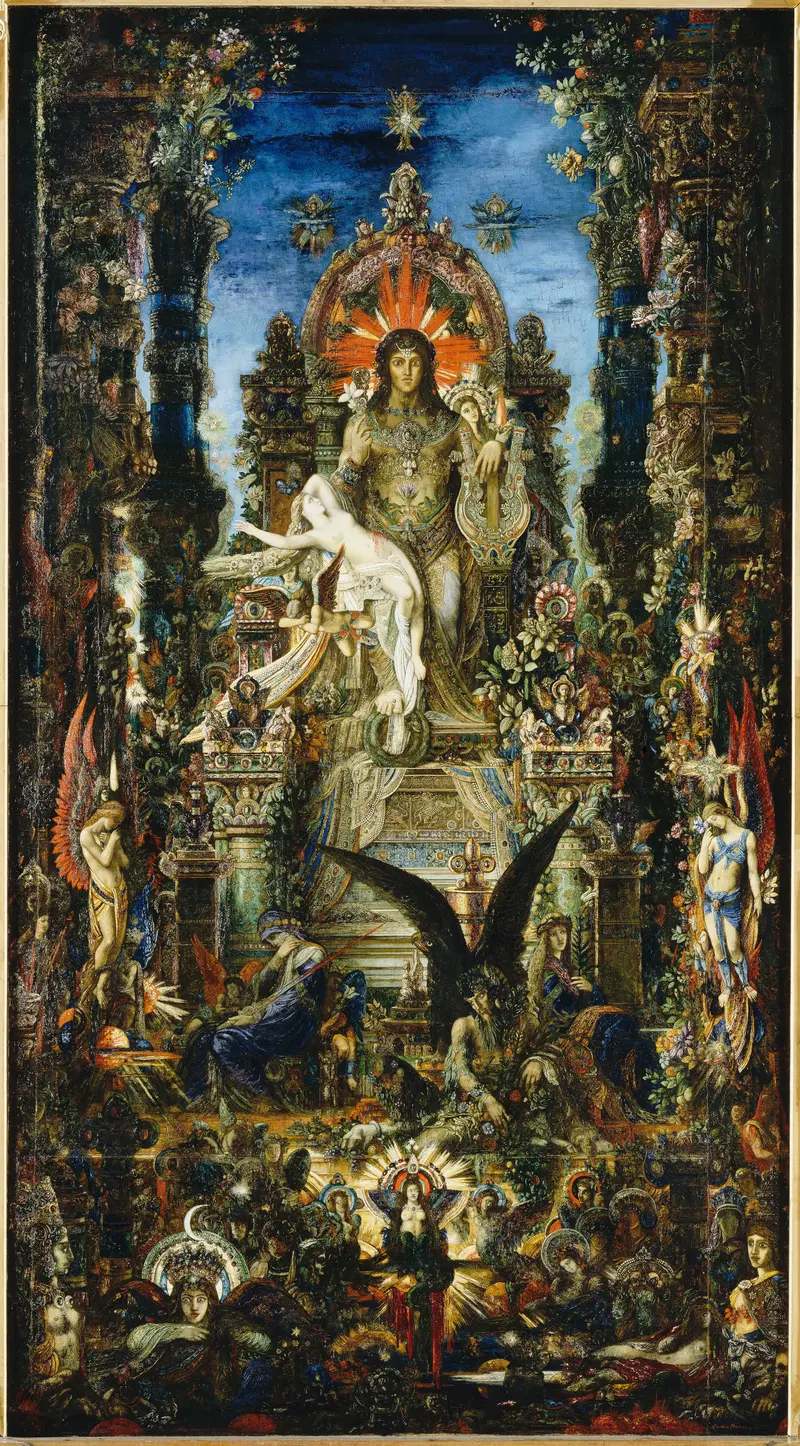
Jupiter and Semele
Gustave Moreau





