
The Arcaded Courtyard of the Landhaus in Graz — History & Facts
What if beauty was never meant to be finished? The allure of timeless architecture whispers secrets of grandeur and forgotten stories, inviting us to linger in its shadows. In The Arcaded Courtyard of the Landhaus in Graz, the juxtaposition of elegance and decay evokes an emotional tension that speaks to the heart of betrayal. Look closely at the intricate arches that dominate the composition, drawing your gaze upwards and inviting you into the depths of the courtyard. The soft, muted colors of the stonework, bathed in gentle sunlight, reveal the textures and age of the building, while the dappled light dances across the cobblestones.
The interplay of light and shadow creates a sense of depth and dimension, allowing the viewer to feel the coolness of the stone and the warmth of the sun, emphasizing a delicate balance between nostalgia and decline. Beneath the surface beauty lies a narrative of abandonment, where each stone seems to carry the weight of forgotten promises. The arches, both inviting and confining, symbolize the allure of the past, while the fading colors hint at the passage of time and the inevitable betrayal of neglect. This tension between elegance and decay resonates within the courtyard, suggesting that beauty often harbors secrets of its own, leading us to question what we truly value. In 1890, Rudolf von Alt painted this piece as part of his exploration of architectural landscapes in Vienna, capturing the spirit of his time.
Emerging as a leading figure in the genre of architecture painting, he found inspiration in the historical and cultural richness of Austria, reflecting a world on the cusp of modernity. His works during this period were characterized by a meticulous attention to detail, firmly establishing his place in the art world while revealing the complexities of the human experience.
More Artworks by Rudolf von Alt
Browse all →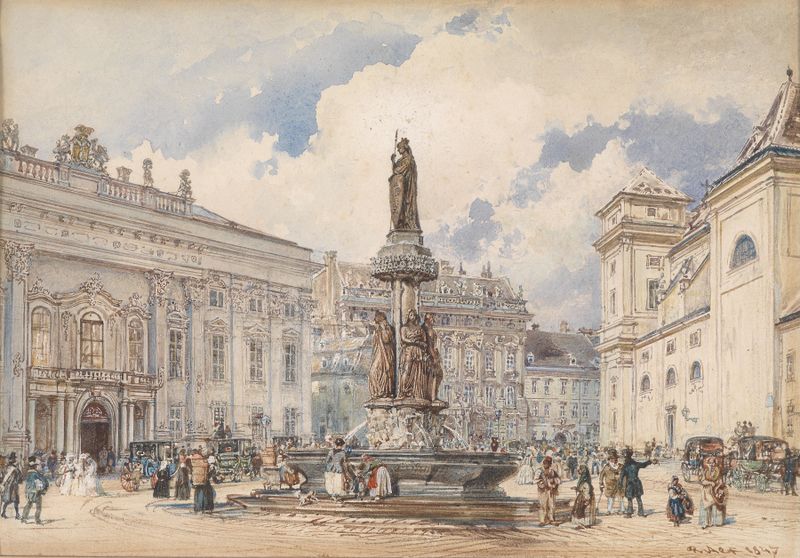
Freyung mit Austriabrunnen
Rudolf von Alt

The Interior of the Cathedral of Saint Stephen at Vienna
Rudolf von Alt
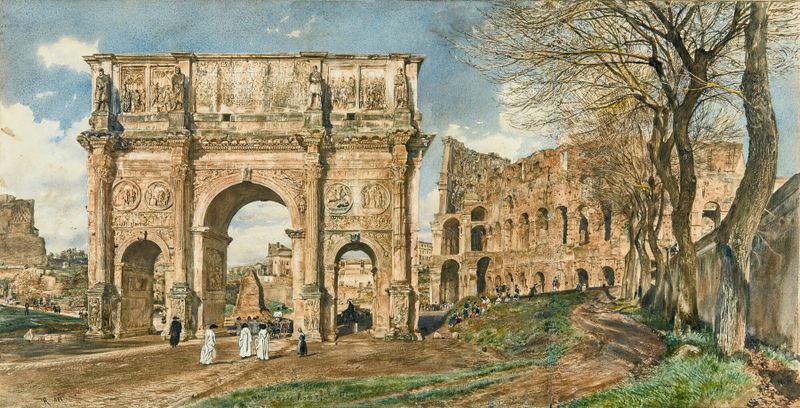
The Arch Of Constantine And The Colosseum, Rome
Rudolf von Alt

The Fleischmarkt in Vienna with the Greek-Orthodox Church of the Holy Trinity
Rudolf von Alt

Der Stephansdom in Wien
Rudolf von Alt
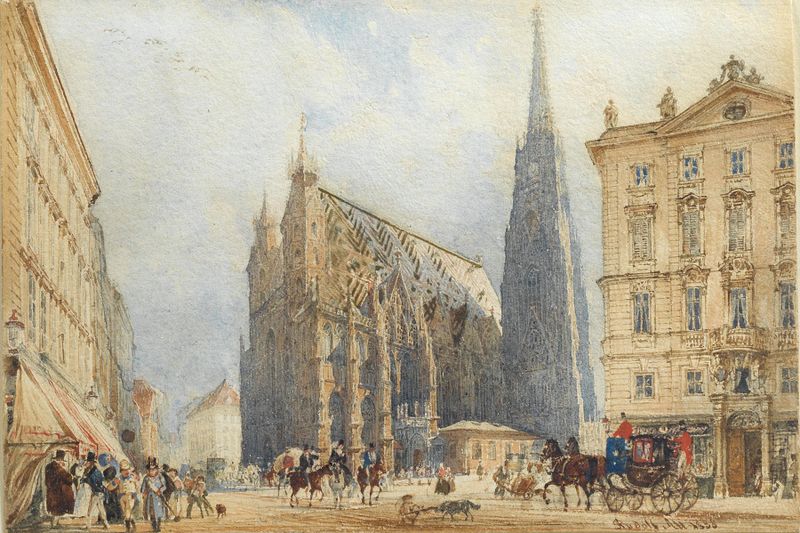
Stephansplatz
Rudolf von Alt
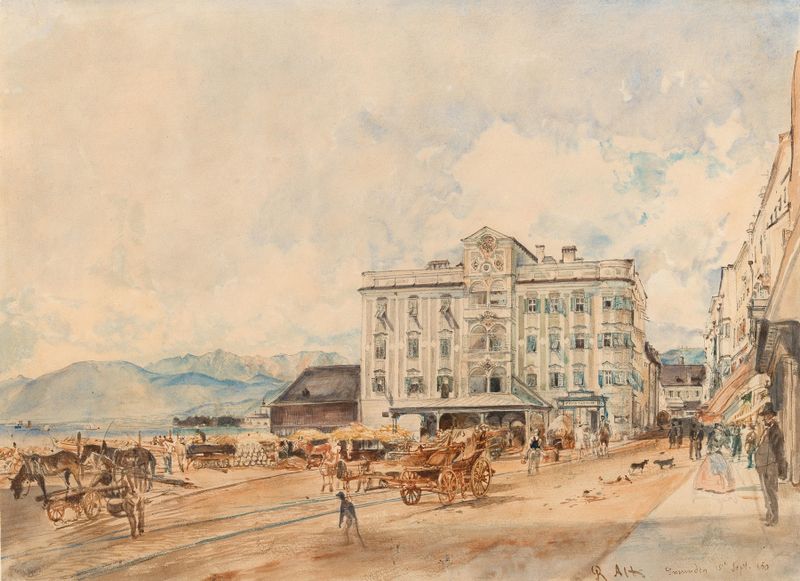
The Town Hall in Gmunden
Rudolf von Alt

View from Sant’Onofrio on Rome
Rudolf von Alt
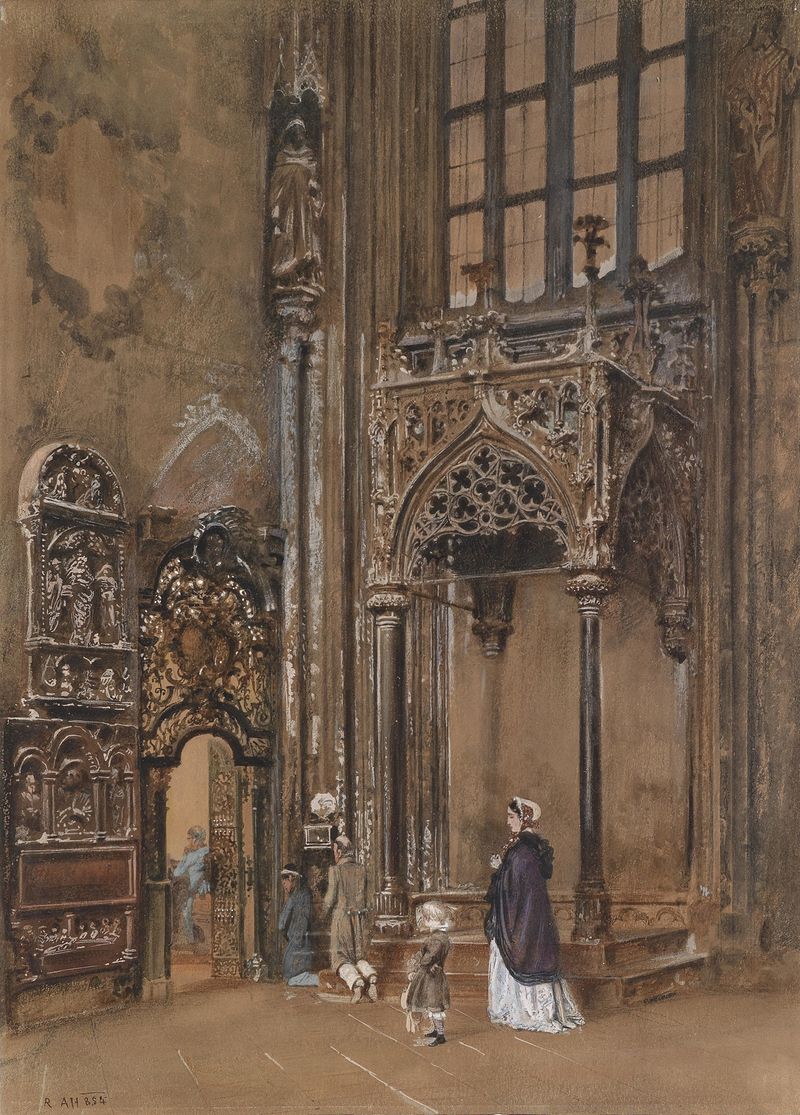
Kircheninneres
Rudolf von Alt
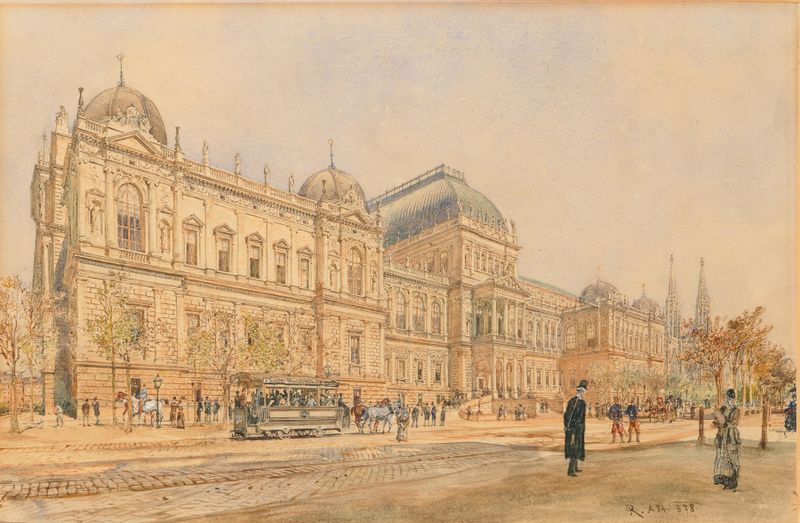
The University of Vienna on the Ringstrasse, with Horse-Drawn Tram and Figures, a view of the building still under construction in 1878 (erected by Heinrich von Ferstel 1873-1884)
Rudolf von Alt
More Architecture Art
Browse all →
The statue of Liberty
Frédéric Auguste Bartholdi

View of Houses in Delft, Known as ‘The Little Street’
Johannes Vermeer

View of Houses in Delft, Known as ‘The Little Street’
Johannes Vermeer

The Cathedral in Rouen. The portal, Grey Weather
Claude Monet

The yellow house
Vincent van Gogh

The Church in Auvers-sur-Oise, View from the Chevet
Vincent van Gogh