
The Arch of Nero — History & Facts
What if beauty was never meant to be finished? The allure of imperfection, the haunting echo of unfinished dreams — these are the obsessions that linger in the shadows of The Arch of Nero. Look to the center, where the grand arch looms, its crumbling stones bathed in a soft, golden light. The juxtaposition of the monumental structure against a panoramic landscape invites contemplation. Notice how the warm hues of the foreground contrast with the cooler tones receding into the background, drawing the eye deeper into the scene.
This technique, masterfully executed with a blend of naturalism and romanticism, captures a fleeting moment suspended between time and memory. At first glance, the arch symbolizes a triumph of civilization, but deeper scrutiny reveals layers of decay and neglect. The once-majestic monument speaks of past glories, now intertwined with the passage of time. This duality mirrors the human experience — an obsession with legacy, beauty, and the inevitable erosion of both.
The trees encroaching upon the arch seem to whisper secrets of nature’s reclamation, evoking a poignant tension between human ambition and the relentless forces of time. In the early 1830s, Thomas Cole painted this work amid his profound engagement with the themes of nature and humanity. As the founder of the Hudson River School, he was deeply influenced by the burgeoning American landscape movement, which sought to capture the sublime beauty of the natural world. During this period, as industrialization began reshaping America, Cole’s art became a meditation on the tension between progress and preservation, reflecting both personal and societal concerns.
More Artworks by Thomas Cole
Browse all →
View from Mount Holyoke, Northampton, Massachusetts, after a Thunderstorm—The Oxbow
Thomas Cole
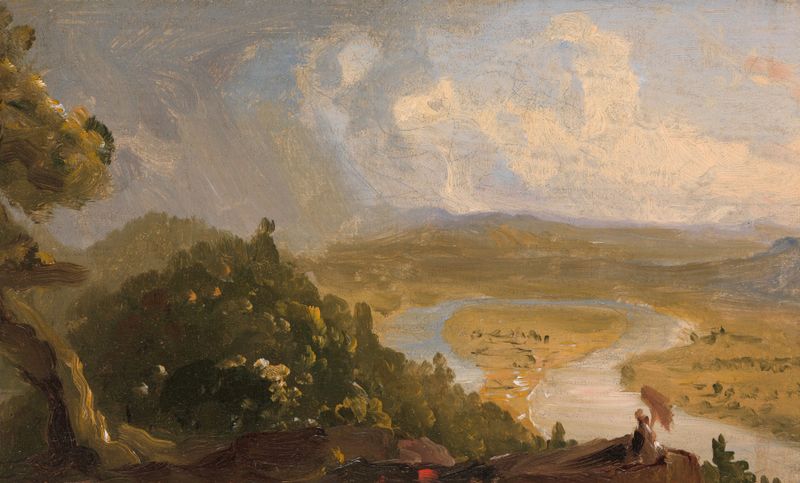
Sketch for View from Mount Holyoke, Northampton, Massachusetts, after a Thunderstorm (The Oxbow)
Thomas Cole
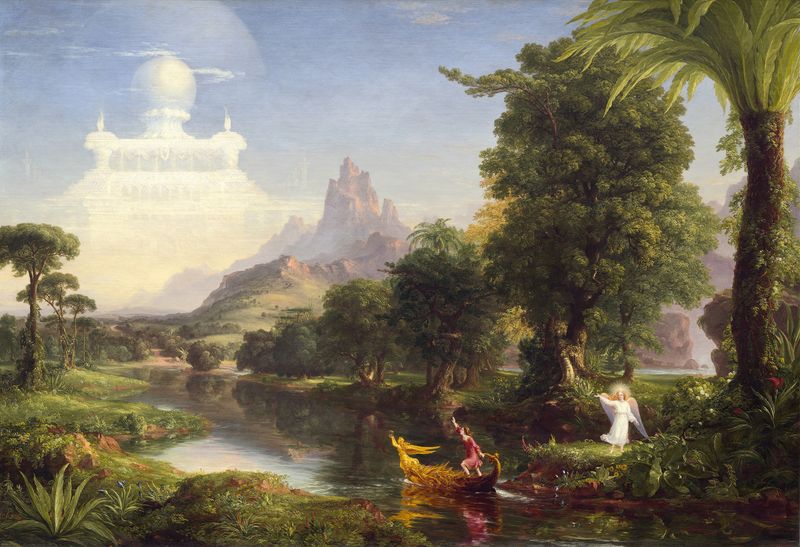
The Voyage of Life – Youth
Thomas Cole
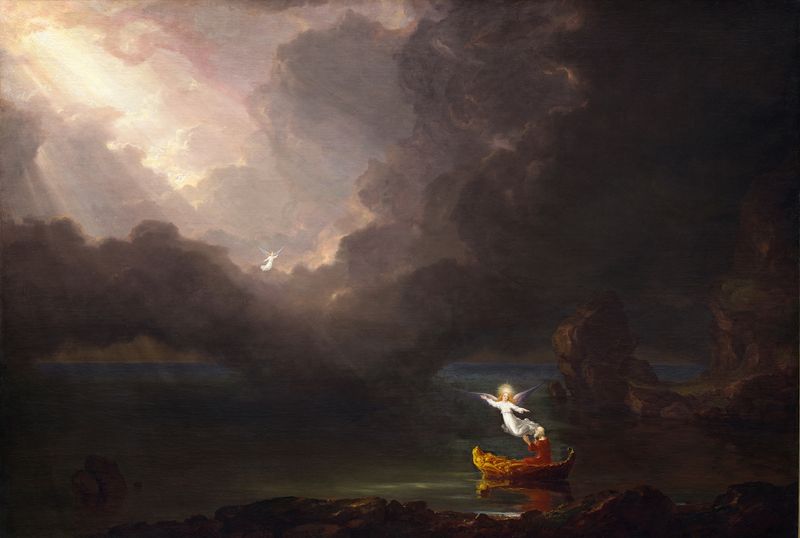
The Voyage of Life – Old Age
Thomas Cole
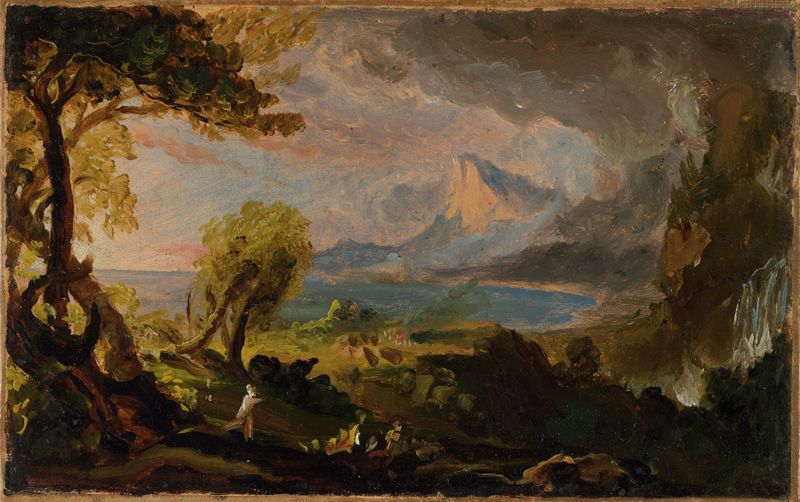
The Course of Empire–The Savage State
Thomas Cole

Landscape
Thomas Cole

New England Scenery
Thomas Cole

Sunrise in the Catskills
Thomas Cole
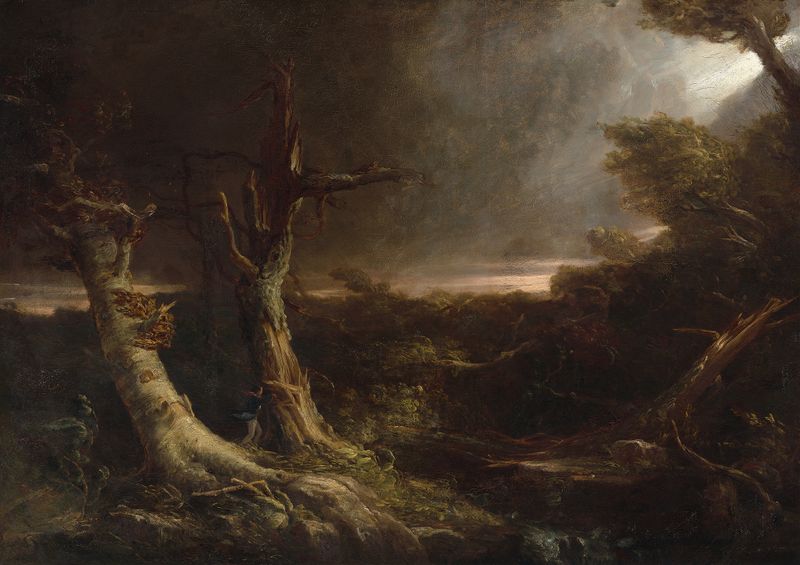
Tornado in an American Forest
Thomas Cole
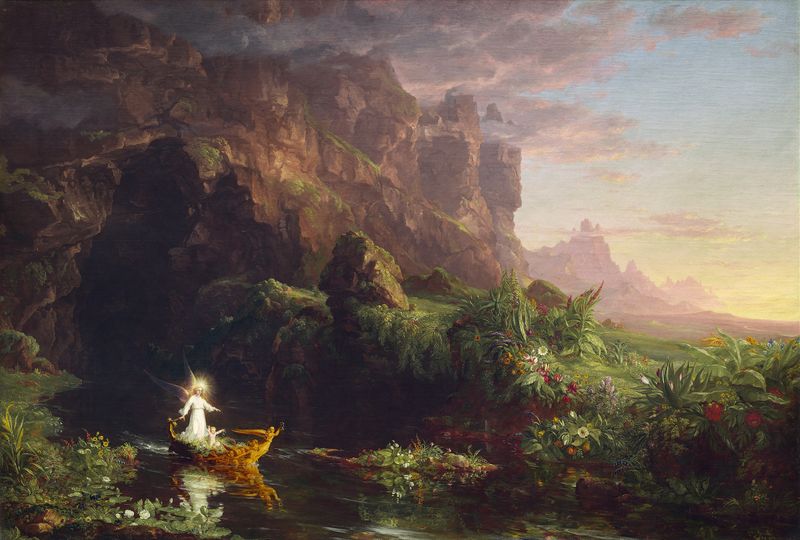
The Voyage of Life – Childhood
Thomas Cole
More Architecture Art
Browse all →
The statue of Liberty
Frédéric Auguste Bartholdi

View of Houses in Delft, Known as ‘The Little Street’
Johannes Vermeer

View of Houses in Delft, Known as ‘The Little Street’
Johannes Vermeer

The Cathedral in Rouen. The portal, Grey Weather
Claude Monet

The yellow house
Vincent van Gogh

The Church in Auvers-sur-Oise, View from the Chevet
Vincent van Gogh