The Austerlitz Quay in Paris — History & Facts
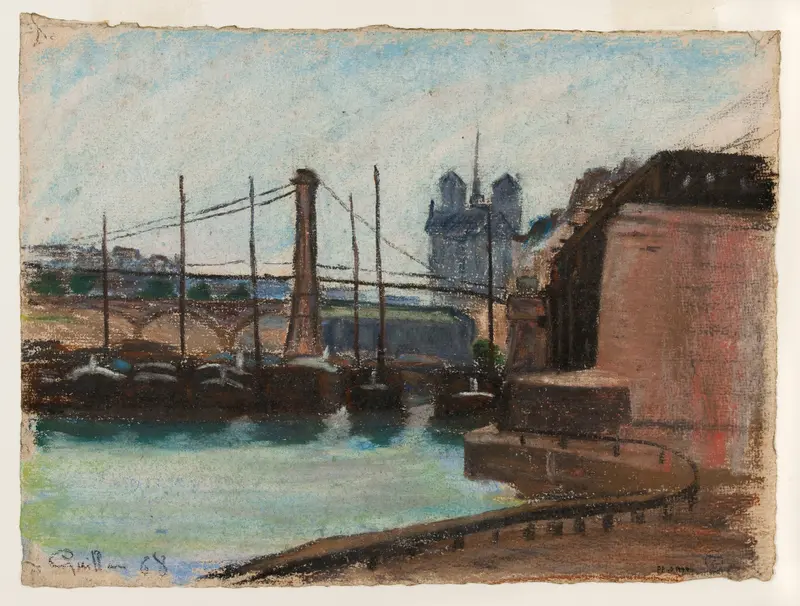
A riverbank bristling with masts and smoke, The Austerlitz Quay in Paris by Armand Guillaumin invites the viewer into a moment of restless industry. The eye is immediately drawn to the tall, slender masts that punctuate the sky, their vertical lines counterbalancing the broad sweep of the quay and the gentle churn of the water below. The painter has chosen a vantage point that lets the river claim much of the foreground, its surface broken with quick, lively strokes that shimmer with reflected sky.
Figures cluster along the quay—not as portrait subjects, but as fleeting presences, dwarfed by the scale of the vessels and the expanse of the scene. The palette, dominated by soft blues, greens, and earth tones, sets a mood of brisk, everyday labor rather than drama or spectacle. This painting belongs unmistakably to the late nineteenth-century world of urban transformation and Impressionist experiment. In the 1870s, Paris was rapidly modernizing: quays like Austerlitz were not only arteries of commerce, but also favorite subjects for artists seeking to capture the pulse of the city’s new rhythms.
Painters such as Guillaumin—often working outdoors, brush in hand—sought to record the fleeting effects of light on water, stone, and smoke. While history has kept few traces of this particular canvas beyond its self-photographed documentation in 2016, it stands as a vivid testament to a moment when painting, like Paris itself, was in motion. Let your gaze linger on the clouds above the masts, and consider how much of modern life once passed along these banks.
More Artworks by Armand Guillaumin

La Seine À Charenton
Armand Guillaumin
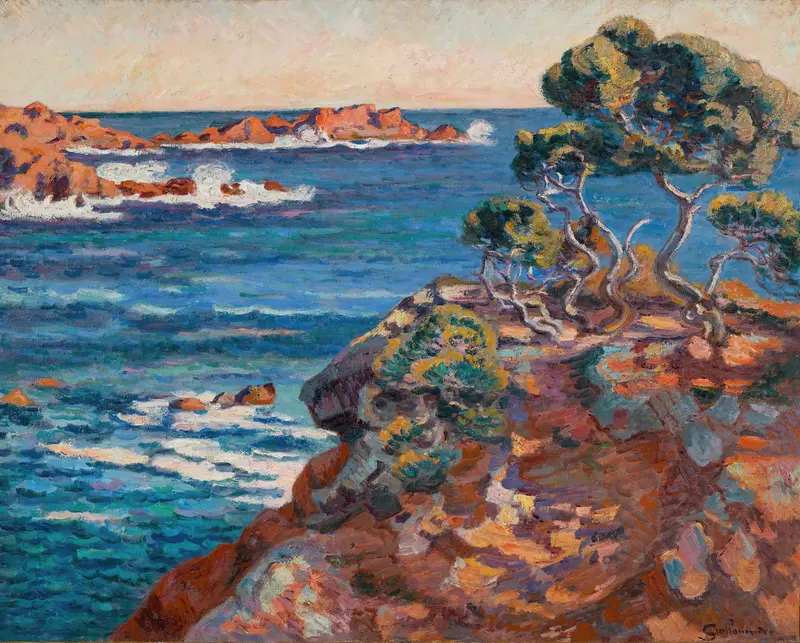
Bord De Mer À Agay
Armand Guillaumin
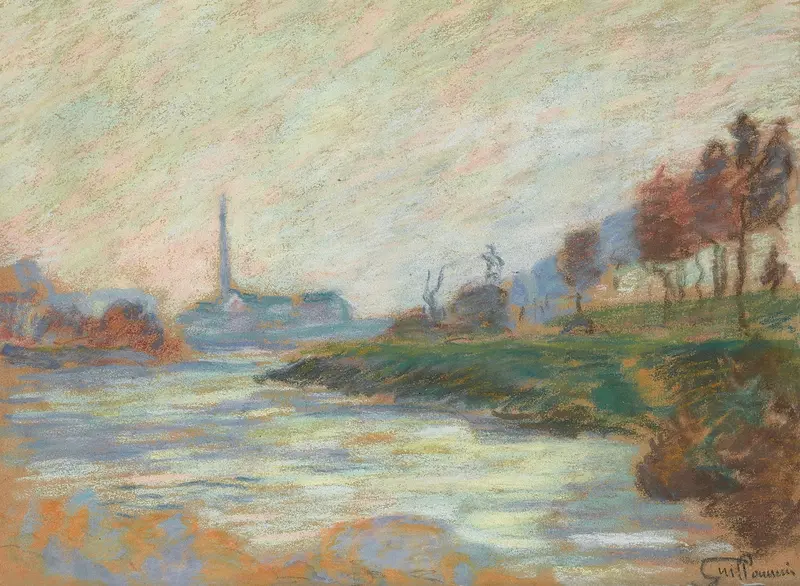
Confluent De La Marne Et De La Seine, Île De La France
Armand Guillaumin
Le Pont d’Austerlitz
Armand Guillaumin
Le Ravin de la folie, vue de Chateau Crozant
Armand Guillaumin
Crozant, Le Ravin De La Sedelle À La Folie
Armand Guillaumin
Paysage de Printemps
Armand Guillaumin
Paysage
Armand Guillaumin
La vallée de la creuse
Armand Guillaumin
Le chemin de halage à Charenton, Ile de France
Armand Guillaumin