
The Avenue at Meerdervoort — History & Facts
In the quiet embrace of a sunlit landscape, illusion and reality intertwine, revealing the depth of longing that lies beneath the surface. Look to the horizon, where the gentle sweep of the avenue draws the eye toward a distant figure, a solitary presence that invites contemplation. Notice how the play of light carves soft shadows over the verdant fields, creating a serene yet powerful contrast between illumination and obscurity. The lush greens and muted blues intertwine, while the golden sunlight bathes the scene in warmth, evoking a sense of nostalgia and yearning. As you absorb the intricate details, consider the figure’s isolation against the expansive landscape, a poignant reminder of both wonder and solitude.
The illusion of depth, created through layers of rich color and atmospheric perspective, suggests a world beyond what is immediately visible. This tension between the seen and the unseen—between the figure and the vastness around them—whispers of unfulfilled dreams and the stories hidden within the silence. In the early 1650s, Cuyp painted this piece amidst the flourishing of Dutch landscape painting, a time when artists sought to convey both beauty and emotion through their work. Living in Dordrecht, he was influenced by the surrounding countryside, using his keen observation to transform everyday scenes into captivating narratives.
This moment in art history heralded a shift toward realism, as artists began to explore the delicate interplay between light and nature, forever altering the viewer's experience.
More Artworks by Aelbert Cuyp
Browse all →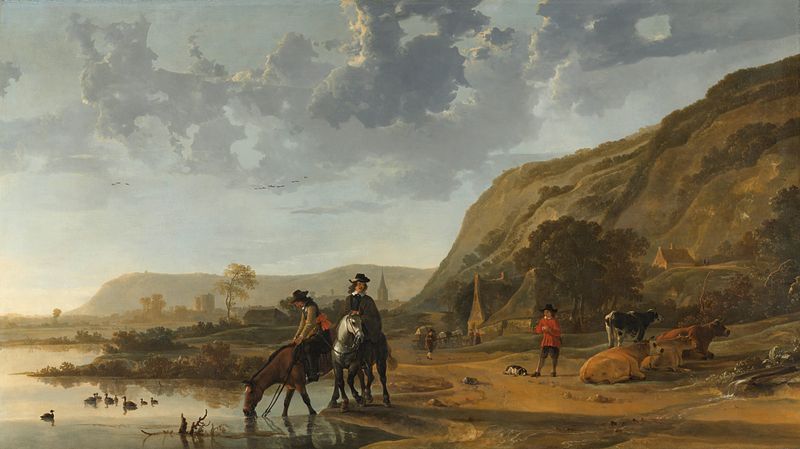
River Landscape with Riders
Aelbert Cuyp

Gezicht op Dordrecht
Aelbert Cuyp
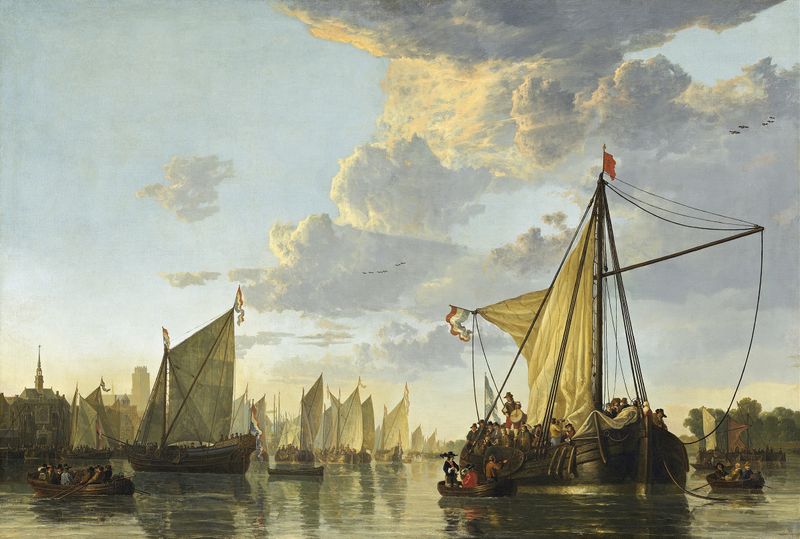
The Maas at Dordrecht
Aelbert Cuyp
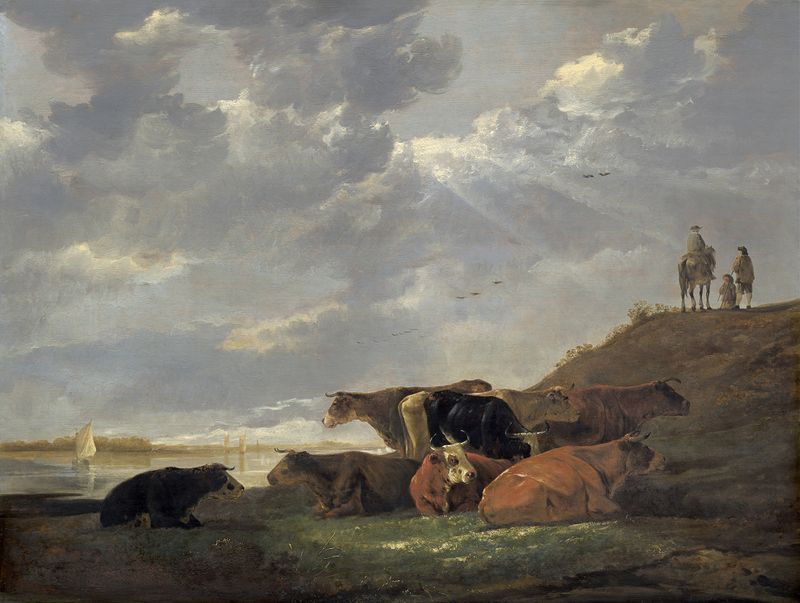
River Landscape with Cows
Aelbert Cuyp
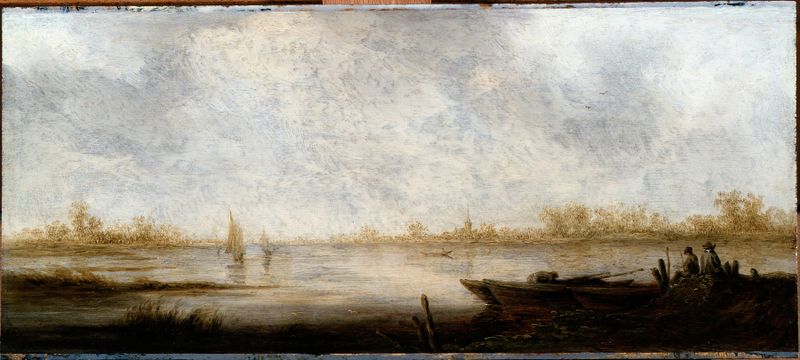
River Landscape
Aelbert Cuyp

Landscape near Dordrecht
Aelbert Cuyp
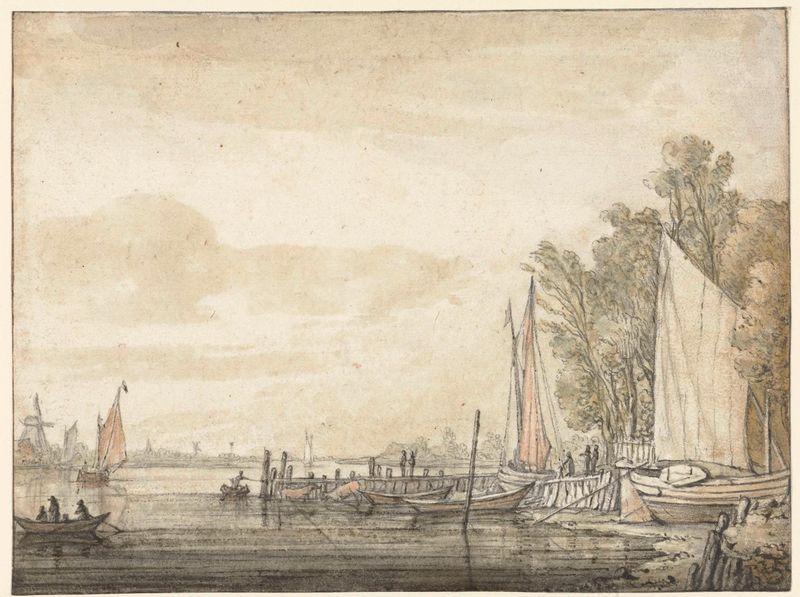
Boten bij een steiger in een rivier
Aelbert Cuyp

Bevroren rivier met schaatsers bij een kerk
Aelbert Cuyp
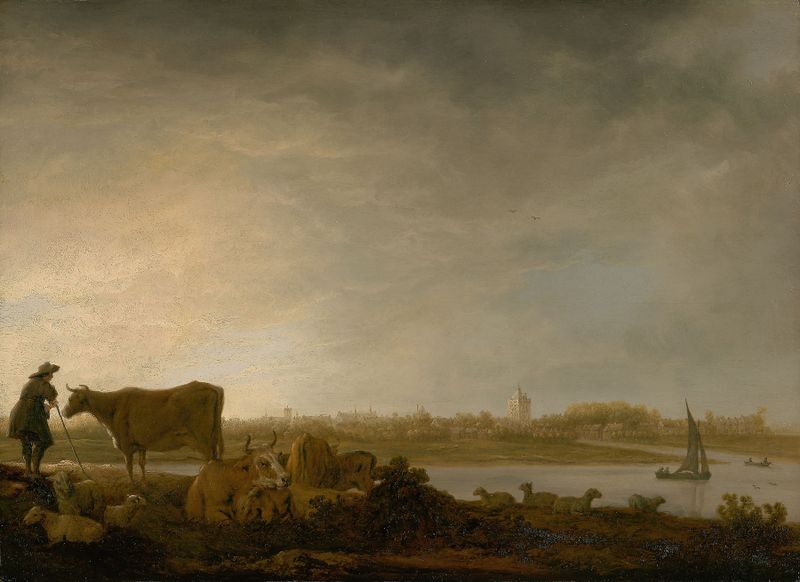
A View of Vianen with a Herdsman and Cattle by a River
Aelbert Cuyp

River Landscape with Cows
Aelbert Cuyp





