
The Balcony Room — History & Facts
Sunlight is the real subject here, pouring through a gauzy curtain and scattering across polished floorboards. The room is empty of people, yet the scene feels newly alive: a chair is angled as if just left, the mirror catches a fleeting glimpse of fabric, and the curtain billows with the suggestion of a breeze. The eye is drawn first to the glowing patch of light, then to the delicate play of shadows cast by the furniture—each detail carefully chosen to heighten the sense of a moment suspended.
The palette is restrained, all soft creams and warm browns, inviting a sense of quiet and anticipation rather than stillness. Painted in 1845, The Balcony Room belongs to a period when artists across Europe were turning their attention to the poetry of everyday interiors. In the world of Adolph von Menzel, such intimate scenes were not grand commissions but personal explorations of light, space, and mood—often painted for private enjoyment or artistic study. This was an era when the middle class was rising, and the home became a stage for new kinds of beauty and comfort.
The painting’s presence today in the digital collection of Google Arts & Culture is a reminder that history has kept few traces of these quiet, luminous moments, making each surviving example a window into another life. Look again at the shifting light: it is as fresh as the day it was painted.
More Artworks by Adolph von Menzel
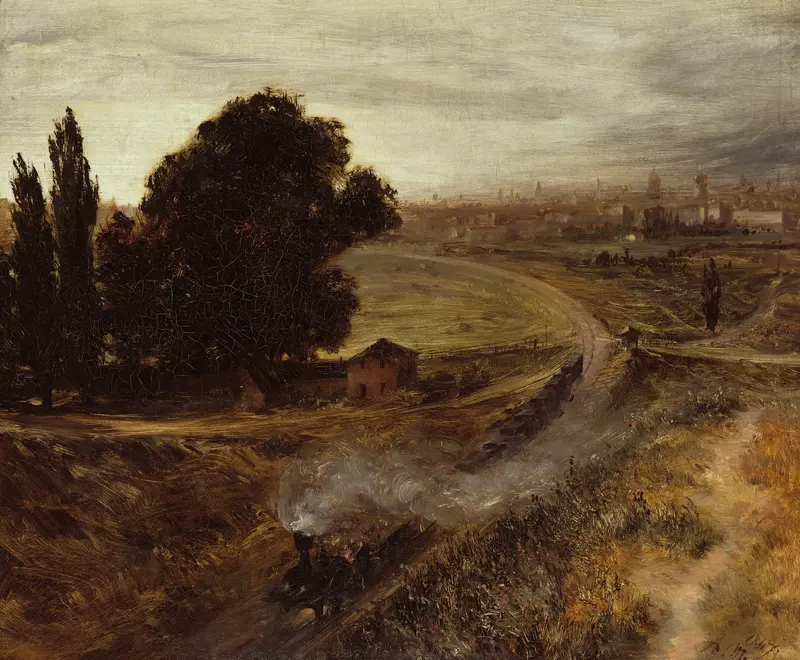
The Berlin-Potsdam Railway
Adolph von Menzel
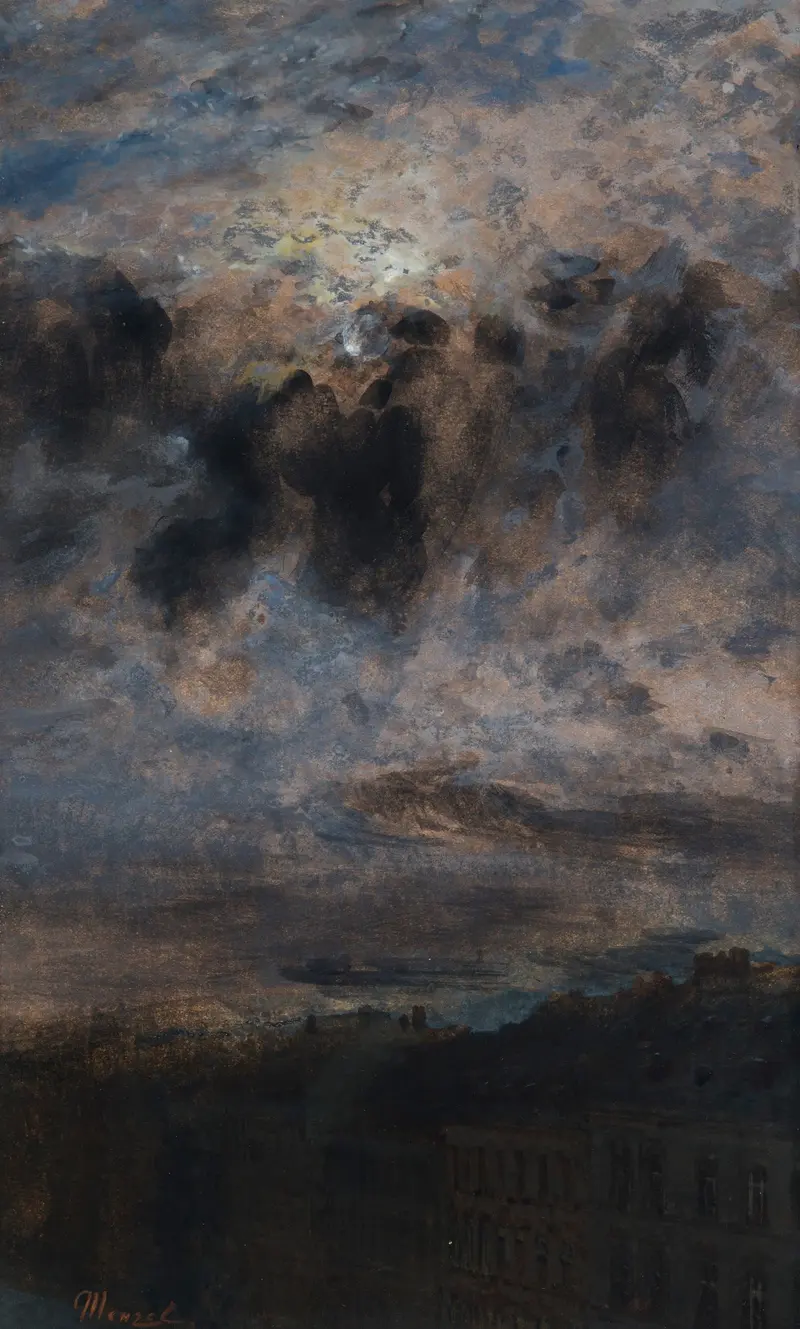
Mondschein über den Dächern von Berlin
Adolph von Menzel
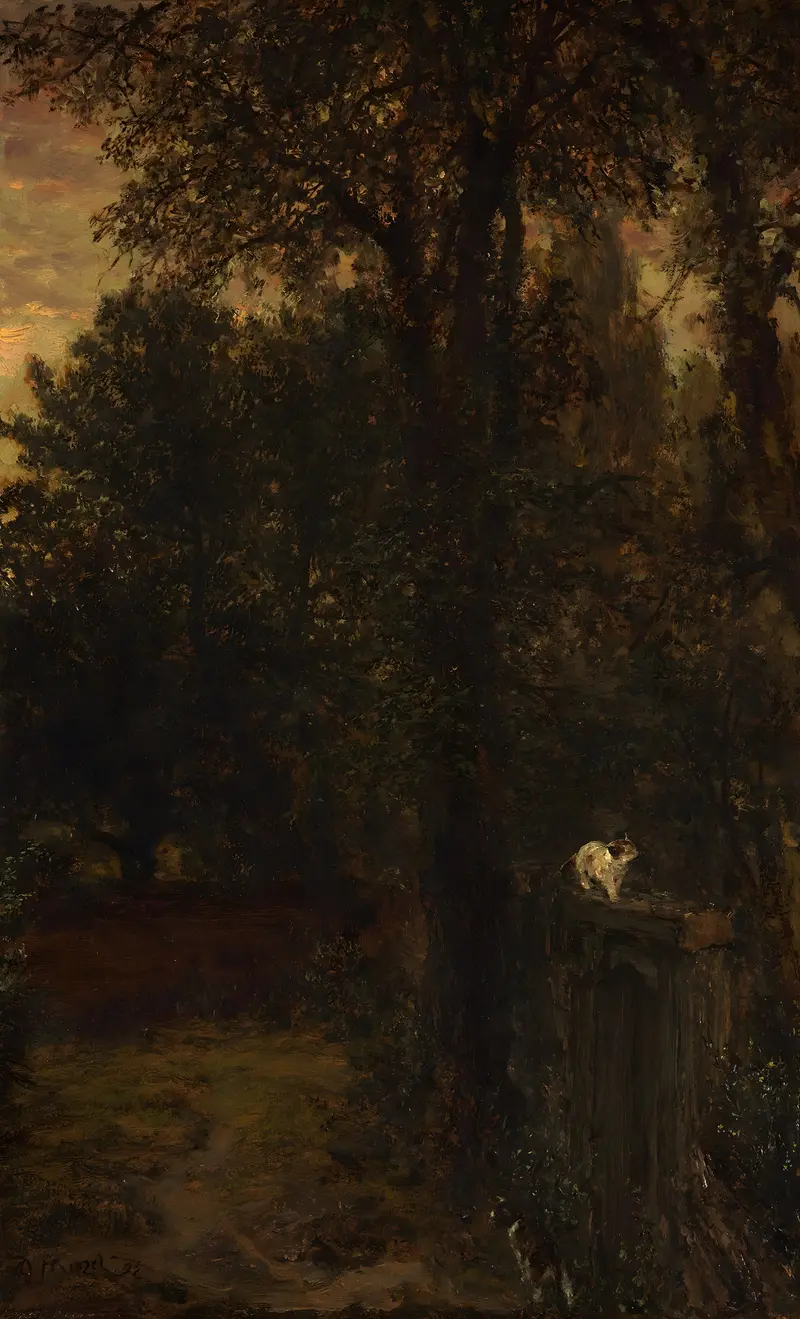
Landscape
Adolph von Menzel
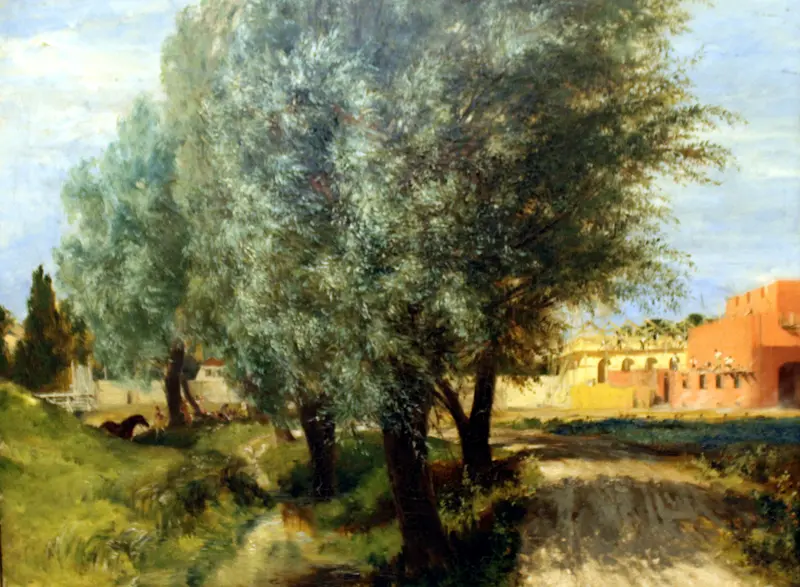
Building Site with Willows
Adolph von Menzel
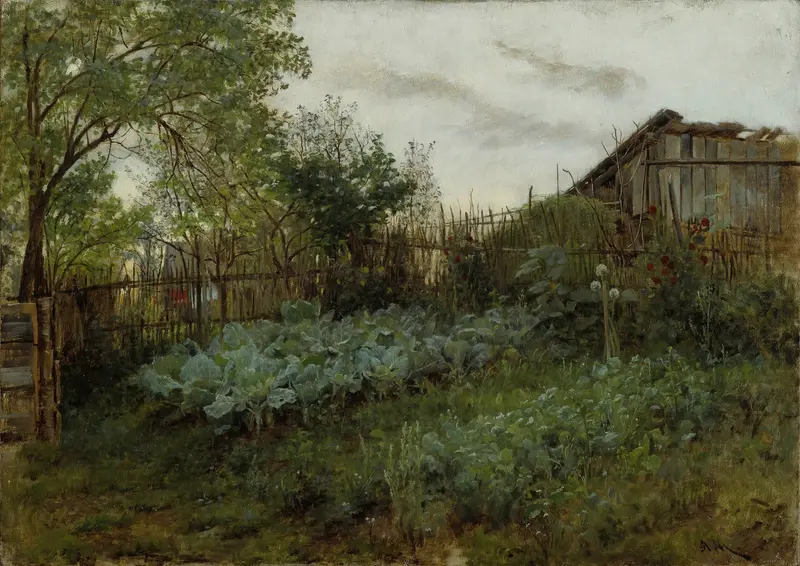
The Back Garden
Adolph von Menzel
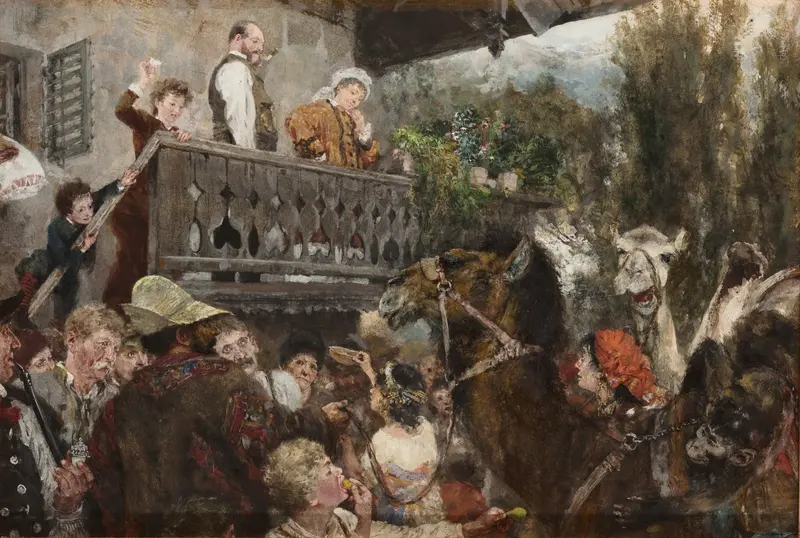
The wandering circus (Camel drivers in Partenkirchen)
Adolph von Menzel

Cloud Study
Adolph von Menzel
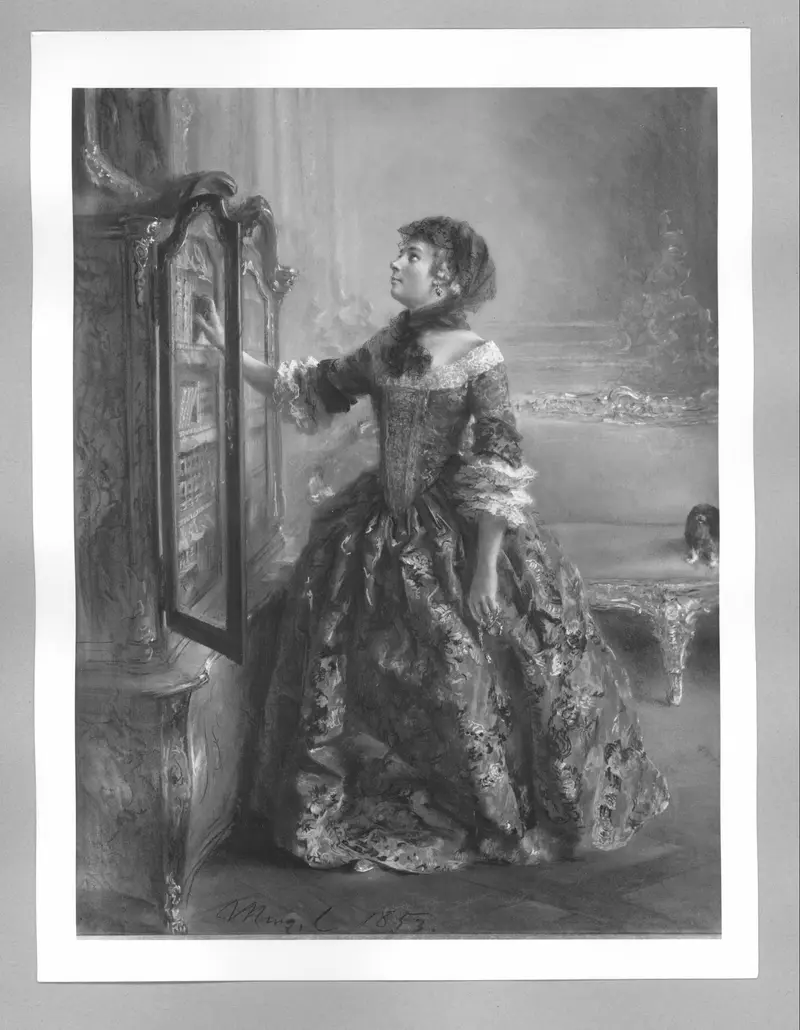
Adolf Friedrich Erdmann Menzel Dame in Rokoko Kostüm vor einem Bücherschrank (Prinzessin Amalie von Hohenzollern) 2320 Führermuseum
Adolph von Menzel
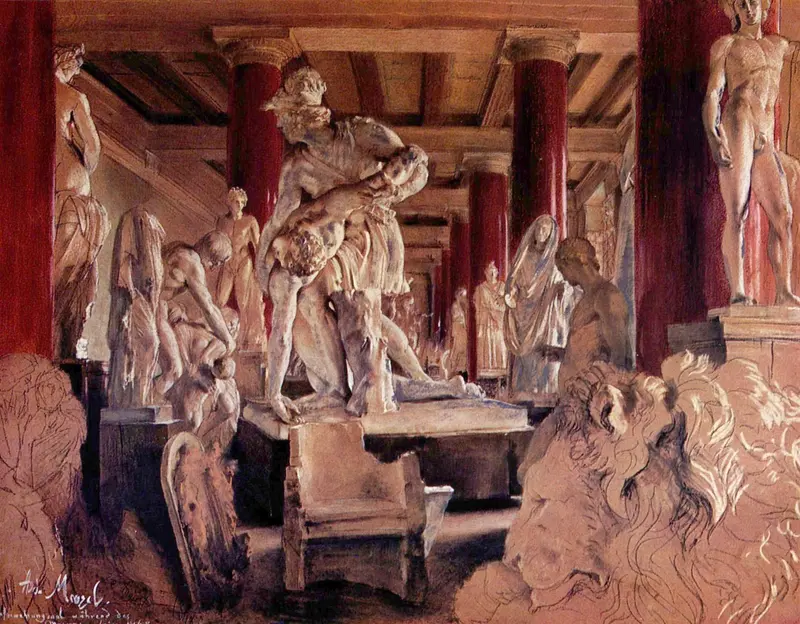
Aufbewahrungssaal während des Museumsumbaus Adolf Friedrich Erdmann von Menzel (Alte Nationalgalerie, Berlin)
Adolph von Menzel
Chodowiecki on the Jannowitz Bridge
Adolph von Menzel





