
The Beautiful Greek — History & Facts
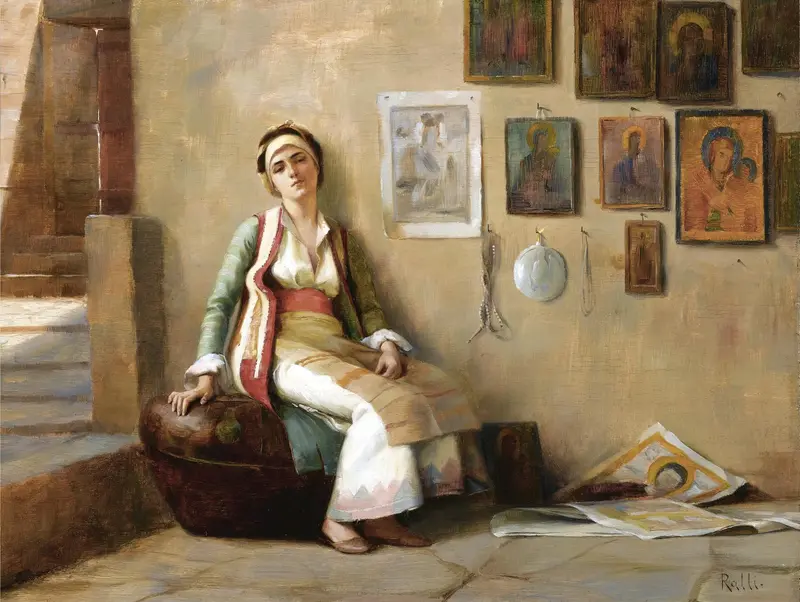
What first catches the eye in The Beautiful Greek by Theodoros Ralli is the poised, almost conspiratorial glance of the sitter—a look that seems to catch the viewer mid-thought. Her gaze, directed just off to the side, draws us into a private moment, as if she has been interrupted or is about to speak. The painter’s attention to the play of light across her cheek and lips gives the flesh a living warmth, while the gold-threaded headscarf, embroidered with bold, folkloric motifs, signals both pride and individuality.
The single gold earring glints, echoing the metallic threads, and the soft blush of her garment gently frames her face, inviting us to linger over each detail. Painted sometime between 1873 and 1909, this work belongs to a world in which portraits were more than likenesses—they were acts of cultural memory and aspiration. In the late 19th century, artists like Ralli—himself known for his ties to both Greek and French artistic circles—often turned to scenes and figures from their homelands, responding to a Europe fascinated by the so-called “Orient” and the rediscovery of national roots. Such portraits were frequently commissioned to celebrate beauty, costume, and character, sometimes for private homes, sometimes for public pride.
Little is recorded about the specific journey of this painting, but its confident brushwork and vivid presence speak to a moment when identity and tradition were painted with both affection and a keen sense of modernity. Let your eye return to that sidelong glance, and imagine the stories it might have witnessed.
More Artworks by Theodoros Ralli

The Sleeping Concubine
Theodoros Ralli
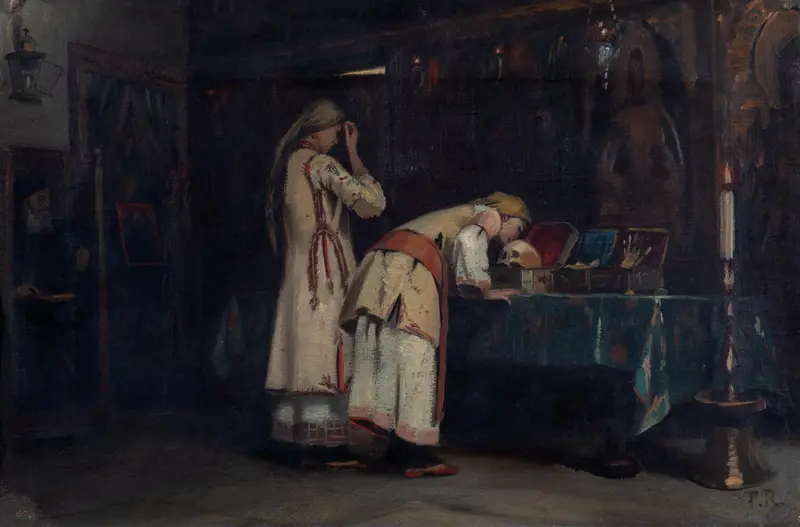
Holy Relics
Theodoros Ralli
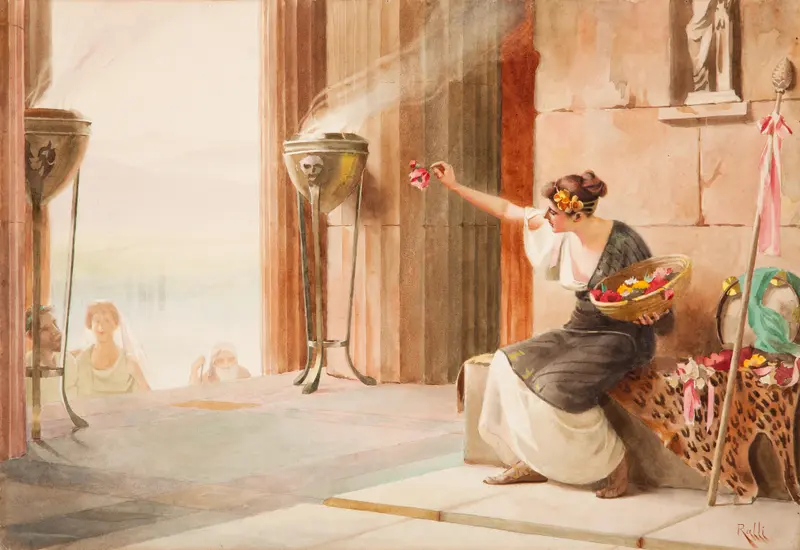
Flower Seller at the Parthenon
Theodoros Ralli
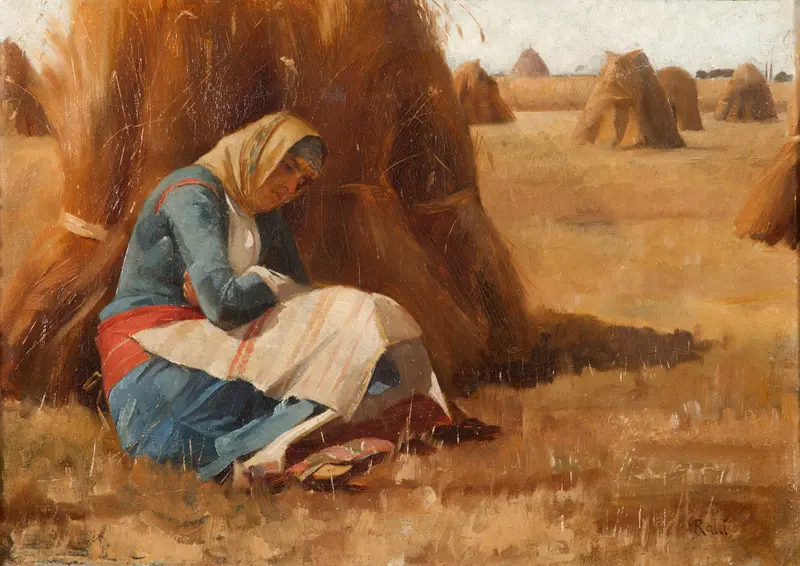
Resting by a Haystack
Theodoros Ralli
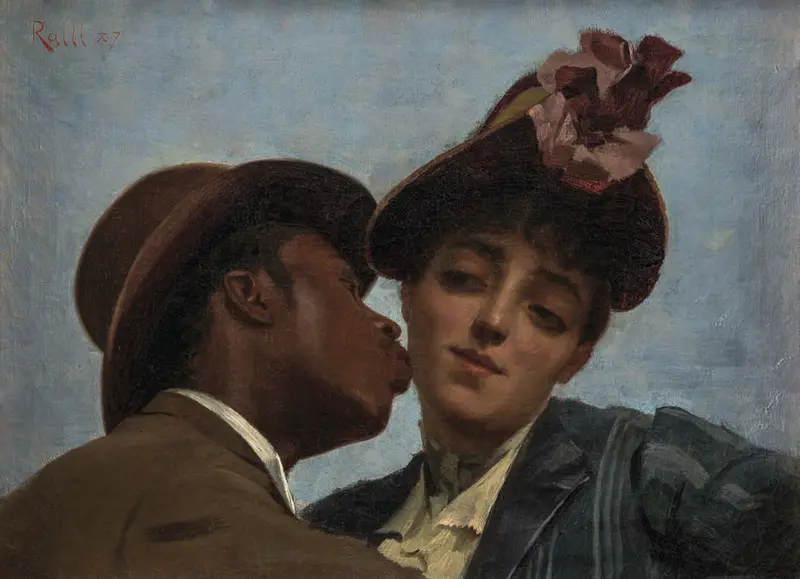
The Kiss (Ralli)
Theodoros Ralli
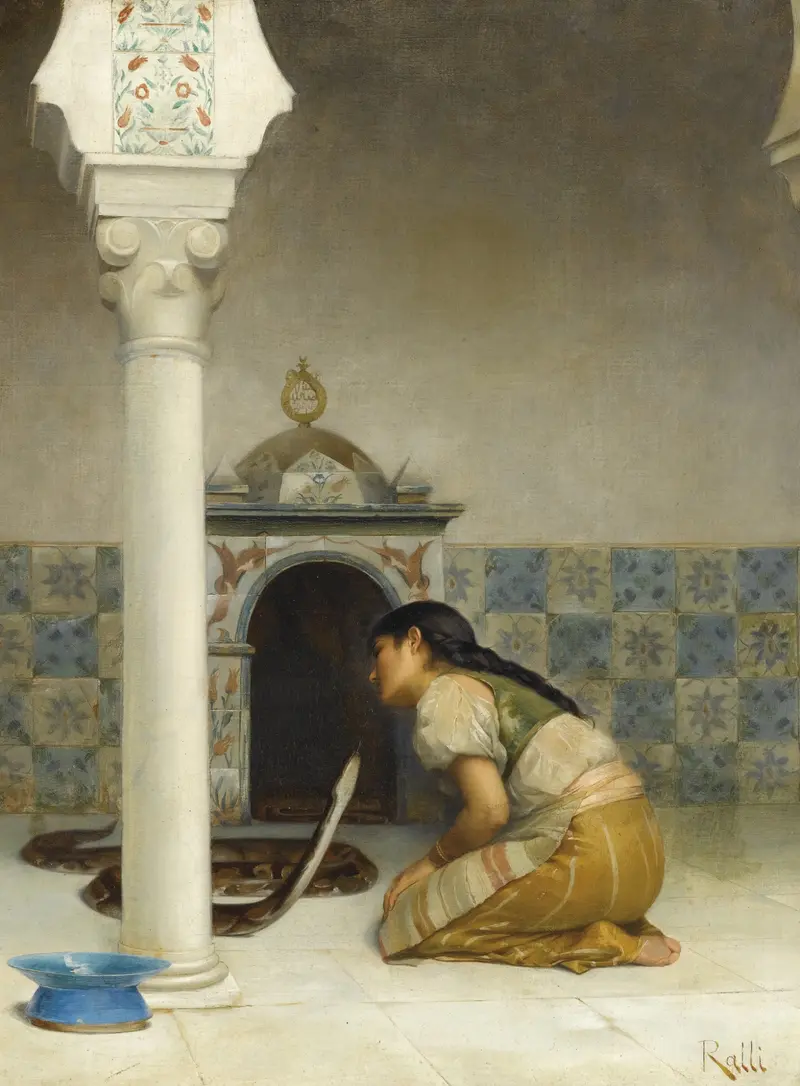
The Sacred Serpent
Theodoros Ralli
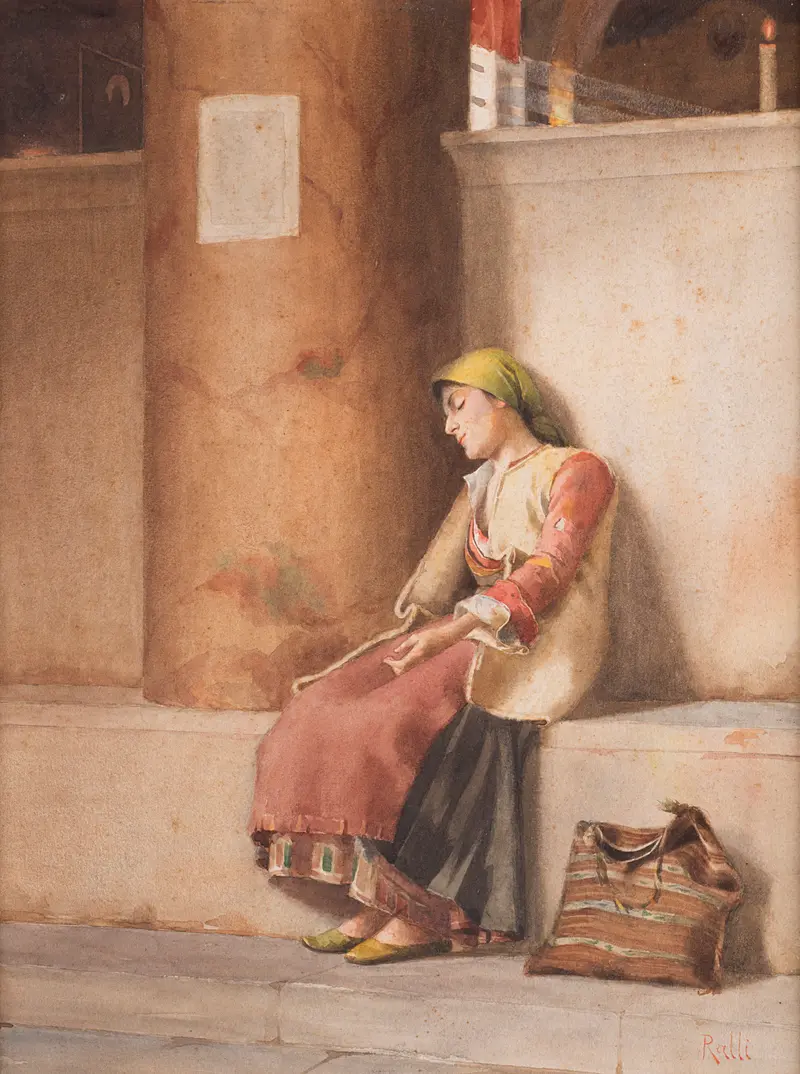
A Moment of Reflection
Theodoros Ralli
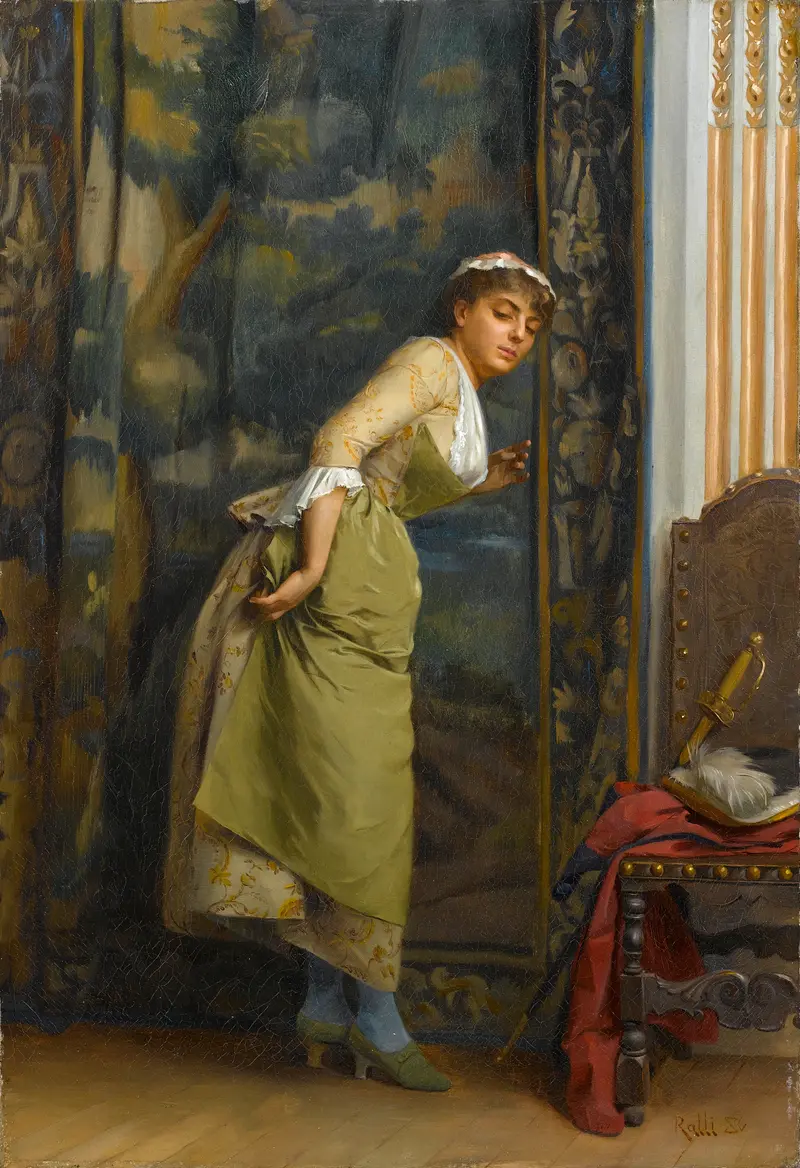
Eavesdropping (Ralli)
Theodoros Ralli
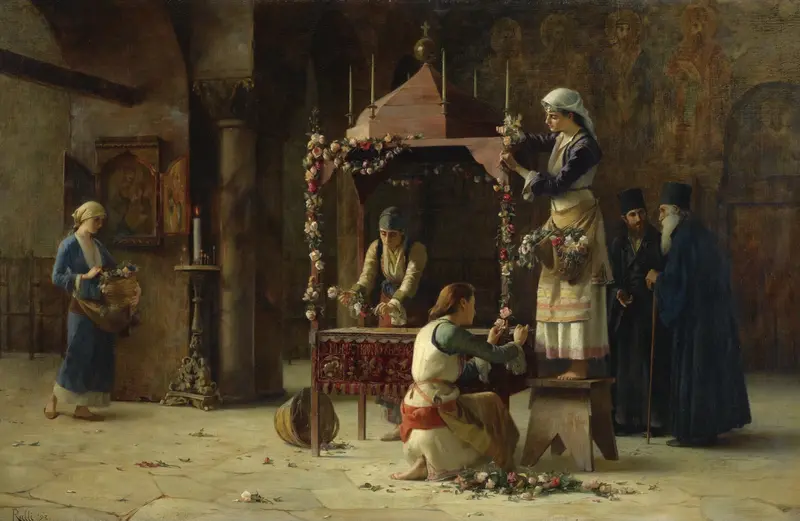
Holy Friday, Greece
Theodoros Ralli
A Moment's Rest
Theodoros Ralli





