
The Bridge — History & Facts
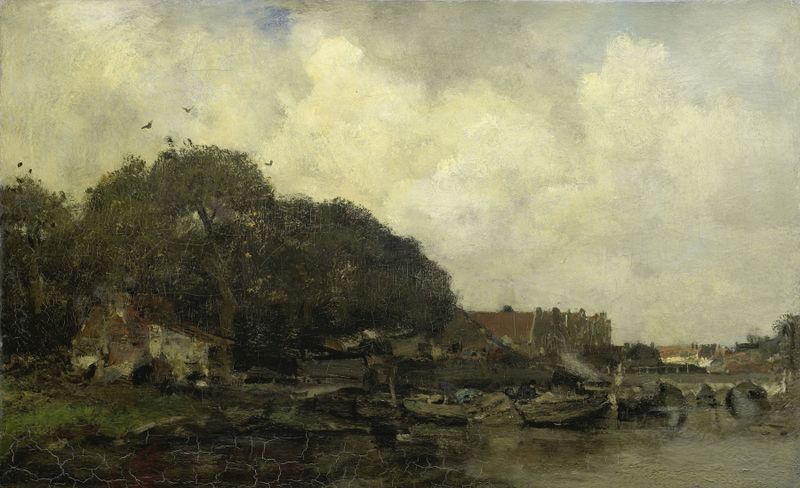
In the delicate interplay of light and shadow, landscapes unveil their secrets, revealing truths about the world and ourselves. Focus first on the bridge that elegantly stretches across the canvas, its arches gracefully leading the eye while commanding a sense of stability. The cool, muted tones of blues and greys contrast with the warm earthiness of the surrounding landscape, drawing attention to the structure's strength amid the fluidity of nature. Look closely at the brushwork: each stroke pulsates with life, connecting the stillness of the bridge with the rippling water below, creating a dialogue between manmade and organic forms. Beneath the surface, the painting conveys a deeper narrative of transience and resilience.
The bridge symbolizes human endeavor, a passage through time, while the soft undulations of the water hint at the permanence of change. The interplay between light and dark evokes a sense of introspection, suggesting that every journey across this bridge might lead to a revelation about the self and the world. The subtle contrasts between the solid structure and the ephemeral qualities of nature reflect our constant struggle to find balance amid uncertainty. In the late 1870s, Jacob Maris painted this scene during a period of significant personal and artistic development in his life.
Living in the Netherlands, he was deeply influenced by the burgeoning Impressionist movement, which sought to capture fleeting moments of light and atmosphere. This work exemplifies his mastery of color and texture, showcasing both his technical skill and his evolving vision as he explored the relationship between humanity and the natural world.
More Artworks by Jacob Maris
Browse all →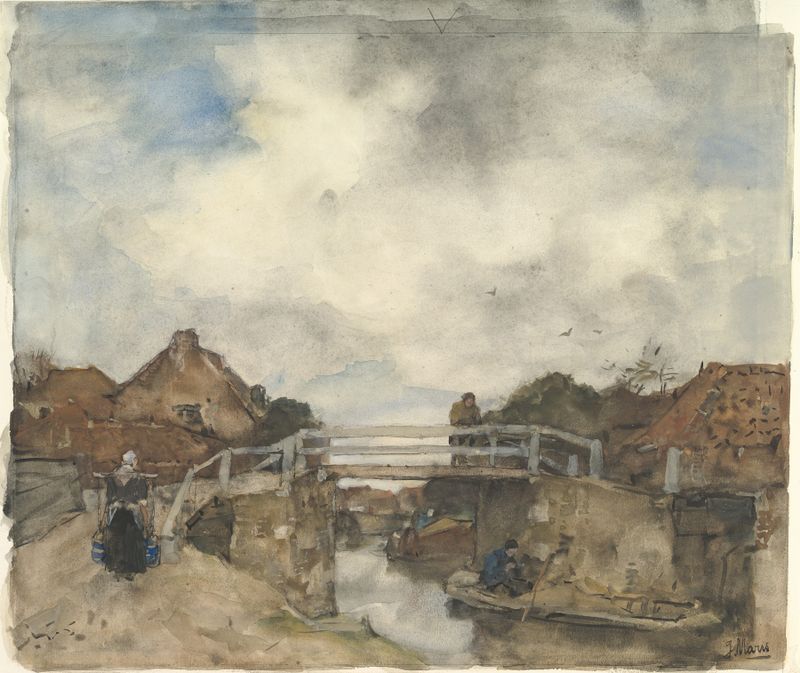
Dutch Canal, Rijswijk
Jacob Maris
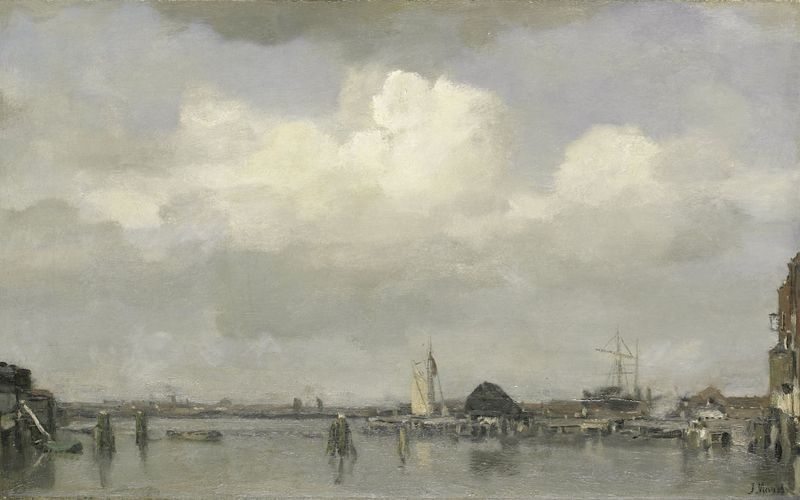
Havengezicht
Jacob Maris
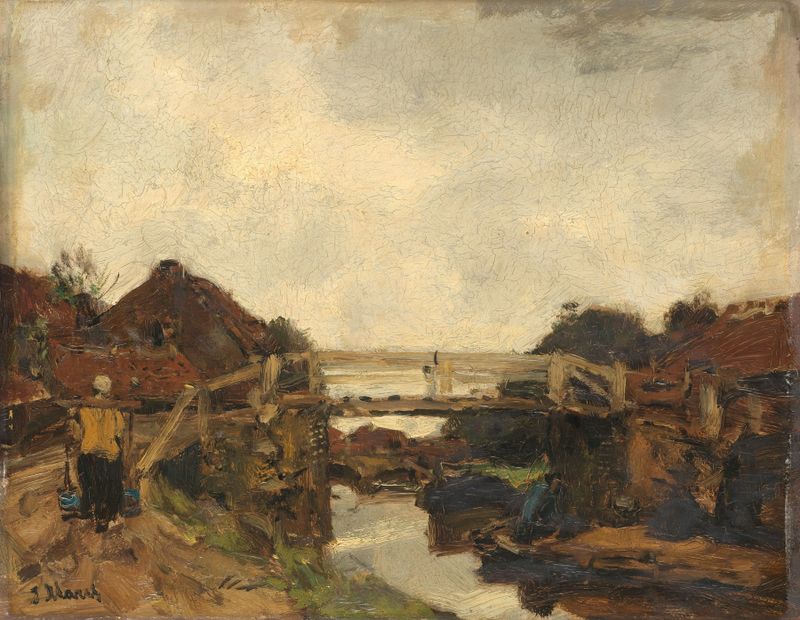
Wooden Bridge across a Canal at Rijswijk
Jacob Maris
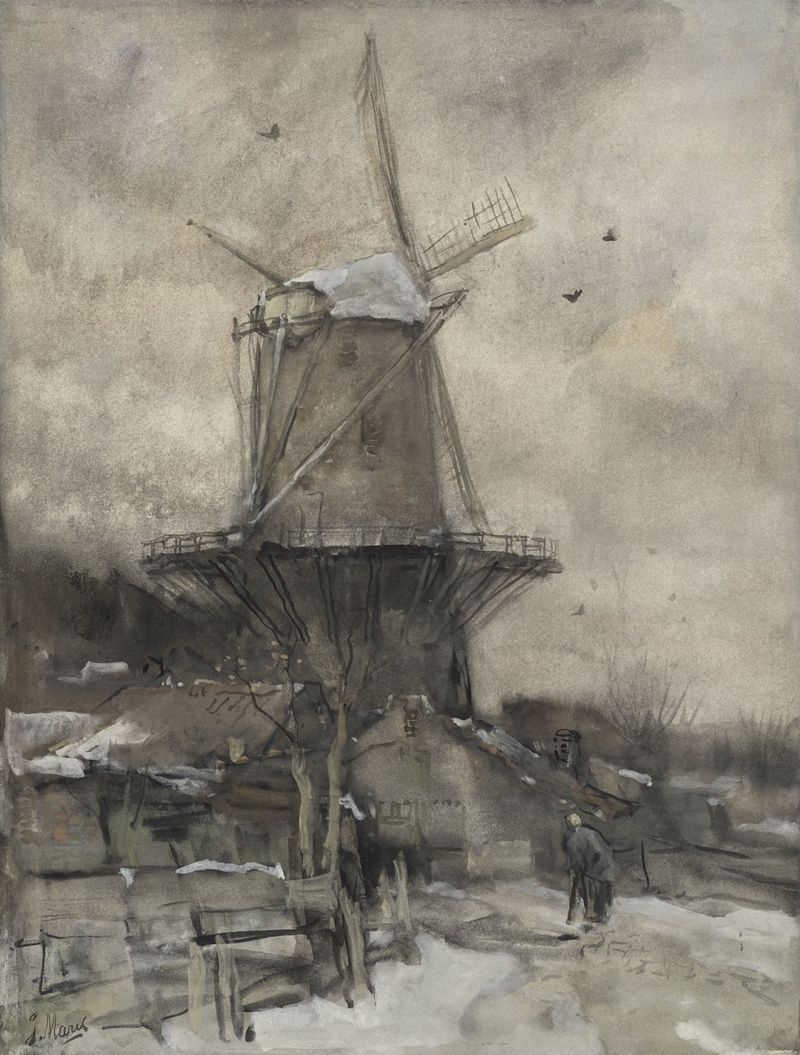
Een molen in de winter
Jacob Maris
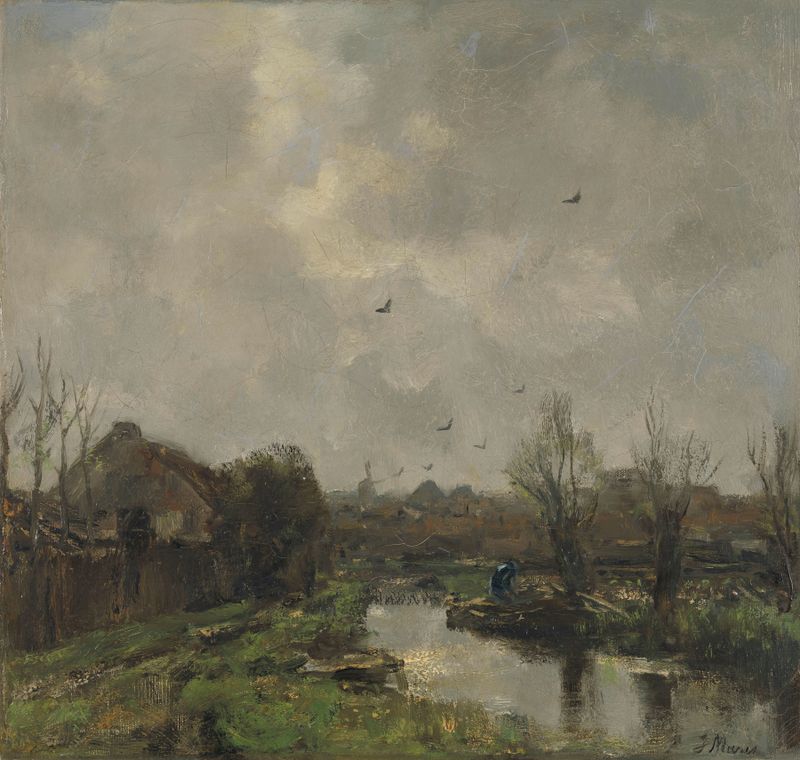
Landschap in de omgeving van Den Haag
Jacob Maris
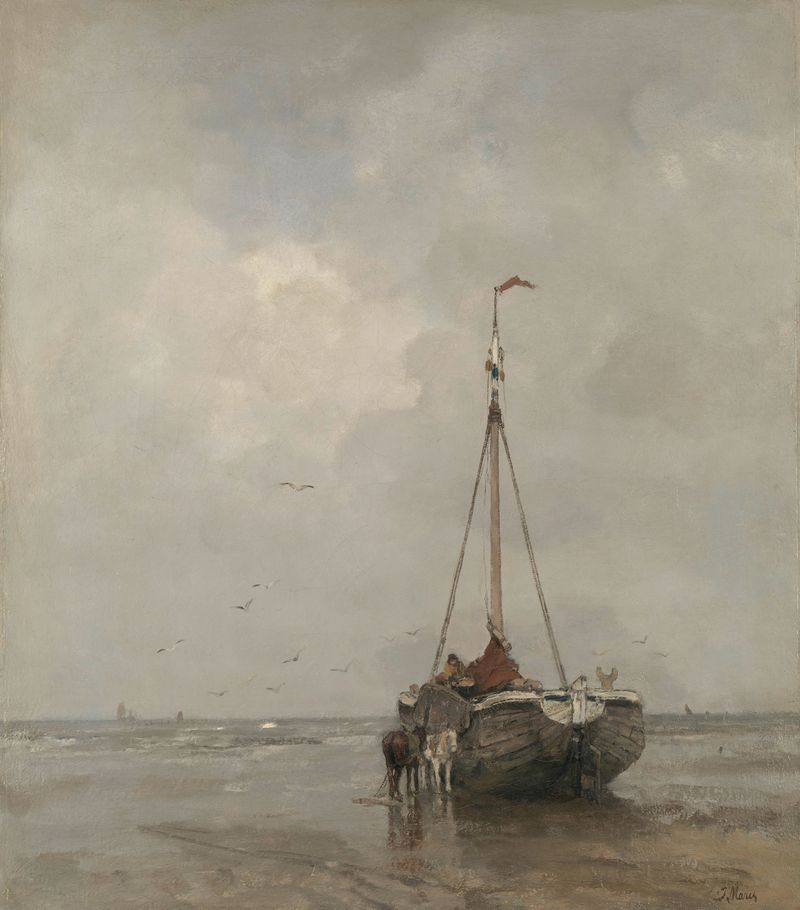
Bluff-bowed Fishing Boat on the Beach at Scheveningen
Jacob Maris
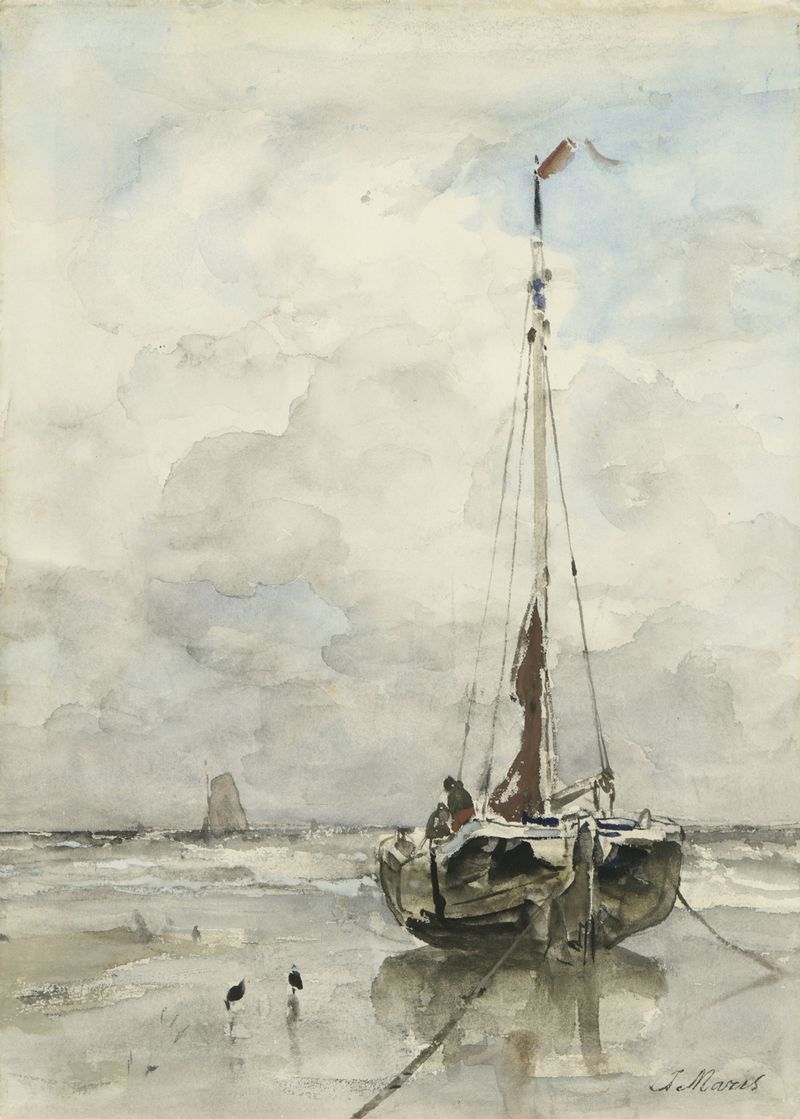
Visserspink aan het strand
Jacob Maris
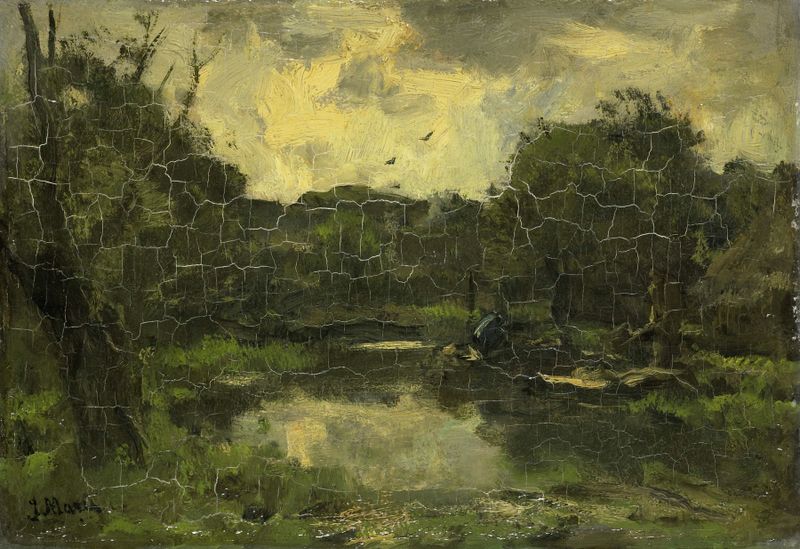
Landschap met schuit
Jacob Maris
Havengezicht
Jacob Maris
Schepen in de haven van Dordrecht
Jacob Maris





