
The Bridge in Moret in the Morning Light — History & Facts
Sunlight pours across the river, turning water and stone alike into a tapestry of gold and pale blue. The eye is drawn first to the bridge, its arches casting gentle shadows, then to the cluster of houses and the church rising behind them—a quiet geometry of gables and towers, all softened by the morning haze. The brushwork is brisk, almost shimmering, capturing not the details of masonry but the fleeting play of light and air.
The sky, wide and open, is dappled with clouds that seem to drift as you look. Every surface in The Bridge in Moret in the Morning Light seems to pulse with the hush of early day, inviting the viewer to linger in the calm before the world stirs. Painted in 1888, this work belongs to the late flowering of Impressionism, when artists like Alfred Sisley sought to capture the changing moods of familiar places. Such paintings were rarely grand commissions; instead, they were labors of personal devotion, often painted outdoors to seize a particular hour’s light.
The bridge at Moret-sur-Loing was a favorite motif for Sisley, emblematic of the era’s fascination with the intersection of nature and the built environment. The painting’s presence in The Yorck Project’s 2002 collection—an archive of 10,000 masterpieces—signals both its quiet importance and the way history sometimes preserves works not through fame, but through the persistence of beauty. Look again at the reflection in the water: it is there that the true subject of the painting—the fleeting morning—lives on.
More Artworks by Alfred Sisley
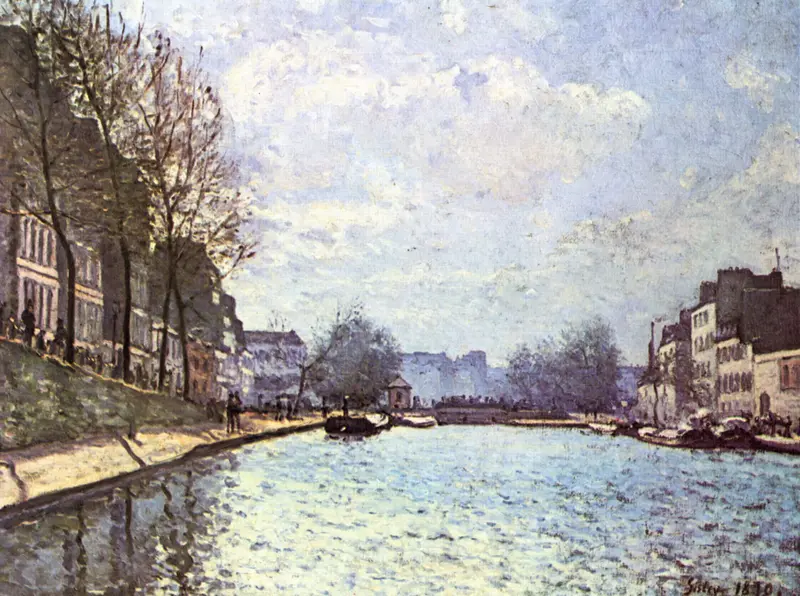
View of the Canal Saint-Martin
Alfred Sisley

Le Loing à Saint-Mammès
Alfred Sisley
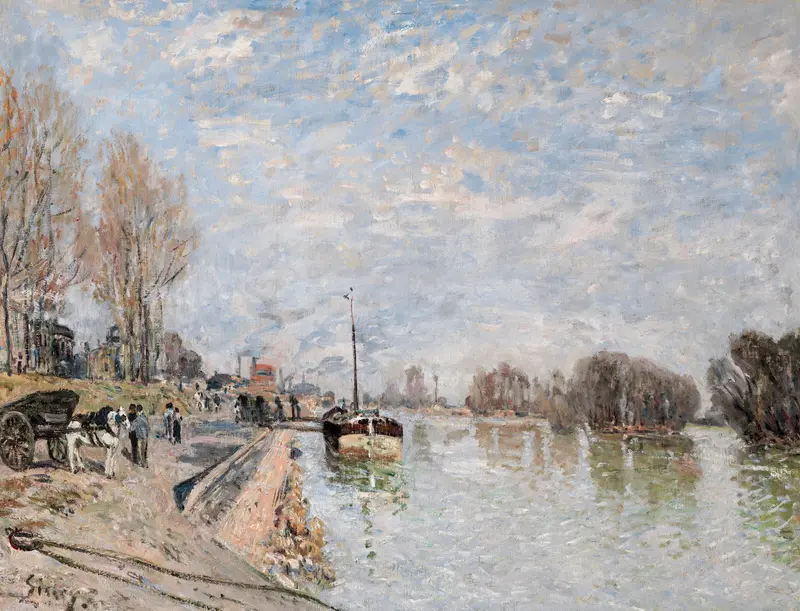
La Seine à Suresnes
Alfred Sisley
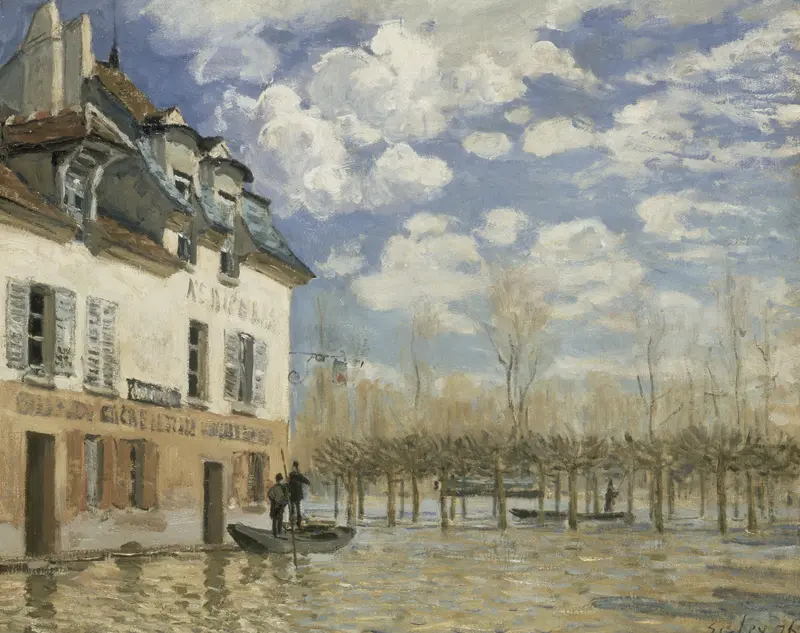
Boat in the Flood at Port Marly
Alfred Sisley
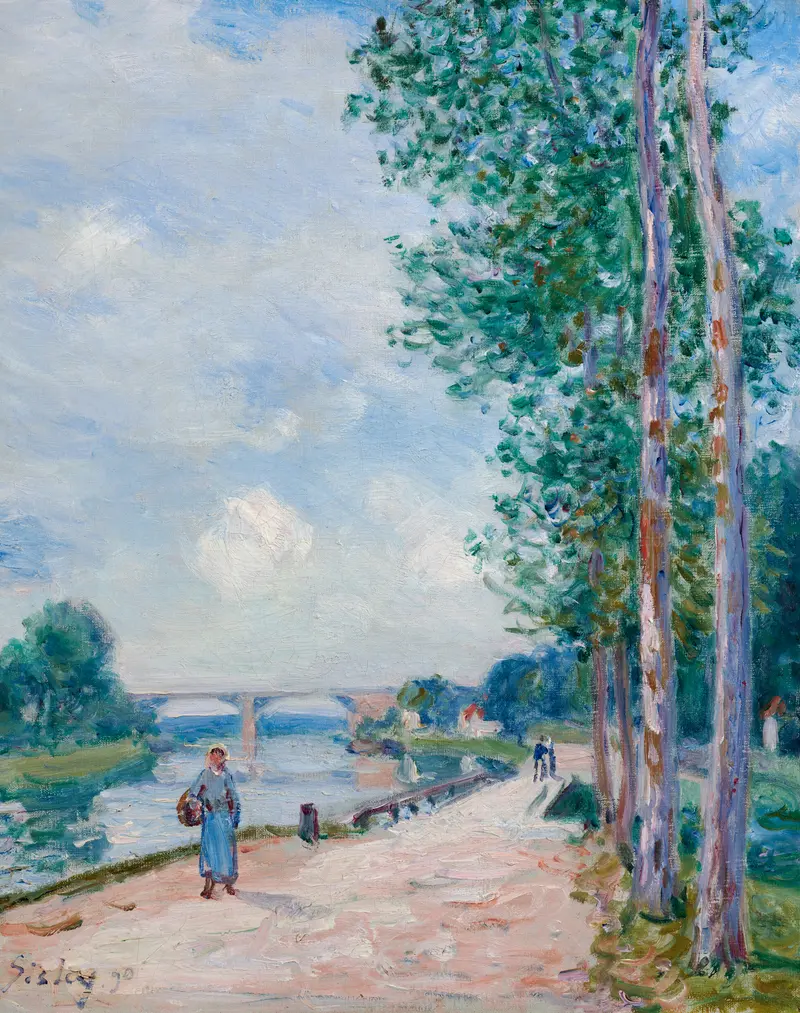
Les bords du Loing près de Moret
Alfred Sisley
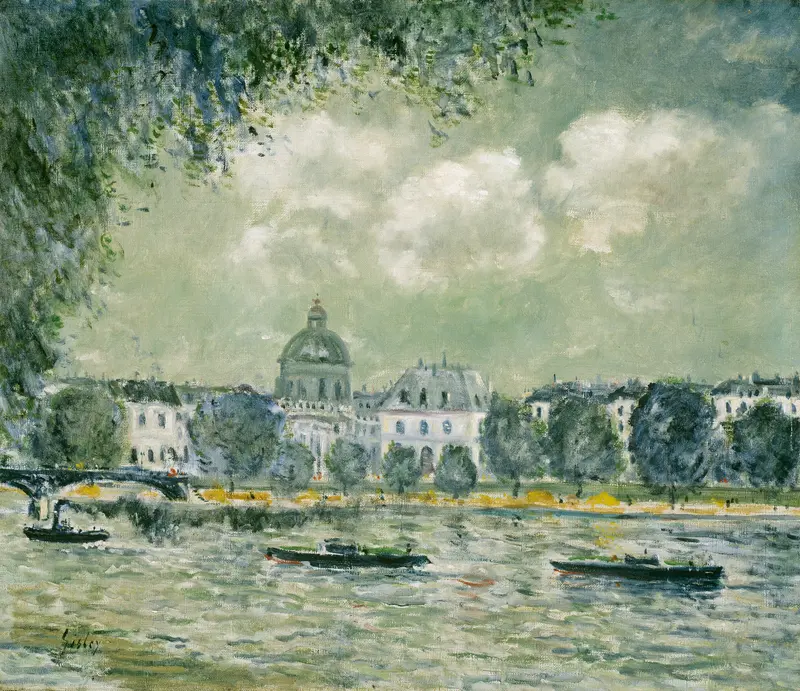
Landscape along the Seine with the Institut de France and the Pont des Arts
Alfred Sisley

Printemps au bord du Loing
Alfred Sisley
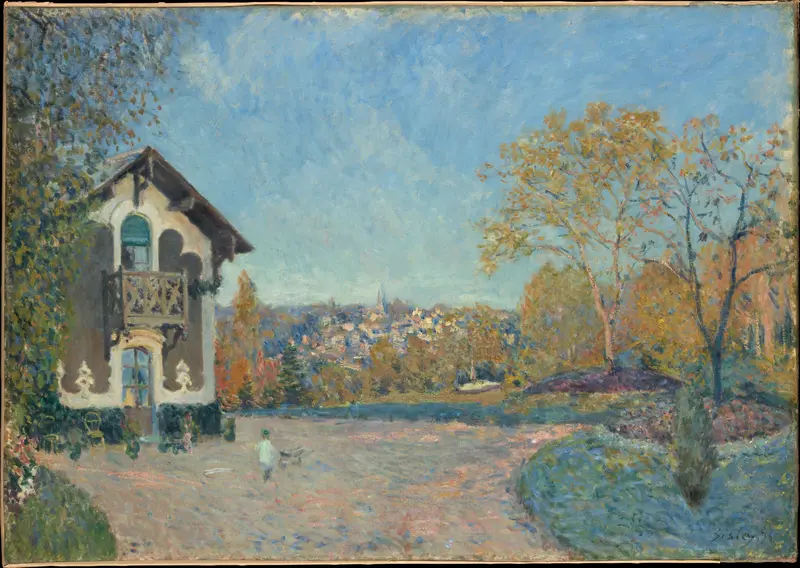
View of Marly-le-Roi from Coeur-Volant
Alfred Sisley
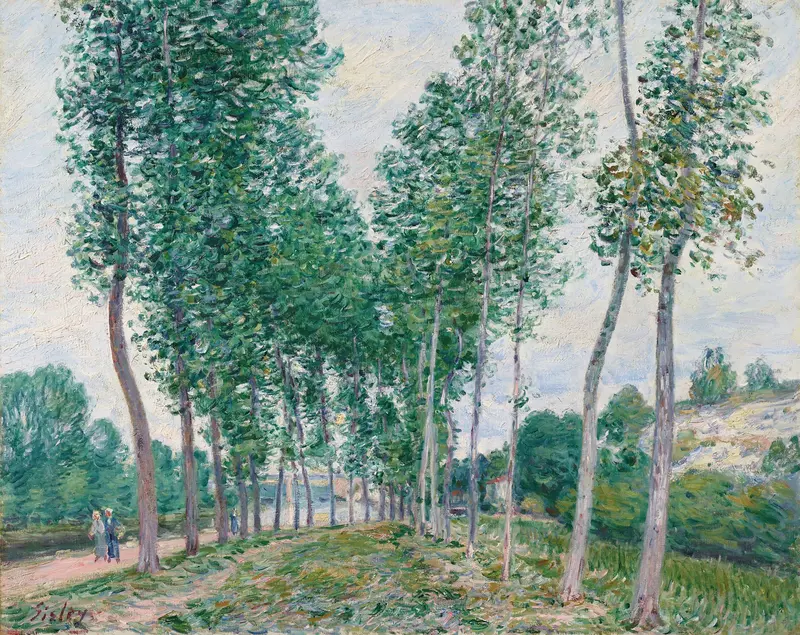
L’allée des peupliers au bord du Loing
Alfred Sisley
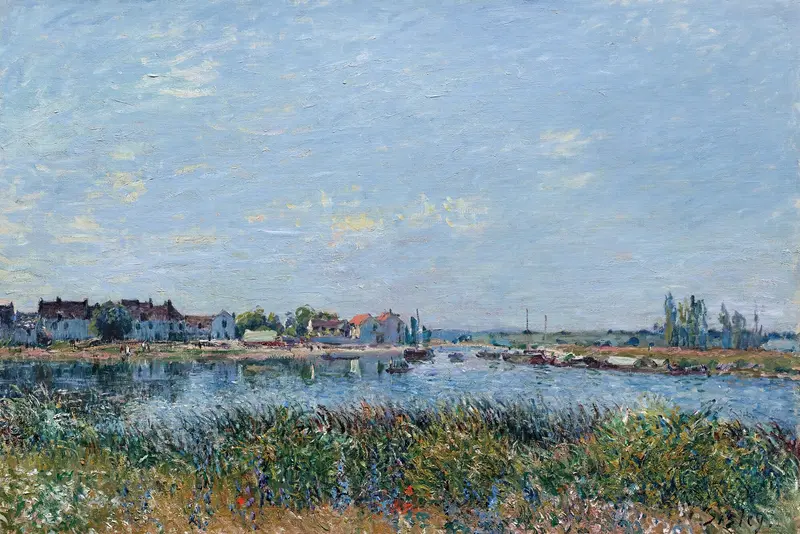
Saint-Mammès, Le Matin
Alfred Sisley
More Landscape Art

The Starry Night
Vincent van Gogh

View of Delft
Johannes Vermeer

Water Lilies
Claude Monet

The Grand Canal, Venice, looking north-west from the Ca' Corner to the Ca' Contarini degli Scrigni, with the campanile of Santa Maria della Carità
Canaletto

Windsor Castle
Canaletto

The Grand Canal looking North-East from the Palazzo Dolfin-Manin to the Rialto Bridge
Canaletto