
The Captive (Turkish Plunder) — History & Facts
The first thing that grips the viewer in The Captive (Turkish Plunder) is the silent gulf between the figures: a young woman, hands bound and eyes meeting ours, stands isolated amid the wreckage of sacred objects, while two men in Ottoman dress squat in the shadows, absorbed in their own world. The painter draws a clear line between captors and captive, not just in posture but in light itself—the woman is bathed in a cool, steady glow that picks out the embroidery on her dress and the flush in her cheeks, while the men are half-swallowed by the darkness of the archway. The scattered vestments and icons at her feet are not just debris; they are the remnants of a violated sanctuary, their presence a silent witness to the violence that has unfolded.
Even the wall behind her, with its faded saints, seems to mourn. Painted around 1885, this work belongs to a moment when European artists, especially those from the Eastern Mediterranean like Theodoros Ralli, turned to scenes of captivity, conflict, and cultural collision—subjects that resonated with audiences shaped by the decline of the Ottoman Empire and the rise of nationalist sentiment. Such paintings often found their way into private collections or salons, where they stirred both fascination and unease, feeding Western curiosity about the “Orient” while also reflecting the anxieties of a rapidly changing world. History has kept few traces of this particular canvas’s journey, but its date and subject root it firmly in the late nineteenth century’s hunger for stories of loss, endurance, and identity.
The woman’s gaze invites us to linger, to ask not just what has happened, but what will happen next.
More Artworks by Theodoros Ralli

The Sleeping Concubine
Theodoros Ralli
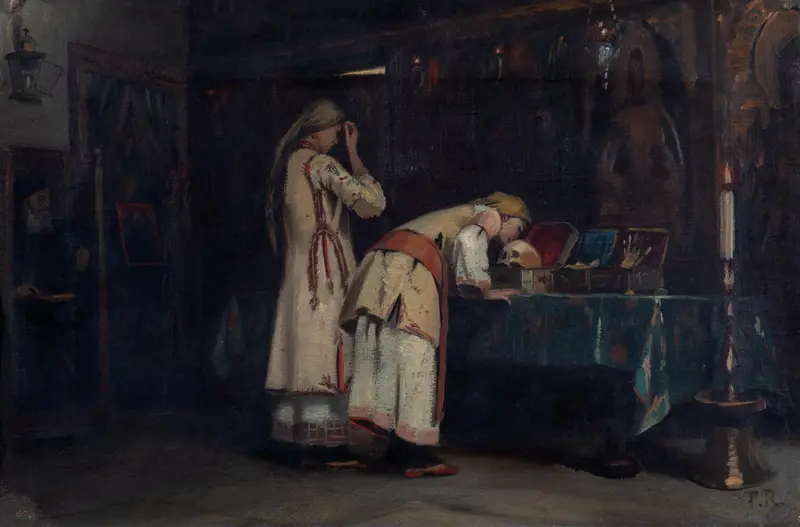
Holy Relics
Theodoros Ralli
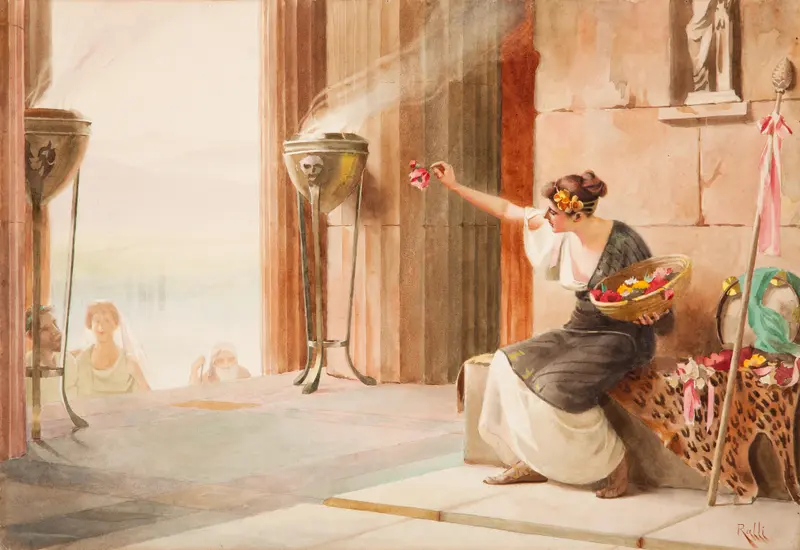
Flower Seller at the Parthenon
Theodoros Ralli
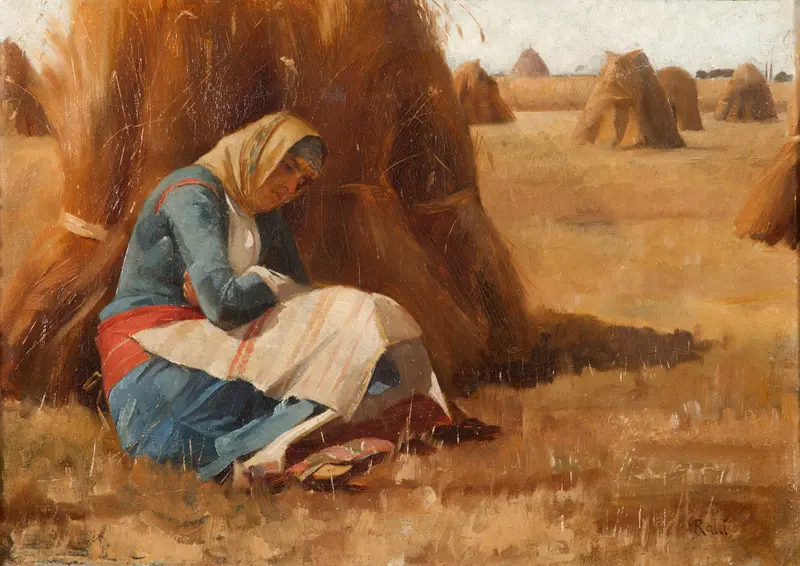
Resting by a Haystack
Theodoros Ralli
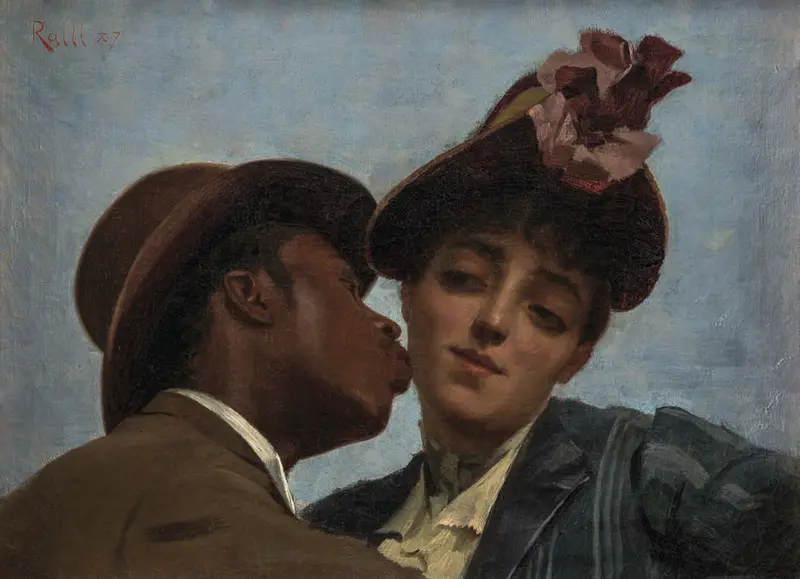
The Kiss (Ralli)
Theodoros Ralli
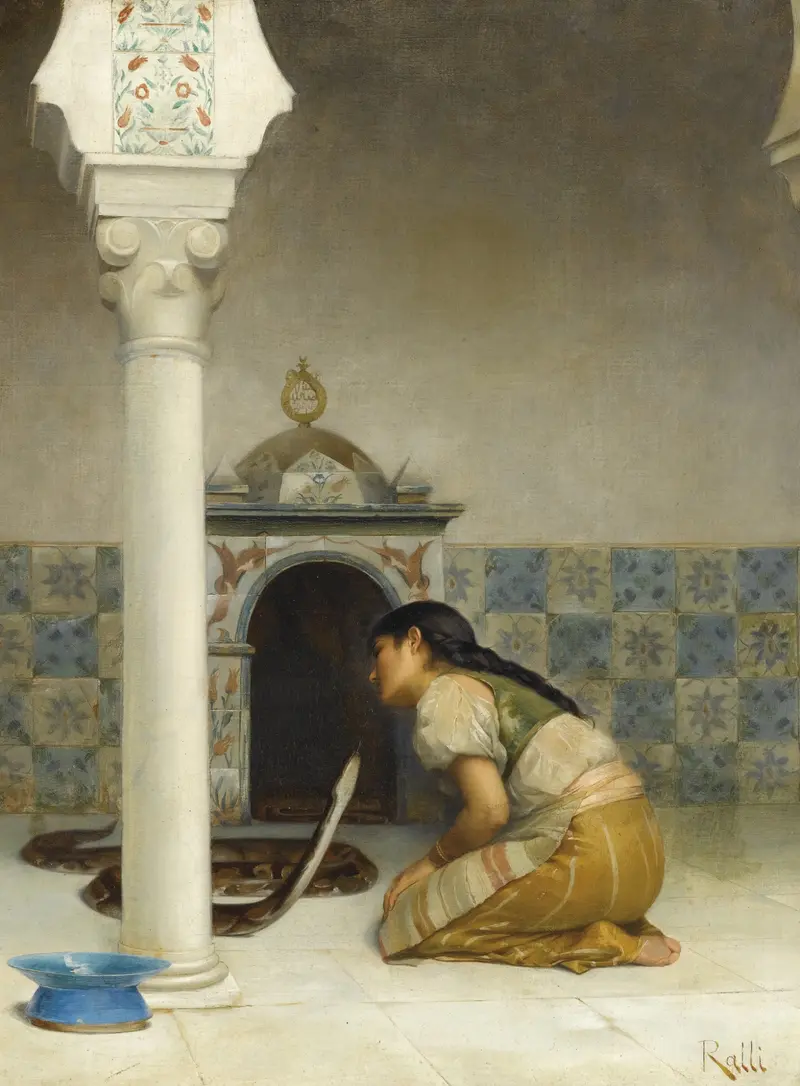
The Sacred Serpent
Theodoros Ralli
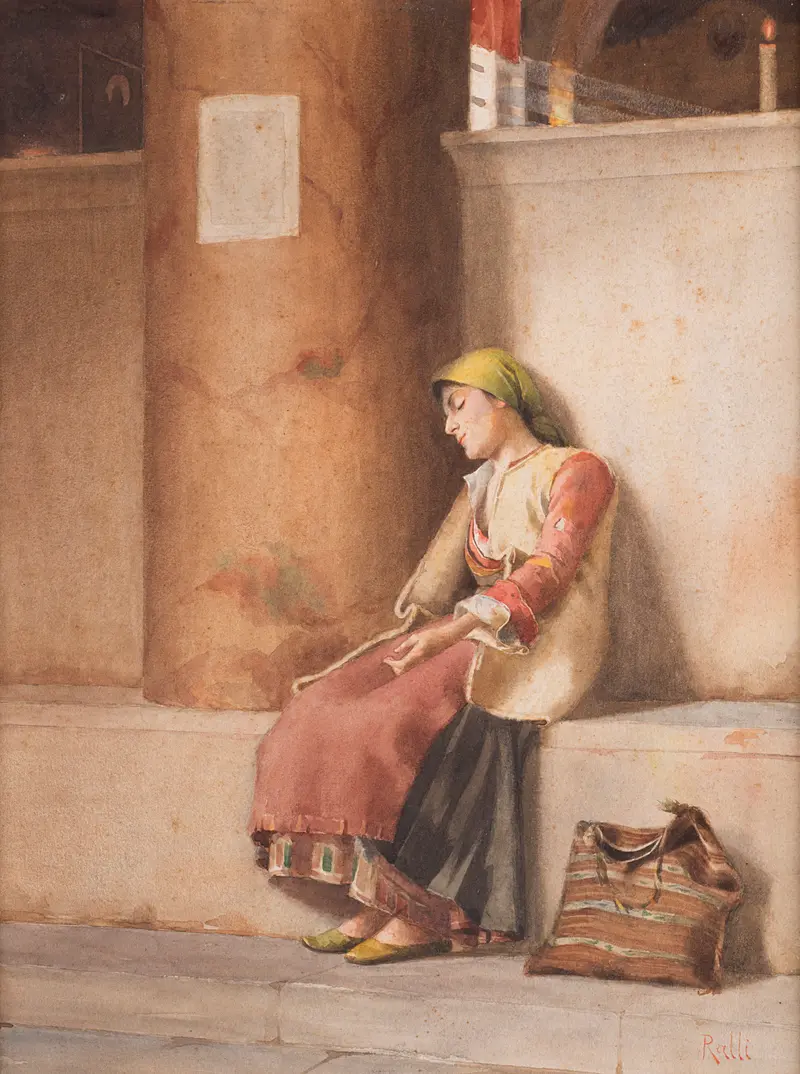
A Moment of Reflection
Theodoros Ralli
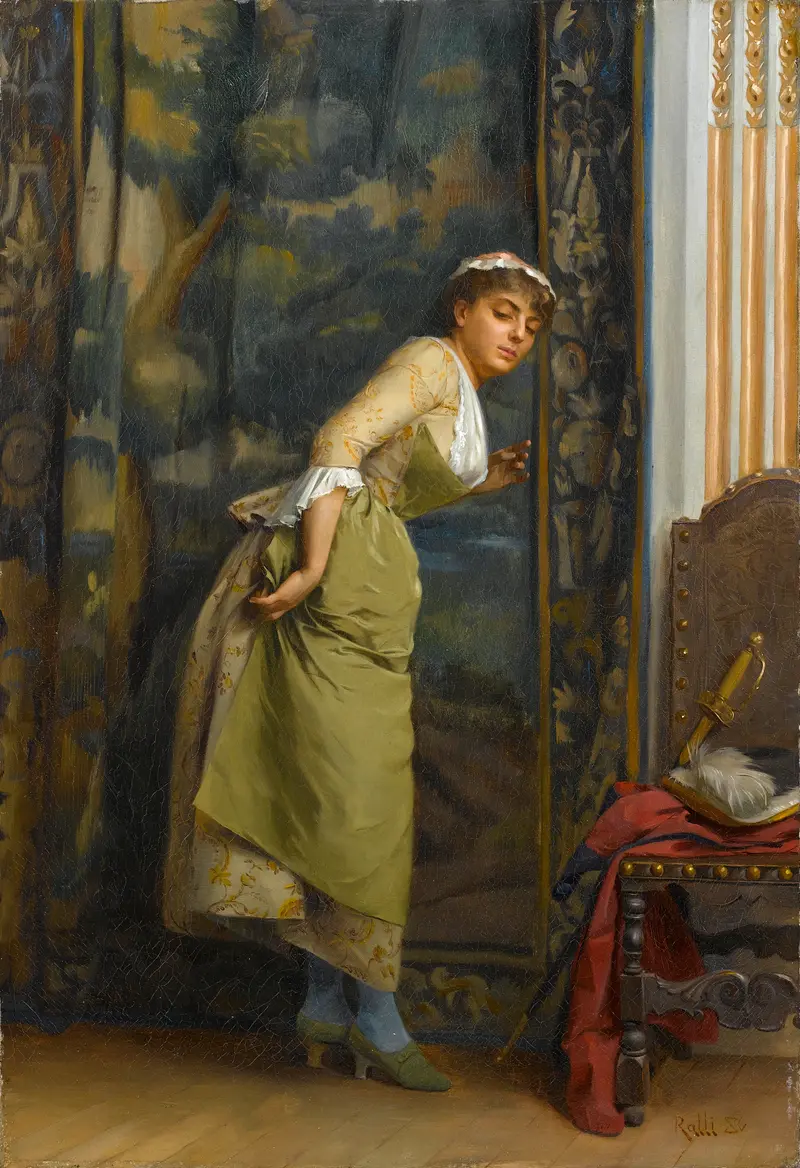
Eavesdropping (Ralli)
Theodoros Ralli
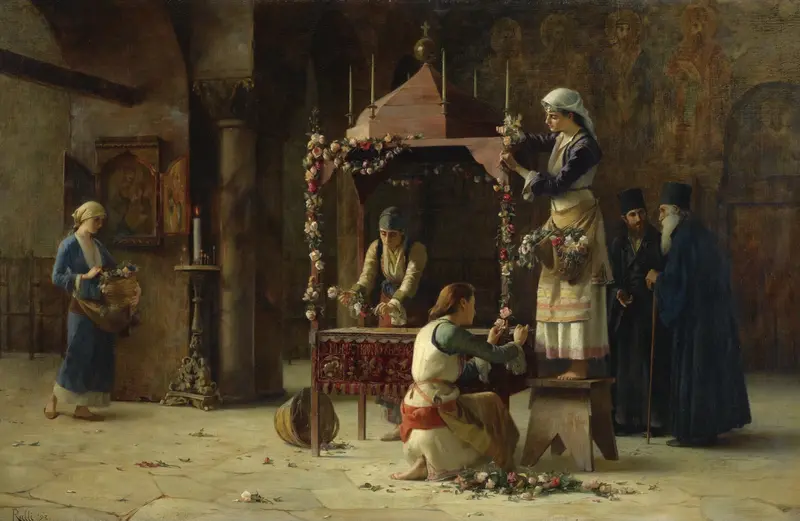
Holy Friday, Greece
Theodoros Ralli
A Moment's Rest
Theodoros Ralli



