The Church at Gaupne in Sogn — History & Facts
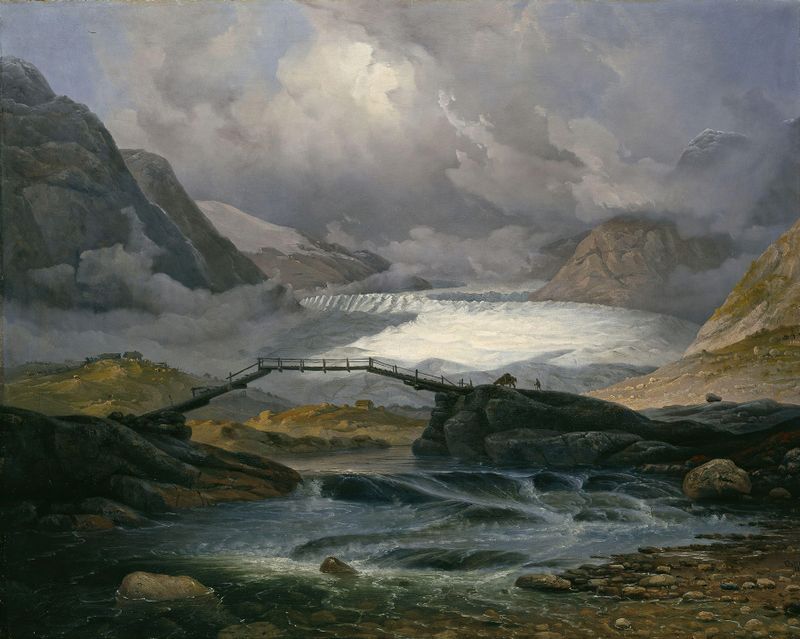
What secret hides in the quiet of the canvas? In that stillness, a dream unfolds, beckoning the viewer to explore its depths. Look to the foreground, where gentle brushstrokes craft an inviting path leading toward the quaint church. Notice how the soft hues of green and gold envelop the landscape, with dappled sunlight filtering through the trees, illuminating the modest structure that stands resolute against the backdrop of towering mountains. The cool, serene blues of the sky enhance the tranquility, while the delicate interplay of light and shadow adds a rhythmic balance to the composition. In the distance, the majestic mountains loom, their jagged peaks contrasting with the softness of the church and its surroundings.
There’s a palpable tension between the natural and the man-made; the church, a symbol of faith and community, appears both vulnerable and steadfast in the grandeur of nature. The slight use of fog in the background evokes a sense of mystery, hinting at the dreams and stories that lie just beyond perception, challenging us to ponder what lies beneath the surface. Knud Baade painted The Church at Gaupne in Sogn in 1834 while residing in Norway, a time when Romanticism was stirring deep connections to nature and spirituality. Emerging from a backdrop of personal loss and searching for identity, he found solace in depicting the landscape, capturing both its beauty and the emotional weight it holds.
This piece reflects not only his artistic journey but also the broader cultural movement that sought to reconcile humanity with the natural world.