
The Church in Moret under the Morning Rain — History & Facts
The first thing that catches the eye in The Church in Moret under the Morning Rain is the way the massive stone façade seems to shimmer, as if the church itself is breathing in the soft, damp air. The brushwork is loose and quick, yet every stroke is purposeful: the pale, wet cobblestones reflect the sky’s silvery light, leading the viewer’s gaze up to the intricate geometry of the church. Figures drift along the street, their forms blurred by the moisture in the air, suggesting both movement and the quiet hush of a rainy morning.
The church dominates, but it does not overwhelm; instead, the painter’s palette of gentle violets, greys, and greens invites the viewer to linger on the subtle play of light and shadow, the rain softening every edge. Painted in 1893, this work belongs to the world of late nineteenth-century Impressionism, when artists like Alfred Sisley sought to capture the fleeting moods of everyday life. Such paintings were rarely grand commissions; instead, they were often painted on the spot, intended for private collectors or the burgeoning middle class eager for scenes of familiar places transformed by weather and light. The church at Moret was a favorite motif for Sisley, who spent his later years in the town, and the choice to paint it under a morning rain speaks to the Impressionist fascination with atmosphere and changing conditions.
Today, as you look at this painting from the collection of the Museen Köln, you step into a moment of quiet observation—a reminder that even the most ordinary street can become extraordinary in the right light.
More Artworks by Alfred Sisley
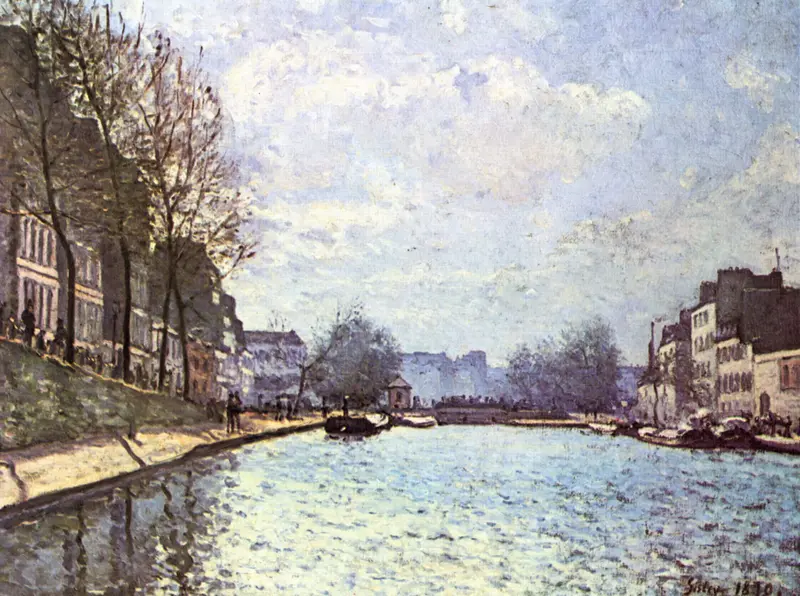
View of the Canal Saint-Martin
Alfred Sisley

Le Loing à Saint-Mammès
Alfred Sisley
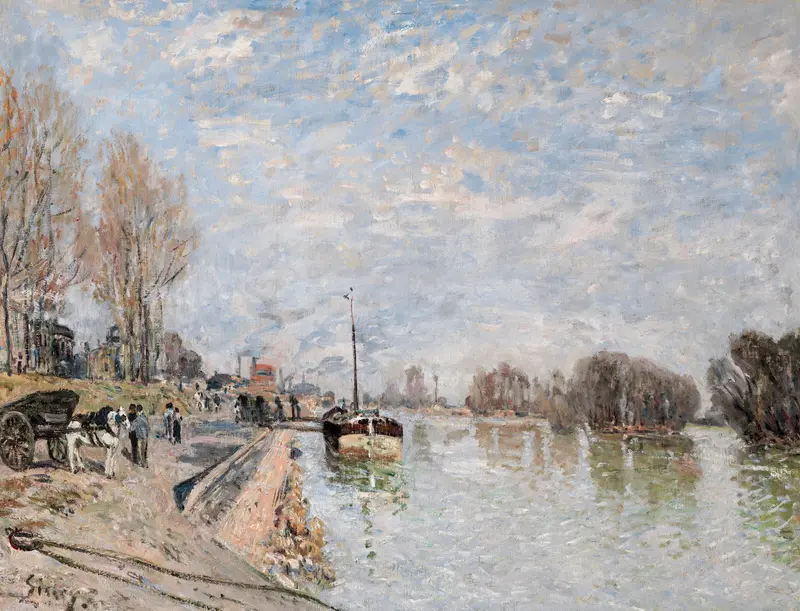
La Seine à Suresnes
Alfred Sisley
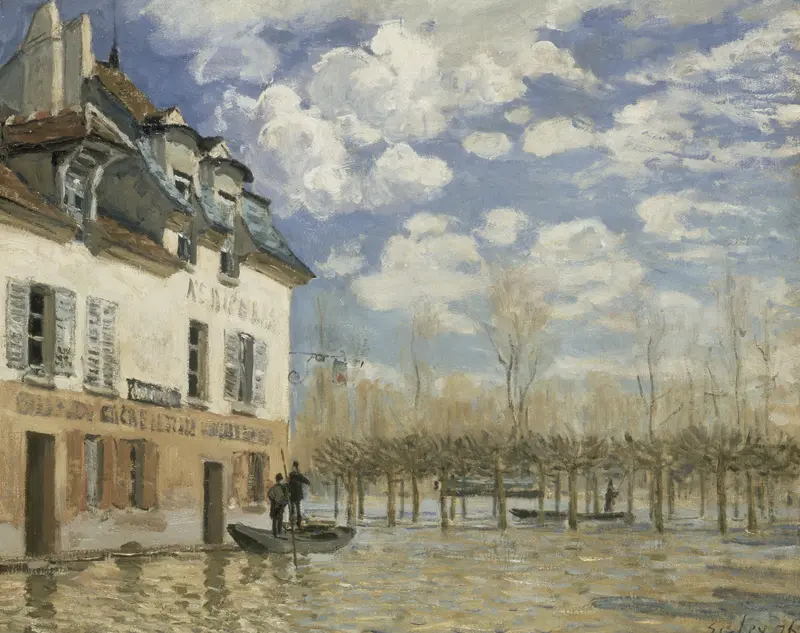
Boat in the Flood at Port Marly
Alfred Sisley
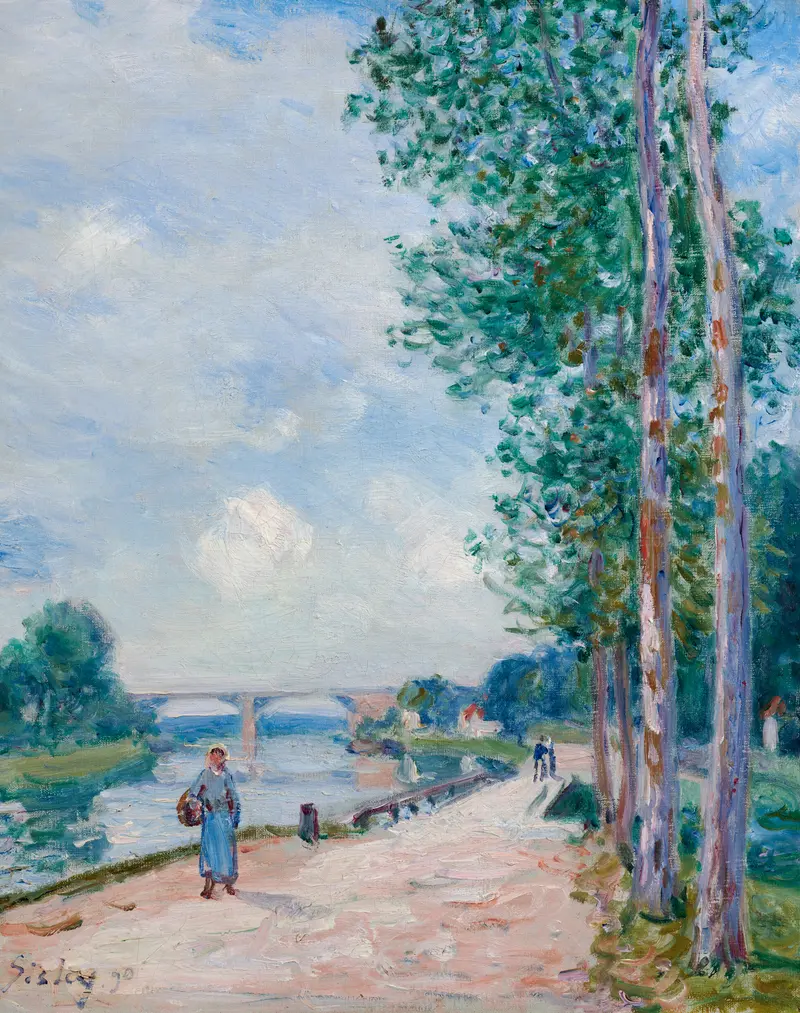
Les bords du Loing près de Moret
Alfred Sisley
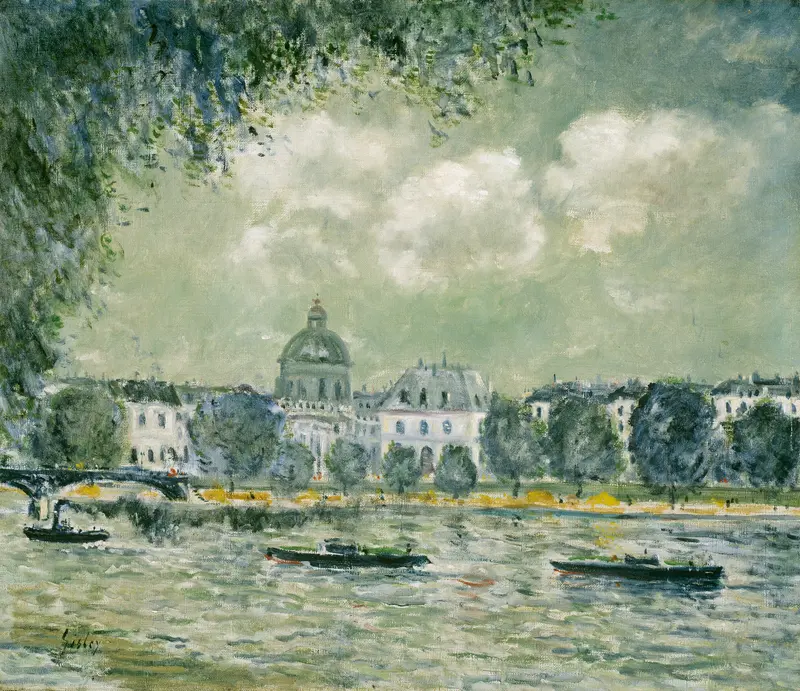
Landscape along the Seine with the Institut de France and the Pont des Arts
Alfred Sisley

Printemps au bord du Loing
Alfred Sisley
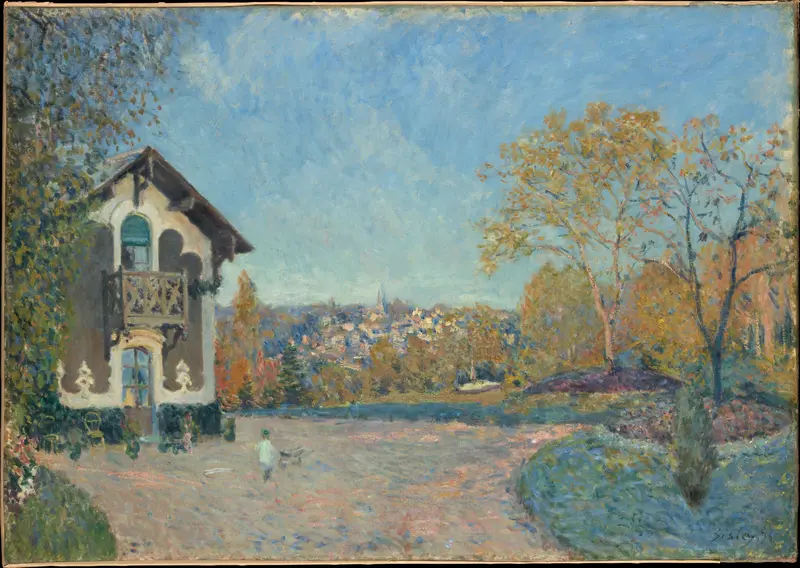
View of Marly-le-Roi from Coeur-Volant
Alfred Sisley
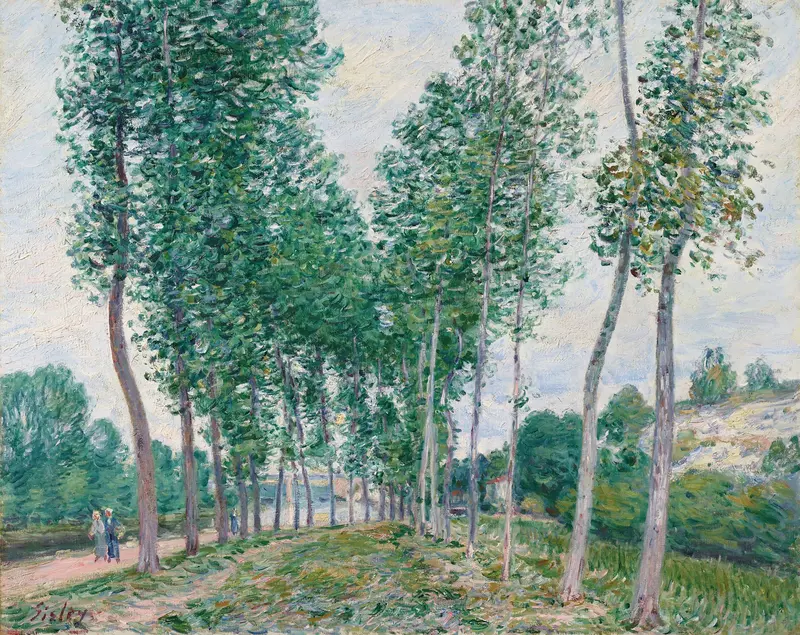
L’allée des peupliers au bord du Loing
Alfred Sisley
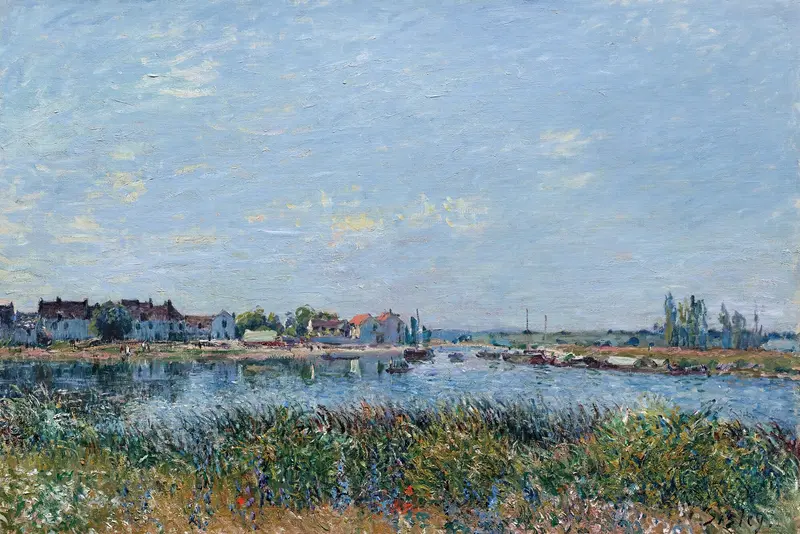
Saint-Mammès, Le Matin
Alfred Sisley
More Landscape Art

The Starry Night
Vincent van Gogh

View of Delft
Johannes Vermeer

Water Lilies
Claude Monet

The Grand Canal, Venice, looking north-west from the Ca' Corner to the Ca' Contarini degli Scrigni, with the campanile of Santa Maria della Carità
Canaletto

Windsor Castle
Canaletto

The Grand Canal looking North-East from the Palazzo Dolfin-Manin to the Rialto Bridge
Canaletto