The City of Bradford — History & Facts
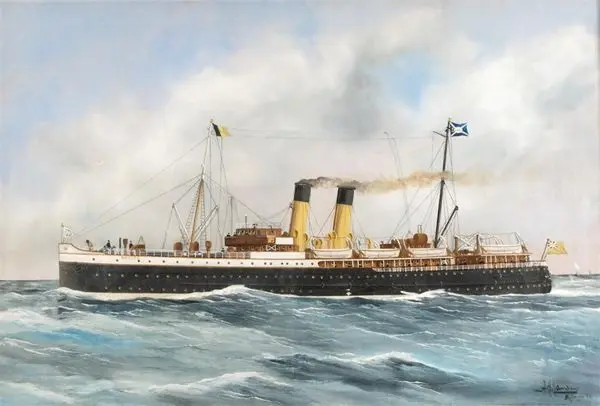
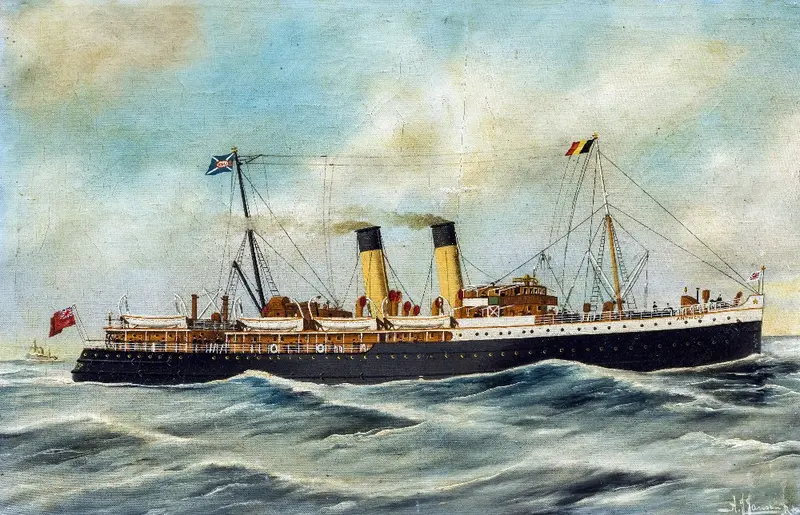
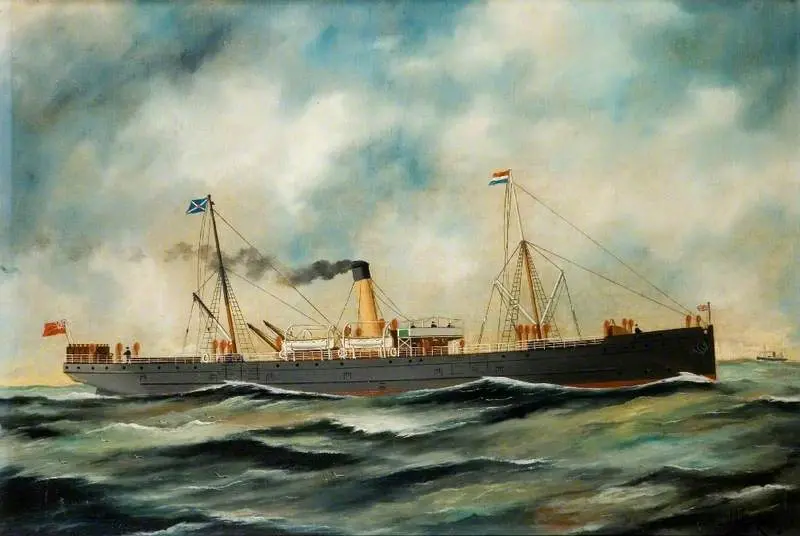
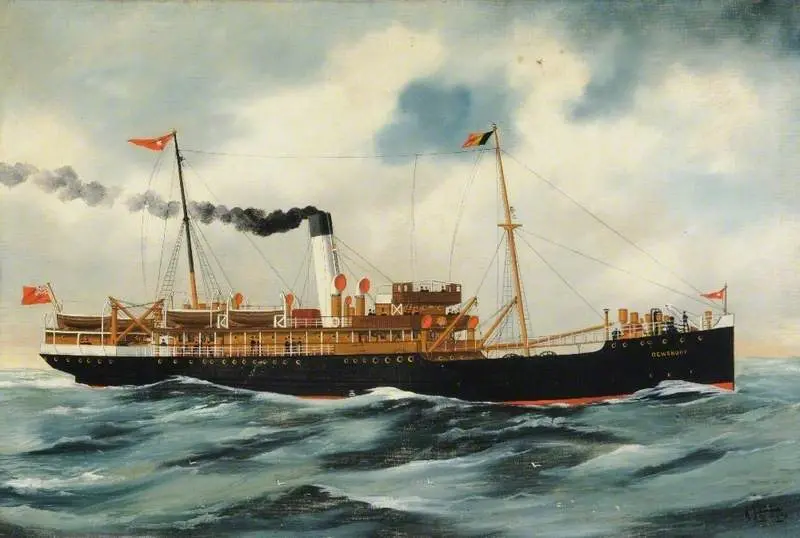
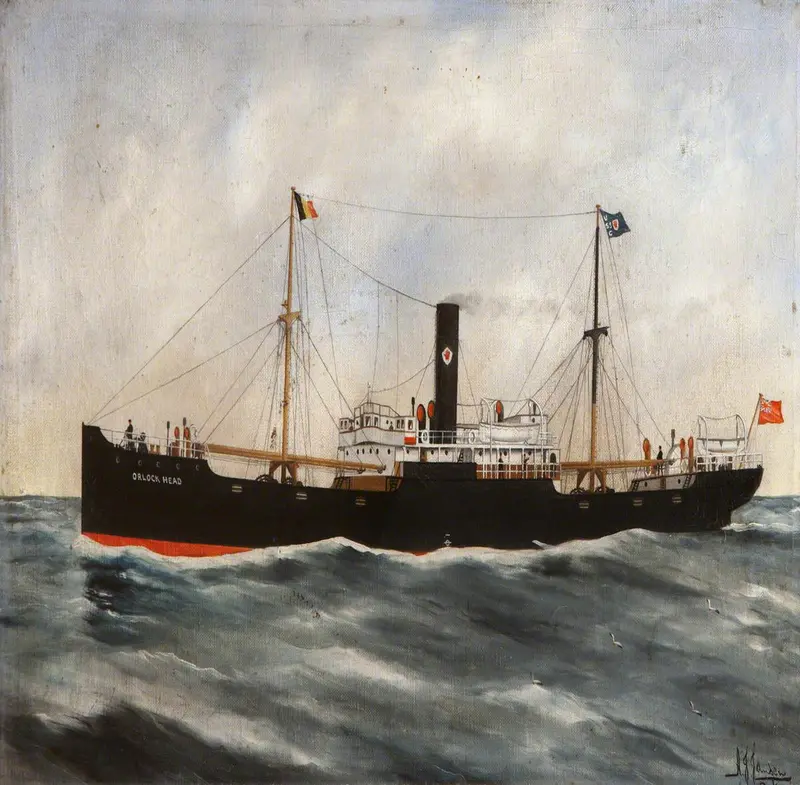
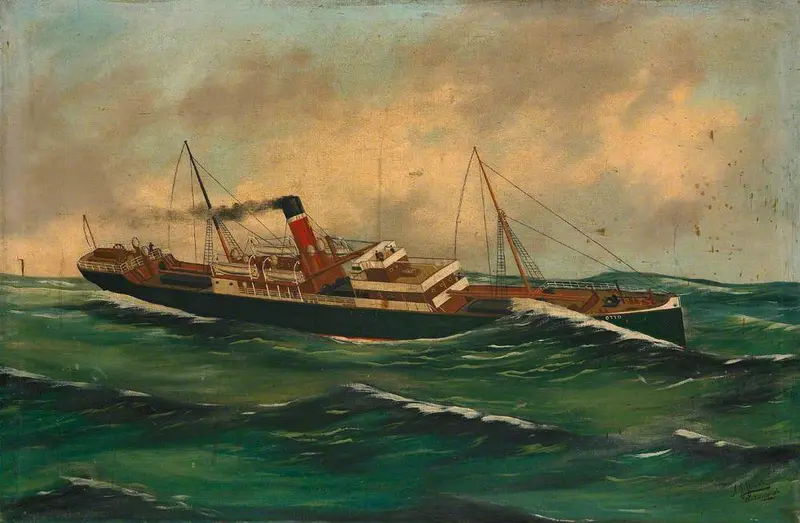
What first catches the eye in The City of Bradford is the ship’s proud, unwavering progress across a restless sea, its black hull slicing through blue waves beneath a sky that seems just clearing after a storm. The vessel’s name, picked out in gold on the bow, and the fluttering flags atop its masts, announce not only its identity but its allegiance and purpose. The artist, A.
J. Jansen, gives the ship a sense of forward momentum: the angled smoke from the funnel, the taut lines, and the lively brushwork of the water all serve to animate the scene. Every detail, from the crisp rigging to the red and white pennants, is rendered with the precision of someone who knows ships intimately, inviting the viewer to imagine the crew at work just out of sight, the engine’s steady pulse, the salt tang in the air. Painted in 1916, this work belongs to a tradition of ship portraiture that flourished in the age of steam and empire, when vessels like the City of Bradford were both lifelines and symbols of national pride.
Such paintings were often commissioned by shipping lines or proud captains, intended to commemorate a launch or a maiden voyage, or to hang in company offices as emblems of progress and reliability. The early twentieth century was a time of rapid change for maritime technology and global trade, and artists like Jansen responded with images that balanced documentary clarity with a touch of drama. History has kept few traces of Jansen or the precise story of this ship, but the painting’s careful detail and date root it firmly in the world of 1916—a world on the brink, yet still confident in the power of steam and steel.
The ship’s flags and the open horizon invite us to imagine where she is bound, and what news she might carry.