
The Disbanding of the ‘Waardgelders’ (Mercenaries in the Pay of the Town Government) by Prince Maurits in Utrecht, 31 July 1618 — History & Facts
Could a single brushstroke hold eternity? In the delicate interplay of light and shadow, beauty exists not just in the grand moments but also in the quiet aftermath of a decision, as if time itself paused for reflection. First, look to the center of the canvas, where the figures of the disbanding mercenaries come into focus. Their expressions—a mix of relief and uncertainty—capture a moment of transition. Notice the warm hues of ochre and earthy greens that envelop the scene, creating an almost nostalgic atmosphere.
The way the light plays on their uniforms draws your attention to the intricate details, from the folds of their clothing to the muted gleam of armor, each brushstroke inviting you deeper into their narrative. As you explore the artwork, consider the emotional tensions at play: here lies the clash between duty and freedom, the bittersweet release from service, and the looming uncertainty of the future. Each soldier embodies this conflict, their varied postures and gazes revealing individual stories within the collective experience. The distant architecture serves as a reminder of the political landscape, the promise of beauty mingling with the weight of history. In 1625, amidst the shifting tides of the Dutch Republic's political landscape, the artist captured a moment ripe with significance.
Having experienced the tumult of warfare and civic strife, he sought to portray the human condition within a historical context. At this time, there was a burgeoning interest in genre scenes, and this work reflects both an artistic evolution and a profound commentary on the era's complexities.
More Artworks by Joost Cornelisz Droochsloot
Browse all →
A Village Kermesse With Numerous Peasants Feasting
Joost Cornelisz Droochsloot

Village Street
Joost Cornelisz Droochsloot
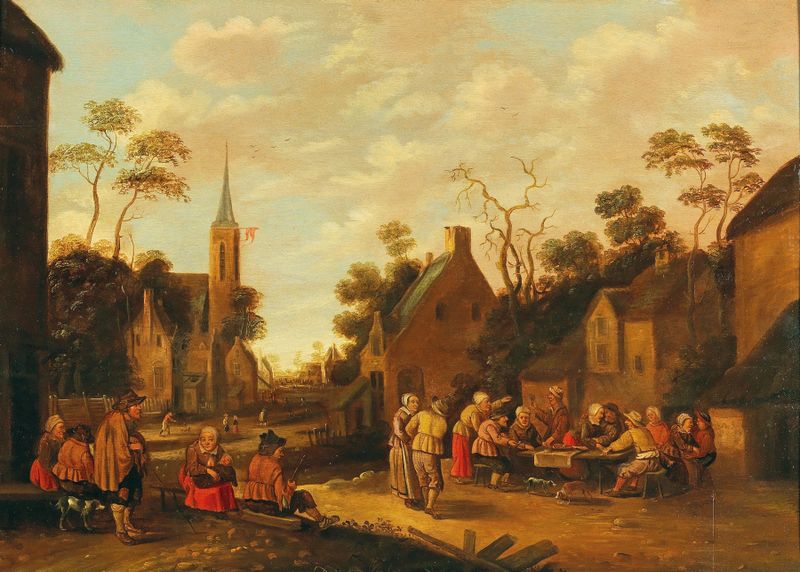
Village scene with peasant festivities
Joost Cornelisz Droochsloot

A Village Festival
Joost Cornelisz Droochsloot

River View
Joost Cornelisz Droochsloot
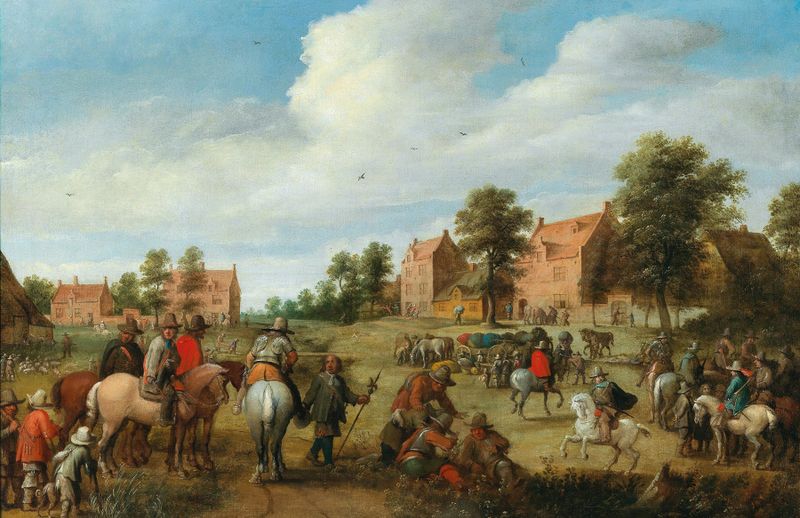
A cavalry unit halting near a village
Joost Cornelisz Droochsloot
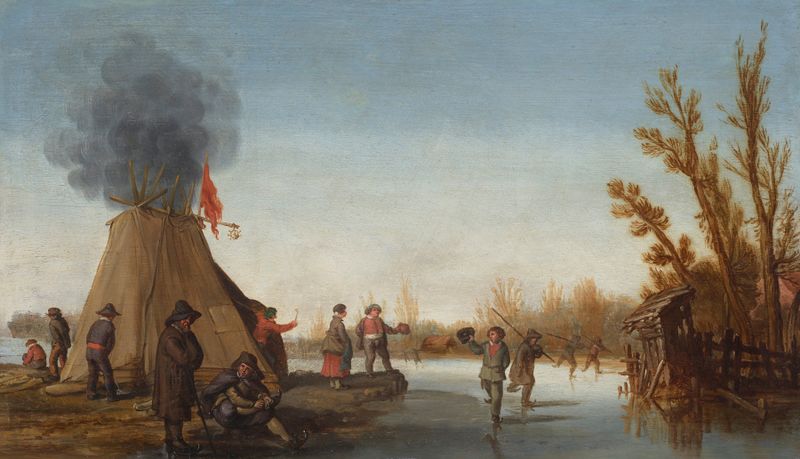
Skaters on a frozen canal with a koek-en-zopie tent
Joost Cornelisz Droochsloot

Village Fair
Joost Cornelisz Droochsloot

Village Scene With Peasants
Joost Cornelisz Droochsloot
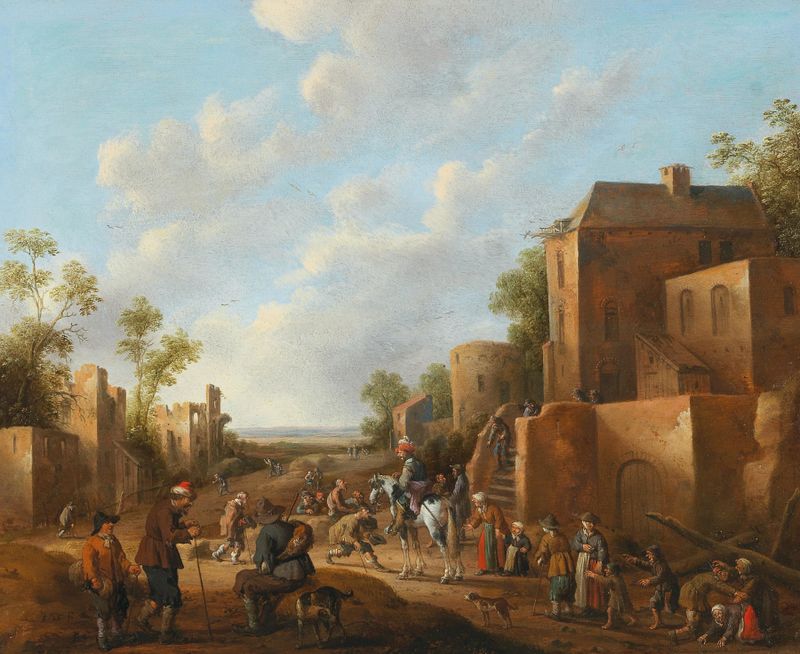
A village landscape with country folk near a tavern
Joost Cornelisz Droochsloot
More Historical Art
Browse all →
The Night Watch Militia Company of District II under the Command of Captain Frans Banninck Cocq
Rembrandt van Rijn

Lincoln Memorial
Henry Bacon

The Third of May 1808
Francisco de Goya

Isaac and Rebecca, Known as ‘The Jewish Bride’
Rembrandt van Rijn

The Charge of the Mamelukes (1814)
Francisco de Goya

De vier ruiters van de apocalyps
Albrecht Dürer