
Village Street — History & Facts
In a time of upheaval, when revolutions were brewing across Europe, some artists turned to the simplicity of everyday life as a refuge and a powerful statement. The village street, a microcosm of society, becomes a canvas where the essence of humanity is distilled into the mundane. Look to the left and notice the interplay of light and shadow cast by the buildings lining the cobbled street. The warm hues of ochre and earthy browns create a sense of intimacy, drawing you into the scene.
Focus on the figures scattered throughout—each gesture and posture tells a story, from the couple engaged in animated conversation to the solitary man lost in thought. The masterful layering of details in the foreground and background invites you to explore the narrative unfolding before you. In this seemingly tranquil moment, deeper tensions emerge. The expressions on the faces hint at unspoken concerns, perhaps reflections of the societal changes looming beyond the canvas.
The slight distance between characters suggests a world divided; they are connected yet isolated, mirroring the broader conflicts of their time. The subtle contrasts between light and shadow evoke a sense of uncertainty, revealing a deeper commentary on the fragility of community amidst change. In 1664, Droochsloot was in the Netherlands, where the aftermath of the Dutch Golden Age led to a shift in artistic focus towards everyday scenes. As the world around him was grappling with political and economic transformations, he found solace in capturing the essence of village life.
His work embodies the shifting tides of an era, reflecting both a commitment to realism and a desire to connect with the human experience amid a changing landscape.
More Artworks by Joost Cornelisz Droochsloot
Browse all →
The Disbanding of the ‘Waardgelders’ (Mercenaries in the Pay of the Town Government) by Prince Maurits in Utrecht, 31 July 1618
Joost Cornelisz Droochsloot

A Village Kermesse With Numerous Peasants Feasting
Joost Cornelisz Droochsloot
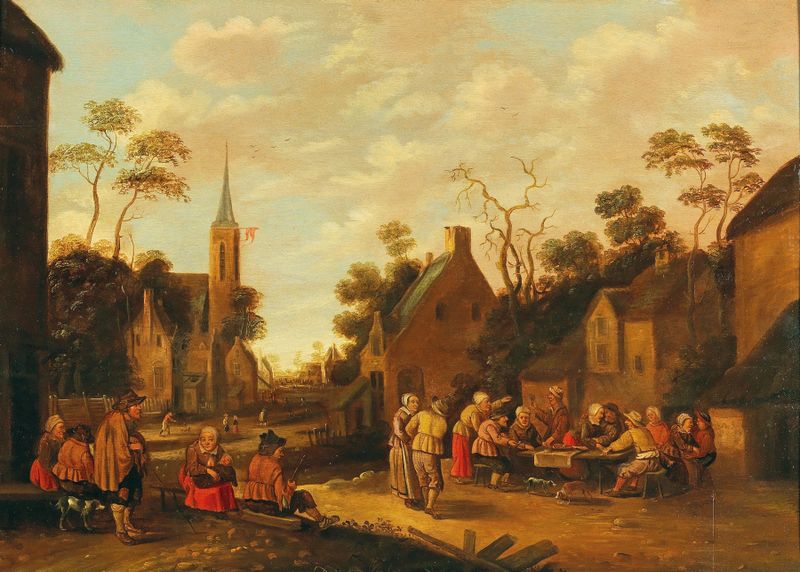
Village scene with peasant festivities
Joost Cornelisz Droochsloot

A Village Festival
Joost Cornelisz Droochsloot

River View
Joost Cornelisz Droochsloot
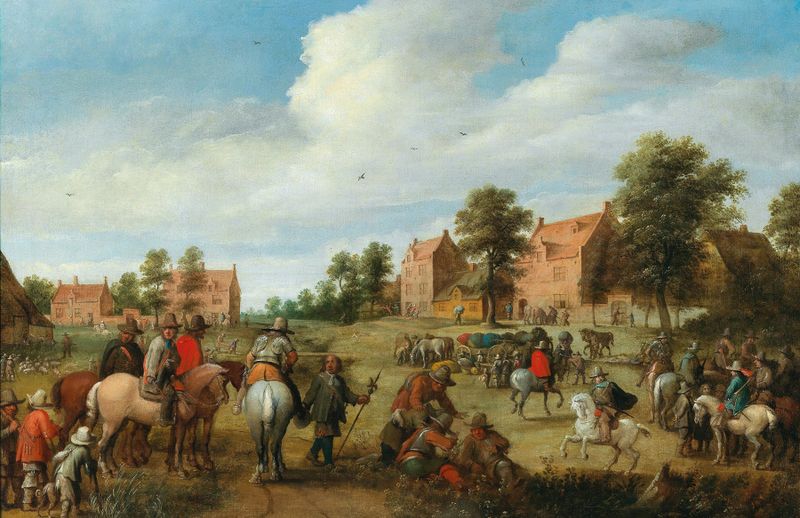
A cavalry unit halting near a village
Joost Cornelisz Droochsloot
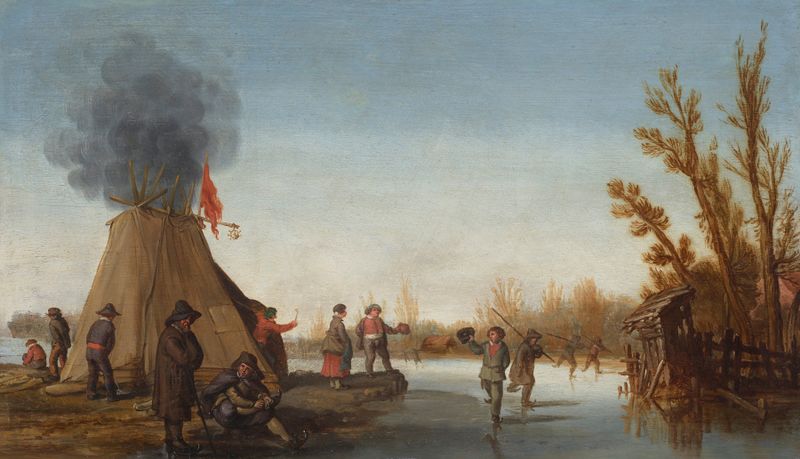
Skaters on a frozen canal with a koek-en-zopie tent
Joost Cornelisz Droochsloot

Village Fair
Joost Cornelisz Droochsloot

Village Scene With Peasants
Joost Cornelisz Droochsloot
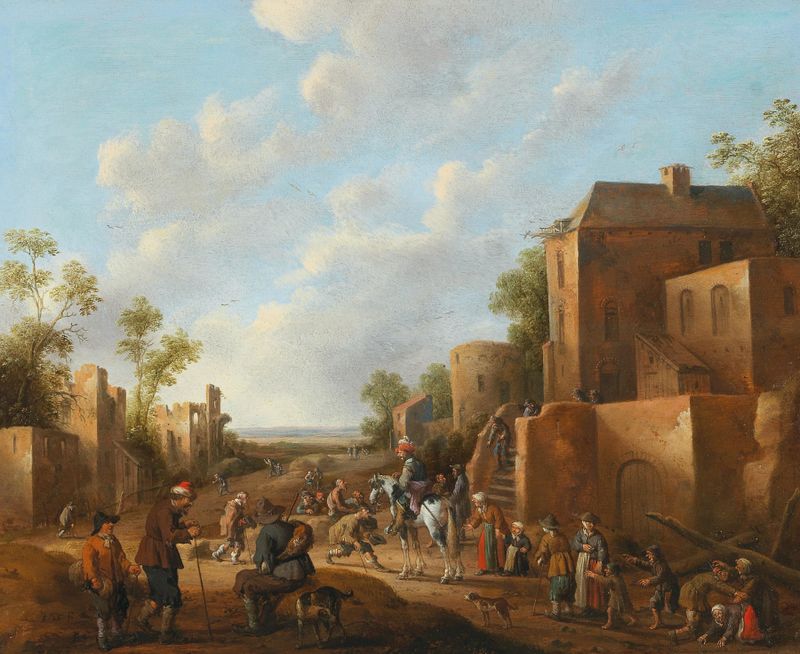
A village landscape with country folk near a tavern
Joost Cornelisz Droochsloot





