
The Doric Nymphaeum at the Villa Domitian — History & Facts
Who listens when art speaks of silence? In the stillness of The Doric Nymphaeum at the Villa Domitian, Carlo Labruzzi captures a moment suspended in time, where echoes of ancient grandeur resonate within the frames of stone. Look to the left, where the Doric columns rise majestically, their simplicity contrasting with the intricate details of the surrounding foliage. Notice how Labruzzi employs soft hues of green and ochre to evoke the warmth of sunlight filtering through the leaves, inviting the viewer into an ethereal realm. The composition leads the eye upward, creating a sense of elevation, while the slight asymmetry of the structure adds a layer of dynamism against the tranquility of the scene. Beneath the serene exterior lies a complex interplay between nature and architecture, symbolizing the tension between civilization and the wild.
The gentle flow of water, hinted at by the soft reflections, suggests both continuity and change, a reminder of the passage of time. Each element speaks to the viewer’s emotions; the quietude of the setting unfolds layers of contemplation about creation, beauty, and the inevitable decay of all things built by human hands. In 1789, Labruzzi painted this work while living in Rome, a period marked by a growing interest in antiquity and the picturesque. The Neoclassical movement was at its height, and artists sought to elevate their work through references to classical themes and forms, paralleling a cultural shift towards Romanticism.
This piece reflects Labruzzi’s desire to encapsulate the essence of history, architecture, and nature — a moment where creation and silence intertwine.
More Artworks by Carlo Labruzzi
Browse all →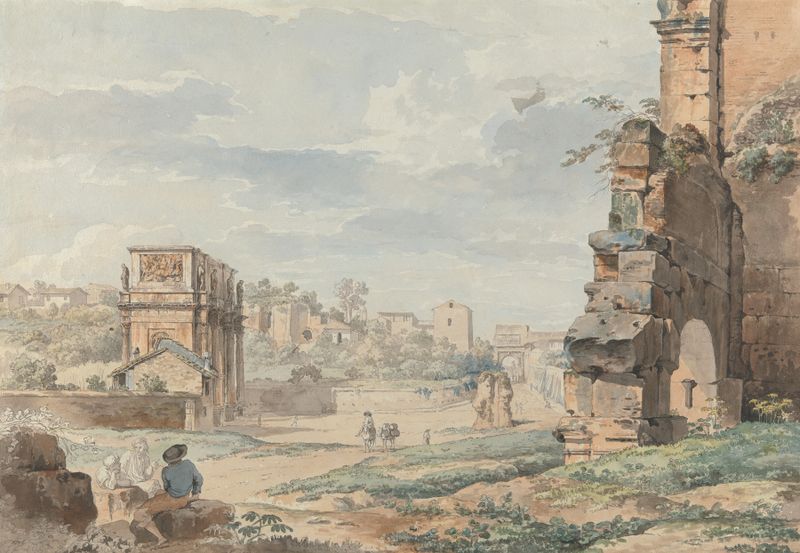
Part of the Colosseum with the Arch of Constantine and Arch of Titus in the Distance, Rome
Carlo Labruzzi
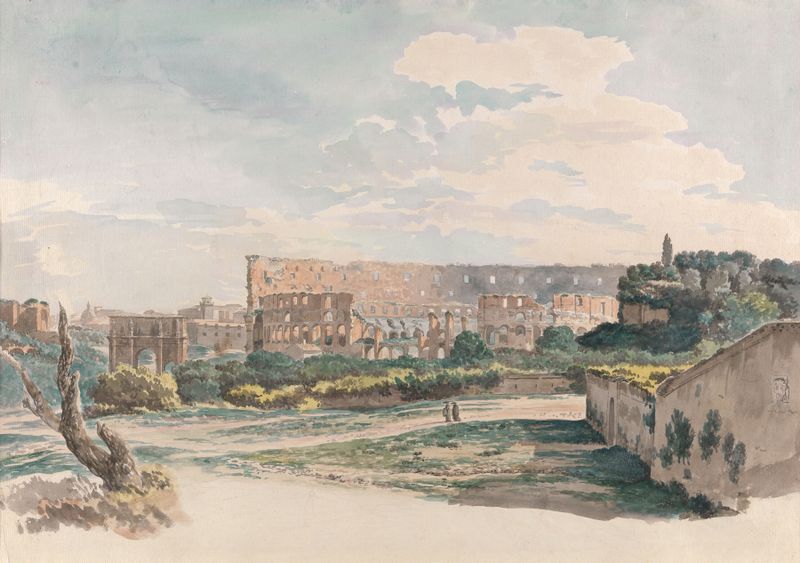
The Colosseum from the Caelian Mount, with the Arch of Constantine and a View of the Forum, Rome.
Carlo Labruzzi
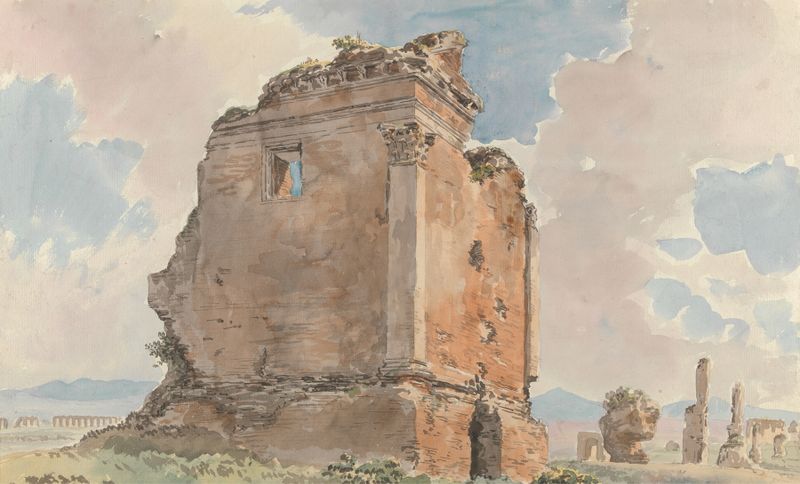
Sepulchre on the Via Nomentana in the Roman Campagna
Carlo Labruzzi
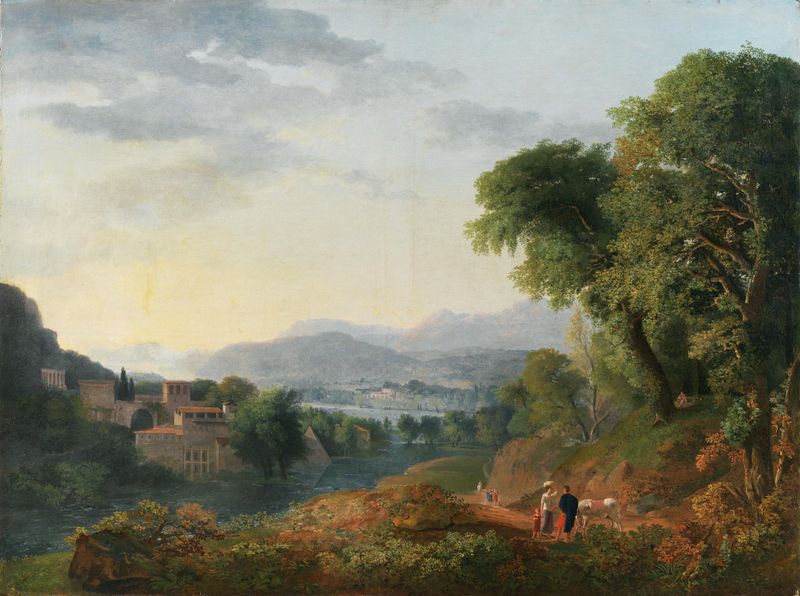
An Italianate landscape
Carlo Labruzzi
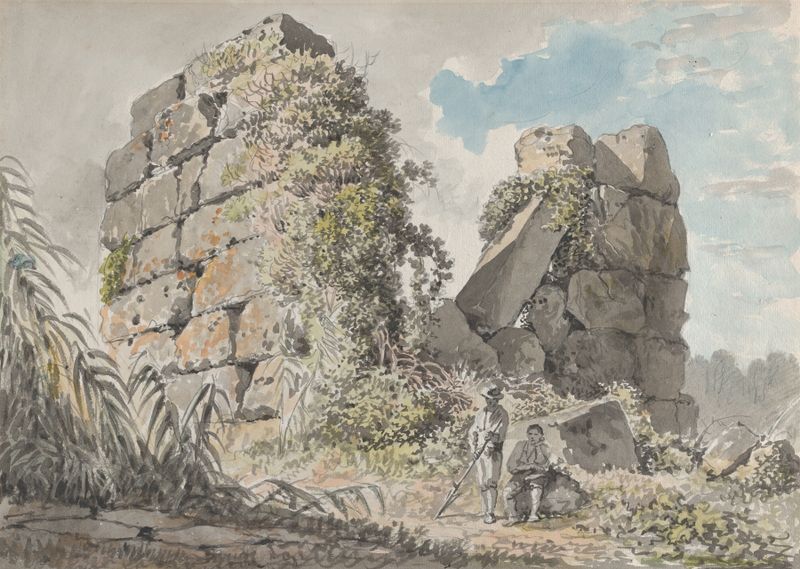
Ruins on the Right of the Via Appia
Carlo Labruzzi
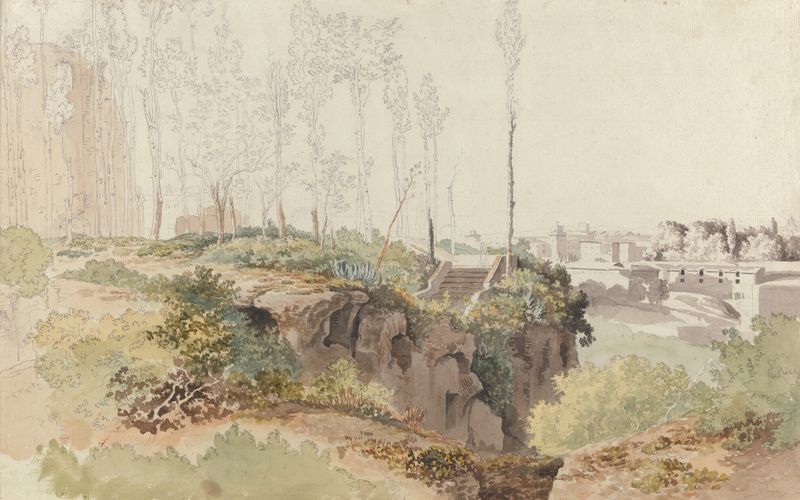
The Baths of Caracalla, Rome
Carlo Labruzzi
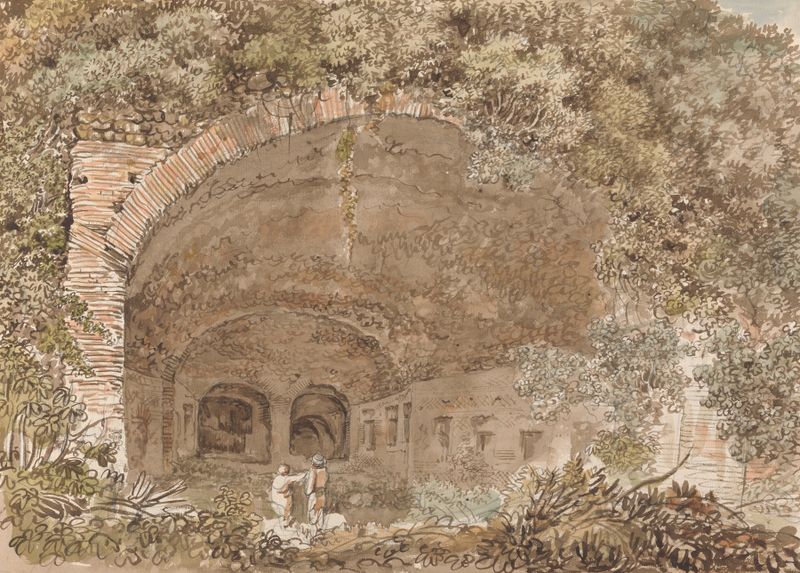
On the Appian Way
Carlo Labruzzi
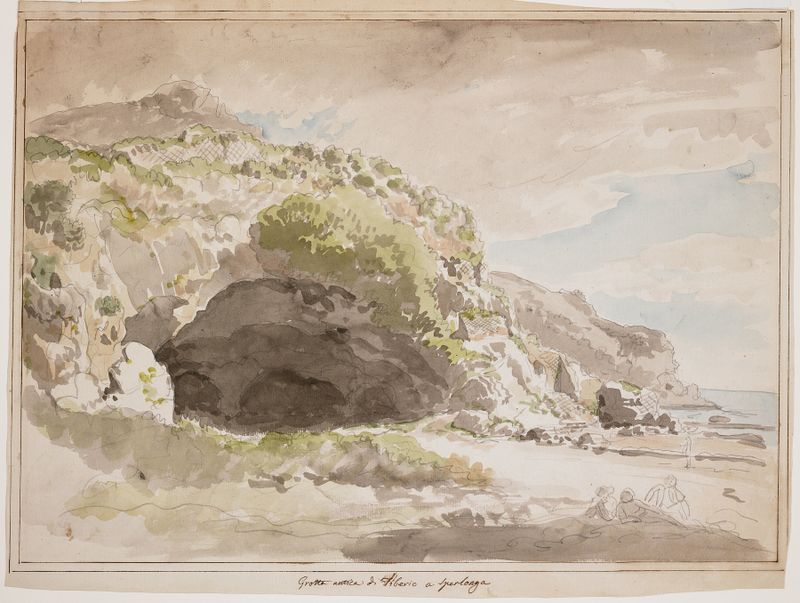
Grotto of Tiberius at Sperlonga
Carlo Labruzzi
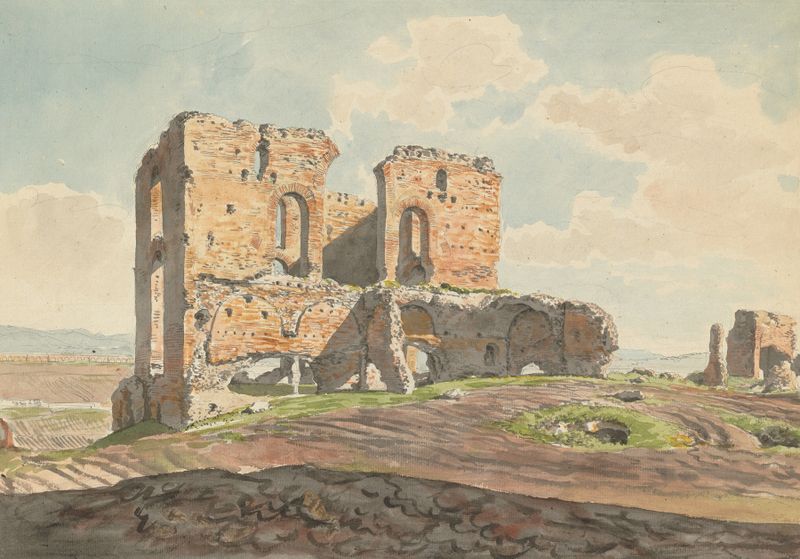
The Great Villa of the Quintilii on the Appian Way
Carlo Labruzzi
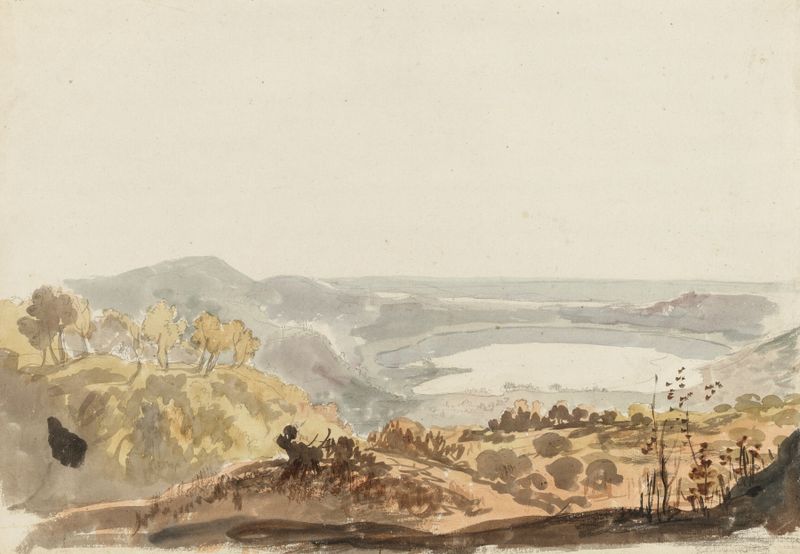
View of Lake Nemi looking towards Rome
Carlo Labruzzi
More Architecture Art
Browse all →
The statue of Liberty
Frédéric Auguste Bartholdi

View of Houses in Delft, Known as ‘The Little Street’
Johannes Vermeer

View of Houses in Delft, Known as ‘The Little Street’
Johannes Vermeer

The Cathedral in Rouen. The portal, Grey Weather
Claude Monet

The yellow house
Vincent van Gogh

The Church in Auvers-sur-Oise, View from the Chevet
Vincent van Gogh