
The Elbe in the Evening — History & Facts
In the stillness of twilight, we confront our deepest fears—an invitation to unravel the mysteries that linger in the shadows. Look to the left at the gentle curve of the river, the Elbe, flowing like a whispered secret through the landscape. Observe the interplay of soft blues and dusky oranges as the setting sun casts a warm glow, illuminating the foliage on the bank. The delicate brushwork captures the movement of water, while the towering, shadowy trees frame the scene, creating tension between light and dark, serenity and unease. Beneath the surface beauty lies a deeper disquiet.
The still water reflects not only the fading light but also the haunting silence of a world on the brink of night. The solitary figure on the riverbank evokes a sense of isolation, suggesting a confrontation with personal fears. The vibrant hues of dusk contrast with the encroaching darkness, symbolizing the duality of hope and trepidation that often defines human experience. In 1845, Johan Christian Dahl painted this evocative scene during a period of artistic exploration in Scandinavia, where Romanticism flourished.
Living in Dresden, he was deeply influenced by the sublime landscapes of his native Norway and the broader European context of emotional expression. Dahl's work began to resonate with growing themes of nature's beauty intertwined with human vulnerability, capturing the zeitgeist of a world evolving in thought and feeling.
More Artworks by Johan Christian Dahl
Browse all →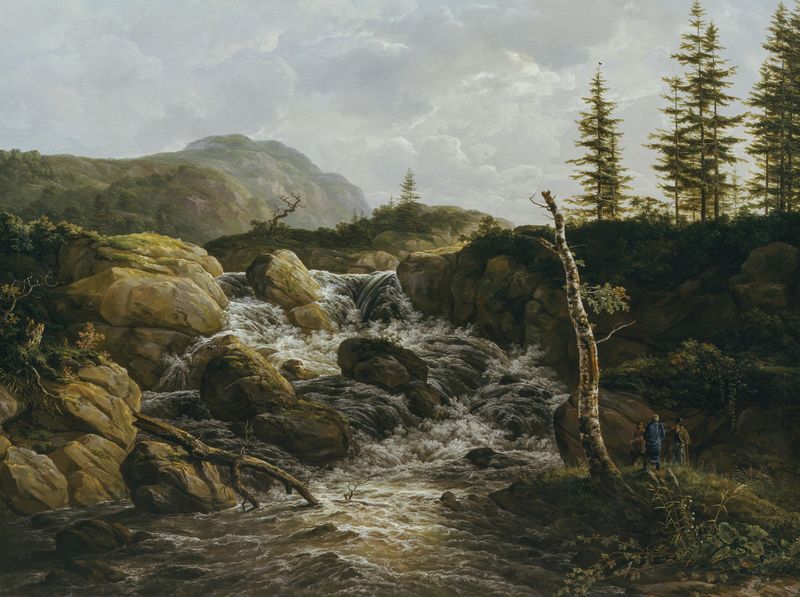
Mountainous Landscape with a Waterfall, Norway
Johan Christian Dahl
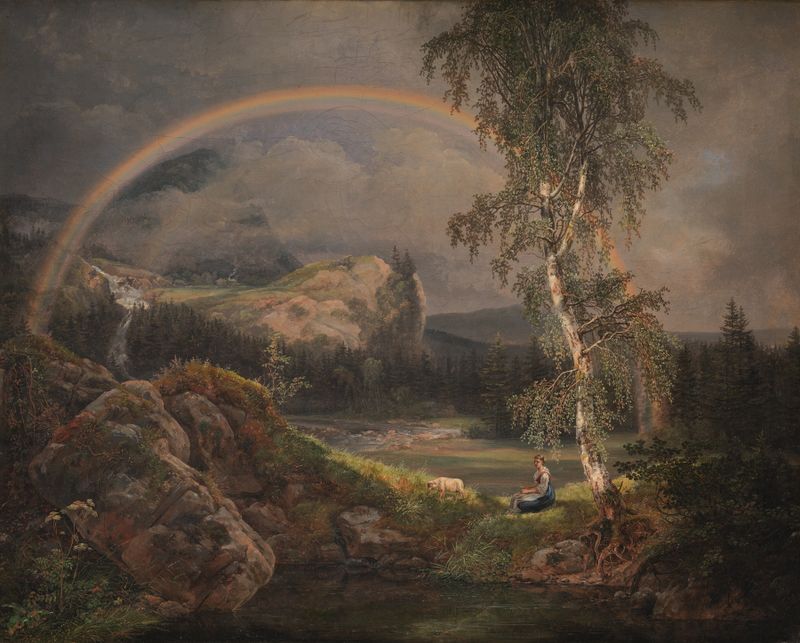
Norwegian Landscape with a Rainbow
Johan Christian Dahl
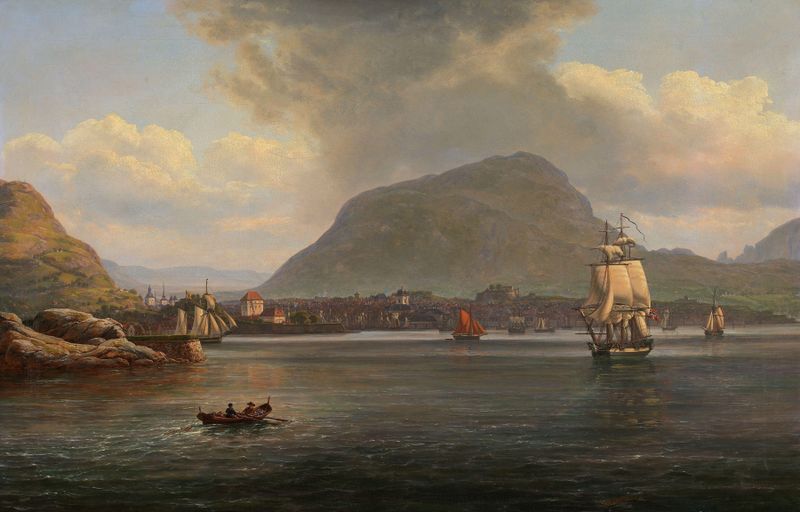
Bergen seen from the northern Inlet
Johan Christian Dahl
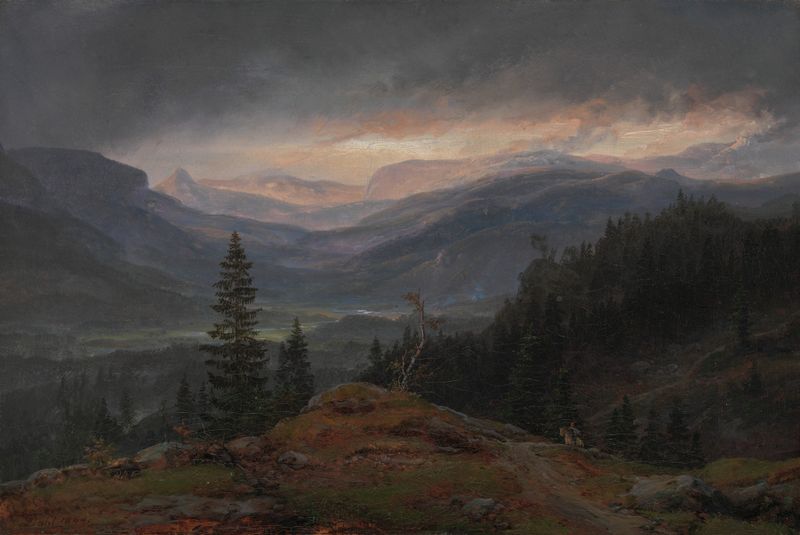
View over Hallingdal
Johan Christian Dahl
View over Øresund near the Lime Works
Johan Christian Dahl
A Shipwreck on the Coast of Norway
Johan Christian Dahl
View of a Lake, Norway
Johan Christian Dahl
The Watzmann
Johan Christian Dahl
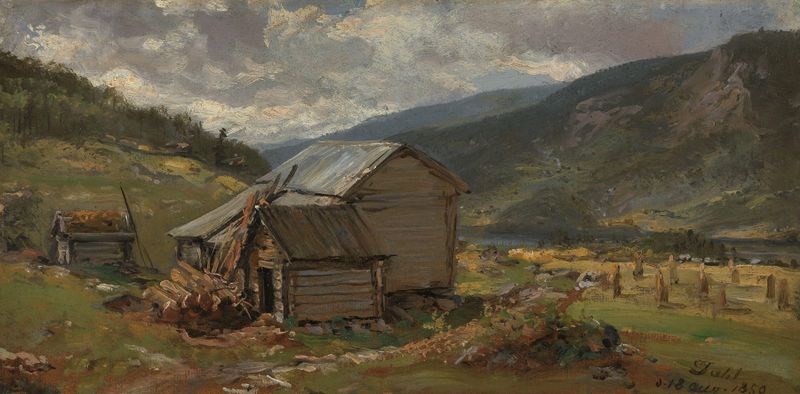
View of Hjelle in Valdres
Johan Christian Dahl

View At Skjolden In Lyster
Johan Christian Dahl





