
The Enchanted Garden (The White Duck) — History & Facts
The first thing that catches the eye in The Enchanted Garden (The White Duck) by Ivan Bilibin is the sense of storybook wonder, as if the very air in this scene is thick with old magic and whispered secrets. A white duck glides serenely on a deep blue pond, while a figure in russet and white bends toward the water’s edge, framed by fantastical trees and oversized mushrooms that seem to have sprung from a fairy tale. Every line and color is deliberate: the twisted branches reach out like enchanted hands, and the golden-roofed palaces in the background promise a world beyond the forest’s edge.
The border, thick with stylized vines and tiny ducks, pulls the viewer into a world where every detail is a clue, every shape a symbol—inviting us to look closer, to linger in the puzzle of the scene. This work belongs to the early twentieth-century flowering of Russian illustration, when artists like Bilibin drew on folklore and medieval ornament to create images that were both modern and timeless. Such illustrations were often commissioned for fairy tale books or popular magazines, meant to enchant children and adults alike with their rich colors and intricate borders. Bilibin became famous for this style, blending Art Nouveau curves with the motifs of Russian folk art, and his work helped define a national visual language in a time of cultural revival.
Though little is recorded about this specific piece beyond its presence in a digital collection, its decorative border and storybook composition are unmistakable signatures of its era. The more you look, the more you see—a world at once familiar and strange, waiting to be read like a favorite tale.
More Artworks by Ivan Bilibin

Ivan Tsarevich and the Firebird
Ivan Bilibin

View Of The Nile
Ivan Bilibin
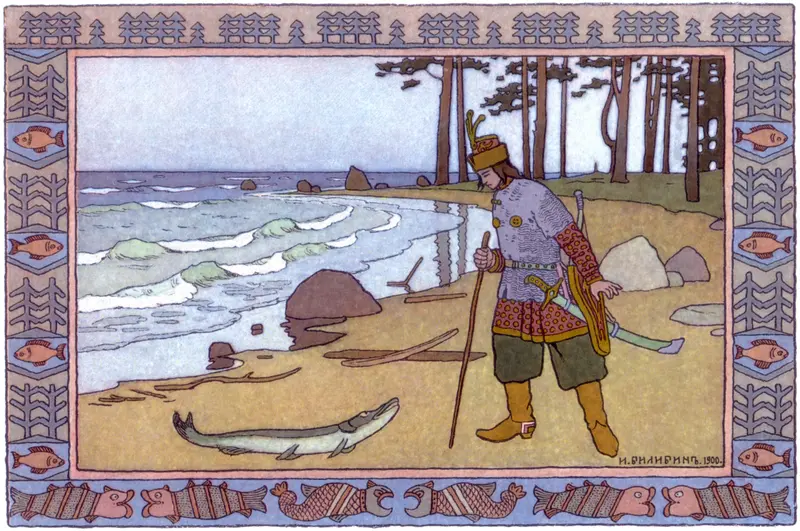
Ivan Tsarevich and the Pike (The Frog Princess)
Ivan Bilibin
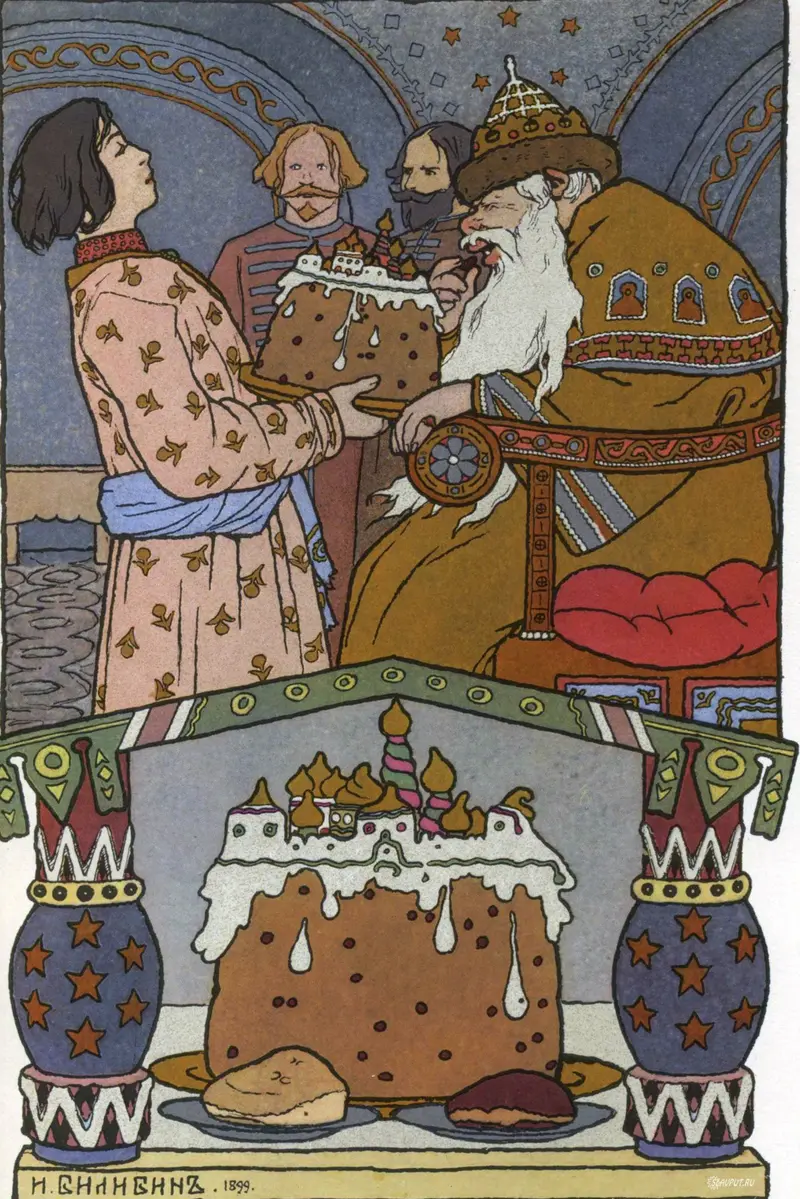
Presenting the Loaf to the Tsar (The Frog Princess)
Ivan Bilibin
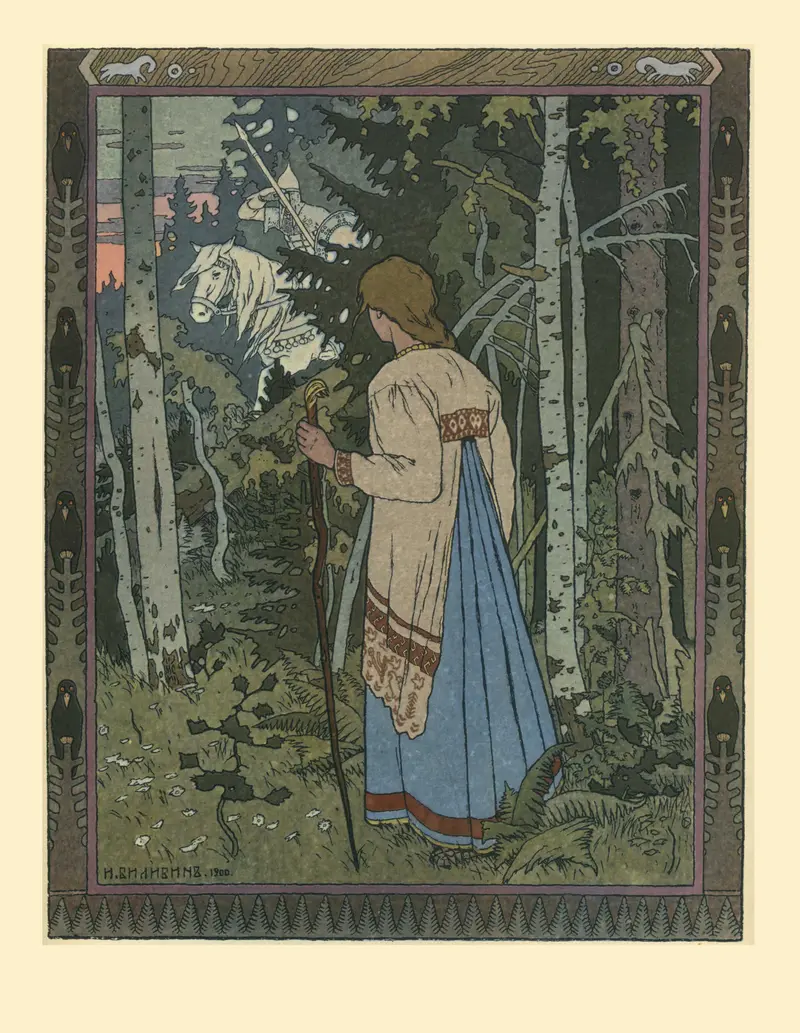
The White Horseman (Vasilisa the Beautiful)
Ivan Bilibin
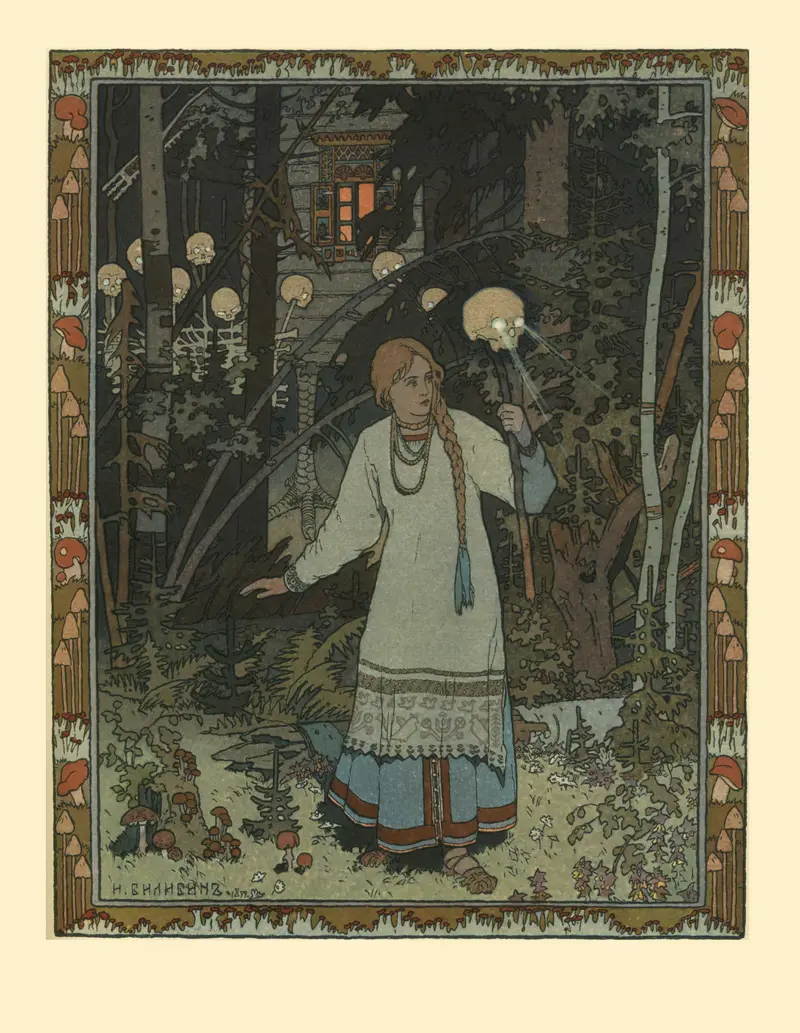
Vasilisa the Beautiful at the Hut of Baba Yaga
Ivan Bilibin
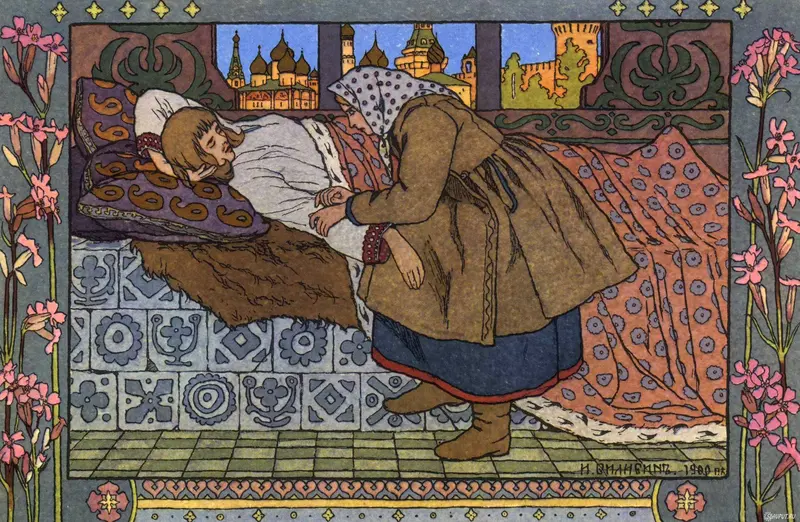
The Maiden Finds Finist (The Feather of Finist the Falcon)
Ivan Bilibin
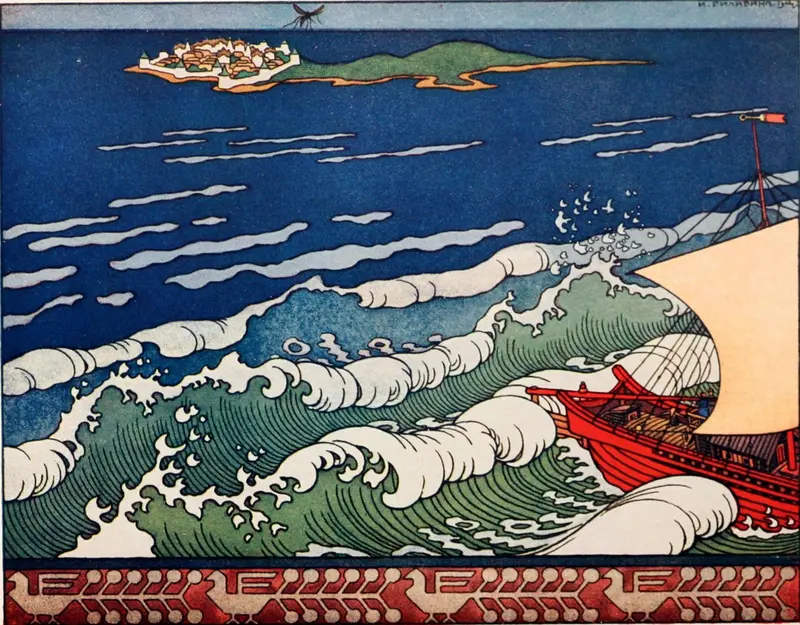
The Ship on the Stormy Sea
Ivan Bilibin
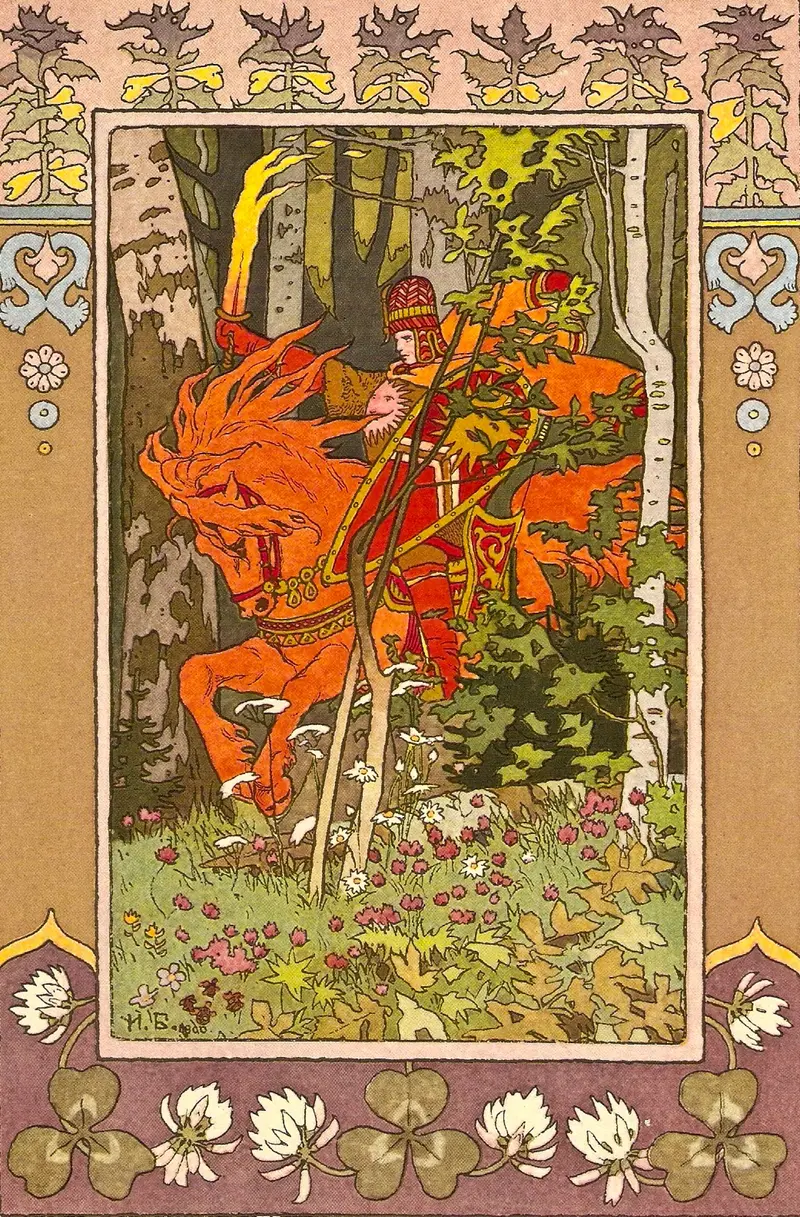
The Red Horseman (Vasilisa the Beautiful)
Ivan Bilibin
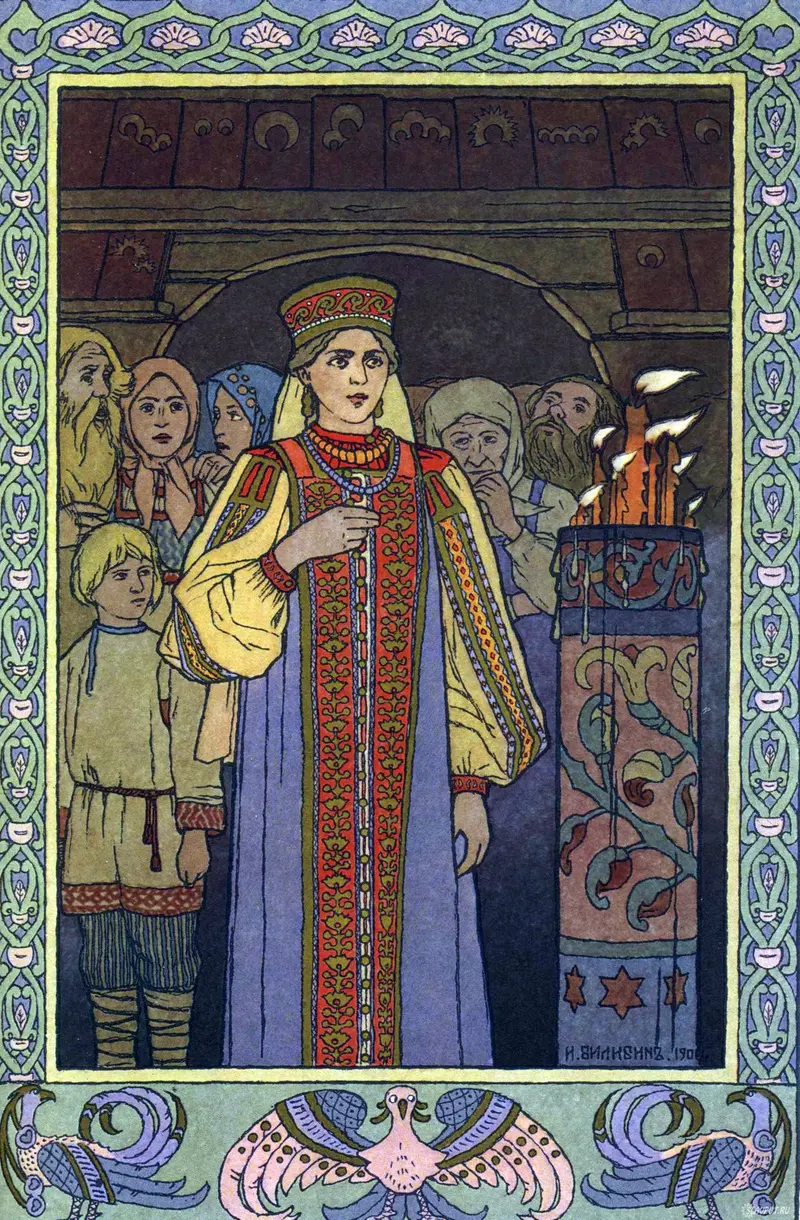
Maryushka and Her Sisters (The Feather of Finist the Falcon)
Ivan Bilibin




