
The Entomologist's Dream — History & Facts
A room drowned in blue shadow, a man sprawled across a bed, and a storm of butterflies—this is the world Edmund Dulac conjures in The Entomologist’s Dream. The first thing to catch the eye is not the man’s haunted expression, but the riot of color and motion: butterflies, once pinned and catalogued, now whirl free in impossible numbers, filling the air with delicate chaos. The boxes that once held them lie open and scattered, as if the order of science has been upended by a single, fevered night.
The entomologist’s splayed hand and wide, unblinking stare suggest both awe and terror, caught between triumph and unraveling. Dulac’s palette, cool and dusky, lets the butterflies’ reds, golds, and violets burn like embers in the gloom, drawing the viewer into the dream’s strange logic. Created in 1909 for Gerard d’Houville’s “Le Papillon Rouge” in the French magazine L’Illustration, this image belongs to a moment when illustration was not just accompaniment, but a stage for fantasy and psychological drama. Dulac, a master of fairy-tale imagery, was part of a generation that blurred the line between children’s stories and adult anxieties, often for magazines and luxury books.
The early 20th century saw illustrators like Dulac and Arthur Rackham weaving the uncanny into everyday interiors, reflecting a world fascinated by science, dreams, and the boundaries between them. History has kept few traces of this specific work’s journey, but its vision—a mind overwhelmed by the beauty it tried to possess—remains as unsettling and magnetic as ever. Look again at the butterflies: are they escape, or invasion?
More Artworks by Edmund Dulac
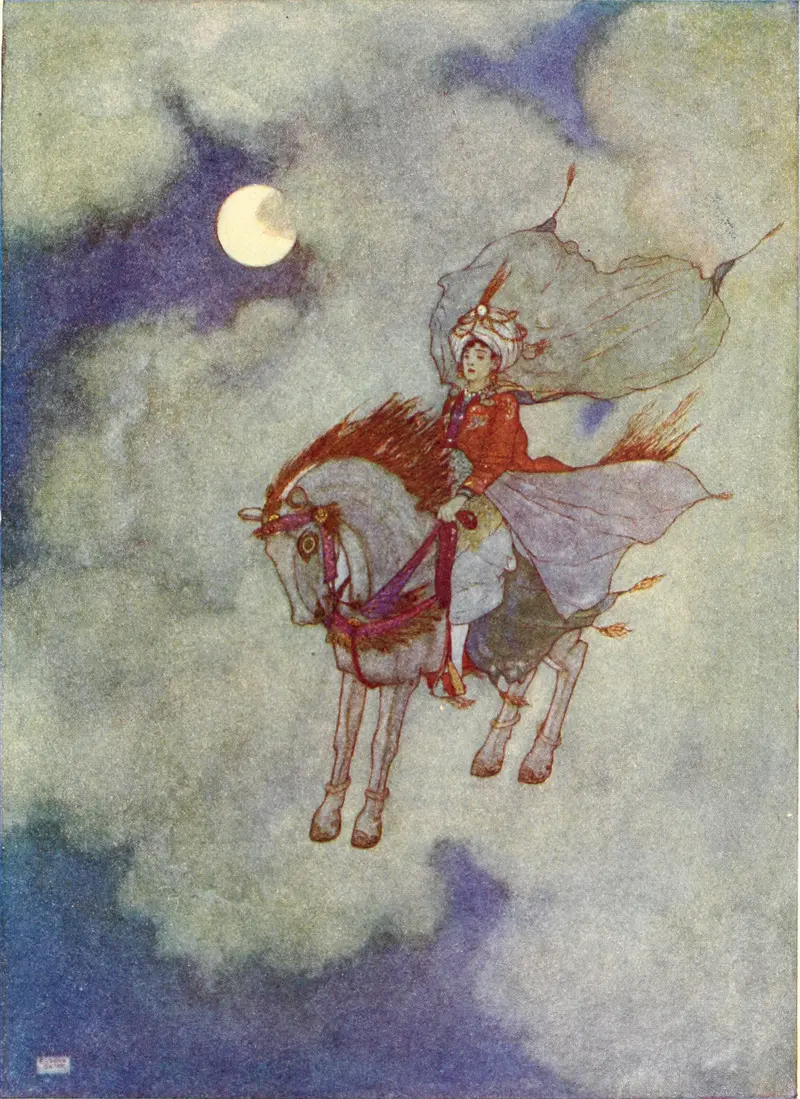
The Magic Horse: As He Descended, the Daylight Faded
Edmund Dulac
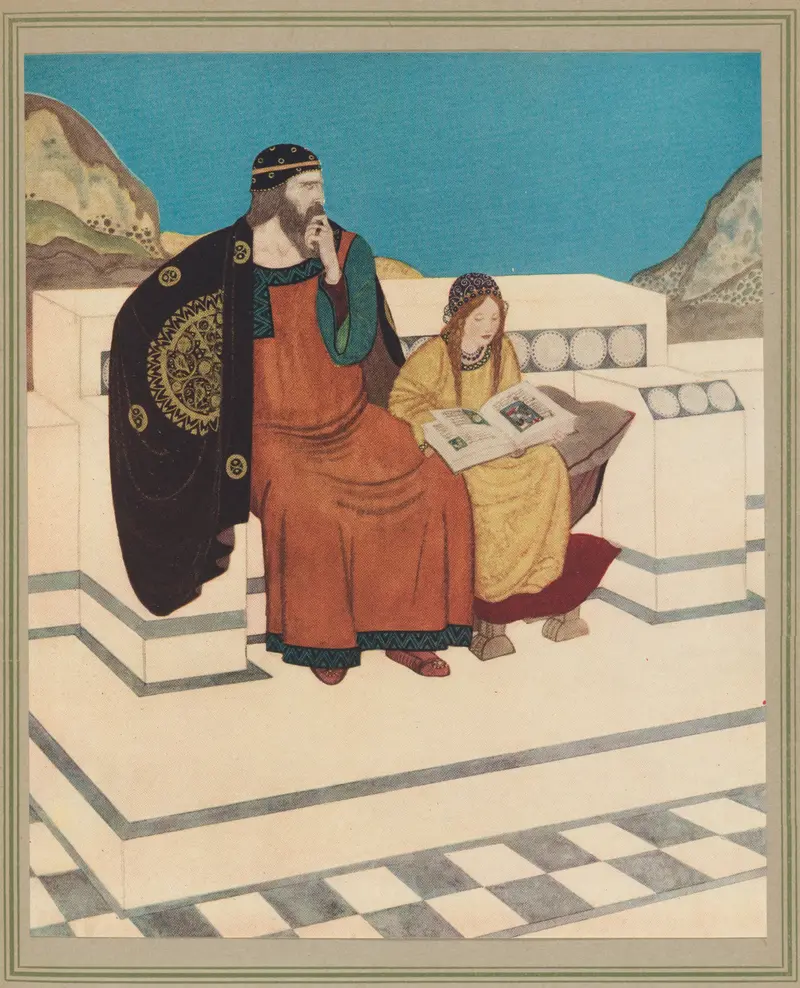
King Wanda Sat
Edmund Dulac

Miraculous Bubbles
Edmund Dulac
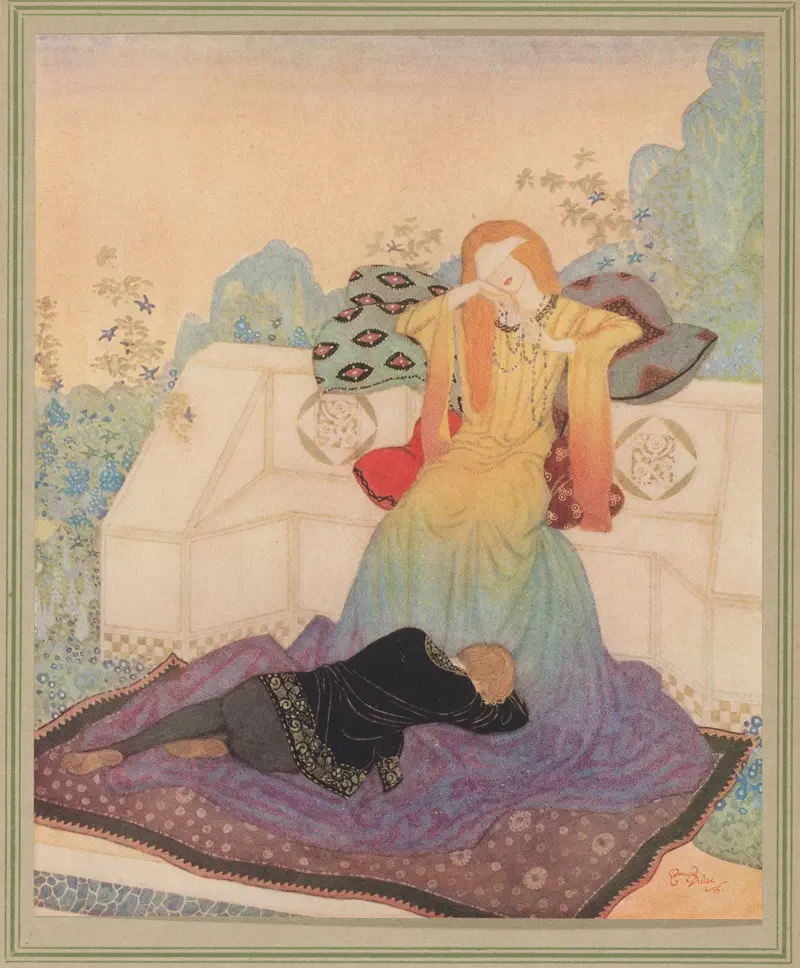
Eric Layed Now
Edmund Dulac
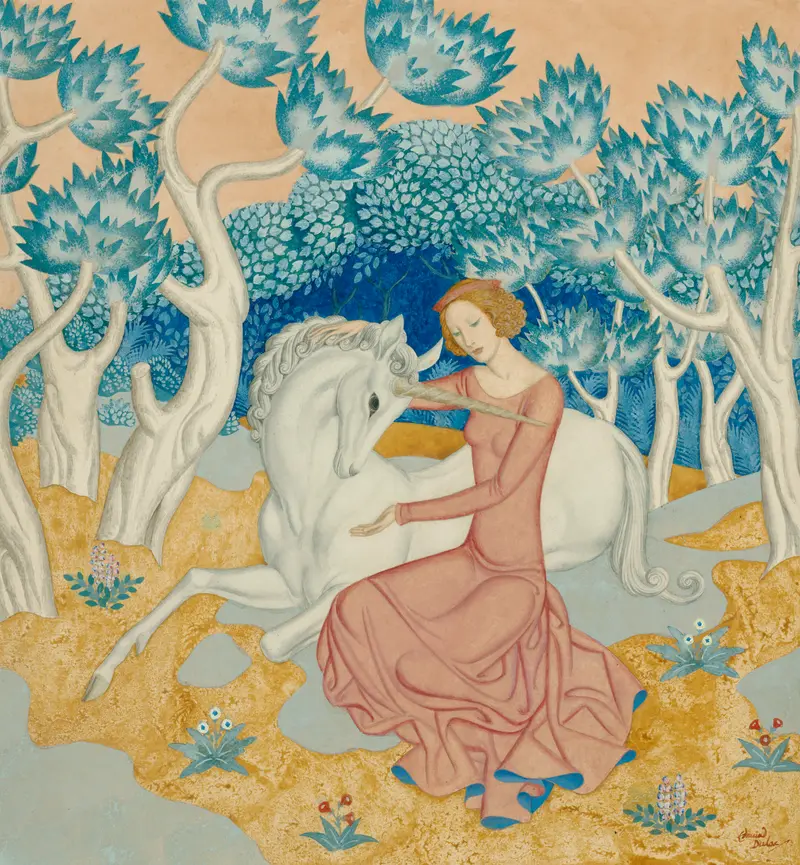
The Maid and the Unicorn
Edmund Dulac
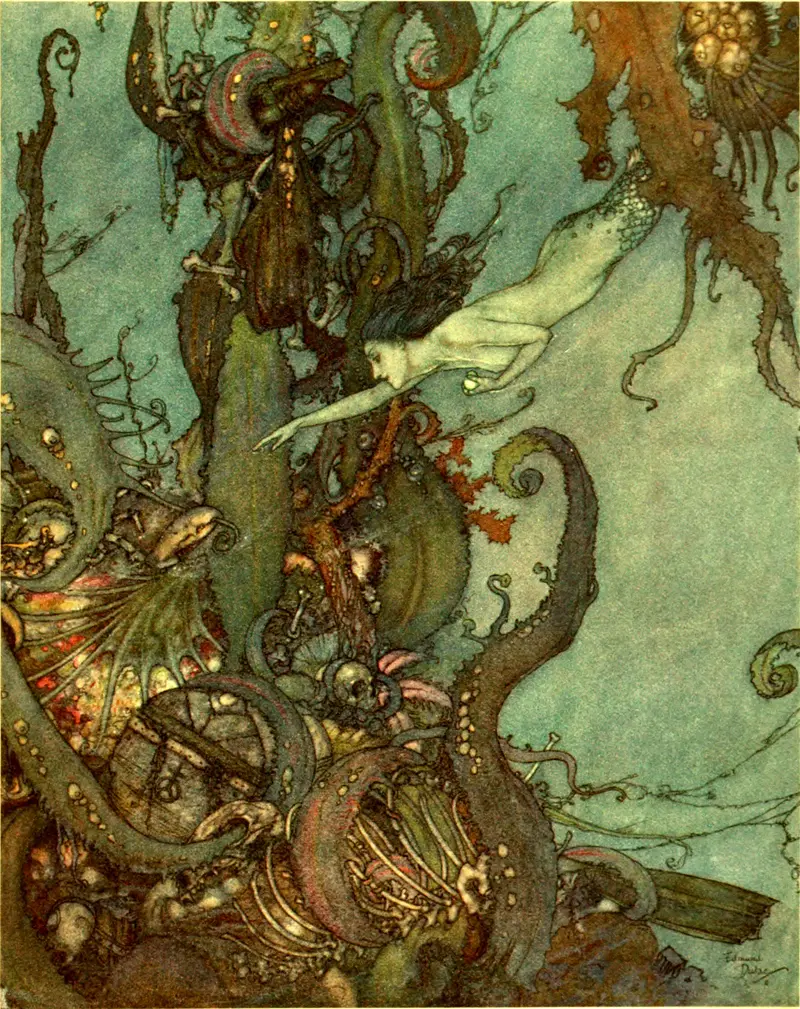
The Little Mermaid: At the Mere Sight of the Bright Liquid
Edmund Dulac

Urashima Taro
Edmund Dulac

And There Leaning
Edmund Dulac
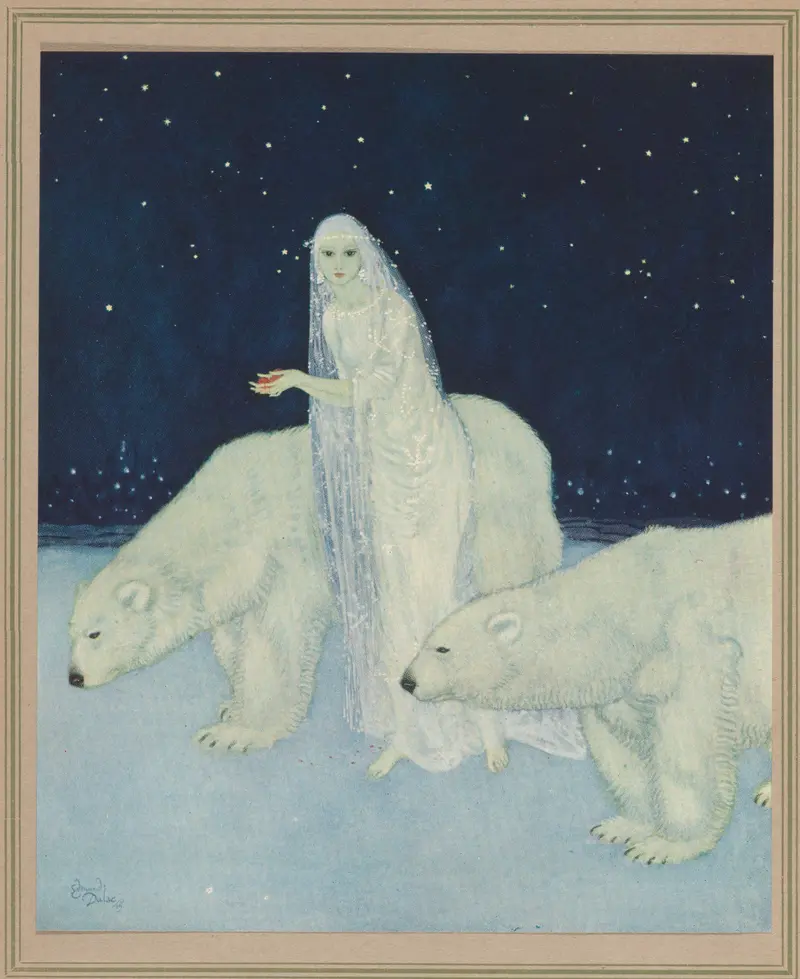
Everything About Her
Edmund Dulac
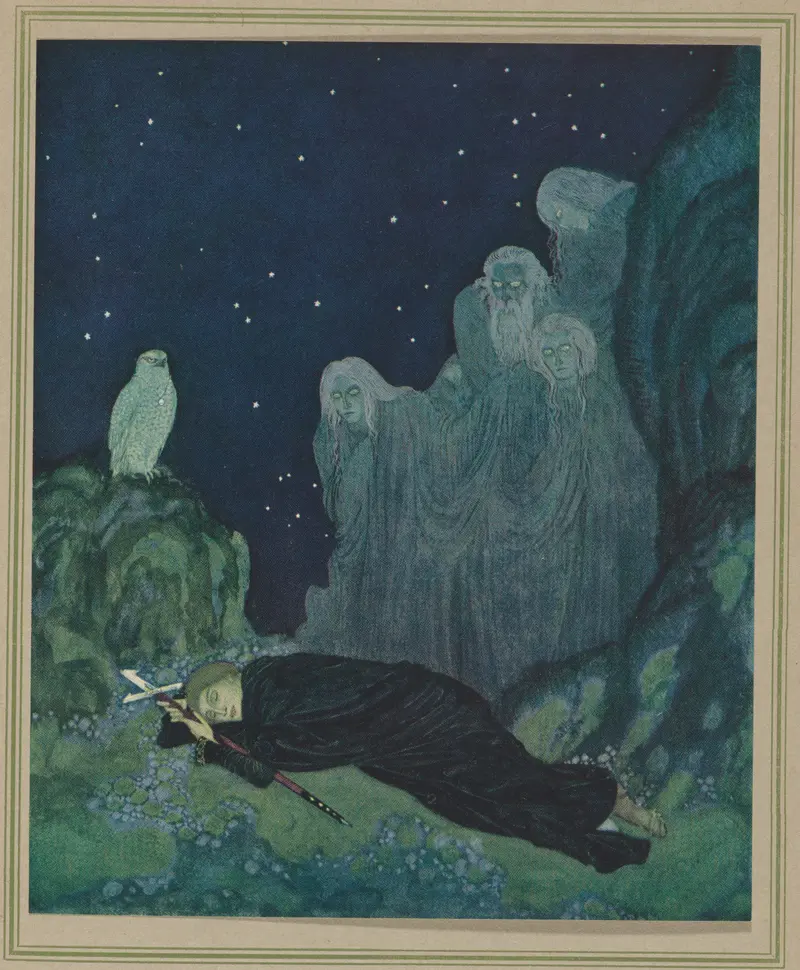
Circle Of Mist
Edmund Dulac





