
The Forest at Pontaubert — History & Facts
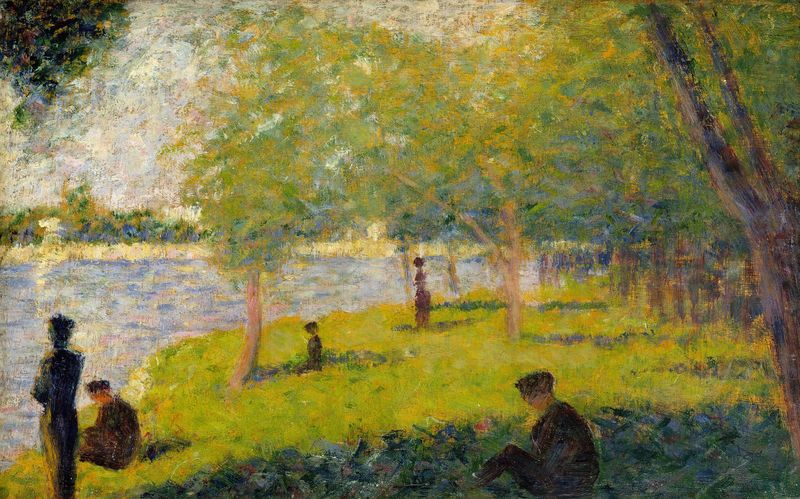
Did the painter know this moment would outlive them? In The Forest at Pontaubert, time stands still, captured in an embrace of shimmering color and delicate brushwork that transcends the ordinary. Look to the left at the vibrant greens intermingling with deep shadows, where the trees sway gently, their leaves whispering secrets of the past. Notice how the dappled sunlight filters through the foliage, creating a mosaic of light and shadow on the forest floor. The meticulous pointillism invites your eye to dance from one dot to another, revealing the harmony of nature and the artist's precision—a symphony orchestrated on canvas. Beneath the serene beauty lies a tension between permanence and transience.
The vibrant colors evoke a sense of life and vitality, yet the stillness hints at the passage of time, as if the moment is both fleeting and eternal. The trees stand sentinel, embodying a contrast between the ephemeral existence of human life and the enduring presence of nature. Each stroke whispers of memories cherished and lost, entwining the viewer in a dance of nostalgia. In 1881, Seurat was exploring the burgeoning world of pointillism, a technique that revolutionized the perception of color.
Living in Paris amidst the Impressionist movement, he was navigating his own path, influenced by both the scientific study of color and the emotional depth of his predecessors. The Forest at Pontaubert illustrates his quest for innovation while capturing a timeless moment in the embrace of nature.
More Artworks by Georges Seurat
Browse all →
A Sunday on La Grande Jatte — 1884
Georges Seurat
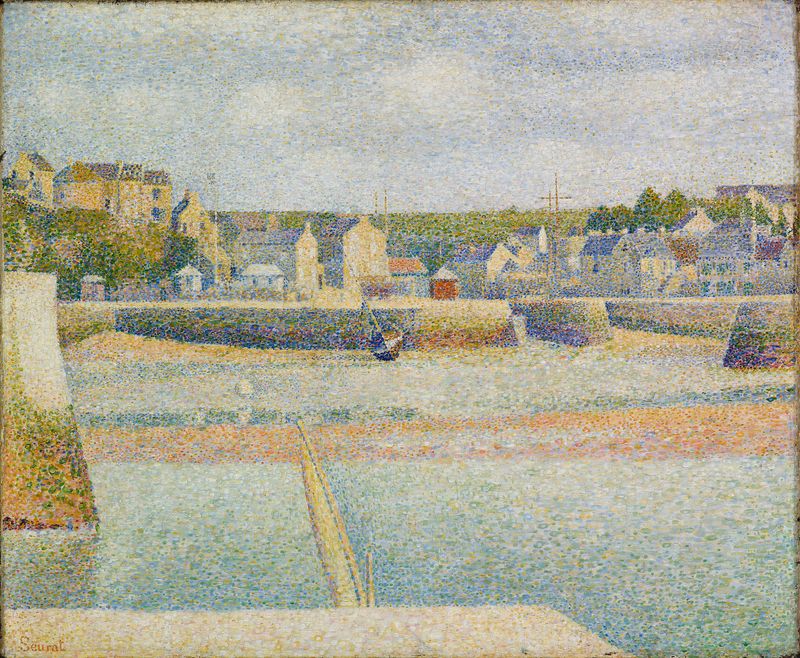
Port-en-Bessin, The Outer Harbor (Low Tide)
Georges Seurat
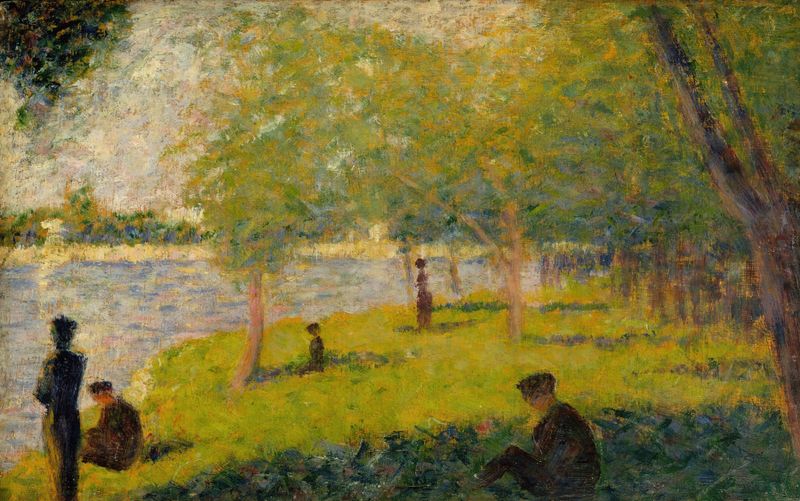
Study for ‘A Sunday on La Grande Jatte’
Georges Seurat

Oil Sketch for "A Sunday on La Grande Jatte — 1884"
Georges Seurat
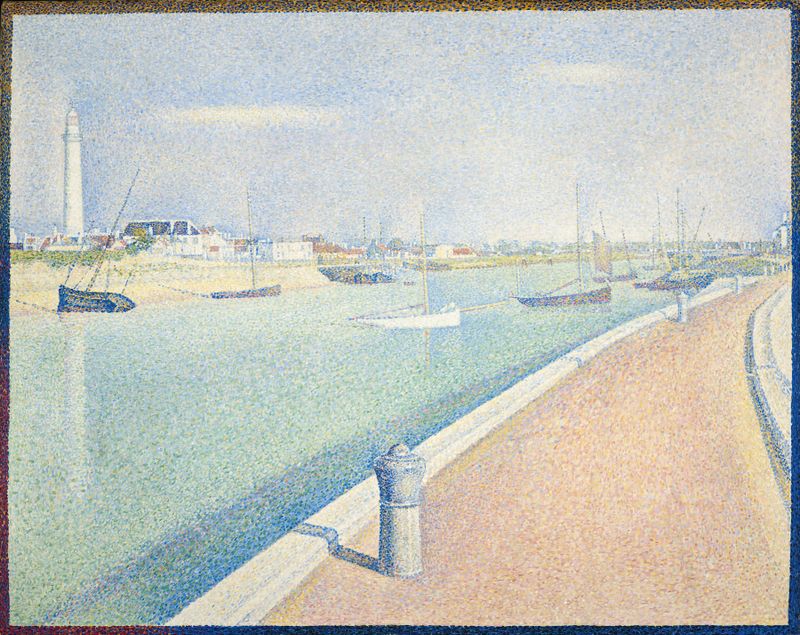
The Channel of Gravelines, Petit Fort Philippe
Georges Seurat

Étude pour ‘La Grande Jatte’ (Study for ‘La Grande Jatte’)
Georges Seurat
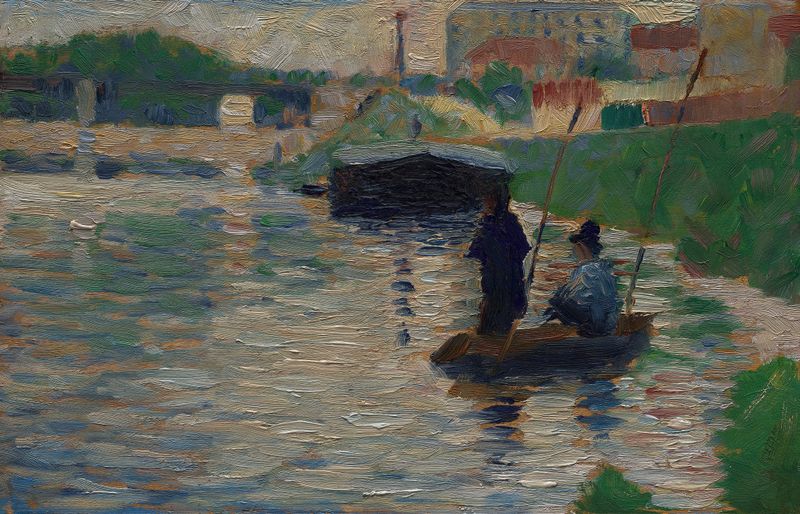
View of the Seine
Georges Seurat

Seascape at Port-en-Bessin,Normandy
Georges Seurat

The Channel at Gravelines, Evening
Georges Seurat
Study for A Sunday on La Grande Jatte
Georges Seurat





