The Frieze of Life — History & Facts
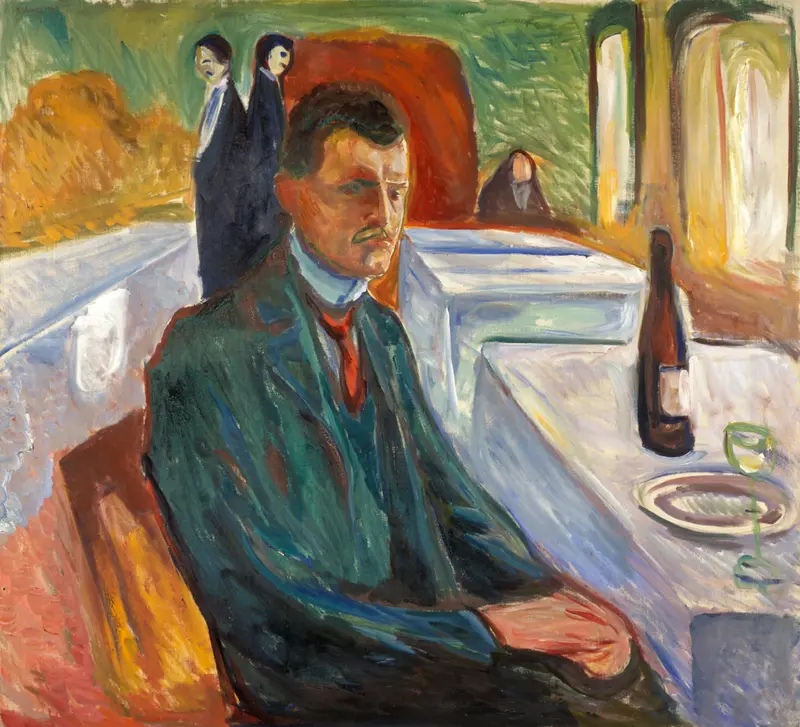
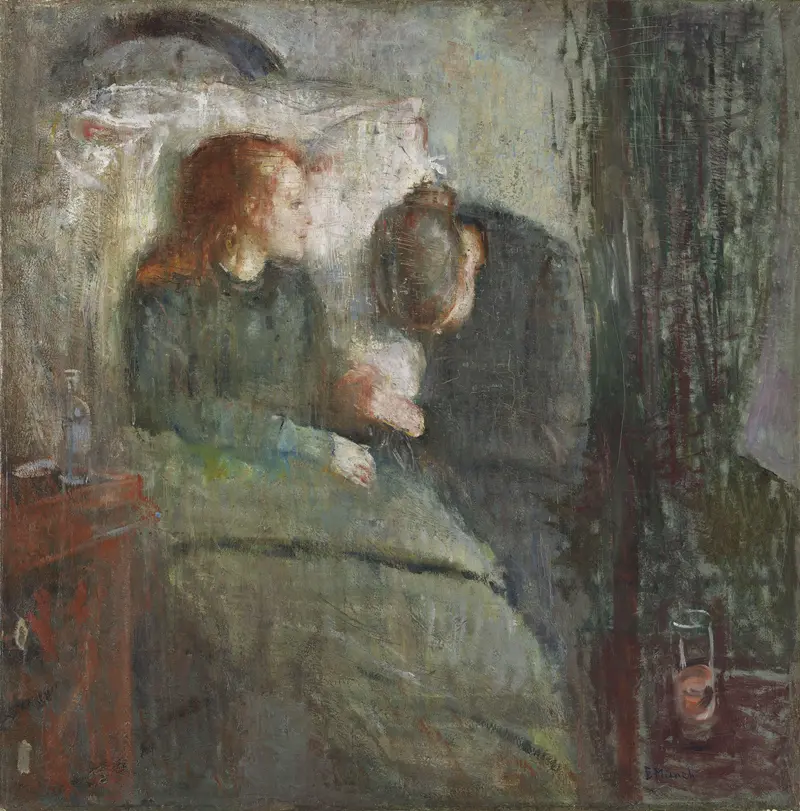
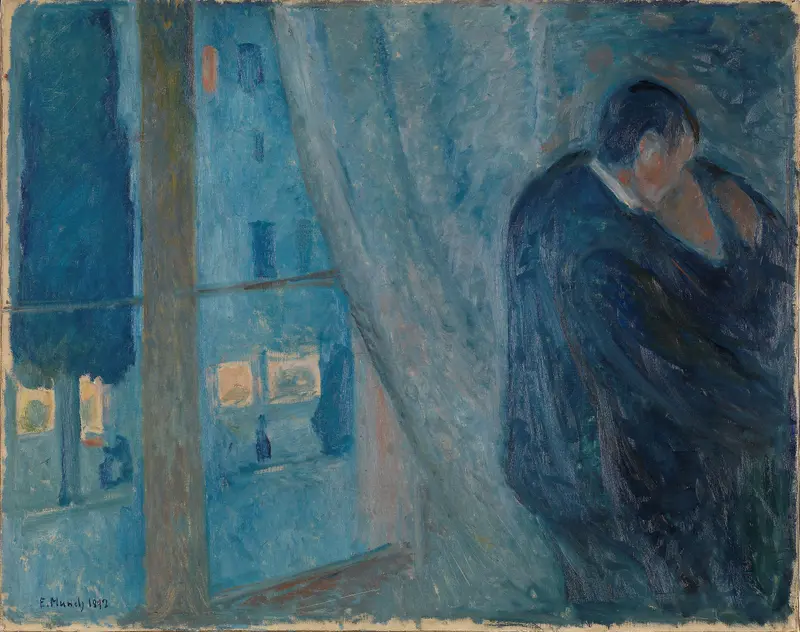
A man stands in a room, half-shadowed, his gaze turned away from the camera, surrounded by paintings that seem to pulse with uneasy life. The largest canvas before him draws the eye: a narrow street or alley, crowded with figures whose faces and gestures are caught between embrace and isolation. The brushwork is loose, urgent, the forms melting into one another, as if the boundaries between people and place are dissolving.
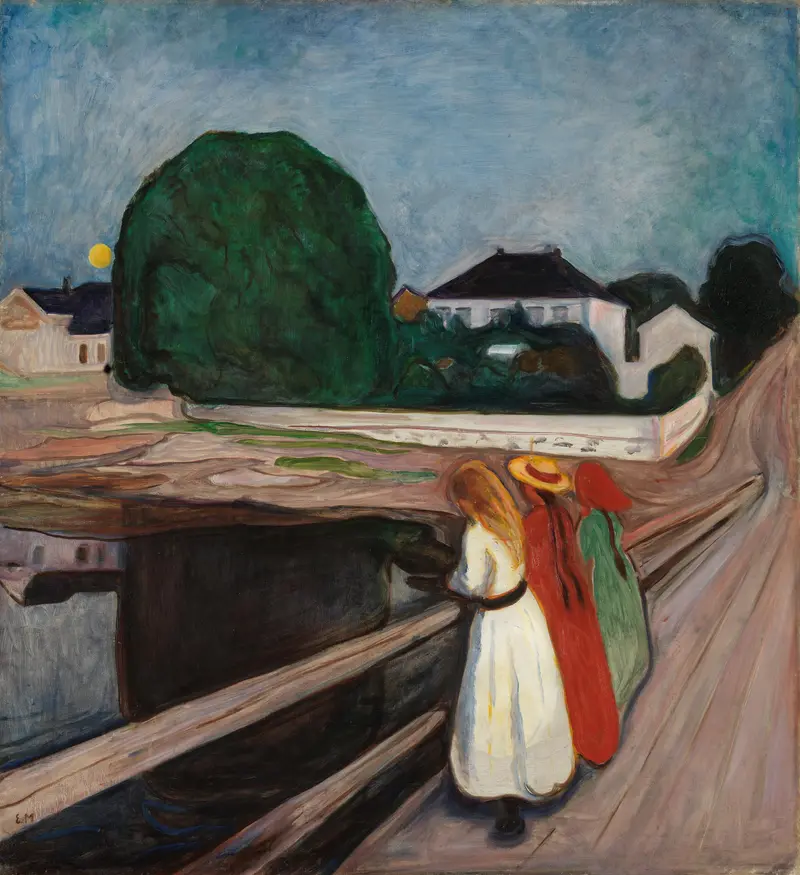
To the left, another painting shows children or young women, their expressions ambiguous, caught in a moment of movement or play that feels both innocent and uncanny. Light slants across the scene, picking out the textures of canvas and wall, while a bottle on the rightmost painting hints at solitary rituals. The mood is unsettled, the palette thick with emotion, inviting the viewer to linger and search for meaning in every blurred outline. Created in 1907, this work belongs to the early twentieth century, a period when artists like Edvard Munch—whose name is linked to existential themes and psychological intensity—were reshaping the possibilities of painting.
The era saw a shift from academic realism to the raw, subjective visions of Expressionism, as painters sought to capture not just the visible world but the turbulence beneath its surface. While little is recorded about the specific journey of this piece, its presence in the Google Art Project collection today speaks to the enduring fascination with art that confronts the mysteries of human experience head-on. In a world on the cusp of modernity, such images were both confession and challenge—an invitation to look again, and deeper.