
The Frog Catchers — History & Facts
What if beauty was never meant to be finished? In the delicate interplay between nature and labor, we find moments that transcend the mundane and elevate the human experience. Focus on the figures at the center of The Frog Catchers, where two men lean into the verdant landscape, their hands brushing against the lush grass and water, embodying the simplicity of their task. Notice how the painter captures the sunlight filtering through the leaves, dappling their skin with warmth, while the earth beneath them retains a deep, shadowed green that contrasts vividly with their lighter garments. The brushwork—loose yet precise—creates a rhythm that breathes life into the scene, inviting you to linger. In this work, the tension between toil and tranquility reveals deeper layers of existence.
The men’s earnest engagement with nature juxtaposes their vulnerability against the backdrop of an unfathomable wilderness. Frogs, symbolizing transformation, hint at the potential for change and rebirth, while the stillness of the surrounding water reflects a moment suspended in time, offering viewers a contemplative space where the mundane becomes beautiful. Lhermitte painted this piece during a period of exploration in the late 19th century when artists sought to connect with rural life and the natural world. Living in France, he was influenced by realism and the emerging Impressionist movement, which emphasized the fleeting effects of light and color.
This work captures a moment of simplicity that resonates with both his life experience and the broader dialogues happening within the art community at the time.
More Artworks by Léon Augustin Lhermitte
Browse all →
The Harvesters
Léon Augustin Lhermitte
La Fenaison
Léon Augustin Lhermitte
Glaneuses En Avant De Vieilles Meules
Léon Augustin Lhermitte
Le chemin de la ferme
Léon Augustin Lhermitte
Haymaking
Léon Augustin Lhermitte
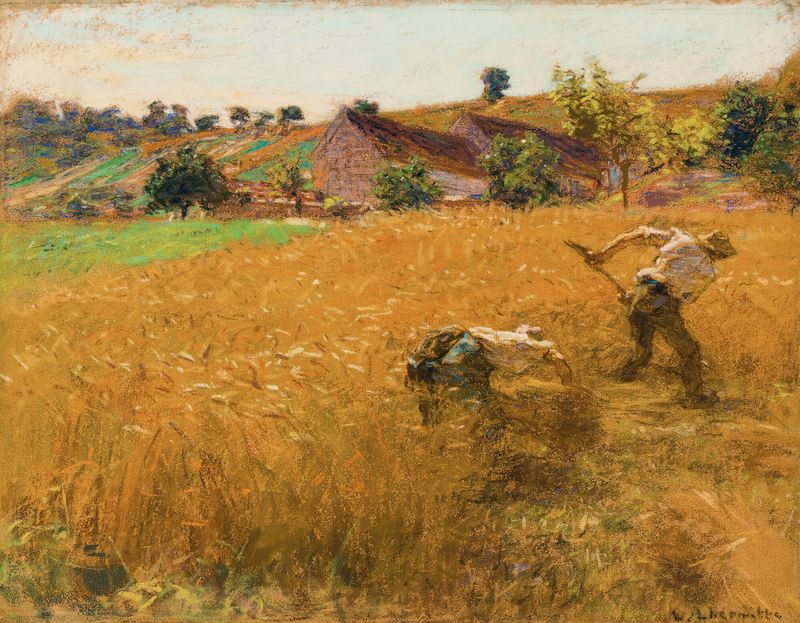
La Moisson
Léon Augustin Lhermitte
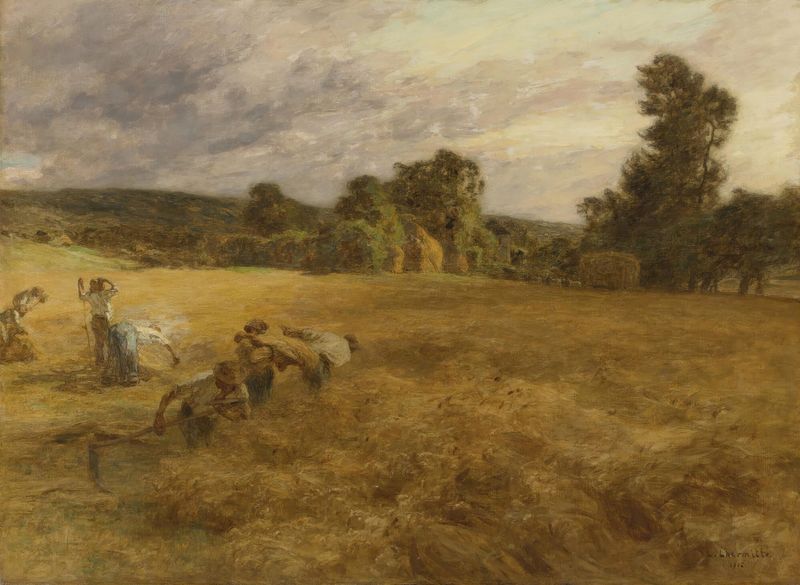
L’orage En Moisson
Léon Augustin Lhermitte
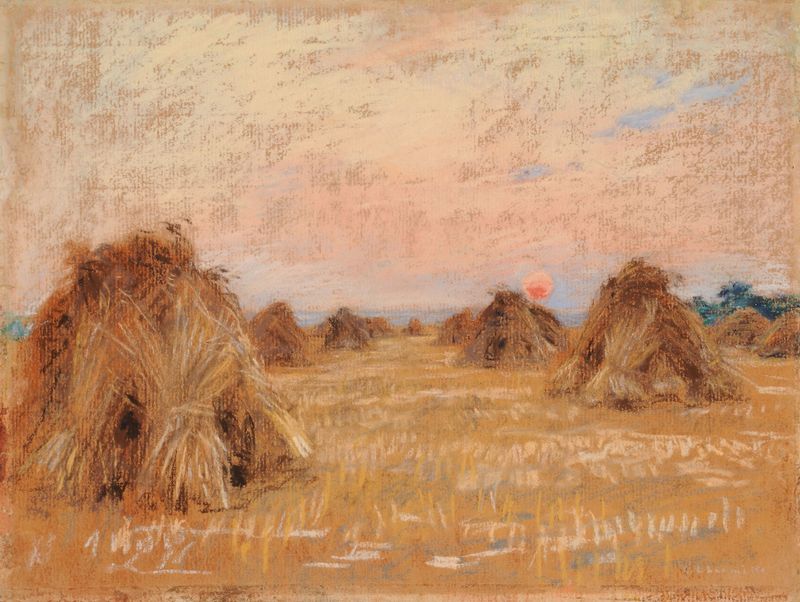
Fin de journée
Léon Augustin Lhermitte
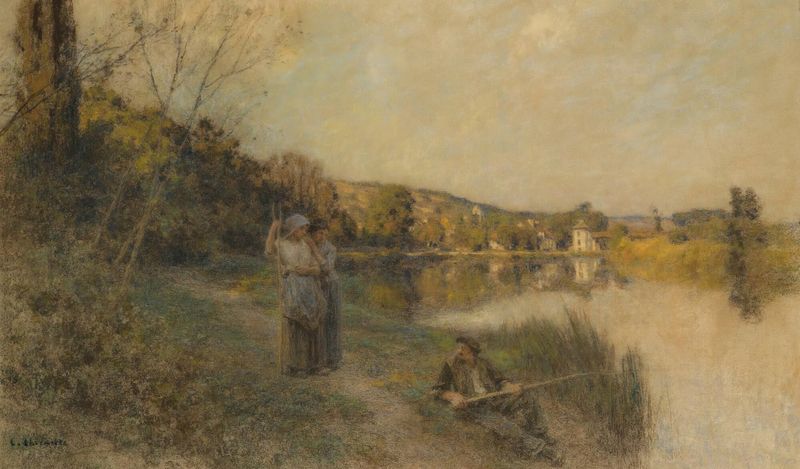
Fin De Belle Journee, Soleil Couchant, Pecheur
Léon Augustin Lhermitte

Quai au Sable, Chartèves
Léon Augustin Lhermitte





