
The Gobelin Quarter — History & Facts
In The Gobelin Quarter, the artist transforms the frenetic energy of Parisian life into a harmonious tableau, evoking an emotional resonance that lingers in the viewer's heart. Look to the center of the canvas, where vibrant patches of color swirl together, depicting the bustling streets alive with activity. The interplay of light and shadow here draws your gaze, revealing the intricate details of cobblestones and the delicate textures of the surrounding architecture. Notice how the warm hues of the buildings contrast with the cooler tones of the figures, suggesting a tangible rhythm within the chaos of urban existence. Beneath the apparent disorder lies a profound commentary on the duality of life in the city.
The juxtaposition of crowded scenes and fleeting moments encapsulates both joy and sorrow, as individuals navigate their lives amidst the turmoil. Small figures engage in mundane tasks, their gestures hinting at deeper stories of ambition, despair, and fleeting connections. It’s as if the artist captures not just a place, but the very essence of human experience—its madness and beauty intertwined. Painted in 1893 in Paris, Lepère was immersed in an art scene that was grappling with the rapid industrialization of the city and the rise of new artistic movements.
This period marked a shift toward modernism, where traditional forms were challenged and redefined. As a printmaker and painter, he was influenced by both Impressionism and the emerging Symbolists, which is evident in his ability to blend everyday life with emotive essence.
More Artworks by Auguste Louis Lepère
Browse all →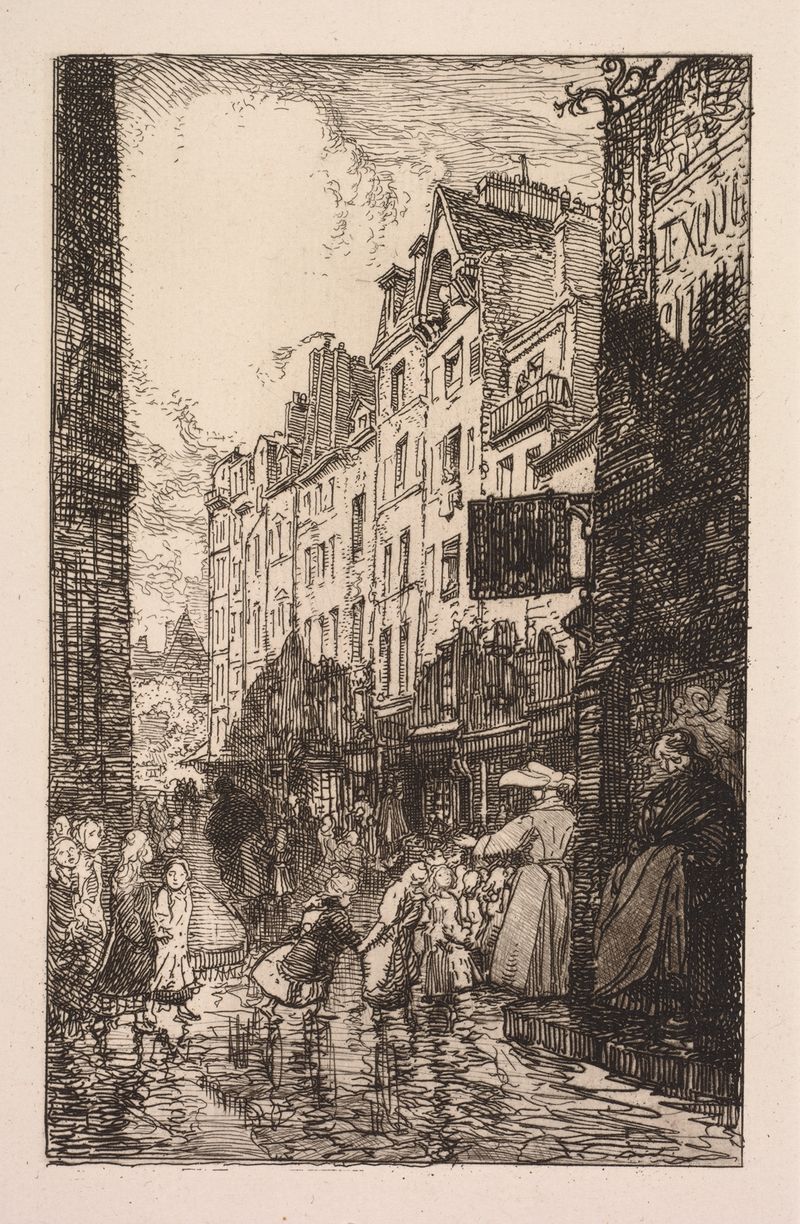
La Rue des Prêtres Saint-Séverin
Auguste Louis Lepère
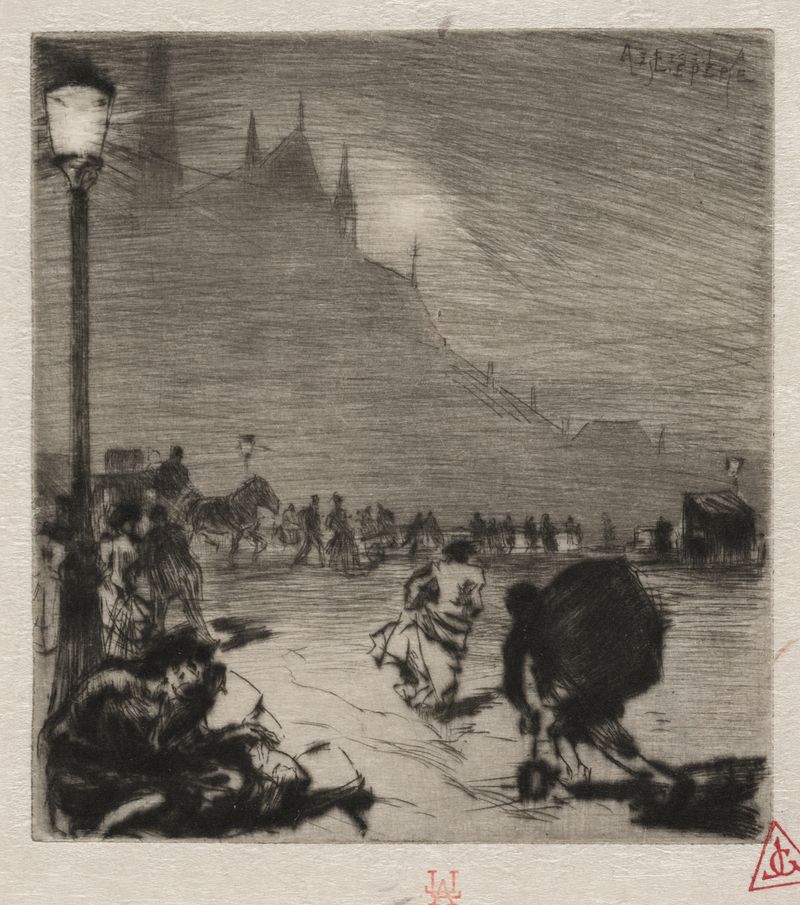
Au Coin du Pont-aux-Doubles
Auguste Louis Lepère
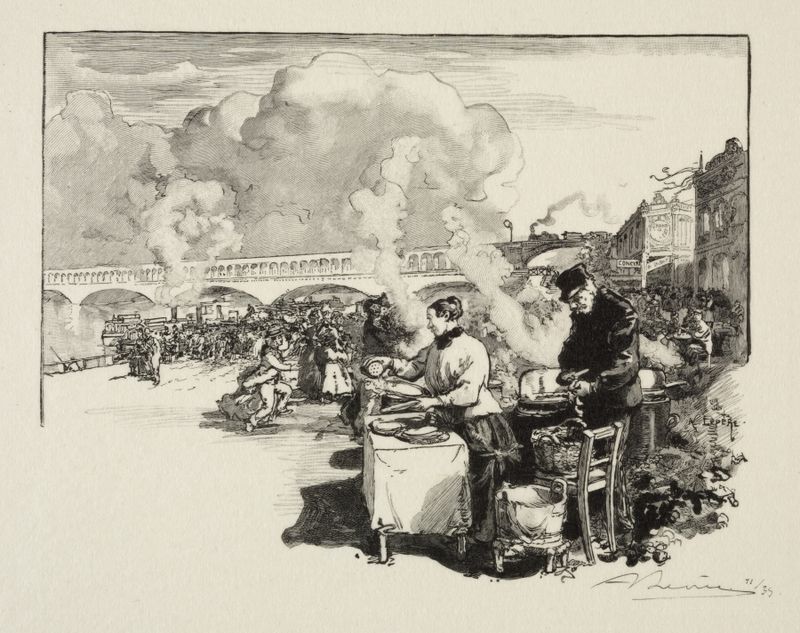
Debarcadère des bateaux-omnibus
Auguste Louis Lepère

La Seine, au quai de la Rapée
Auguste Louis Lepère
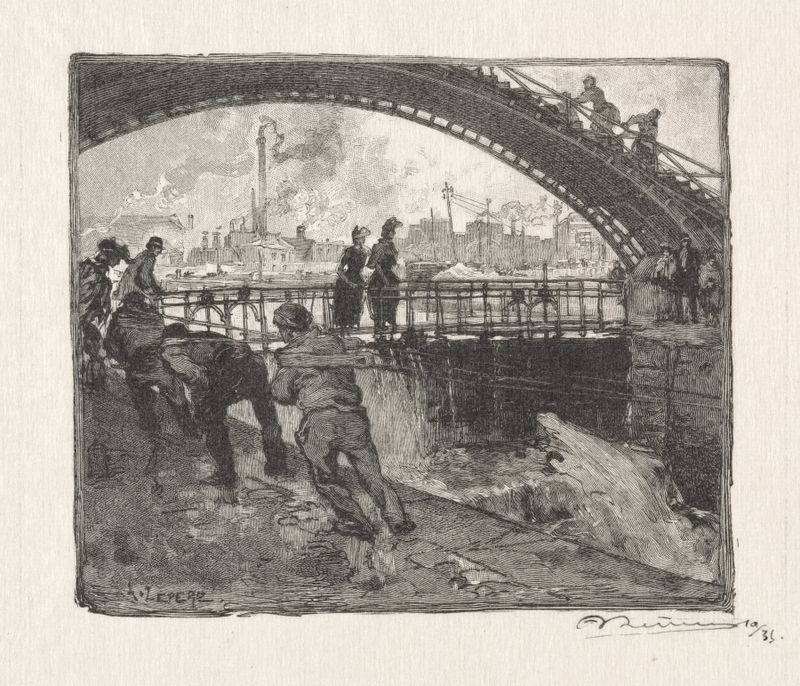
L’Ecluse du Canal St. Martin
Auguste Louis Lepère

Le Boulevard Montmartre, le Soir
Auguste Louis Lepère

Une Chasse au Mont Gérard
Auguste Louis Lepère
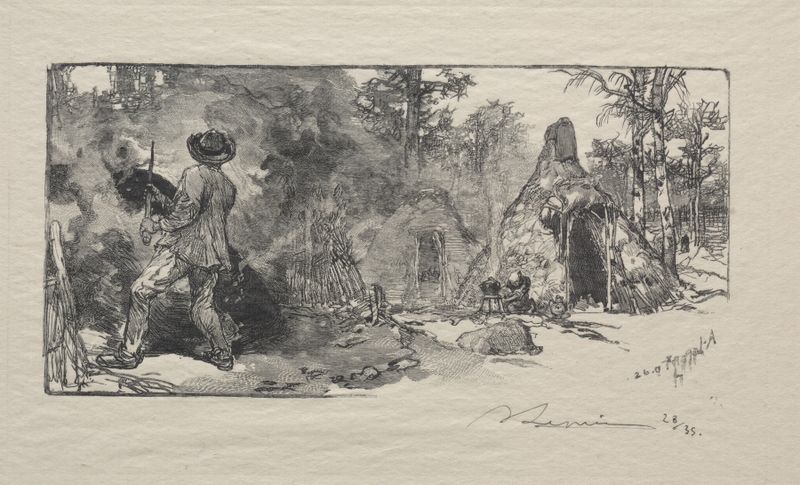
Les Charbonniere
Auguste Louis Lepère
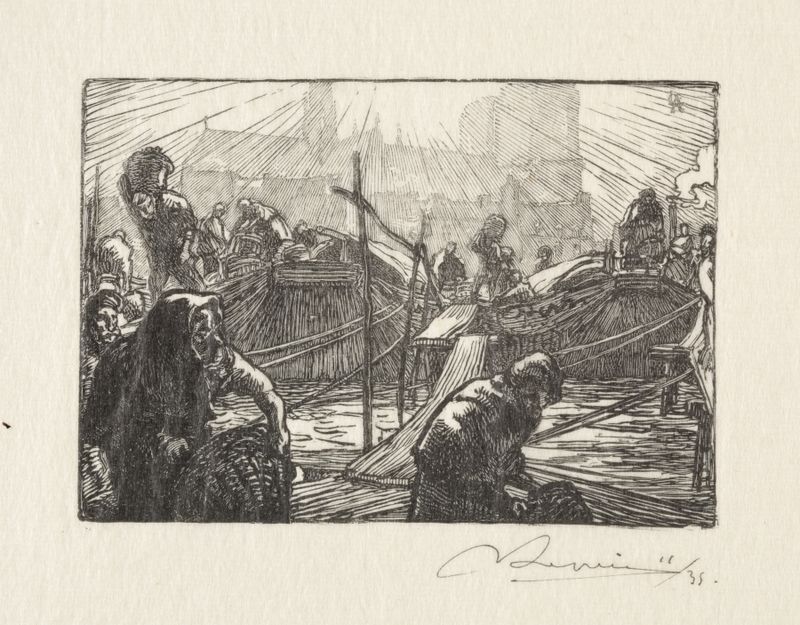
Notre Dame vue du Marché aux pommes
Auguste Louis Lepère

Le Palais des Arts Liberaux, Intèrieur
Auguste Louis Lepère





