
The Gorge At Suk Wady Barada, Lebanon — History & Facts
What secret hides in the quiet of the canvas? In the stillness of The Gorge At Suk Wady Barada, a divine essence whispers through the landscape, inviting contemplation and reflection. Look to the left where the towering cliffs embrace the river's gentle curve, inviting your gaze to dance along the water's surface. Notice how the artist employs delicate strokes of greens and blues to capture the shimmering light, enhancing the depth of the gorge as it recedes into the distance. The interplay of shadow and sunlight reveals the rugged terrain, while wisps of clouds float above, creating a serene yet vibrant atmosphere that beckons the viewer into its embrace. The interplay of nature's elements evokes a sense of tranquility, yet beneath this serene surface lies an emotional tension.
The contrasting solidity of the rocks against the fluidity of the river reveals the duality of existence—stability versus change, permanence versus transience. This dichotomy suggests a deeper connection to the divine, as if nature itself holds the secrets of creation within its folds, urging us to seek knowledge in our own lives. In 1858, Edward Lear was deeply engaged in his travels through the Middle East, sketching and painting various landscapes that captured his fascination with their beauty. Living in a world on the cusp of modernity, he was part of a movement that sought to document the uncharted territories of nature.
This period was marked by a growing interest in Romanticism and a longing for the sublime, as artists embraced the power of nature as a reflection of the human spirit.
More Artworks by Edward Lear
Browse all →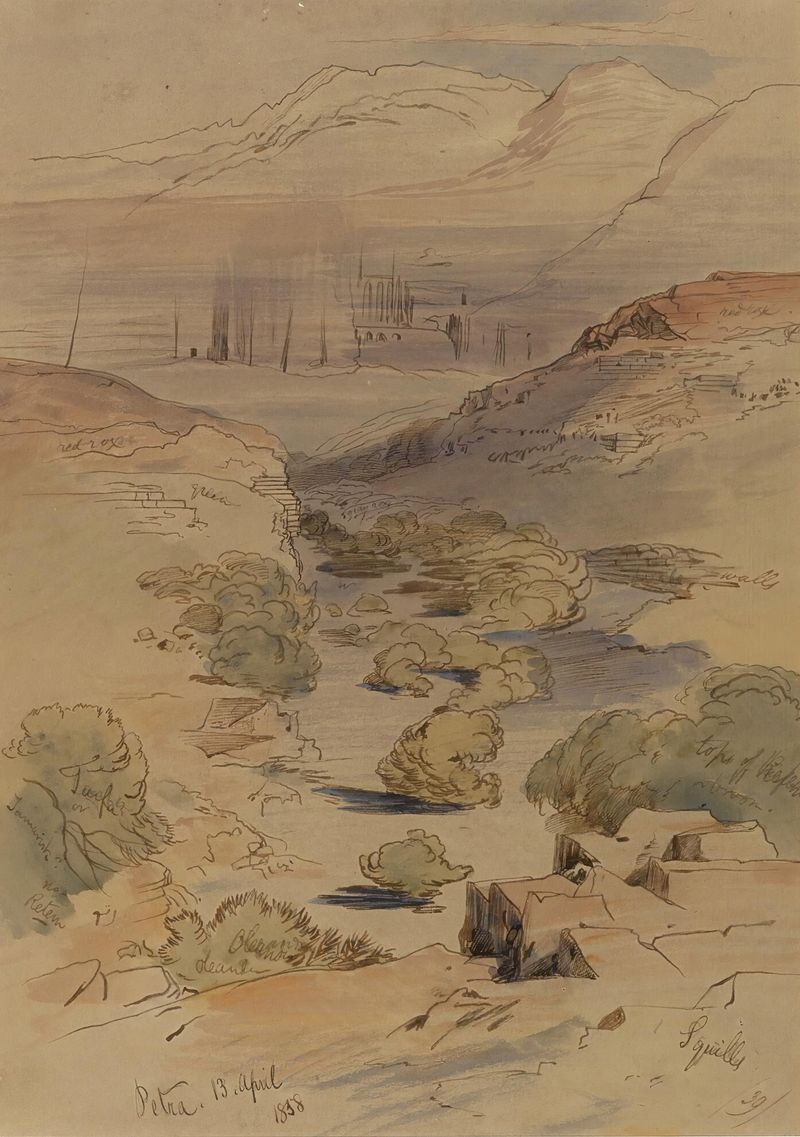
Petra
Edward Lear
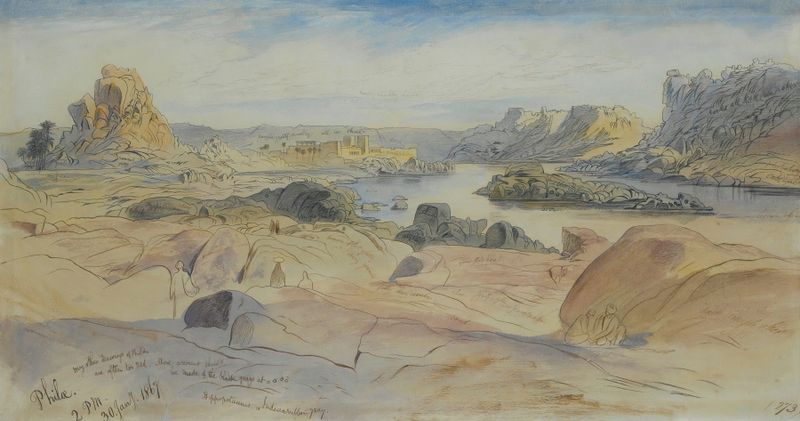
Philae, Egypt
Edward Lear
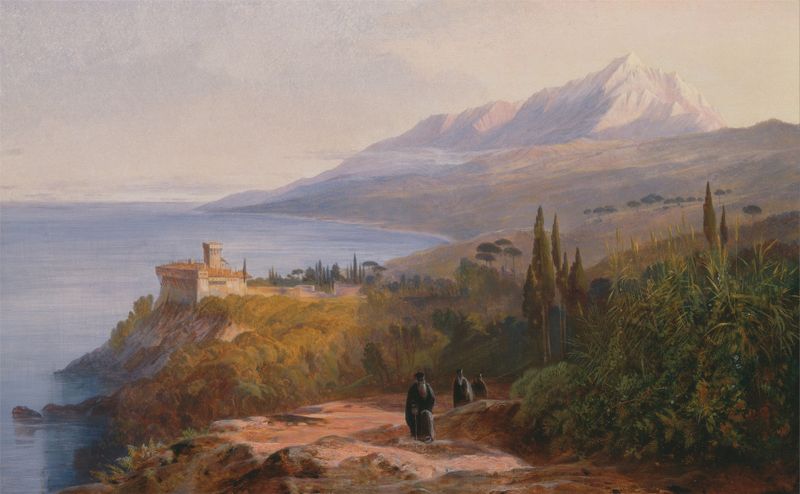
Mount Athos and the Monastery of Stavronikétes
Edward Lear
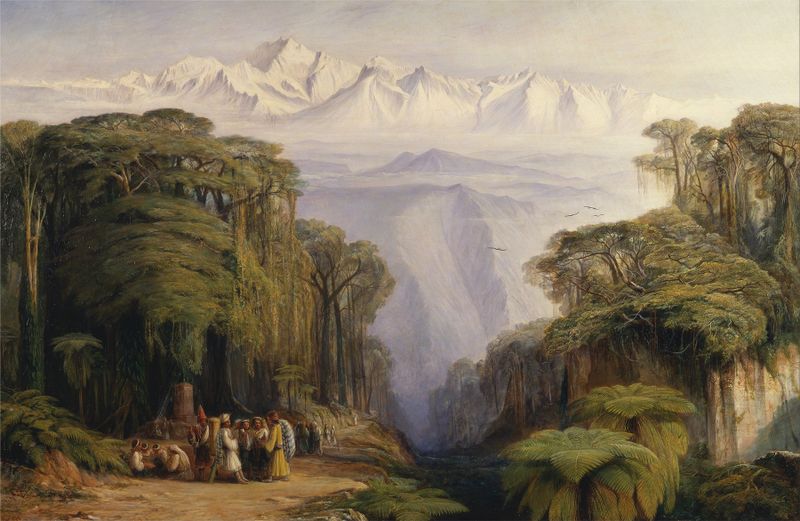
Kangchenjunga from Darjeeling
Edward Lear
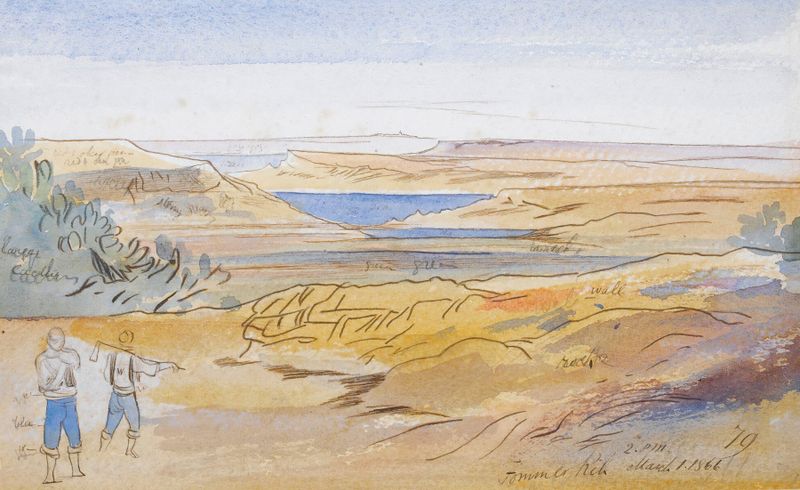
Fomm Ir-Rih, Malta
Edward Lear
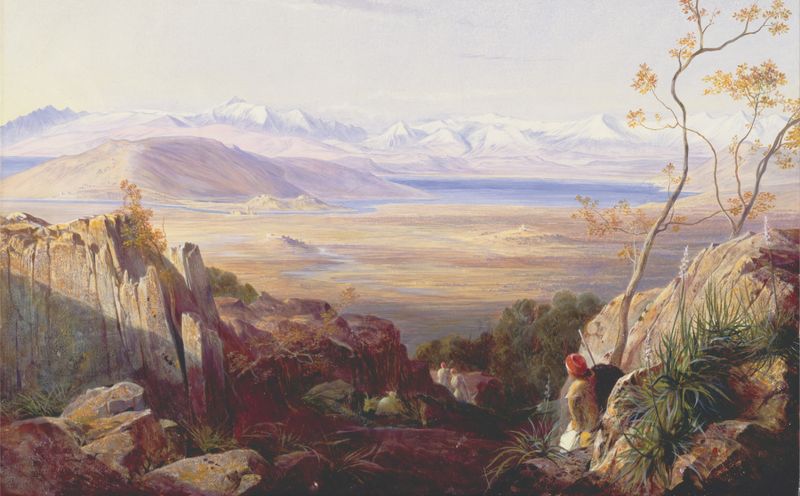
Butrinto, Albania
Edward Lear
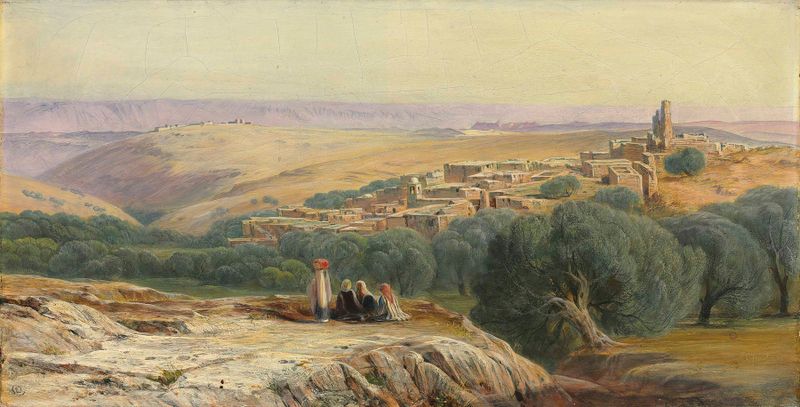
The Plains of Bethany
Edward Lear

Karnak, 9-30 pm, 22 January 1867
Edward Lear
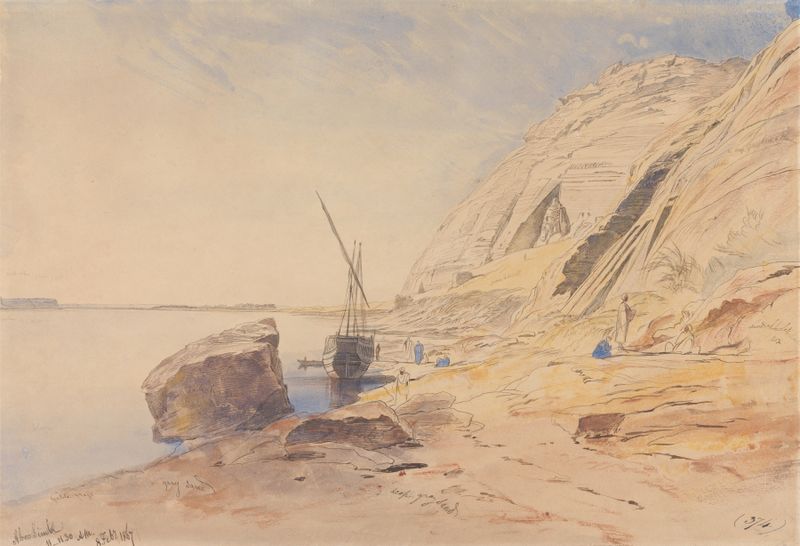
Abu Simbel, 11-11;30 am, 8 February 1867 (374)
Edward Lear

A View Of Mount Athos And The Pantokrator Monastery, Greece
Edward Lear





