
The Grand Quai of Le Havre — History & Facts
What if beauty was never meant to be finished? In the tranquil embrace of The Grand Quai of Le Havre, silence becomes a character, inviting us to linger and contemplate the stillness of a bustling port. Look to the left at the gentle curves of the quay, where elegant ships rest, their hulls reflecting the muted colors of the sky. Notice how the brushstrokes create a delicate interplay of light and shadow, imparting a sense of weightlessness to the vessels. The soft blues and greys envelop the scene, evoking the calm before the storm, where each detail speaks to the transient nature of maritime life. In this composition, contrasts emerge from the harmony.
The solidity of the structures juxtaposes the fluidity of the water, suggesting that stability is often deceptive in a world governed by tides. The figures scattered along the quay, engaged in their own contemplations, highlight a shared solitude, creating an emotional tension that resonates beyond the canvas. This coexistence in silence invites viewers to reflect on their own lives and the quiet moments that define them. Siebe Johannes Ten Cate painted this work in 1901 while living in the Netherlands, during a period marked by a profound shift in artistic expression.
The early 20th century saw artists redefining their relationships with their subjects, navigating the interplay between realism and impressionism. Ten Cate’s choice to capture this serene moment in a thriving port reflects both his personal exploration and the broader artistic currents of his time, where silence and contemplation began to find their place amidst the chaos of modernity.
More Artworks by Siebe Johannes Ten Cate
Browse all →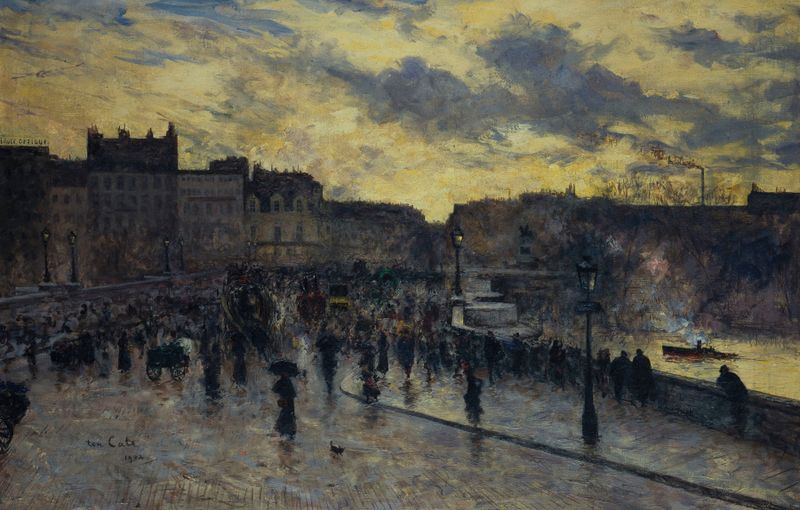
Le Pont-Neuf, vu du quai de la Mégisserie
Siebe Johannes Ten Cate
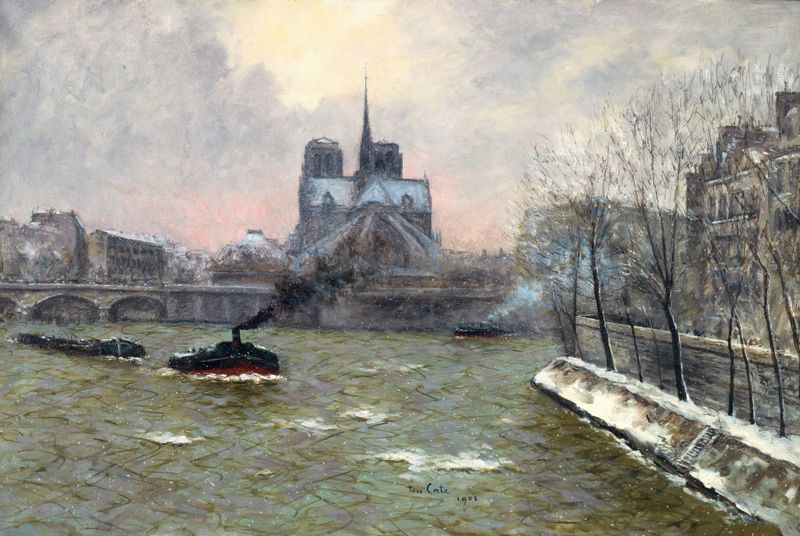
Le chevet de Notre-Dame, vu du pont de la Tournelle, effet de neige
Siebe Johannes Ten Cate
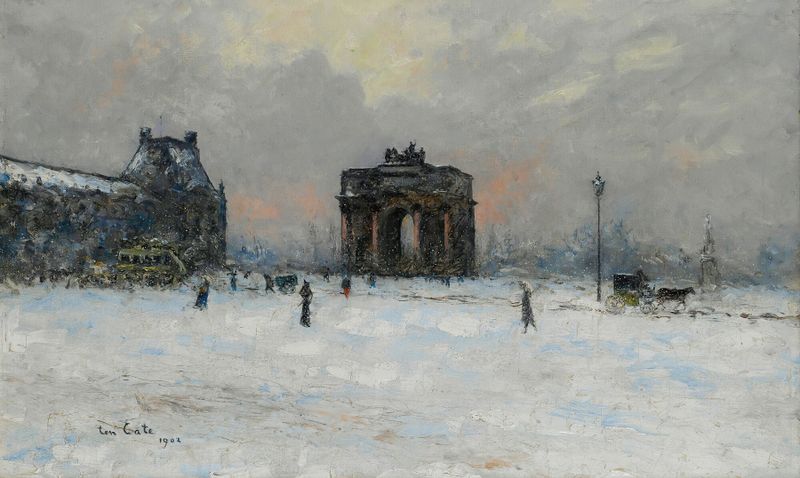
Paris, the Pavillon de Flore and the Arc de Triomphe of the Carrousel
Siebe Johannes Ten Cate
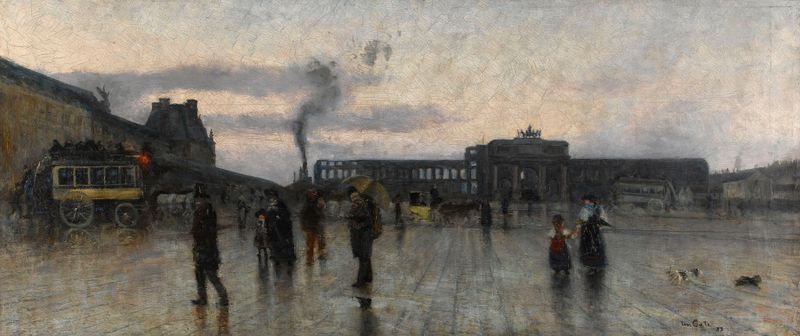
Les ruines des Tuileries et la place du Carroussel, 1er arrondissement.
Siebe Johannes Ten Cate

A View of Antwerp
Siebe Johannes Ten Cate
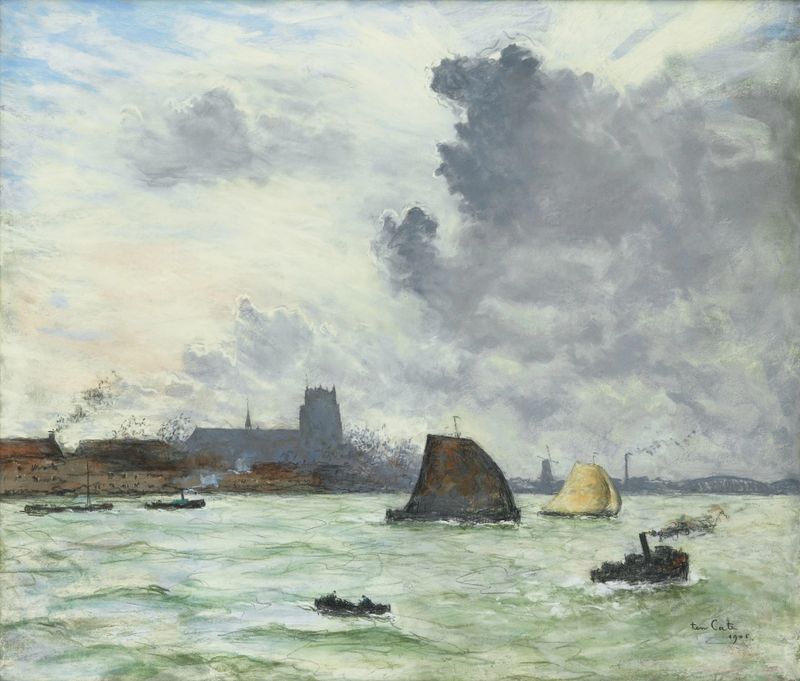
Vue du Port de Dordrecht
Siebe Johannes Ten Cate
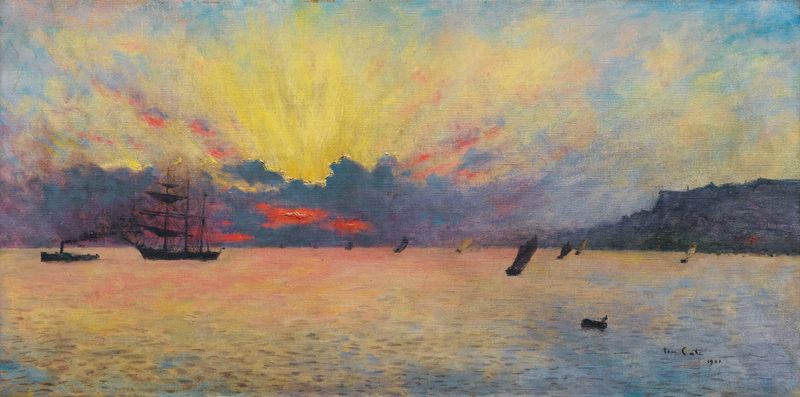
The Sea At Sainte-Adresse, Twilight
Siebe Johannes Ten Cate





