
The Sea At Sainte-Adresse, Twilight — History & Facts
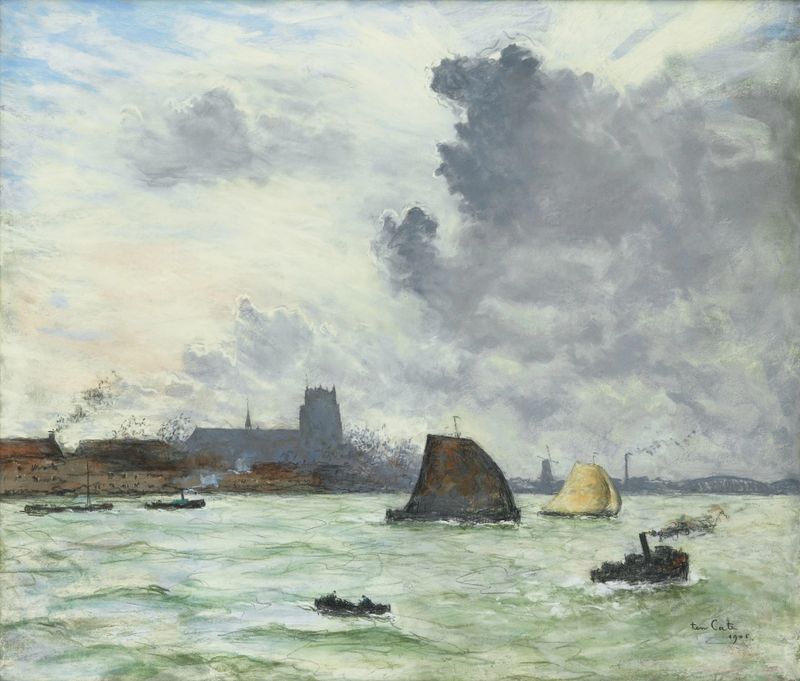
In this canvas, the profound undercurrents of revolution ripple just beneath the tranquil surface of twilight. Shades of indigo and cerulean mingle with hints of coral and saffron, evoking the lingering tension between the serene beauty of nature and the chaotic transformations of a world on the brink of change. Look to the horizon where the sea meets the sky, a muted line that divides yet connects the elements. The gentle waves, painted with delicate brushstrokes, shimmer with fading daylight, while the soft clouds mirror the rich, warm tones of the setting sun.
Focus on the small figures near the shore, their silhouettes blending into the landscape, evoking a sense of isolation amid vastness. Each detail, from the playful reflections on the water to the tranquil expressions of those present, is meticulously rendered, drawing the viewer into this intimate yet expansive moment. However, the painting's stillness belies a deeper unrest. The contrast between the vibrant colors of the water and the somber shadows hints at the fleeting nature of peace, suggesting the tumult that often lurks just out of sight.
The juxtaposition of human figures against the boundless sea speaks to humanity's fragility in the face of nature’s grandeur—each individual seems both insignificant and monumental within this larger narrative of change. In 1907, Siebe Johannes Ten Cate was working in France as part of a post-impressionist movement that sought to capture the transient effects of light and color. This was a period marked by artistic exploration and societal upheaval, as new ideas about art and existence were emerging. The world around him was ripe with revolution—socially, politically, and artistically—and The Sea At Sainte-Adresse, Twilight encapsulates the tension between serenity and the inevitable shift that lay ahead.
More Artworks by Siebe Johannes Ten Cate
Browse all →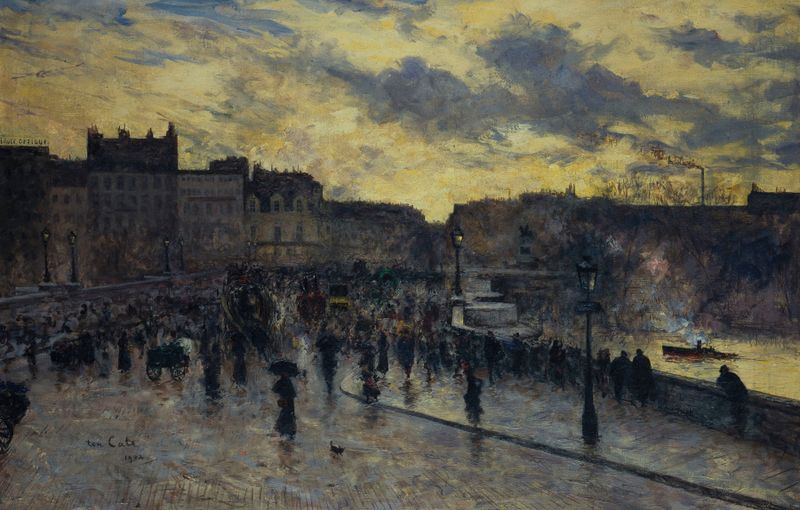
Le Pont-Neuf, vu du quai de la Mégisserie
Siebe Johannes Ten Cate
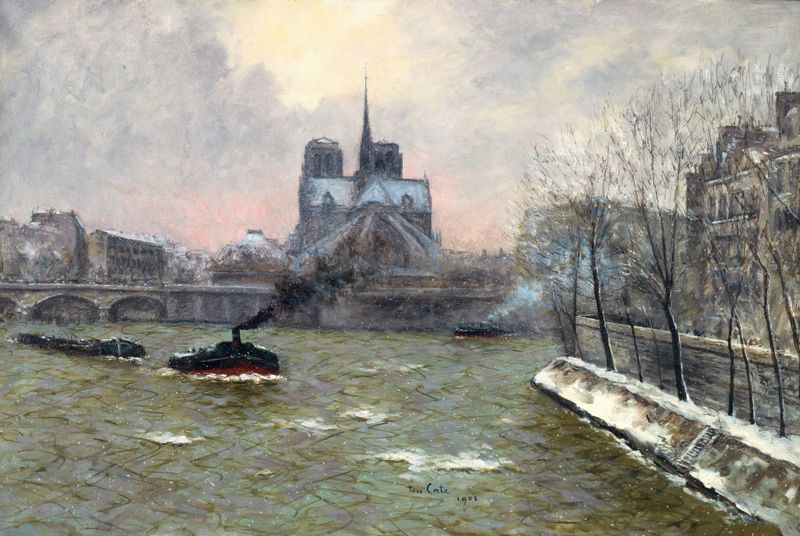
Le chevet de Notre-Dame, vu du pont de la Tournelle, effet de neige
Siebe Johannes Ten Cate
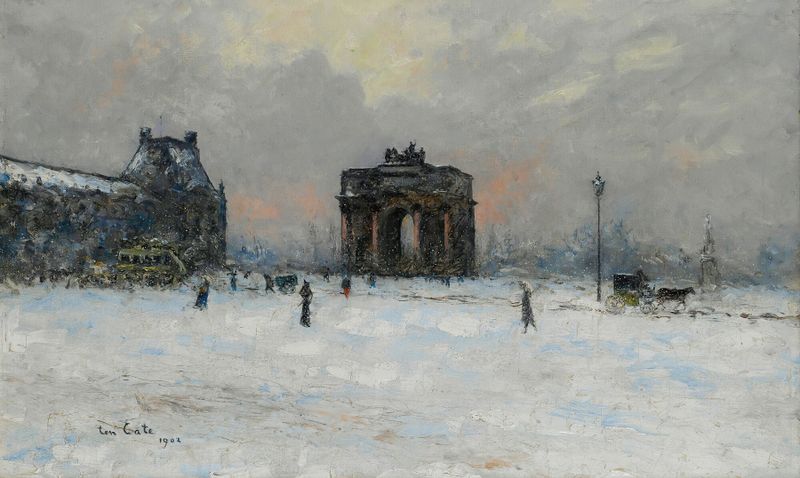
Paris, the Pavillon de Flore and the Arc de Triomphe of the Carrousel
Siebe Johannes Ten Cate
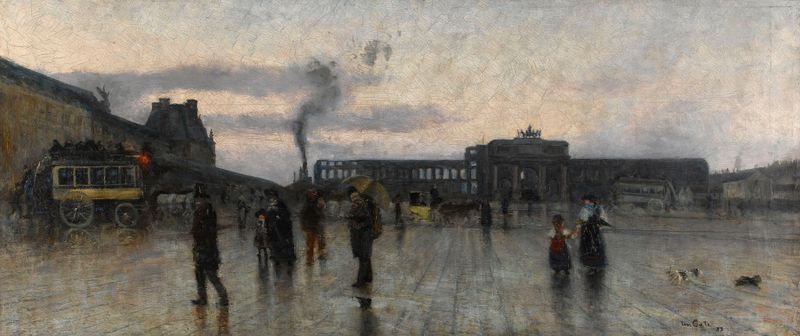
Les ruines des Tuileries et la place du Carroussel, 1er arrondissement.
Siebe Johannes Ten Cate

A View of Antwerp
Siebe Johannes Ten Cate

The Grand Quai of Le Havre
Siebe Johannes Ten Cate
Vue du Port de Dordrecht
Siebe Johannes Ten Cate





