
The graves in the fort on Cathcart’s Hill – of the officers 4th Division who fell at Inkermann — History & Facts
In the solemn embrace of the graveyard, beneath the weight of history, one cannot help but feel the haunting grip of obsession — the compulsion to remember, to mourn, and to immortalize. As you approach the canvas, look to the foreground, where white gravestones rise like sentinels from the earth, each one a testament to sacrifice. Notice how the muted palette of grey and earth tones reflects the somber reality of loss, contrasting sharply with the soft, golden light that bathes the scene. This delicate illumination lends an ethereal quality to the landscape, inviting the viewer to contemplate the stories behind each grave, while the distant hills loom as a silent witness to the conflict. Beneath the surface, the painting reveals the emotional tension between remembrance and despair.
The starkness of the gravestones embodies a raw, haunting memorial, while the surrounding landscape, though serene, hints at the chaos that once enveloped these souls. The meticulous detail of each stone and the gentle touch of light emphasize the obsession with honoring the deceased, a preoccupation that intertwines beauty and grief inextricably. In 1855, during the Crimean War, William Simpson found himself deep in the throes of a conflict that shaped both nations and individuals. Capturing scenes of war and its aftermath, he sought to document the stark realities and the emotional weight of sacrifice.
This work comes from a time when art was being used not only to celebrate victory but also to memorialize the fallen, embodying a pivotal moment in his artistic journey and the collective consciousness of society.
More Artworks by William Simpson
Browse all →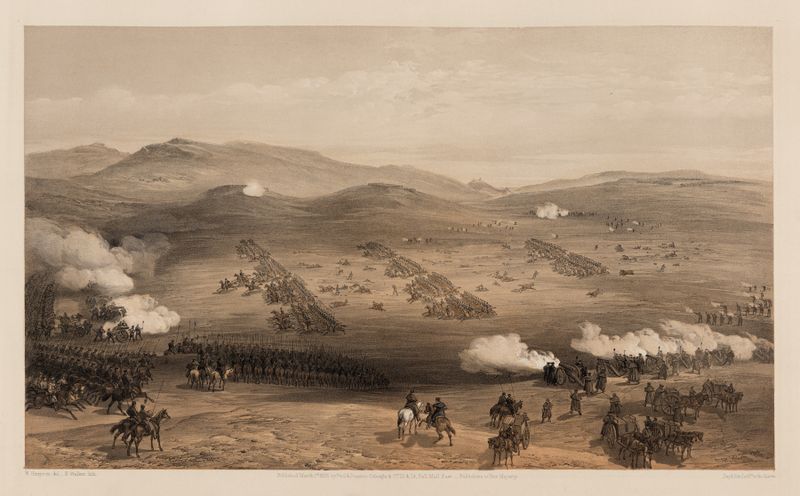
Charge of the light cavalry brigade, 25th Oct. 1854, under Major General the Earl of Cardigan
William Simpson

Charge of the heavy cavalry brigade, 25th Octr. 1854
William Simpson
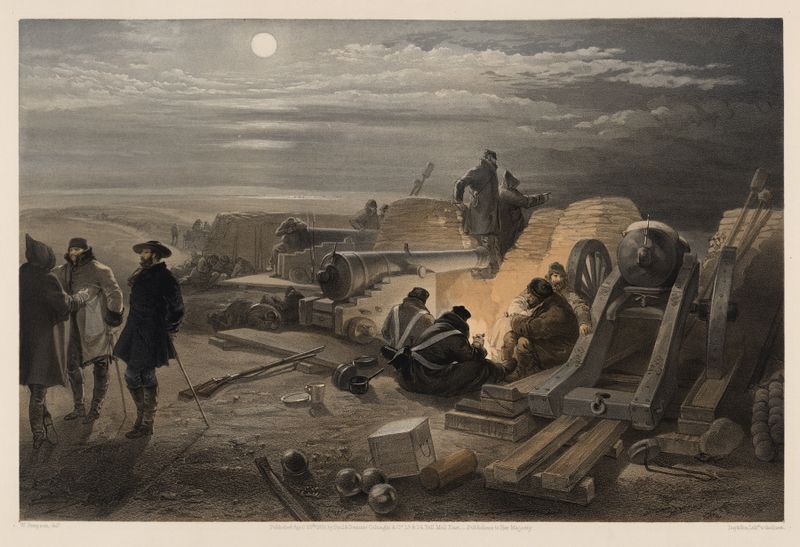
A quiet night in the batteries – a sketch in the Greenhill battery (Major Chapman’s), 29th Jany. 1855
William Simpson

The Great Wall of China
William Simpson
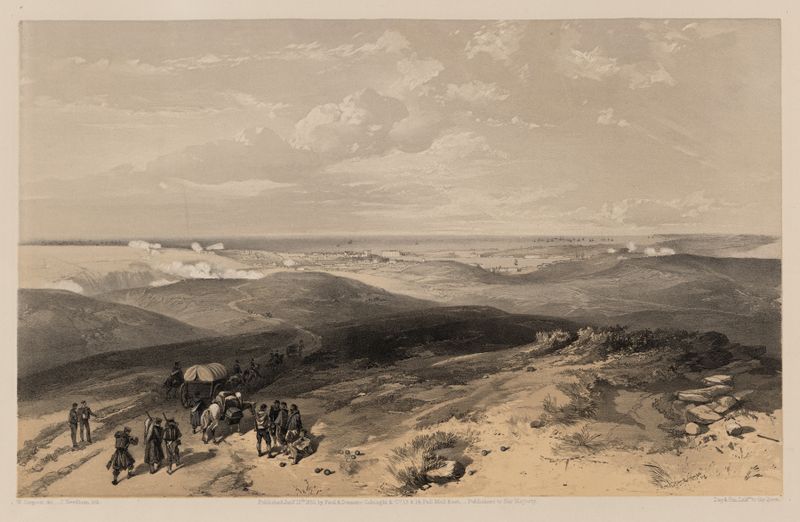
Sebastopol from the rear of the English batteries
William Simpson
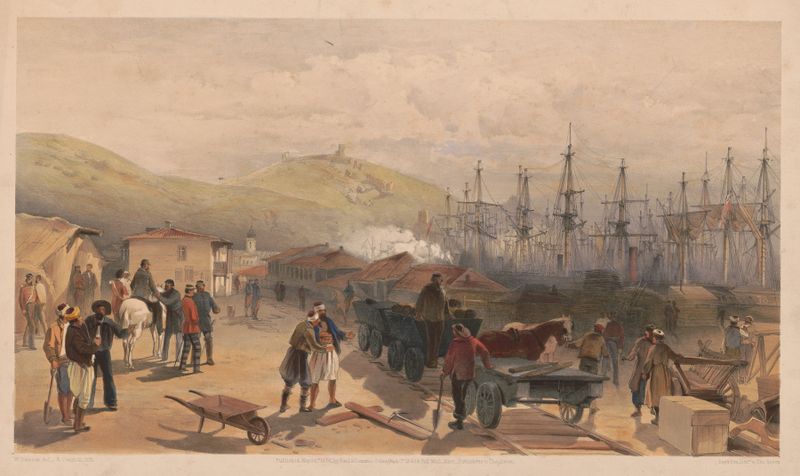
The railway at Balaklava, looking south
William Simpson

The Governor-General’s and Commander-in-Chief’s Camp at Jalandhar, 1 Febuary 1860
William Simpson
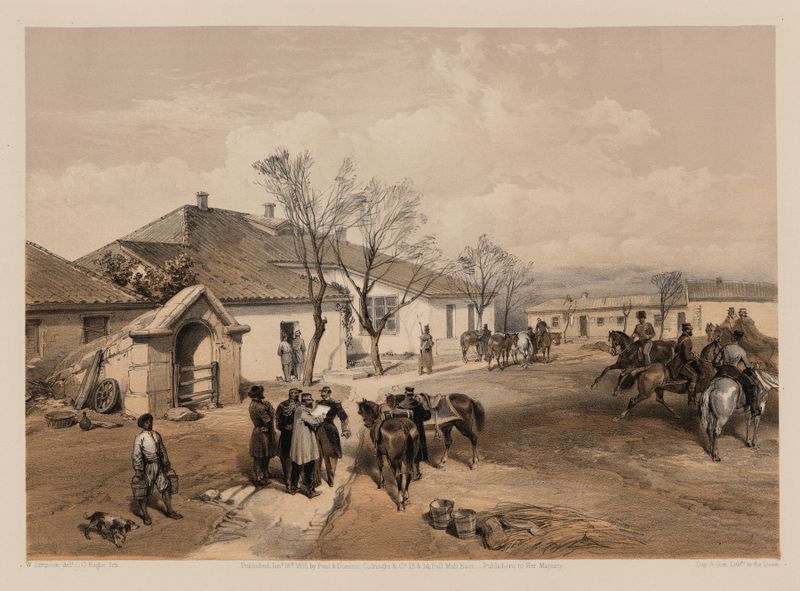
Lord Raglan’s head quarters at Khutor-Karagatch
William Simpson
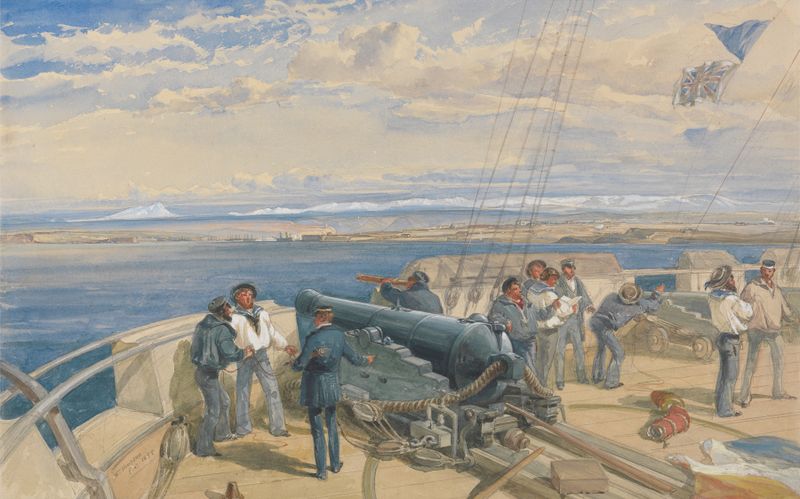
Sebastopol from the Sea, Sketched from the Deck of H. M. S. Sidon, Feb. 1855
William Simpson
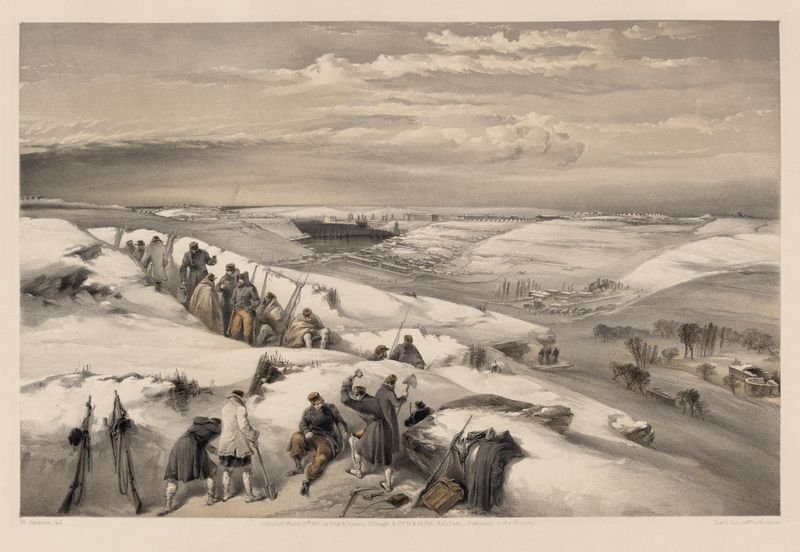
Sebastobol from the 26 gun battery on the extreme right of French attack
William Simpson
More Historical Art
Browse all →
The Night Watch Militia Company of District II under the Command of Captain Frans Banninck Cocq
Rembrandt van Rijn

Lincoln Memorial
Henry Bacon

The Third of May 1808
Francisco de Goya

Isaac and Rebecca, Known as ‘The Jewish Bride’
Rembrandt van Rijn

The Charge of the Mamelukes (1814)
Francisco de Goya

De vier ruiters van de apocalyps
Albrecht Dürer